Asbestos Testing in Yorba Linda, CA — MoldRx
Vetted Asbestos Testing Specialists Serving Yorba Linda and North Orange County
Yorba Linda is known as the "Land of Gracious Living," a phrase that has defined the community since the Janss Investment Company first subdivided citrus land from the former Rancho Canon de Santa Ana in 1907. For its first half-century, Yorba Linda remained a quiet agricultural settlement — citrus groves, avocado orchards, and open land stretching across the rolling terrain at the northeastern edge of Orange County. The town's most famous native, Richard Nixon, was born here in 1913 in a modest farmhouse his father built from a Sears mail-order kit. When the Nixon family left for Whittier in 1922, Yorba Linda had fewer than 300 residents. It would stay small for another four decades. Then, beginning in the 1960s, Yorba Linda underwent one of the most rapid residential transformations in Orange County. The population surged from 1,198 in 1960 to over 11,000 by incorporation in 1967, to nearly 30,000 by 1980, and past 52,000 by 1990. Each wave of growth brought new housing developments — and each decade brought different construction materials, building methods, and levels of asbestos use. Today, with approximately 68,000 residents and more than 24,000 housing units spanning construction dates from the early 1960s through the present, Yorba Linda contains a substantial share of homes built during the peak years of asbestos use in American construction. MoldRx only sends vetted asbestos testing professionals who understand the construction patterns specific to each era of Yorba Linda's growth and every applicable federal and state regulation.
Request your free estimate — we will help you determine if testing is needed for your project.
When Asbestos Testing Is Required in Yorba Linda
Multiple overlapping federal and state regulations make asbestos testing a legal prerequisite — not a suggestion — for most work on older Yorba Linda properties.
Before Any Renovation or Demolition
SCAQMD Rule 1403 requires an asbestos survey before renovation or demolition in the South Coast Air Quality Management District, which includes Yorba Linda. The survey must be performed by a certified asbestos consultant before permits are pulled. Notification to SCAQMD must be submitted at least 10 working days before any removal of asbestos-containing materials. For demolition, the survey requirement applies regardless of building age.
Cal/OSHA Title 8, Section 1529 requires identification of asbestos-containing materials through laboratory testing before any renovation or demolition that may disturb them in pre-1980 structures. All thermal system insulation, surfacing materials, and resilient flooring in pre-1980 buildings are legally presumed to contain asbestos until testing proves otherwise.
Federal OSHA 1926.1101 (the construction-industry asbestos standard) applies to all construction activities that may disturb ACM. It establishes a permissible exposure limit of 0.1 fiber per cubic centimeter as an 8-hour time-weighted average, requires wet methods and engineering controls, and mandates pre-work assessments for renovation, demolition, and maintenance.
When Buying or Selling a Property
California disclosure laws require sellers to report known hazards, including asbestos. A pre-purchase asbestos test gives buyers a clear picture of what they are acquiring and what renovation will involve. In Yorba Linda's market, where homes from the 1960s and 1970s command premium prices and buyers almost always plan renovation, this information directly affects purchase negotiations and post-closing budgets.
When Materials Show Damage or Deterioration
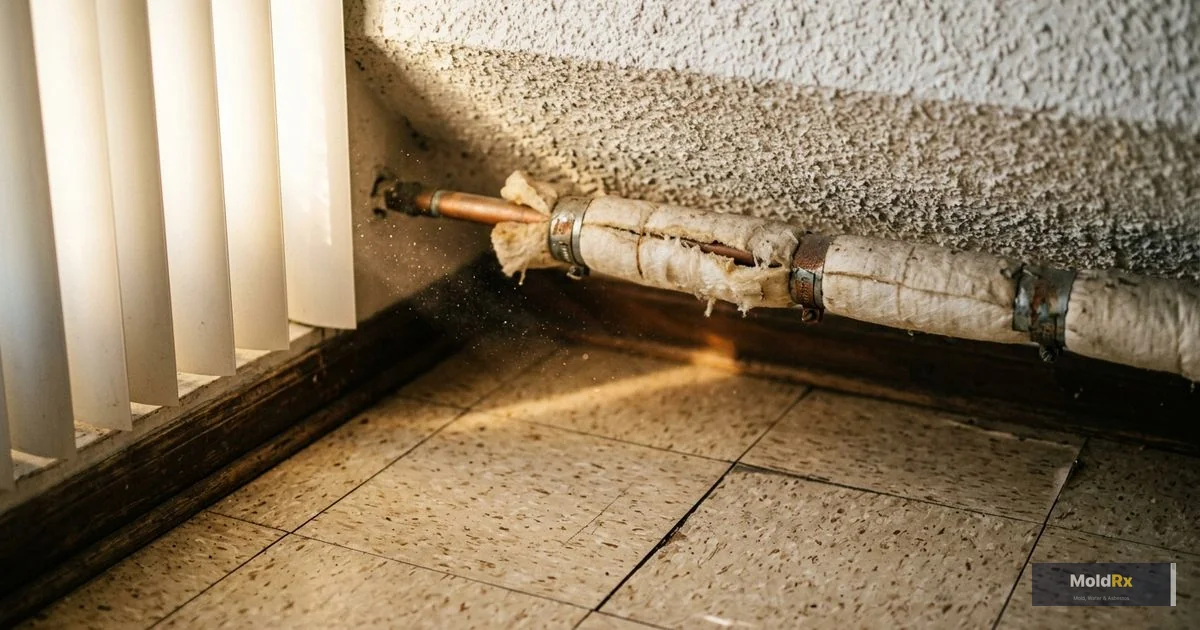
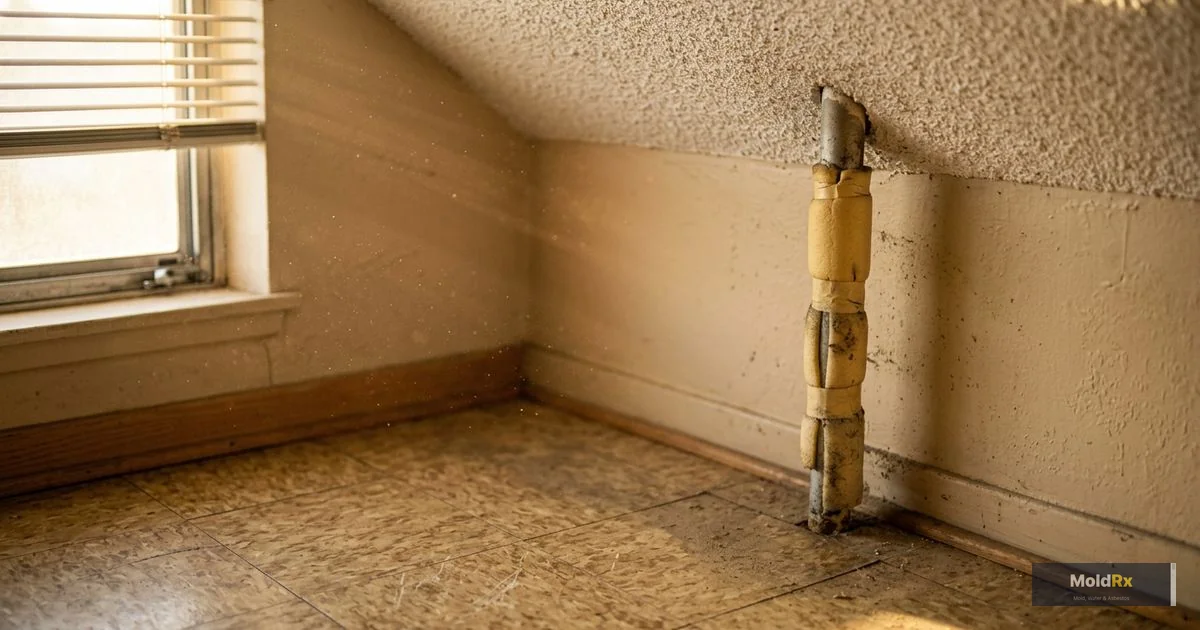
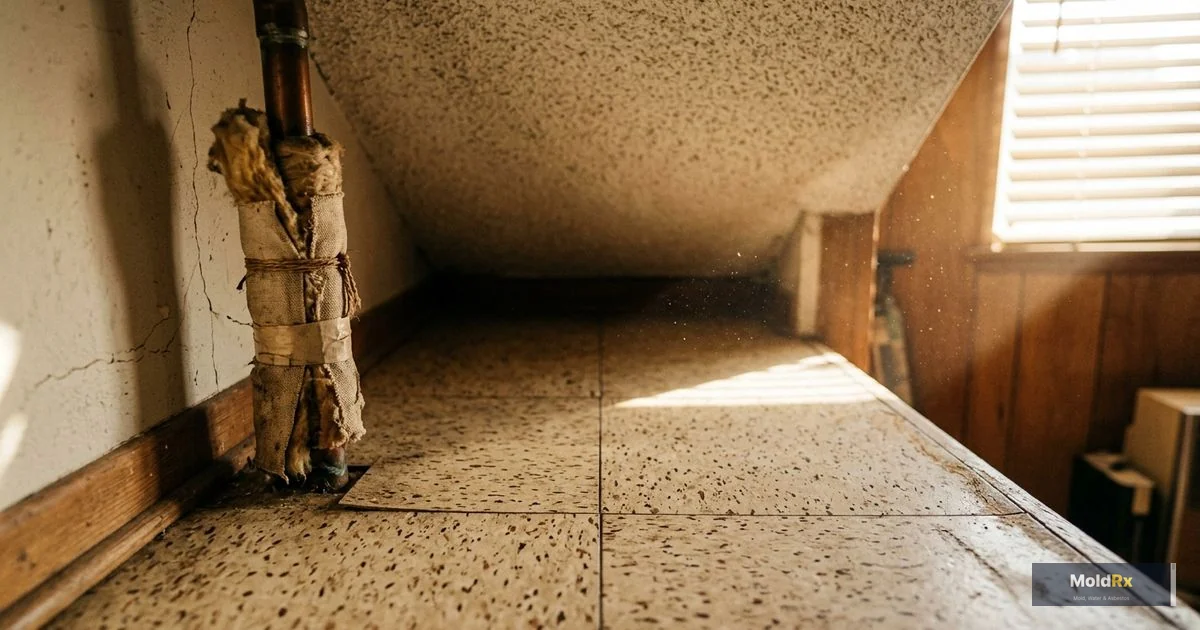
If ceiling texture is flaking, pipe insulation is fraying, floor tiles are cracking, or exterior siding is breaking apart, the question is no longer theoretical. Testing determines whether the damaged material contains asbestos and guides the appropriate response — monitoring, encapsulation, or professional removal.
Yorba Linda's Construction History and Asbestos Risk
Unlike older Orange County cities that were largely built out by the early 1960s, Yorba Linda's residential development occurred across multiple decades — creating a housing stock that spans the full arc of asbestos use, from its peak through its gradual phase-out.
The 1960s — Incorporation and First Suburbs
Yorba Linda's transformation from rural outpost to suburban community began in earnest during the early 1960s. Threatened with annexation by Brea in 1958 and by Anaheim and Placentia in 1963, residents voted to incorporate as an independent city on November 2, 1967. By that point, the population had already grown nearly tenfold in just seven years. The homes built during this decade — the city's first wave of suburban development — were constructed during the absolute peak of asbestos use. Ranch-style homes, split-levels, and modest tract houses from this period commonly contain asbestos in virtually every applicable building component: ceilings, flooring, insulation, roofing, siding, and joint compound.
The 1970s — The Largest Building Wave
The 1970s represented Yorba Linda's most prolific construction decade. The population nearly tripled, and housing developments filled the flatlands and began climbing into the lower hillsides. The city adopted its first municipal general plan in 1972. Asbestos remained widespread in building materials through the mid-1970s, and the phase-out that began in the late 1970s was gradual and incomplete. Homes built between 1970 and 1978 carry high probability of containing asbestos. Homes built between 1978 and 1980 carry moderate probability. Many of the city's housing developments — including East Lake Village — were built during this era.
The 1980s — Hillside Development
Yorba Linda's eastern hillside communities — including neighborhoods in the Bryant Ranch, Hidden Hills, East Lake Village, and Vista del Verde areas — were largely developed during the 1980s. These homes tend to be larger, more custom in design, and built on sloped terrain requiring specialized foundation systems. While asbestos use declined significantly after 1980, the transition was not clean. Some building products available through the mid-1980s still contained asbestos, and builders were permitted to use remaining stock. Homes from the early to mid-1980s warrant testing before renovation.
The 1990s and Beyond
Development continued into the 1990s in Yorba Linda's eastern reaches, with communities like Kerrigan Ranch and portions of Vista del Verde being built during this period. These homes are generally considered low risk for asbestos, though exceptions exist for specialty products, imported materials, and situations where older salvaged materials were reused. SCAQMD Rule 1403 still requires a survey before demolition regardless of building age.
Hillside Homes: Special Asbestos Considerations
A defining feature of Yorba Linda's residential landscape is its hillside development. The rolling terrain in the eastern portion of the city — rising into the foothills that separate Orange County from Riverside County — created demand for homes with views, privacy, and elevation.
From an asbestos perspective, hillside homes present specific considerations beyond the standard materials found in any home of the same era:
Structural components. Sloped-lot construction often required specialized structural elements: retaining walls, extensive foundation work, custom drainage systems, and reinforced substructures. Some of these components — particularly in homes built during the 1970s and early 1980s — may incorporate cement-asbestos (transite) materials.
Fireproofing materials. Yorba Linda's location in the wildland-urban interface means many hillside homes were built with enhanced fireproofing. Some fireproofing products from the 1970s and 1980s — including fire-rated insulation, heat shields, and fireproof boards — contained asbestos. Homes with fireplaces, wood stoves, or other heating features from these eras may have asbestos in associated components such as flue liners, hearth pads, chimney insulation, and gaskets.
Exterior cladding. Hillside homes with exterior materials exposed to direct sunlight, wind, and thermal cycling on south-facing slopes may experience accelerated deterioration of original cladding materials — increasing the risk of fiber release if those materials contain asbestos.
Common Asbestos-Containing Materials in Yorba Linda Homes
Based on the construction methods and products used across Yorba Linda's development decades, the following materials are priority testing targets:
-
Textured ceiling coatings — Popcorn, knockdown, and orange-peel textures applied before 1980 frequently contain chrysotile asbestos at concentrations ranging from 1 to 10 percent
-
Vinyl floor tiles and mastic — Both the tiles themselves (9-inch and 12-inch sizes) and the black adhesive used to install them commonly contained asbestos in pre-1980 construction
-
Pipe and duct insulation — Asbestos wrapping on hot water pipes, heating ducts, boiler connections, and HVAC plenums was standard through the 1970s
-
Roofing felt, shingles, and underlayment — Asbestos-reinforced roofing products were the default choice for Southern California builders throughout the postwar era
-
Joint compound and drywall mud — Used for taping, finishing, and texturing interior walls, these products frequently contained asbestos through the late 1970s
-
Cement siding and stucco additives — Transite siding is a cement-asbestos product, and some stucco mixtures used during the 1960s and 1970s contained asbestos as a reinforcing fiber
-
Vermiculite attic insulation — Loose-fill, granular insulation that may contain naturally occurring tremolite asbestos, particularly if sourced from the contaminated Libby, Montana mine
-
Fireplace and heating components — Heat shields, millboard, flue liners, fireproof boards behind inserts, and gaskets around wood stove installations
-
Electrical panel backing and components — Some electrical panel boxes and arc chute dividers manufactured before 1980 contained asbestos
You cannot determine whether any of these materials contain asbestos by looking at them. Photographs will not tell you. Online guides claiming to help you "spot" asbestos by color or texture are misleading. The only way to confirm or rule out asbestos is laboratory analysis of a physical sample — the position of the EPA, OSHA, Cal/OSHA, and every accredited consultant in the state.
Call (888) 609-8907 to schedule testing — honest answers, no pressure.
Understanding Asbestos: How It Causes Harm
Asbestos becomes a health hazard only when its fibers are released into the air — a process called becoming "friable." This happens when asbestos-containing materials are cut, drilled, sanded, scraped, sawed, broken, or allowed to deteriorate to the point where they crumble. The fibers released are microscopically thin — thinner than the wavelength of visible light — which means they are entirely invisible to the human eye. They have no odor and no taste.
The Mechanism of Disease
Inhaled asbestos fibers travel past the body's normal filtration systems and lodge deep in the tissue of the lungs or, in some cases, migrate to the lining of the abdominal cavity. Once embedded, the fibers are permanent. The body possesses no enzyme, no immune response, and no mechanical process capable of dissolving or expelling them. Over years and decades, the persistent presence of these fibers causes chronic inflammation, progressive scarring of lung tissue, and cumulative DNA damage to surrounding cells.
This process leads to three primary diseases:
Mesothelioma — an aggressive cancer of the membrane lining the lungs or abdomen. Caused almost exclusively by asbestos exposure, it has no cure and carries a median survival time of 12 to 21 months after diagnosis.
Asbestosis — a chronic, progressive fibrosis of the lungs that causes worsening shortness of breath, persistent dry cough, and declining respiratory capacity. It develops slowly and has no reversal.
Lung cancer — asbestos exposure substantially increases the risk of developing lung cancer, with the risk multiplying dramatically for individuals who also smoke.
The Latency Factor
All asbestos-related diseases share a defining characteristic: an extended latency period between exposure and symptom onset ranging from 10 to 50 years. A Yorba Linda homeowner who inhales asbestos fibers during a renovation in 2026 may not develop symptoms until the 2040s, 2050s, or later. This latency makes testing essential — asbestos exposure produces no immediate symptoms, no coughing, no irritation, no warning of any kind. The only way to prevent exposure is to identify asbestos-containing materials before they are disturbed.
The Regulatory Framework for Yorba Linda Properties
California's asbestos regulations are among the strictest in the nation and apply fully to Yorba Linda properties. Here is the complete regulatory landscape property owners should understand:
SCAQMD Rule 1403
SCAQMD Rule 1403 governs asbestos during demolition and renovation activities in the South Coast district. It requires a survey by a certified consultant before work begins, written notification to SCAQMD at least 10 working days before asbestos removal, and prescribed work practices for all handling and disposal. Non-compliance penalties can exceed $20,000 per day.
Cal/OSHA Section 1529
Cal/OSHA Title 8, Section 1529 mandates laboratory testing to identify ACM before renovation or demolition in pre-1980 structures. Thermal system insulation and surfacing materials in pre-1980 buildings are legally presumed to contain asbestos until laboratory analysis proves otherwise.
Federal OSHA 1926.1101
OSHA 1926.1101 is the federal construction standard for asbestos. It sets the permissible exposure limit at 0.1 fiber per cubic centimeter (8-hour TWA) with an excursion limit of 1.0 fiber per cubic centimeter over 30 minutes. It classifies asbestos work into categories (Class I through IV) with escalating safety requirements, and mandates pre-work assessments and exposure monitoring.
AHERA
The Asbestos Hazard Emergency Response Act establishes inspection and management requirements for asbestos in public and commercial buildings. Its protocols form the foundation for residential testing practices. AHERA requires that all asbestos analysis be performed by NVLAP-accredited laboratories, and inspectors performing residential surveys hold AHERA-accredited certifications.
CSLB C-22 Licensing
When asbestos removal is necessary, California law requires that abatement be performed by a contractor holding a CSLB C-22 asbestos abatement license and registered with DOSH. The C-22 classification requires four years of documented experience, passage of trade and law examinations, and active DOSH registration. No other contractor classification authorizes asbestos removal.
Our Asbestos Testing Process in Yorba Linda
MoldRx coordinates professional asbestos testing through vetted specialists who understand the construction patterns, materials, and regulatory requirements specific to Yorba Linda and North Orange County.
Step 1: Project Scoping and Consultation
We begin by understanding your property and your goals. The age of your Yorba Linda home, the specific rooms or systems involved in your project, and the types of materials present all shape the testing scope. A homeowner renovating a single bathroom in a 1975 tract home needs targeted testing of the materials in that space. A buyer evaluating a 1968 ranch-style home before a whole-house renovation needs comprehensive coverage. A family updating a 1983 hillside home needs a scope calibrated to the moderate-risk materials that era may contain. We tailor the plan to your actual situation.
Step 2: Professional Sample Collection
Vetted asbestos specialists collect samples on-site following established EPA protocols. Before each sample is taken, the material is wetted to suppress fiber release. A small, representative sample is extracted using specialized tools, sealed in a labeled container, and documented with chain-of-custody records. Each distinct material type in each distinct location is sampled separately, because visually identical materials in different rooms or areas may have been installed at different times with different compositions. EPA procedures require a minimum of three samples per homogeneous material in each distinct area.
Step 3: NVLAP-Accredited Laboratory Analysis
All samples are analyzed at an NVLAP-accredited laboratory — accredited by the National Voluntary Laboratory Accreditation Program administered by NIST, as required by AHERA.
PLM (Polarized Light Microscopy) is the standard analytical method for asbestos identification in bulk building material samples. PLM identifies asbestos fiber type (chrysotile, amosite, crocidolite, or tremolite) and measures the concentration percentage, following EPA Method 600/R-93/116. PLM has a detection limit of approximately 1%, which is also the regulatory threshold for classifying a material as ACM.
TEM (Transmission Electron Microscopy) provides higher magnification and greater sensitivity when PLM results are inconclusive, for air monitoring samples, or for post-abatement clearance testing. TEM detects fibers too small for light microscopy and provides the highest level of analytical certainty.
Standard turnaround is 3 to 5 business days. Rush processing — as fast as 24 hours — is available for time-sensitive projects including real estate closings and scheduled renovation starts.
Step 4: Results and Actionable Recommendations
Your report identifies each material tested, its location in the property, and whether asbestos was detected. For positive results, the asbestos type and concentration percentage are clearly stated. Any material exceeding 1% asbestos is classified as ACM. We explain the practical implications for your project: which materials can remain undisturbed, which can be managed through encapsulation or monitoring, and which must be professionally removed by a CSLB C-22 licensed asbestos abatement contractor before renovation work proceeds. The report provides a clear, complete picture of your property's condition and the specific steps needed to move forward safely and legally.
What to Expect
-
On-site time: Sample collection for a typical Yorba Linda home takes two to four hours, depending on the number of materials being sampled. Larger hillside homes with more complex construction may require additional time.
-
Results timeline: Standard laboratory results are available within 3 to 5 business days from an NVLAP-accredited lab. Rush analysis can reduce turnaround to 24 to 48 hours.
-
Documentation: Your report meets all California regulatory requirements and provides the documentation contractors need to plan and execute work in compliance with Cal/OSHA Section 1529, SCAQMD Rule 1403, and OSHA 1926.1101 standards.
-
Honest assessment: If materials in your Yorba Linda home do not warrant testing based on their age, composition, or condition, we will say so. If results are negative, you can proceed with documented confidence. If asbestos is found, you will receive clear, direct guidance — not sales pressure toward unnecessary removal.
Common Testing Scenarios in Yorba Linda
Pre-Renovation Testing
The most common reason Yorba Linda homeowners contact us. Remodeling a kitchen in a 1972 tract home. Scraping popcorn ceilings in a 1968 ranch. Replacing old vinyl flooring. Upgrading insulation. Converting a garage. Opening up a floor plan by removing walls. Every one of these projects disturbs materials that may contain asbestos, and California law requires testing before the work begins.
Hillside Home Renovations
Yorba Linda's hillside properties present specific testing needs beyond standard materials. Renovations involving structural modifications, exterior work, fireplace or chimney alterations, or retaining wall modifications should include testing of structural components, fireproofing materials, and specialized exterior cladding in addition to standard interior materials.
Real Estate Transactions
Buyers evaluating pre-1980 properties in Yorba Linda benefit from asbestos testing as part of due diligence. Understanding the asbestos condition before closing allows informed negotiation, accurate renovation budgeting, and avoidance of post-purchase surprises. Sellers benefit equally — documented testing results remove uncertainty from the transaction.
Estate and Inheritance Properties
Yorba Linda families inheriting homes from parents or grandparents — properties that may not have been renovated in decades — face a common situation: the home needs updating, but nobody knows what the original materials contain. Testing provides the answers needed to plan renovation work safely and in compliance with all regulations.
Damaged or Deteriorating Materials
When ceiling texture is flaking, pipe insulation is fraying, floor tiles are cracking, or exterior siding is breaking apart, testing determines whether the damage involves ACM and what response is appropriate — monitoring, encapsulation, or professional removal by a CSLB C-22 licensed contractor.
Yorba Linda Areas We Serve
MoldRx provides asbestos testing throughout Yorba Linda, including established communities such as Black Gold, Yorba Linda Estates, Travis Ranch, Country Club Estates, East Lake Village, Bryant Ranch, Hidden Hills, Vista del Verde, Kerrigan Ranch, Lakeview, Fairmont Hill, Parkside Estates, Old Towne, and the neighborhoods along the Yorba Linda Boulevard corridor. We serve properties in ZIP codes 92886 and 92887, covering the full geographic extent of the city from the flatlands west of Fairmont Boulevard through the hillside communities east of the Nixon Library.
Our coverage extends to neighboring communities including Placentia to the west, Anaheim Hills to the south, Brea to the north, and Corona to the east. Whether your property is a 1960s ranch on a flat lot, a 1970s tract home in a mature neighborhood, a 1980s custom build on a hillside, or a 1990s development in the eastern reaches, our vetted specialists understand the construction patterns and materials specific to each era of Yorba Linda's growth.
Related Services in Yorba Linda
In addition to asbestos testing, we also offer Mold Removal in Yorba Linda, Asbestos Removal in Yorba Linda, Water Damage Restoration in Yorba Linda, and Mold Testing in Yorba Linda services to Yorba Linda property owners.
→ Learn more about remediation services in Yorba Linda
Frequently Asked Questions
Is asbestos testing legally required before renovating in Yorba Linda?
Yes. Cal/OSHA Section 1529 requires identification of ACM through laboratory testing before renovation or demolition in pre-1980 structures. SCAQMD Rule 1403 requires an asbestos survey before renovation or demolition — and for demolition, the requirement applies regardless of building age. Federal OSHA 1926.1101 mandates pre-work assessments for all construction activities that may disturb ACM. Given that Yorba Linda's most prolific building decades were the 1960s and 1970s, testing is a legal prerequisite for the majority of renovations in the city.
What laboratory accreditation should I look for?
All asbestos analysis should be performed by an NVLAP-accredited laboratory. The National Voluntary Laboratory Accreditation Program, administered by NIST, accredits laboratories for both PLM and TEM asbestos fiber analysis. AHERA requires NVLAP accreditation for all asbestos analysis, and this standard represents the benchmark for reliable, legally defensible results. MoldRx only works with NVLAP-accredited laboratories.
My Yorba Linda home was built in 1985. Does it need asbestos testing?
It depends on your plans. While asbestos use declined substantially after 1980, some building products manufactured through the mid-1980s still contained asbestos. Builders were also permitted to use existing material stocks after manufacturing restrictions took effect. If you are planning renovation work that will disturb original materials in a home from this era, testing provides certainty. For Yorba Linda homes built after 1990, asbestos risk is generally low but not zero — and SCAQMD Rule 1403 still requires a survey before demolition.
What is the difference between PLM and TEM analysis?
PLM (Polarized Light Microscopy) is the standard EPA-accepted method for identifying asbestos in bulk building material samples. It determines fiber type and estimates concentration, with a detection limit of approximately 1%. TEM (Transmission Electron Microscopy) provides higher magnification and sensitivity, detecting fibers too small for light microscopy. TEM is used when PLM results are inconclusive, for air monitoring, and for post-abatement clearance testing. Both methods are performed at NVLAP-accredited laboratories.
What happens if asbestos is found before my Yorba Linda renovation?
Materials containing asbestos that will be disturbed by renovation work must be professionally removed by a CSLB C-22 licensed asbestos abatement contractor before any other work begins. This is a California legal requirement. SCAQMD Rule 1403 requires notification at least 10 working days before removal begins. Materials in areas that will not be disturbed by your project can often remain in place and be managed through periodic monitoring or encapsulation. Your testing report provides the specific information needed to determine the appropriate response for each identified material.
Can asbestos testing be completed during escrow?
Yes. Asbestos testing during escrow is common for pre-1980 properties in Yorba Linda and fits comfortably within standard escrow timelines. Standard results from an NVLAP-accredited lab arrive within 3 to 5 business days. Rush processing is available when tighter deadlines require faster answers. The resulting report becomes part of your property documentation and informs renovation planning after closing.
How long does the entire testing process take?
On-site sample collection for a typical Yorba Linda home takes two to four hours. Standard laboratory analysis requires 3 to 5 business days. Rush turnaround options can reduce the laboratory portion to 24 to 48 hours. From initial contact to final report, most testing engagements are completed within one to two weeks.
Get Asbestos Testing in Yorba Linda
From the modest ranch homes built during Yorba Linda's first decade of suburban development, through the sprawling tract communities of the 1970s, to the hillside estates that climbed the eastern foothills during the 1980s and 1990s, Yorba Linda's housing stock reflects four decades of continuous growth. The birthplace of a president, the Land of Gracious Living, and a community where the fundamental question for property owners is the same: do the materials in your home contain asbestos, and what does that mean for your plans?
Professional testing gives you a definitive answer. Our vetted specialists know Yorba Linda's neighborhoods, its construction eras, and the materials that builders in this part of North Orange County commonly used decade by decade. They will tell you what needs testing, what the results mean, and what your realistic options are — clearly, honestly, and without pressure.
Call MoldRx to schedule your asbestos test — (888) 609-8907. Know before you start.