Asbestos Testing in Upland, CA
MoldRx Only Sends Vetted Asbestos Testing Specialists to Upland and West San Bernardino County
Upland sits at the foot of the highest peaks of the San Gabriel Mountains, a city whose identity was shaped by citrus groves, Craftsman architecture, and the sweeping grandeur of Euclid Avenue — the tree-lined boulevard that George Chaffey laid out in the 1880s as the backbone of his agricultural colony. That history gave Upland its character, and it also gave the city a housing stock that spans more than a century of construction methods and materials.
From the early Craftsman bungalows of the 1920s through the post-war tract homes of the 1950s and 1960s to the foothill developments of later decades, Upland's residential fabric is deeply intertwined with the era when asbestos was a standard construction ingredient. With an estimated population of approximately 80,000 residents spread across ZIP codes 91784, 91785, and 91786, and a significant concentration of homes built before 1980, asbestos testing is not a theoretical concern in Upland — it is a practical and legal necessity for anyone planning renovations, purchasing older property, or wondering what decades of construction history have left behind inside their walls.
Ready to get started? Request your free estimate or call (888) 609-8907 to speak with someone today.
Why Upland Properties Need Asbestos Testing
From Citrus Colony to Residential City
Upland's story begins in 1882, when Canadian engineer George Chaffey purchased approximately 6,216 acres of what was then part of the Cucamonga Rancho, along with significant water rights from San Antonio Creek, for $60,000. Chaffey had already established the Etiwanda irrigation community in 1881. His vision for this new colony centered on a "mutual water company" model — the San Antonio Water Company, incorporated on October 25, 1882 — in which each landowner became a stockholder. By 1889, some 2,000 acres of citrus orchards had been planted.
At the center of it all was Euclid Avenue, a seven-mile thoroughfare with a planted median parkway that Chaffey named for his favorite mathematician. The boulevard, found eligible for the National Register of Historic Places in 1979 and later formally listed as the Euclid Avenue Historic District in 2005, remains a city landmark.
The area was originally known as North Ontario before being renamed Upland in 1902 — after the Upland Citrus Association, a nod to the higher-elevation land and, implicitly, the premium quality of citrus grown at elevation. The city was formally incorporated on May 15, 1906.
For decades, Upland was part of California's famous citrus belt, known for lemons, oranges, and stone fruits. During this era, the city's earliest residential neighborhoods took shape: Craftsman bungalows, California Colonial homes, and small vernacular houses built along the streets radiating from Euclid Avenue and the downtown core.
The transformation from citrus colony to residential suburb accelerated dramatically in 1954, when the San Bernardino Freeway (later Interstate 10) connected Upland to Los Angeles. The groves began falling to housing tracts, and by the 1960s and 1970s, Upland was filling in with the ranch homes, split-levels, and tract developments that characterize much of the city today.
Construction Timeline and Asbestos Risk
Upland's housing falls into several distinct risk categories based on when it was built:
1920s-1940s Craftsman and Early Homes — HIGH RISK
The oldest homes in Upland, concentrated along Euclid Avenue, in the historic downtown district, and in San Antonio Heights (the unincorporated community on Upland's northern edge with a population of approximately 3,400), date primarily to the 1920s and 1930s. These Craftsman bungalows, California Colonials, and period-revival residences often contain asbestos in:
- Original lime plaster walls and ceilings
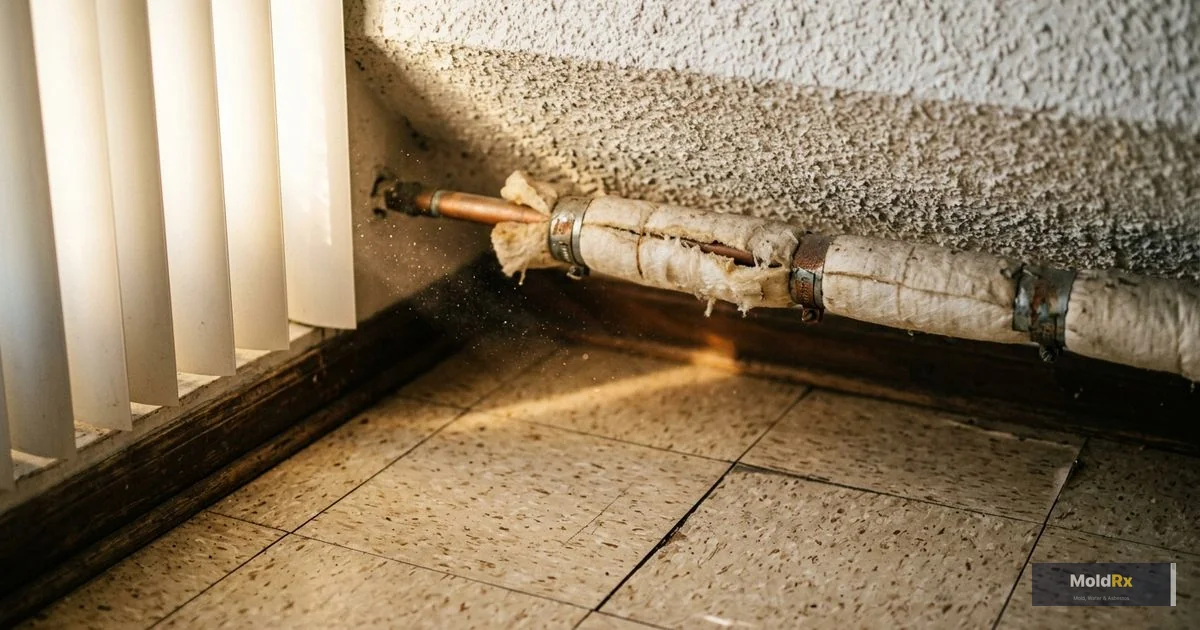
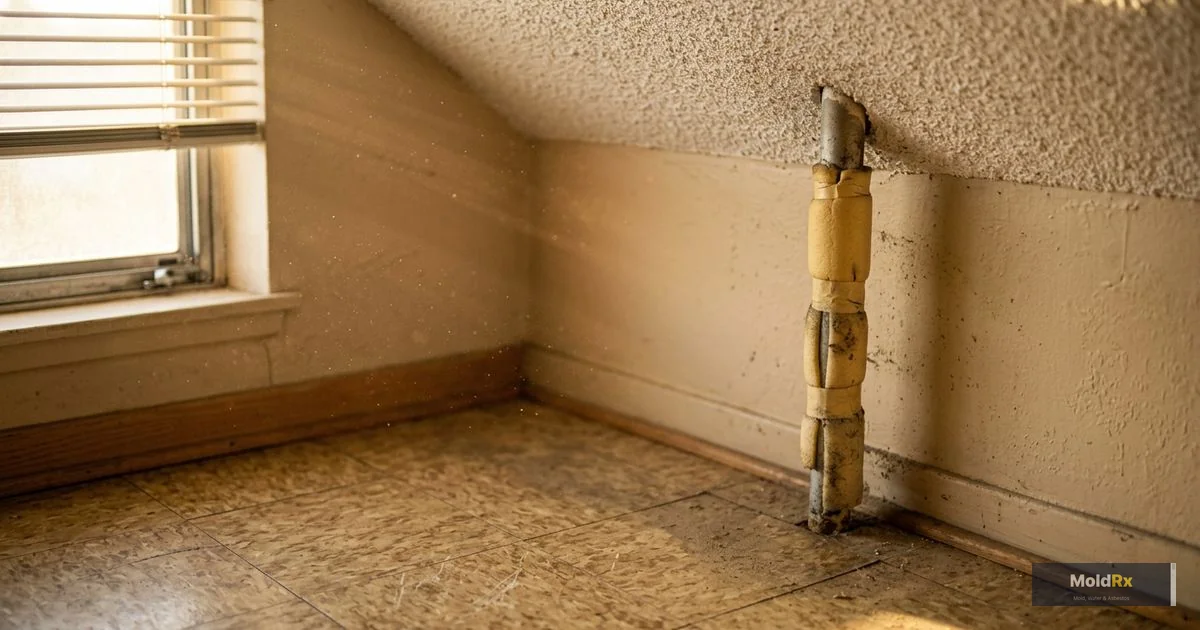
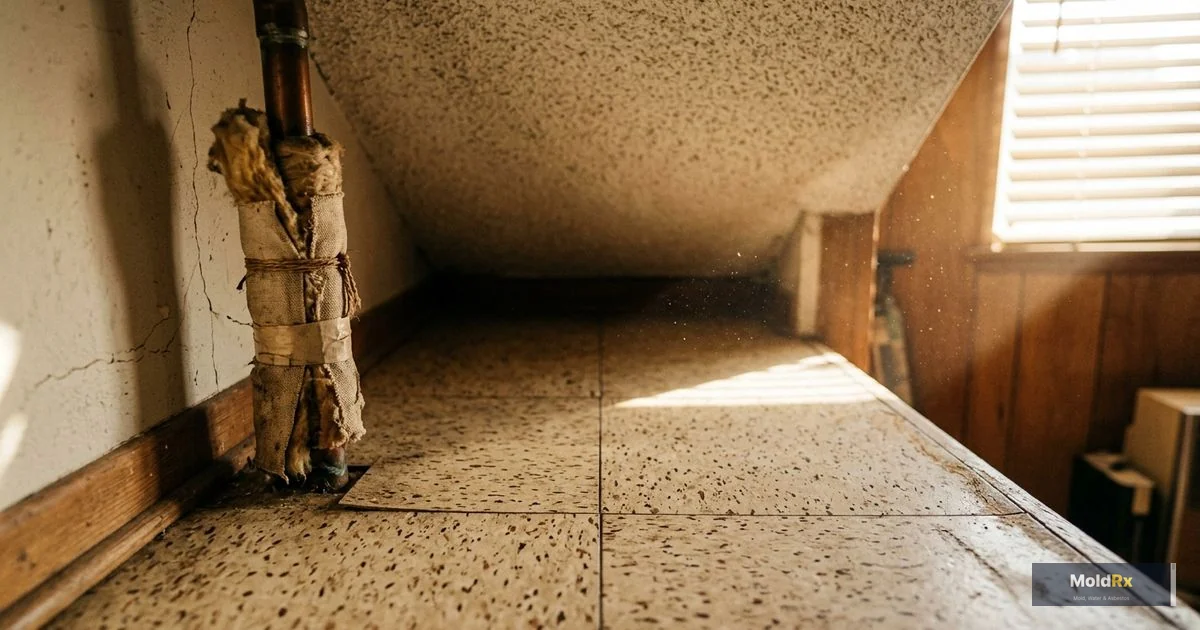
- Pipe insulation and boiler lagging for gravity hot water heating systems
- Roofing felt and shingles
- Exterior stucco (some formulations contained asbestos)
- Linoleum flooring and backing material
- Window glazing putty and caulking
- Electrical wiring insulation in knob-and-tube systems
These homes have often been renovated multiple times over the decades, meaning asbestos materials may be layered beneath newer surfaces — old flooring hidden under modern tile, original plaster behind new drywall. Each renovation project in these older homes requires testing to identify what lies beneath.
1940s-1970s Post-War and Mid-Century Homes — HIGH RISK
This represents the largest segment of Upland's housing stock. As the citrus groves gave way to residential development — especially after the freeway connected Upland to the greater Los Angeles area — thousands of homes were built using materials that routinely contained asbestos. Ranch-style homes, split-levels, and modest tract houses from this era are found throughout central and southern Upland. Common asbestos materials include:
- 9x9-inch vinyl floor tiles and black mastic adhesive — The single most frequently identified asbestos material in Inland Empire homes
- Popcorn or acoustic ceiling texture — Sprayed-on coatings applied from the late 1950s through the early 1980s
- Pipe and duct insulation — Fibrous wrapping around hot water lines and HVAC ducts
- HVAC duct tape — Older cloth-type adhesive tape at duct joints
- Roofing shingles and felt — Asbestos-cement shingles and tar-impregnated underlayment
- Cement siding — Fiber-cement exterior cladding (transite)
- Drywall joint compound — Pre-1980 formulations used to finish drywall seams
- Textured wall coatings — Decorative plaster textures in living and dining areas
- Vermiculite attic insulation — Loose-fill insulation, sometimes from contaminated sources like the Libby, Montana mine (marketed as Zonolite)
1980s-1990s Foothill Developments — LOW TO MODERATE RISK
Newer neighborhoods in the northern and eastern parts of Upland, toward the foothills and near the Colonies Crossroads development, were built after the major asbestos restrictions took effect. However, homes from 1978 through the mid-1980s may still contain leftover asbestos-era materials that were in stock when construction began. Testing is prudent for renovations in homes from this transitional period.
Climate Factors That Increase Risk
Upland's location at the base of the San Gabriel Mountains creates specific climate conditions that stress older building materials:
- Hot summers — Temperatures regularly reach the mid-90s to low 100s during summer months. Decades of extreme heat cause roofing materials, exterior cladding, and attic insulation to deteriorate and become friable.
- Temperature swings — The elevation gradient from Upland's lower areas (around 1,200 feet) to San Antonio Heights (nearly 2,600 feet) means significant daily and seasonal temperature variation. Materials expand and contract constantly, causing cracking and fiber release over time.
- Santa Ana winds — When Santa Ana winds blow down through the mountain canyons, the air becomes extremely dry and hot. These conditions accelerate the drying and brittleness of older adhesives, caulking, and insulation, making them more likely to crumble and release fibers.
- Heavy HVAC demand — Upland homes run air conditioning systems heavily through the summer. Older ductwork with asbestos insulation and tape circulates air past deteriorating materials for months at a time, potentially distributing fibers through the entire living space.
The Regulatory Framework for Upland Property Owners
Upland property owners must comply with overlapping federal, state, and regional regulations before disturbing building materials in older structures.
Federal OSHA Standard — 29 CFR 1926.1101
The federal OSHA asbestos standard for the construction industry (29 CFR 1926.1101) establishes baseline requirements for any construction work that may disturb asbestos-containing materials. The standard sets a permissible exposure limit (PEL) of 0.1 fibers per cubic centimeter of air averaged over an eight-hour workday, with an excursion limit of 1.0 f/cc averaged over 30 minutes. Building owners must identify the presence, location, and quantity of asbestos-containing materials and notify all parties who may be exposed. A competent person must be designated for all covered worksites.
Cal/OSHA Title 8, Section 1529
California's Cal/OSHA Section 1529 requires an asbestos survey before renovation or demolition of any structure built before 1980. The survey must be conducted by a Cal/OSHA-certified asbestos inspector or an individual holding a current AHERA (Asbestos Hazard Emergency Response Act) Building Inspector certificate. Cal/OSHA regulates asbestos at concentrations greater than 0.1 percent. Any abatement project exceeding 100 square feet requires formal notification and must be performed by a contractor registered with DOSH.
Penalties under Cal/OSHA can reach $25,000 per serious violation, with additional penalties available under air quality regulations.
SCAQMD Rule 1403
Upland falls within the jurisdiction of the South Coast Air Quality Management District, and SCAQMD Rule 1403 governs asbestos emissions from demolition and renovation activities. Rule 1403 goes further than many property owners realize:
- Survey required before any renovation or demolition, regardless of building age. The survey must be conducted by a Cal/OSHA-certified inspector or a current AHERA Building Inspector certificate holder.
- NVLAP-accredited laboratory analysis required. All asbestos analyses performed to comply with Rule 1403 must be conducted by a laboratory accredited through the National Voluntary Laboratory Accreditation Program (NVLAP), administered by NIST.
- Notification to SCAQMD. At least 14 calendar days before any asbestos removal of 100 square feet or greater, or before any demolition, a notification must be submitted to SCAQMD through their online web application.
- On-site supervision. Supervisory personnel must hold AHERA Asbestos Abatement Contractor/Supervisor accreditation.
- Proper handling and disposal. All asbestos-containing materials must be removed, handled, and disposed of in compliance with Rule 1403 procedures, including wetting, containment, and disposal at approved facilities.
Violations of Rule 1403 carry significant fines and potential criminal penalties.
CSLB C-22 Licensing for Abatement
If asbestos is identified and removal is necessary, the work must be performed by a contractor holding a CSLB C-22 Asbestos Abatement license from the Contractors State License Board. The C-22 classification requires four years of journey-level experience, trade and law examinations, and active registration with DOSH. This is why testing and abatement should always be performed by separate, independent parties — the party that identifies the problem should not be the same party that profits from fixing it.
Historic Preservation Considerations
For homes in the Euclid Avenue Historic District or properties on the City of Upland's historic register, renovation work may need to balance asbestos abatement with preservation requirements. Testing helps identify which specific materials contain asbestos so that abatement can be targeted and minimally disruptive to architecturally significant elements. A Craftsman bungalow with asbestos in its plaster walls requires a different approach than one with asbestos only in its roofing felt — and only laboratory testing can make that distinction.
Understanding the Health Risks
Asbestos fibers are microscopic — far too small to see, feel, or taste. When asbestos-containing materials are disturbed through cutting, sanding, scraping, drilling, or simply deteriorating with age, these fibers become airborne and can remain suspended in indoor air for hours. Once inhaled, they lodge permanently in lung tissue. The body cannot break them down or expel them.
The health consequences develop over decades:
- Mesothelioma — A rare, aggressive cancer of the lung or abdominal lining. Almost exclusively caused by asbestos exposure. Latency period of 20 to 50 years. Median survival after diagnosis: 12 to 21 months.
- Asbestosis — Progressive, irreversible scarring of lung tissue that reduces breathing capacity. No cure exists.
- Lung cancer — Asbestos exposure significantly increases risk, with the risk multiplying for smokers.
- Pleural plaques and thickening — Non-cancerous but permanent changes to the lung lining causing chest pain and breathing difficulty.
The long latency period is what makes asbestos uniquely insidious. A homeowner who spends a weekend scraping an asbestos-containing ceiling or pulling up asbestos-containing floor tiles will not feel ill during the work or for years afterward. The damage is cumulative and silent. Testing before disturbance is the only reliable prevention. There is no safe threshold of exposure.
How Professional Asbestos Testing Works in Upland
Step 1: Property Assessment and Sample Planning
A vetted asbestos testing specialist evaluates your property and identifies materials that may contain asbestos based on age, appearance, and location. For Upland's historic Craftsman homes, this means checking plaster, original flooring, pipe insulation, and heating system components. For mid-century tract homes, the focus shifts to floor tiles, ceiling textures, duct insulation, and roofing. We discuss your specific plans — renovation scope, real estate timeline, or general assessment — and develop a sampling plan that covers every area of concern.
Step 2: Safe Sample Collection
Following EPA NESHAP and Cal/OSHA Section 1529 protocols, the specialist carefully collects small samples of suspect materials. Proper technique is critical: materials are wetted before cutting, containment barriers are used, protective equipment is worn, and each sample is sealed in a labeled container with chain-of-custody documentation for transport. This prevents fiber release during the sampling process itself — a risk that makes DIY sampling inadvisable.
Step 3: NVLAP-Accredited Laboratory Analysis
Samples are submitted to an NVLAP-accredited laboratory for analysis. The primary method is Polarized Light Microscopy (PLM), which provides definitive identification of asbestos presence, fiber type (chrysotile, amosite, crocidolite, tremolite), and concentration percentage. Transmission Electron Microscopy (TEM) is available for applications requiring greater analytical sensitivity, such as post-abatement air clearance testing or low-concentration confirmations.
NVLAP accreditation requires laboratories to maintain less than a 1 percent error rate on qualitative analysis, participate in biannual proficiency testing for PLM and annual proficiency testing for TEM, and comply with ISO/IEC 17025:2017 standards. This accreditation is mandatory for all analyses performed under SCAQMD Rule 1403.
Materials at or above 1 percent asbestos content are regulated. Results typically arrive within three to five business days, with rush processing available for time-sensitive projects.
Step 4: Results and Guidance
You receive a clear report explaining what was found, where, and what it means for your property. If asbestos is present, we explain your options:
- Leave undisturbed — Materials in good condition that will not be affected by your plans can remain safely in place with periodic monitoring
- Encapsulation — Coating or sealing materials to prevent fiber release, a viable option for materials in moderate condition that will not be disturbed
- Professional abatement — Licensed removal by a CSLB C-22 certified contractor when materials are damaged, friable, or in the path of planned work
Have questions about your Upland property? Request your free estimate or call (888) 609-8907 — no obligation, no pressure.
What to Expect When You Work with MoldRx
MoldRx only sends vetted asbestos testing specialists who understand Upland's construction history and the full regulatory framework:
-
Honest assessment. If testing is not necessary for your situation, we will tell you. If results come back negative, you will know you can proceed safely. We do not create unnecessary work.
-
Clear communication. You will understand exactly what is being tested, why, and what the results mean. No confusing jargon, no vague answers — just straightforward guidance you can act on.
-
Full compliance documentation. Every test follows EPA NESHAP, OSHA 1926.1101, and Cal/OSHA Section 1529 protocols. Results come from an NVLAP-accredited laboratory with proper chain-of-custody documentation — essential for SCAQMD Rule 1403 compliance, real estate transactions, permit applications, historic preservation reviews, and contractor coordination.
-
Next steps clarity. If asbestos is found, you will know exactly what your options are. Some materials can remain safely undisturbed. Others require licensed removal by a CSLB C-22 contractor. We explain the difference clearly, based on material condition and your specific plans.
-
Reasonable timeline. On-site sampling takes one to two hours for most residential properties. Lab results arrive within three to five business days, with rush processing available for time-sensitive projects.
When Should You Get Asbestos Testing in Upland?
Before any renovation project — Kitchen remodels, bathroom updates, flooring replacement, ceiling scraping, wall demolition, window replacement, or HVAC upgrades in a pre-1980 home. Cal/OSHA Section 1529 requires it, and SCAQMD Rule 1403 requires a survey before renovation regardless of building age.
Before buying or selling a home — Especially for Upland properties built before 1980, which includes the majority of the city's housing stock. Testing protects buyers and sellers alike and fulfills California disclosure obligations.
Before restoring a historic home — Craftsman bungalows and early homes in the Euclid Avenue area and historic downtown often contain multiple layers of materials from different eras. Testing identifies which specific materials contain asbestos so restoration work can proceed with proper precautions and minimal disruption to architecturally significant features.
If you notice deteriorating materials — Crumbling ceiling texture, cracked floor tiles, fraying pipe insulation, peeling exterior materials, or flaking plaster in an older home should prompt testing immediately. Damaged materials may already be releasing fibers.
After water damage or earthquake — Any damage to the structure of an older home can disturb previously stable asbestos materials. Testing should be part of the damage assessment.
When upgrading HVAC systems — Replacing older heating and cooling equipment in pre-1980 homes frequently involves disturbing asbestos-containing duct insulation, tape, and furnace components.
Upland Areas We Serve
MoldRx sends vetted asbestos testing specialists to properties throughout Upland and surrounding West San Bernardino County. We serve all neighborhoods within ZIP codes 91784, 91785, and 91786, including:
- Historic Downtown Upland — The city's original commercial and residential core along Euclid Avenue
- Euclid Avenue corridor — Properties within the National Register Historic District
- San Antonio Heights — The unincorporated community on Upland's northern foothill edge
- Upland Hills — Hillside residential neighborhoods
- Colonies Crossroads — Newer mixed-use development area
- Cable Airport area — Established neighborhoods surrounding the historic airport
- North Upland — Foothill residential areas with a mix of construction eras
- South and East Upland — Post-war tract home neighborhoods near Ontario
We also serve neighboring communities including Rancho Cucamonga to the east, Claremont to the west, Ontario to the south, and Mount Baldy to the north. Whether you are in a 1920s Craftsman near Euclid Avenue, a 1960s ranch home near Foothill Boulevard, or a 1970s tract home in eastern Upland, our vetted specialists know where to look and what to test.
Related Services in Upland
In addition to asbestos testing, MoldRx also sends vetted specialists for Mold Removal in Upland, Asbestos Removal in Upland, Water Damage Restoration in Upland, and Mold Testing in Upland.
→ Learn more about remediation services in Upland
Frequently Asked Questions
When is asbestos testing required in Upland?
Under Cal/OSHA Section 1529, testing is required before any renovation or demolition that might disturb materials in structures built before 1980. SCAQMD Rule 1403 requires an asbestos survey before renovation or demolition regardless of building age, with all analyses performed by an NVLAP-accredited laboratory. Given that Upland's residential growth spans the 1920s through the 1970s — the full arc of the asbestos construction era — these regulations apply to a very large portion of the city's housing stock. Federal OSHA 1926.1101 adds additional requirements for construction workers who may encounter asbestos on the job.
My Upland home is a 1920s Craftsman. What should I expect?
Craftsman-era homes in Upland may contain asbestos in original plaster walls and ceilings, pipe insulation around early hot water heating systems, roofing felt and shingles, linoleum flooring, window putty, exterior stucco, and possibly knob-and-tube wiring insulation. Many of these homes have been renovated over the decades, meaning asbestos materials may be hidden beneath newer surfaces. A thorough assessment using PLM laboratory analysis examines both visible materials and areas where original materials may be concealed. For homes in the Euclid Avenue Historic District, testing results help guide abatement decisions that respect preservation requirements.
What materials should be tested for asbestos in an Upland home?
Common asbestos-containing materials include 9x9-inch floor tiles and black mastic adhesive, popcorn ceiling texture, pipe and duct insulation, HVAC tape, roofing shingles, cement siding, drywall joint compound, textured wall coatings, vermiculite attic insulation, original plaster, window putty, and linoleum. In pre-1980 homes, assume any original construction material might contain asbestos until NVLAP-accredited laboratory testing using PLM or TEM proves otherwise.
How are asbestos samples collected?
Trained professionals wet the material to prevent fiber release, collect small samples using specialized tools, and seal them in labeled containers with chain-of-custody documentation for laboratory transport. The sampling area is cleaned afterward. This is not a DIY task — improper sampling releases the very fibers you are trying to identify and may not produce results accepted for SCAQMD Rule 1403 or Cal/OSHA Section 1529 compliance.
What happens if asbestos is found in my Upland home?
Finding asbestos does not automatically mean removal is needed. Intact, undisturbed materials in good condition can often remain safely in place with periodic monitoring. If materials are damaged, friable, or in the path of planned renovation, professional abatement by a CSLB C-22 licensed California contractor is required. Notification to the South Coast AQMD under Rule 1403 may be required before work begins. For properties in the Euclid Avenue Historic District, coordination with the city's historic preservation requirements may also be needed. Your testing report explains your specific options — monitoring, encapsulation, or removal — based on material condition and your plans.
Do I need special permits for asbestos abatement in Upland?
If testing reveals asbestos-containing materials that need removal, abatement must be performed by a CSLB C-22 licensed asbestos contractor following Cal/OSHA Section 1529, OSHA 1926.1101, and SCAQMD Rule 1403 regulations. Notification to the South Coast AQMD is required before removal of 100 square feet or more of asbestos-containing material, or before any demolition. The notification must be submitted at least 14 calendar days in advance through SCAQMD's online application. All on-site supervisory personnel must hold AHERA Contractor/Supervisor accreditation.
Get Asbestos Testing in Upland
Upland was built from the ground up during the asbestos era — from the Craftsman bungalows that George Chaffey's original colonists constructed along Euclid Avenue in the 1920s, through the post-war tract homes that replaced the citrus groves in the 1950s and 1960s, to the foothill developments that filled in the city's edges. Each generation of Upland construction used the building materials of its time, and for every decade from the 1920s through the 1970s, that meant materials containing asbestos.
If you are planning a renovation on your Upland home, buying a property built before 1980, restoring a historic Craftsman, or simply want to know what is in your walls and ceilings, asbestos testing gives you the facts you need. MoldRx only sends vetted specialists who understand Upland's construction history, know the materials that each era of builders used, and deliver NVLAP-accredited laboratory results with full documentation for SCAQMD Rule 1403, Cal/OSHA Section 1529, OSHA 1926.1101, and AHERA compliance.
No guesswork. No unnecessary testing. No runaround. Request your free estimate or call (888) 609-8907 to schedule asbestos testing for your Upland property.