Mold Removal in Santa Ana, CA — MoldRx
IICRC-Certified Mold Removal Professionals Serving Santa Ana and Central Orange County
Santa Ana is the seat of Orange County — approximately 310,000 residents packed into 27 square miles at roughly 110 feet of elevation, making it the fourth-densest large city in the United States. ZIP codes 92701 through 92707 cover an extraordinary concentration of housing: 1920s Craftsman bungalows in French Park, 1930s-1950s period homes in Floral Park, dense mid-century apartment blocks across Downtown and Logan, and 1960s-1970s tract homes stretching through Delhi and South Coast Metro. Of the city's roughly 83,000 housing units, the median construction year is 1968. Over 55 percent of households are renter-occupied, which means deferred maintenance on aging plumbing, ventilation, and building envelopes is widespread. The marine layer pushes inland from the Pacific twelve miles southwest, the Santa Ana River runs along the western edge, Santiago Creek cuts through the north, and Santa Ana winds drive rain into stucco walls that have been cracking for decades. When mold establishes here, it has usually been growing inside wall cavities or behind aging plumbing for weeks before anyone notices. MoldRx only sends vetted, IICRC-certified mold removal professionals who follow IICRC S520/R520 standards and EPA guidance (publication 402-K-01-001).
Request your free estimate — we'll assess your property and give you straight answers.
Why Mold Grows in Santa Ana Homes
Four persistent moisture pathways explain why this city has a recurring mold problem across every neighborhood and ZIP code.
Marine Layer Humidity and Year-Round Moisture
The Pacific sits roughly twelve miles southwest. The marine layer pushes inland overnight through late spring and summer — "May Gray" and "June Gloom" keep relative humidity between 60 and 73 percent into late morning. At 110 feet of elevation on flat terrain, the city sits squarely in the marine layer's path with no topographic barrier. Santa Ana averages 13 inches of rain per year concentrated between November and March, but the marine layer delivers moisture year-round. In older homes where bathroom exhaust is absent or ducted into attic spaces, that humidity condenses on cooler surfaces — window frames, exterior wall cavities, closet walls backing garages. The IICRC S520 Standard and EPA publication 402-K-01-001 document that mold colonizes damp materials within 24 to 48 hours. In Santa Ana's dense apartment blocks and mid-century homes with single-pane windows, condensation alone provides enough moisture for colonization.
The Oldest and Densest Housing Stock in Orange County
Santa Ana's median construction year of 1968 tells only part of the story. French Park preserves Victorian and Craftsman homes from the early 1900s — predating vapor barriers, modern plumbing, and insulation standards by half a century. Floral Park's roughly 600 homes, built from the 1920s through the 1950s and listed on the National Register of Historic Places, feature original wood-frame construction and aging drainage. The postwar boom filled Willard, Logan, and Delhi with tract homes, duplexes, and apartment buildings through the 1960s-1970s — slab foundations without vapor barriers, galvanized plumbing that corrodes after 40 to 60 years, single-pane aluminum windows, and HVAC never designed for humidity control. Nearly 9 percent of housing predates 1940. Each decade's construction has its own mold vulnerabilities, and Santa Ana has all of them concentrated in 27 square miles.
Santa Ana River, Santiago Creek, and Flood Channel Proximity
The channelized Santa Ana River defines the city's western boundary, and Santiago Creek runs through the northern sections before joining the river. Despite Prado Dam and Seven Oaks Dam upstream, the flat, low-lying terrain has historically made Santa Ana vulnerable to flooding. Properties near these waterways sit on terrain subject to elevated water tables. Subsurface moisture wicks upward through older slabs without vapor barriers, feeding mold along baseboards and inside wall cavities. This is gradual moisture migration that creates colonization conditions over weeks and months. Storm drainage in the oldest neighborhoods was engineered decades ago and frequently fails during high-volume rain events, leaving water pooling against foundations.
Santa Ana Winds and Wind-Driven Rain
Santa Ana winds gust 40 to 70 mph several times per year between October and March, funneling through mountain passes across the flat valley. When these winds coincide with Pacific storms, rain drives laterally into building envelopes — through stucco cracks, around window flashing, under eaves. After decades of UV and thermal cycling, stucco on 1950s-1970s homes has developed extensive hairline cracking. Each wind-driven rain event forces water into wall cavities where it feeds mold behind intact interior paint — invisible until weeks after the storm. The flat terrain offers no shelter, so every neighborhood faces equal wind exposure.
Signs You Need Professional Mold Removal
These indicators warrant professional assessment in Santa Ana properties.
Visible Growth Beyond a Small Area
EPA publication 402-K-01-001 sets ten square feet as the professional remediation threshold. In Santa Ana, colonies commonly appear along slab-to-drywall transitions, inside bathroom cavities with original plumbing, at single-pane window frames, behind stucco with wind-driven rain intrusion, and along foundations near Santiago Creek and the Santa Ana River. If growth exceeds a three-by-three-foot patch or appears in multiple rooms, professional containment is appropriate.
Persistent Musty Odor Without Visible Mold
A persistent musty smell without a visible source typically means concealed mold — inside wall cavities, within exhaust ducts terminating in attic spaces, behind cabinetry on exterior walls, or beneath flooring near flood channels. In multi-unit buildings, odors may originate in an adjacent unit and migrate through shared walls. If the odor intensifies when the HVAC cycles on, concealed mold is likely.
Recurring Mold After Previous Cleanup
If mold returns after cleaning, the moisture source persists — marine layer condensation, corroded plumbing, stucco cracks admitting wind-driven rain, flood channel proximity, or slab moisture wicking upward. Recurring mold requires professional moisture mapping and source correction.
Water Damage History
Per IICRC S520 and EPA guidance, mold colonizes damp materials within 24 to 48 hours. Properties that have experienced a plumbing leak, slab leak, rain intrusion, or water heater failure should be evaluated even if surfaces appear dry — water inside wall cavities feeds concealed mold for weeks.
Health Symptoms That Worsen Indoors
The CDC notes that mold exposure can cause nasal stuffiness, throat irritation, coughing, and wheezing. If symptoms improve when you leave and return when you come back, indoor mold is a reasonable possibility — especially in older homes where original HVAC circulates spores from concealed colonies through every room.
Health Risks of Mold Exposure
Mold produces allergens, irritants, and in some species mycotoxins. The EPA, CDC, and WHO Guidelines for Indoor Air Quality: Dampness and Mould document that prolonged exposure is associated with respiratory symptoms, allergic reactions, and asthma aggravation. The concern arises when indoor colonies exceed normal outdoor baselines.
Populations at Higher Risk
Santa Ana's 310,000 residents include a high concentration of families with children — household composition shapes which populations face the greatest risk:
- Children and infants — The WHO Guidelines for Indoor Air Quality identify children as a priority population. Developing respiratory systems are more sensitive to airborne spores. Santa Ana's family-dense neighborhoods have large numbers of households with young children — ensuring healthy indoor air in bedrooms and play areas is critical.
- Adults with asthma or respiratory conditions — The CDC reports that mold triggers asthma attacks. In older homes where original HVAC circulates air from concealed colonies through every room, sensitive occupants face continuous exposure.
- Elderly residents — Original homeowners who have aged in place in Floral Park, French Park, and mid-century tract neighborhoods face compounded risk from prolonged exposure.
- Immunocompromised individuals — Chemotherapy patients, transplant recipients, and those with chronic immune conditions face elevated risk from species like Aspergillus.
The goal of professional remediation is to return indoor fungal ecology to normal background levels — what the IICRC S520 standard defines as Condition 1.
When DIY Mold Removal Isn't Enough
The EPA allows homeowners to address small areas of mold using basic precautions. These situations exceed what DIY methods can handle:
- The affected area exceeds ten square feet — EPA publication 402-K-01-001 identifies this as the professional remediation threshold.
- Mold is inside HVAC ductwork or the air handler — NADCA (National Air Duct Cleaners Association) recommends professional cleaning when mold is confirmed inside duct systems. In Santa Ana's older homes, original ductwork runs through unconditioned attic spaces, affecting air quality throughout every room.
- Growth has penetrated structural materials — Mold in wall framing, subfloor sheathing, or slab-to-wall transitions requires selective demolition, containment, and professional drying.
- The mold appears to be Stachybotrys (black mold) — IICRC S520 requires careful containment due to mycotoxin production. Species identification requires laboratory analysis.
- The water source is Category 2 or Category 3 — IICRC S500 classifies sewage or flood water as gray or black water, requiring biohazard protocols. Sewer backups in Santa Ana's oldest neighborhoods and storm drainage overflow near the Santa Ana River and Santiago Creek are documented scenarios.
- Documentation is needed for insurance or real estate — DIY cleanup does not produce the reports and clearance testing that carriers, buyers, and lenders require.
If any of these conditions apply, professional assessment is the practical next step. Request a free estimate — we will tell you what you actually need.
How We Remove Mold in Santa Ana Properties
Every project follows IICRC S520/R520 and Cal/OSHA Title 8 regulations — methodical, documented, designed to eliminate mold at the source.
1. Inspection and Moisture Mapping
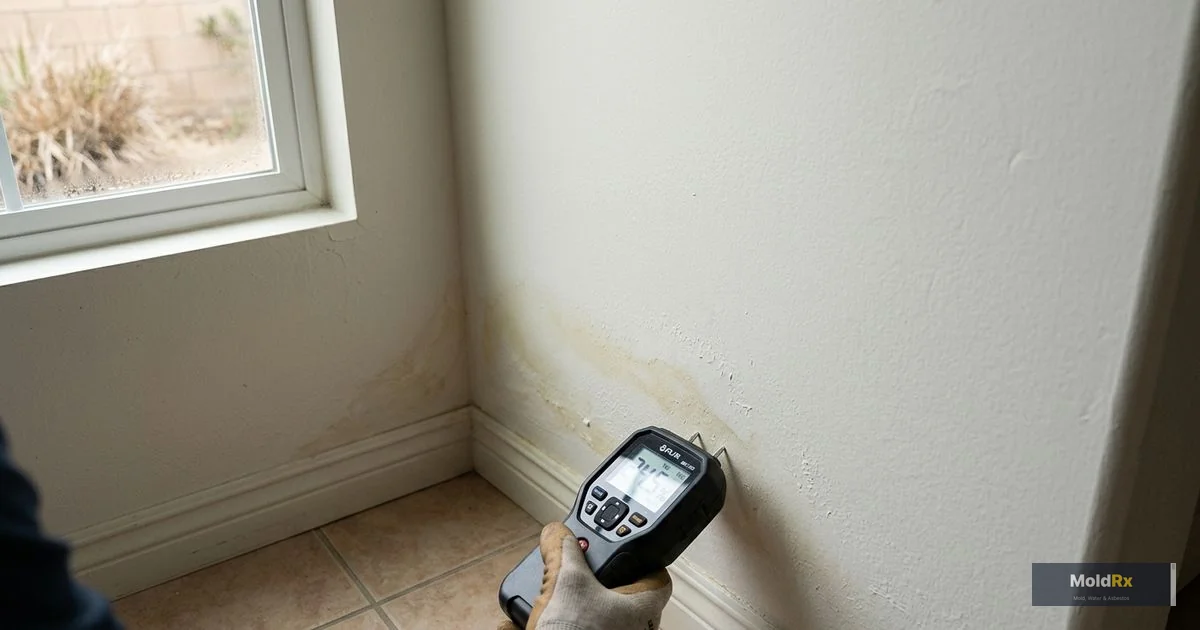
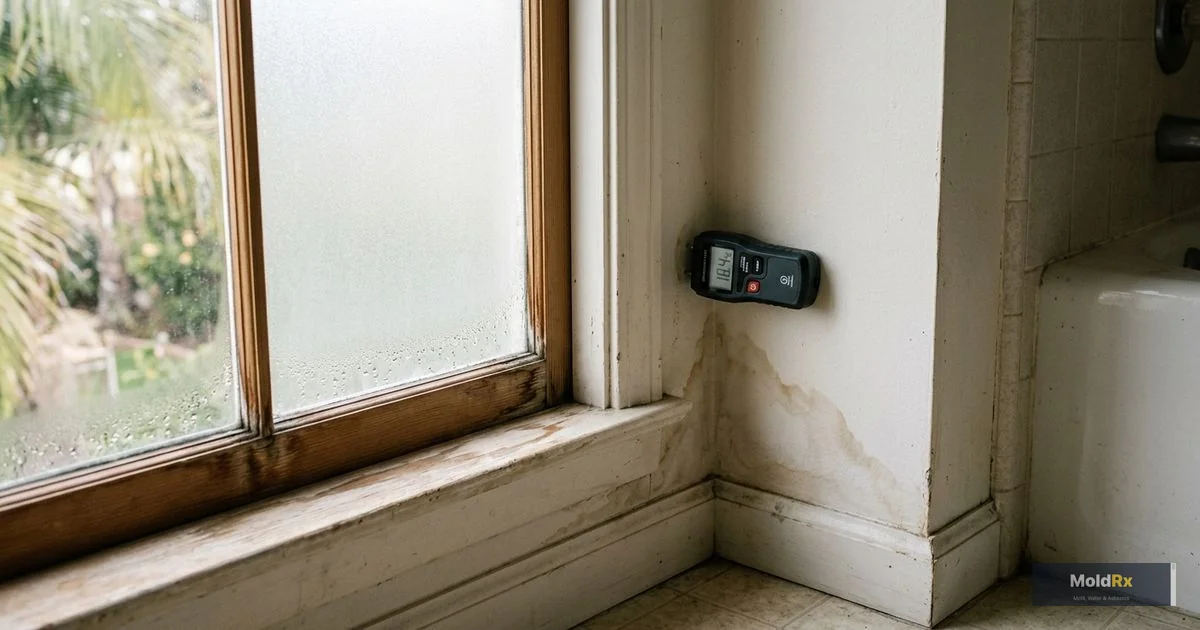
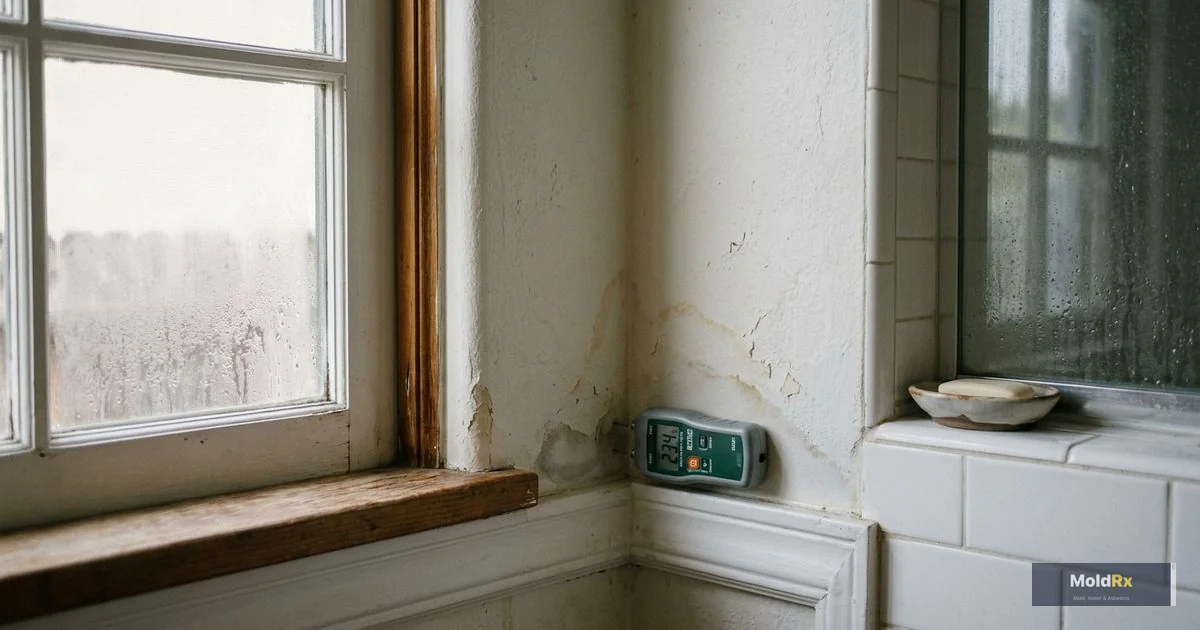
Infrared thermal imaging and calibrated moisture meters locate all affected areas — slab-to-drywall transitions in mid-century homes, aging plumbing in French Park and Floral Park bungalows, shared plumbing risers in Downtown apartments, and stucco walls with wind-driven rain intrusion. The assessment follows EPA 402-K-01-001 protocols, producing a moisture map and scope of work before any material is disturbed.
2. Containment
Affected areas are isolated using polyethylene sheeting and negative air pressure with HEPA filtration, following IICRC S520 Condition 2 and 3 classifications. The CDC and EPA advise keeping vulnerable occupants away from active remediation — the WHO Guidelines for Indoor Air Quality document elevated risks for children. In multi-unit buildings, containment prevents cross-contamination to adjacent units through shared wall cavities and plumbing chases.
3. Removal and Treatment
Colonized porous materials are removed, double-bagged, and disposed of per IICRC S520 and Cal/OSHA Title 8 section 5155 standards. Salvageable surfaces are HEPA-vacuumed and treated with EPA-registered antimicrobials. Common locations: behind bathroom tile with original plumbing, inside wall cavities around corroded pipes, along slab-to-drywall transitions, behind cracked stucco, beneath flooring near flood channels, and inside shared wall cavities in multi-unit buildings.
4. Moisture Correction
Mold removal without moisture correction is temporary. Correction targets the specific pathway: replacing corroded plumbing, sealing stucco and re-flashing windows, repairing drainage near flood channels, installing vapor barriers on older slabs, upgrading bathroom exhaust to exterior termination, and addressing shared plumbing failures in multi-unit buildings.
5. Post-Remediation Verification
Verification confirms IICRC S520 Condition 1 — normal fungal ecology, no visible mold, no elevated spore counts. You receive complete documentation: photographs, moisture readings, clearance results, and moisture correction summary for insurance and real estate records.
Mold Removal vs. Mold Remediation: What's the Difference?
Mold removal is the physical elimination of colonized materials — cutting out drywall, disposing of contaminated insulation, cleaning surfaces. Mold remediation is the full IICRC S520 process: assessment, containment, removal, moisture correction, drying, and verification to confirm Condition 1 — normal fungal ecology.
Removal without remediation is incomplete. In Santa Ana, where marine layer humidity, aging plumbing, wind-driven rain, and flood channel proximity are persistent, moisture correction is the difference between a permanent fix and a recurring problem. MoldRx coordinates the complete IICRC S520 protocol from assessment through Condition 1 clearance.
Preventing Mold After Remediation
These steps are tailored to Santa Ana's climate, construction eras, and dense housing stock.
Replace Aging Plumbing Before It Fails
A large share of Santa Ana homes still have original galvanized supply lines and cast iron drains that corrode from the inside out. Slab leaks are common in 1950s-1970s tract homes from Willard to Delhi. A pinhole leak behind a wall feeds mold for weeks before any visible sign appears. In multi-unit buildings, a failure in one unit migrates through shared walls into adjacent units. If your property still has galvanized plumbing, have it evaluated — proactive replacement eliminates the most common concealed moisture source in mid-century homes.
Control Indoor Humidity
The marine layer keeps outdoor humidity at 60 to 73 percent much of the year. Run bathroom exhaust fans during showers and for 20 minutes afterward. Use kitchen range hoods when cooking. A standalone dehumidifier maintaining indoor humidity between 30 and 50 percent prevents condensation — especially important in apartment units and older homes with single-pane windows. Monitor with a hygrometer and respond when readings exceed 55 percent.
Maintain Your Building Envelope
Santa Ana's stucco exteriors degrade under UV, thermal cycling, and decades of Santa Ana winds. Inspect exterior walls annually for hairline cracks, failed caulk around windows, and deteriorating flashing. Seal cracks promptly with elastomeric caulk before the next wind-driven rainstorm. For multi-unit property owners, envelope maintenance across the entire building prevents moisture intrusion affecting multiple tenants simultaneously.
Address Water Intrusion Immediately
Mold colonization begins within 24 to 48 hours. Whether the source is a slab leak, rain through stucco, or flood channel overflow, dry affected materials immediately. Remove standing water, set up air movement, and call for professional assessment if materials cannot be dried within 24 hours.
Schedule Periodic Inspections
For properties with original mid-century plumbing, pre-1940 homes in French Park and Floral Park, multi-unit buildings, and any property with prior water intrusion, an annual professional moisture inspection is practical preventive care. Thermal imaging and moisture meters identify problems before mold establishes. The ideal timing is late fall — after marine layer season and before winter rains.
What Sets MoldRx Apart
- Straight talk, not sales talk. We report what the inspection actually finds — including when the problem is smaller than you feared. No inflated scopes, no manufactured urgency.
- Licensed, insured, IICRC-certified. Every professional MoldRx sends holds active credentials verified through the CSLB (Contractors State License Board) and carries full liability and workers' compensation insurance for Orange County work.
- Full documentation on every job. Inspection reports, scope of work, moisture readings, clearance testing, photo documentation — a complete written record for insurance and real estate purposes.
- Family-owned accountability. We only send vetted remediation professionals we stand behind. If something is not right, you call us directly and we make it right.
Get your free estimate — no obligations, no pressure.
Santa Ana Neighborhoods We Serve
MoldRx provides mold removal across every Santa Ana neighborhood — ZIP codes 92701, 92702, 92703, 92704, 92705, 92706, and 92707 — including single-family homes, condos, townhomes, multi-family buildings, and commercial properties.
-
Downtown Santa Ana (92701) — The urban heart of the city and Orange County's government center. Dense apartment complexes from the 1940s through 1970s dominate residential blocks around Fourth Street and the Artists Village. Shared plumbing risers, minimal ventilation, and aging stucco combine with high renter occupancy and deferred maintenance — corroded plumbing, failing exhaust systems, and moisture migrating between units through shared wall cavities. Mold frequently establishes behind bathroom walls and along slab-to-drywall transitions before anyone sees visible signs.
-
Floral Park (92706) — Santa Ana's largest historic district. Over 600 homes built from the 1920s through the 1950s — Craftsman bungalows, Spanish Colonial Revival, Tudor, Art Deco — listed on the National Register of Historic Places. Original plaster walls, wood-frame construction, and plumbing predating modern standards create persistent concealed moisture conditions. These homes lack vapor barriers and often have inadequate ventilation, making them highly vulnerable to mold when plumbing ages or stucco fails.
-
French Park (92701) — One of Santa Ana's oldest neighborhoods, developed in the early 1900s with Victorian and Craftsman-style houses listed on the National Register of Historic Places. Original wood framing, plaster, and plumbing well past its intended lifespan make French Park properties among the highest-risk homes in Santa Ana for concealed mold growth.
-
Willard (92703, 92707) — A family-dense residential area south of downtown with mid-century tract homes and apartment complexes from the 1950s-1970s. Slab foundations without vapor barriers, galvanized plumbing, and single-pane windows are standard. Aging infrastructure in renter-occupied units with limited maintenance means slab leaks and plumbing failures go undetected, allowing mold to establish behind walls and beneath flooring.
-
Logan (92707) — A mix of single-family homes and multi-unit apartments from the 1950s-1970s in Santa Ana's southern section. Proximity to the channelized Santa Ana River means lower-elevation properties face elevated subsurface moisture. Original plumbing, aging stucco, and dense apartment occupancy produce the concealed mold conditions typical of the city's mid-century housing.
-
Delhi (92704, 92707) — A large, family-oriented neighborhood in southwestern Santa Ana, predominantly 1960s-1970s tract homes and apartment buildings. Flat terrain and proximity to flood control channels expose properties to elevated water tables during the rainy season. Multi-unit buildings with shared plumbing risers and decades of stucco degradation are common. Mold colonization often begins at slab-to-drywall transitions and inside shared wall cavities.
-
South Coast Metro (92704, 92707) — Santa Ana's southern boundary adjacent to Costa Mesa, featuring late 1960s-1970s single-family homes, townhomes, and condominiums across roughly 29 builder tracts near South Coast Plaza. Mid-century housing faces the same plumbing, stucco, and ventilation issues as other neighborhoods. Condo and townhome associations face the added challenge of coordinating envelope maintenance across multiple owners.
Nearby Communities We Also Serve
Related Services in Santa Ana
- Mold Removal in Santa Ana
- Mold Testing in Santa Ana
- Water Damage Restoration in Santa Ana
- Asbestos Removal in Santa Ana
- Asbestos Testing in Santa Ana
→ All remediation services in Santa Ana
Frequently Asked Questions
How quickly does mold grow in Santa Ana's climate?
Mold colonizes damp materials within 24 to 48 hours. Santa Ana's marine layer keeps humidity between 60 and 73 percent, so any water intrusion event creates colonization conditions almost immediately. In older homes where wall cavities trap moisture, growth establishes before visible signs appear.
My home was built in the 1950s-1970s. Does that make it more prone to mold?
Yes. The majority of Santa Ana's housing was built in this era — slab foundations without vapor barriers, galvanized plumbing that corrodes and leaks, single-pane windows that create condensation, and original HVAC with no humidity control. If your mid-century home has original plumbing and windows, proactive moisture monitoring is important.
Does mold risk differ in apartments versus single-family homes?
The risk is comparable but the pathways differ. Single-family homes face slab moisture, corroding plumbing, condensation, and wind-driven rain intrusion. Apartment buildings add shared plumbing risers, adjacent-unit moisture migration through shared walls, and the reality that a leak in one unit can feed mold in neighboring units. In buildings with deferred maintenance, these shared pathways compound the risk. Remediation in multi-unit buildings often requires coordinating access across multiple units.
Do the Santa Ana River and Santiago Creek affect mold in nearby homes?
Properties near the Santa Ana River and Santiago Creek sit on terrain subject to elevated water tables. Subsurface moisture wicks upward through older slabs without vapor barriers, feeding mold along baseboards and inside wall cavities — gradual moisture migration that creates colonization conditions over weeks and months.
Can mold in my home affect my family's health?
The EPA, CDC, and WHO document that prolonged mold exposure is associated with respiratory symptoms, allergic reactions, and asthma aggravation. The WHO identifies children as a priority population — in Santa Ana, where households frequently include young children, prompt remediation is important when mold is suspected.
How do Santa Ana winds contribute to mold growth?
Santa Ana winds drive rain horizontally into building envelopes — through stucco cracks, around window flashing, under eaves. The exterior dries quickly while water trapped inside wall cavities remains, creating hidden colonization conditions that may not appear for weeks.
I rent my apartment and found mold. What should I do?
Document the mold with photos, notify your landlord or property manager in writing, and keep copies of all communication. Under California law, landlords must maintain habitable conditions, which includes addressing mold and its moisture source. If the mold exceeds ten square feet or involves shared building systems, professional remediation following IICRC S520 protocols is appropriate. MoldRx works with both tenants and property owners.
Should I test for mold before selling my Santa Ana home?
Testing is not legally required in California, but increasingly common in Orange County transactions. A pre-listing clearance report demonstrating IICRC S520 Condition 1 eliminates a negotiation point and gives buyers confidence. Addressing issues before listing is less disruptive than negotiating remediation mid-escrow.
Do I need to leave my home during mold removal?
For most projects with proper containment, occupants can stay in unaffected areas. If contamination involves the HVAC system, spans multiple rooms, or if household members include young children or individuals with respiratory conditions, we may recommend temporary relocation during the most intensive phases.
Does MoldRx provide emergency mold removal in Santa Ana?
Yes. Mold colonization begins within 24 to 48 hours, and delay allows contamination to spread through wall cavities and into ductwork. Call (888) 609-8907 — we coordinate prompt assessment and containment to limit colonization before it spreads.
Get Mold Removal in Santa Ana
MoldRx only sends vetted, IICRC-certified remediation professionals who know Santa Ana's century-spanning housing stock, marine layer humidity, Santa Ana winds, flood channel proximity, and the unique challenges of the city's dense multi-unit buildings.
Call (888) 609-8907 or request your free estimate online — clear answers, honest guidance, work done right.