Asbestos Testing in Santa Ana, CA — MoldRx
Vetted Asbestos Testing Specialists Serving Santa Ana and Central Orange County
Santa Ana is the county seat of Orange County, one of California's most densely populated cities, and home to approximately 310,000 residents. It is also one of the most significant asbestos-risk cities in the entire region. Founded in 1869 by William H. Spurgeon and incorporated in 1886, Santa Ana has a housing stock that stretches back more than a century — with a heavy concentration of homes built during the 1920s through 1970s, the exact decades when asbestos was used most aggressively in residential construction.
If you own a home in Santa Ana — whether it is a Craftsman bungalow in Floral Park, a Spanish Colonial Revival in French Park, or a mid-century ranch house in any of the city's dozens of established neighborhoods — there is a high probability that asbestos-containing materials are somewhere in the structure. Professional asbestos testing, performed by vetted specialists using NVLAP-accredited laboratories, is the only way to know for certain what is in your building materials before you disturb them.
Need clarity before you renovate, buy, or sell? Request a free estimate or call (888) 609-8907 to speak with a vetted asbestos testing specialist who understands Santa Ana's diverse housing stock.
Why Santa Ana Has Among the Highest Asbestos Risk in Orange County
A Deep and Diverse Housing History
Unlike many Orange County cities that were primarily built out during the 1960s and 1970s suburban boom, Santa Ana has been accumulating housing for well over a hundred years. This creates a uniquely layered asbestos risk profile that spans every major era of asbestos use in American construction.
Pre-1930s construction — Santa Ana's oldest neighborhoods include French Park, developed from the late 1890s through the 1920s with large Victorian, Craftsman, and Colonial Revival homes built by some of Orange County's most prominent citizens. French Park is a 20-square-block historic district officially listed on the National Register of Historic Places. Downtown Santa Ana, also listed as a National Register Historic District since 1984, contains both residential and commercial structures from this era. These older buildings may contain asbestos in original plaster, pipe insulation, boiler components, roofing felt, and exterior stucco.
1920s through 1950s bungalow era — This is where Santa Ana's asbestos risk becomes especially concentrated. Floral Park, established in the 1920s through the 1950s, contains over 630 vintage homes in Tudor Revival, Spanish Colonial, and Craftsman bungalow styles — and the neighborhood was added to the National Register of Historic Places in 2023. Neighborhoods like Wilshire Square, Morrison Park, Park Santiago, and Portola Park were also built out during these decades. Homes from this era commonly contain asbestos in:
- Knob-and-tube wiring insulation
- Original plaster walls and ceilings
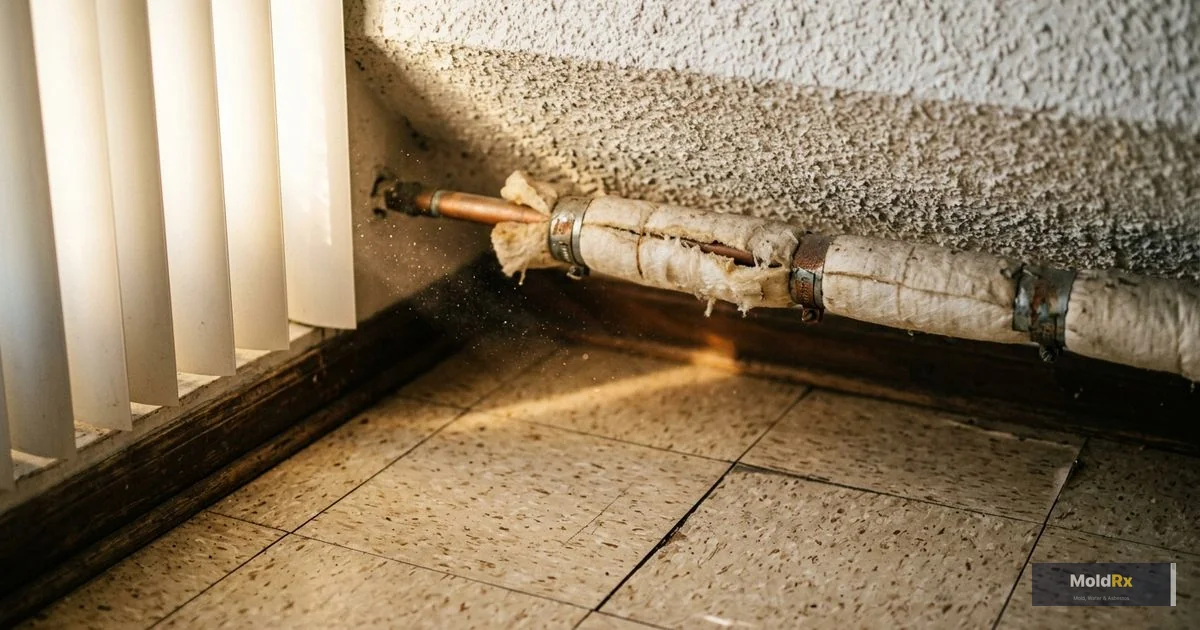
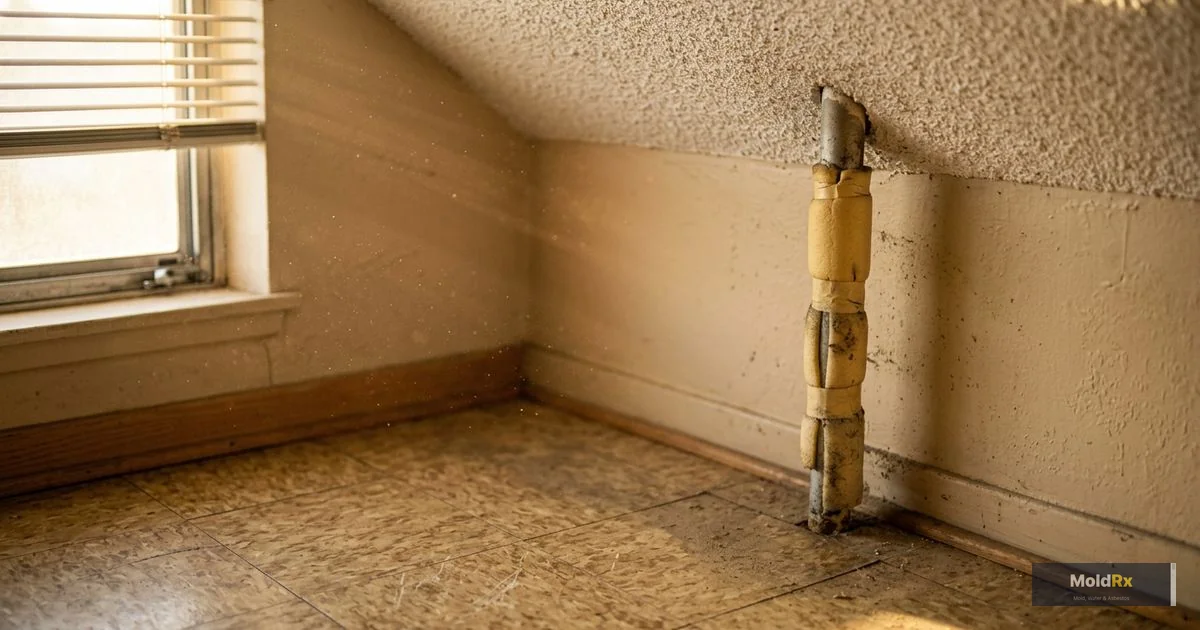
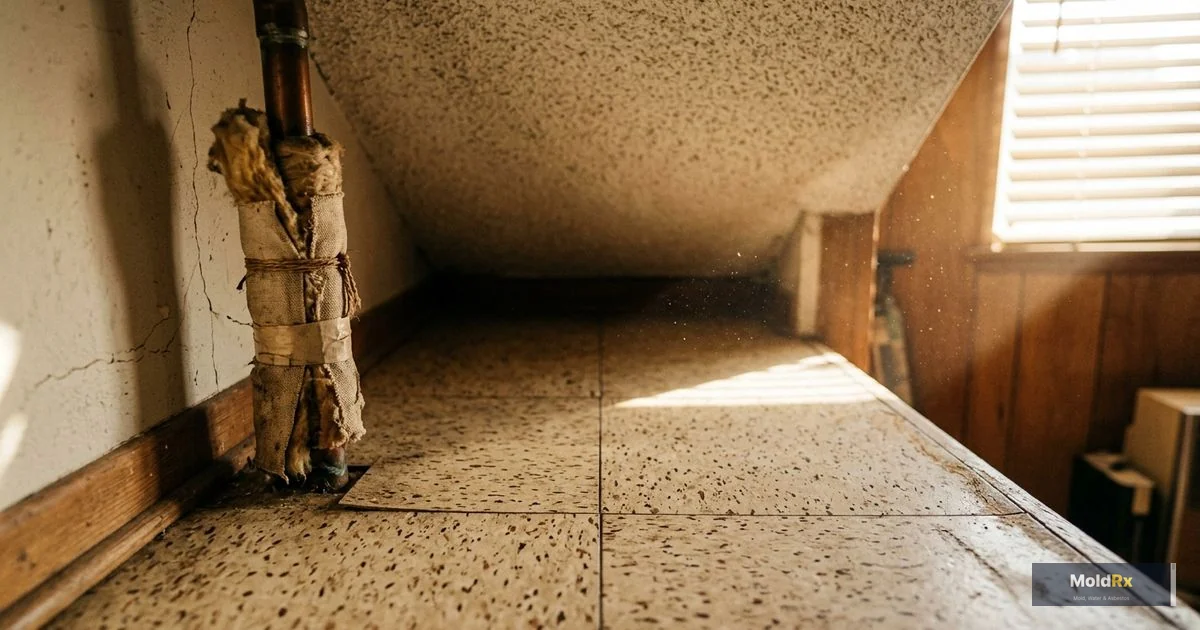
- Pipe wrap and boiler insulation
- Roofing felt and shingles
- Linoleum flooring and backing
- Window glazing putty and exterior caulking
1950s through 1970s tract era — As Orange County's population exploded after World War II, Santa Ana filled in with post-war tract homes, duplexes, and apartment buildings throughout neighborhoods like Delhi, Willard, Logan, Artesia Pilar, Bristol Memory, and Santa Anita. Both the Delhi and Logan barrios are among Santa Ana's oldest neighborhoods, with some homes predating 1910. However, many of the surrounding structures were built during the 1950s and 1960s using materials laden with asbestos — vinyl floor tiles, popcorn ceiling texture, HVAC duct insulation, joint compound, and cement siding.
The median home age in Santa Ana hovers around 50 to 60 years old. Combined with the city's extraordinary density — one of the highest in California — this means a massive concentration of asbestos-containing structures packed into a relatively small geographic area.
Common Asbestos-Containing Materials by Neighborhood and Era
Because Santa Ana's housing spans multiple construction eras, the types of asbestos materials found vary by neighborhood and home age:
In pre-1940s homes (French Park, Floral Park, Downtown):
- Plaster walls and decorative ceiling treatments
- Pipe insulation and boiler lagging
- Roofing felt and tar
- Window putty and exterior caulking
- Original linoleum flooring and backing
In 1940s-1970s homes (Delhi, Logan, Willard, Bristol Memory):
- 9x9-inch vinyl floor tiles and black mastic adhesive
- Popcorn or acoustic ceiling texture (1 to 10 percent asbestos content)
- HVAC duct tape and insulation
- Cement fiber siding and roofing shingles
- Drywall joint compound and textured wall coatings
- Vermiculite attic insulation (often contaminated with tremolite asbestos from the Libby, Montana mine)
In multi-family buildings and apartments:
- Sprayed-on fireproofing in corridors and mechanical rooms
- Stairwell and elevator shaft fire barriers
- Common-area flooring and ceiling treatments
- Rooftop HVAC equipment insulation
- Electrical panel backing boards
Climate and Environmental Factors
Santa Ana's semi-arid Mediterranean climate creates conditions that slowly degrade older building materials over decades. Summer temperatures regularly reach the mid-80s and higher, with winter lows in the 50s. This constant thermal cycling causes asbestos-containing materials to expand and contract, eventually causing them to crack, crumble, and release fibers.
The city also sits in the path of Santa Ana wind events — powerful, dry, offshore winds that gust through the region multiple times per year. In older homes with compromised building envelopes, these wind events can create pressure differentials that draw deteriorated asbestos fibers from wall cavities, attics, and crawl spaces into living areas.
Additionally, Santa Ana's high population density means that renovation activity is constant. In a city where homes sit close together, a neighbor's renovation project that disturbs asbestos materials without proper containment can potentially affect adjacent properties — another reason why testing and proper abatement protocols matter for the entire community.
Understanding the Health Risks of Asbestos Exposure
Asbestos fibers are microscopic — up to 700 times thinner than a human hair. When asbestos-containing materials are cut, scraped, sanded, drilled, or simply allowed to deteriorate, these fibers become airborne and can remain suspended in indoor air for hours. Once inhaled, they lodge deep in lung tissue where the body cannot remove them.
The health consequences develop slowly, typically over 15 to 50 years after exposure:
- Mesothelioma — An aggressive cancer of the lining of the lungs or abdomen, almost exclusively caused by asbestos exposure. Median survival after diagnosis is 12 to 21 months. Nearly 80 percent of cases are diagnosed in people 65 and older.
- Asbestosis — Permanent scarring of lung tissue that progressively restricts breathing capacity. There is no cure; the disease can only be managed.
- Lung cancer — Asbestos exposure significantly increases lung cancer risk, with the risk multiplying dramatically for smokers.
- Pleural thickening and plaques — Non-cancerous but permanent changes to the lung lining that can cause chest pain and breathing difficulty.
There is no safe level of asbestos exposure. Both OSHA and the EPA have stated this explicitly. A single afternoon of scraping a popcorn ceiling that contains asbestos can release enough fibers to cause disease decades later. This is why testing before disturbing any suspect material is not optional — it is a fundamental health protection.
The Regulatory Framework: What Santa Ana Property Owners Must Know
Santa Ana property owners operate under one of the most comprehensive asbestos regulatory frameworks in the country. Here is what applies to your property.
SCAQMD Rule 1403
The South Coast Air Quality Management District (SCAQMD) Rule 1403 governs asbestos emissions from demolition and renovation activities throughout Santa Ana and all of Orange County. Rule 1403 requires:
- An asbestos survey before any renovation or demolition work, regardless of building age. The survey must be conducted by a Cal/OSHA-certified inspector or an employee holding an unexpired AHERA Building Inspector certificate from a Cal/OSHA-approved course.
- Written notification to SCAQMD at least 10 working days before work begins if regulated asbestos-containing materials will be disturbed. All full demolitions require notification regardless of survey findings. Since November 2016, all notifications must be submitted through SCAQMD's online application.
- Licensed abatement for removal of confirmed asbestos-containing materials before general renovation or demolition proceeds.
- Violations carry fines upward of $20,000 per day, and negligence leading to bodily or environmental harm can result in criminal penalties.
Given that the vast majority of Santa Ana's housing stock predates the asbestos ban, Rule 1403 applies to nearly every renovation project in the city.
Federal OSHA Standard 1926.1101
OSHA's Asbestos Standard for Construction (29 CFR 1926.1101) establishes four classes of asbestos work based on risk level, sets permissible exposure limits at 0.1 fibers per cubic centimeter over an 8-hour workday and 1.0 fiber per cubic centimeter over any 30-minute period, and requires building owners to identify the presence and location of asbestos-containing materials before renovation or demolition. A designated competent person must be present on every jobsite where asbestos may be disturbed.
Cal/OSHA Section 1529
California's Title 8 CCR Section 1529 mirrors and in several areas exceeds the federal OSHA standard. It applies to all construction work where asbestos is present — demolition, salvage, removal, encapsulation, alteration, repair, maintenance, and renovation. Cal/OSHA defines asbestos-containing material as anything exceeding 1 percent asbestos, and asbestos-containing construction material (ACCM) as anything exceeding one-tenth of 1 percent by weight. Contractors must register with DOSH when performing asbestos work involving 100 square feet or more, and all workers must complete AHERA-approved training.
AHERA Training and Inspection Standards
The Asbestos Hazard Emergency Response Act (AHERA), enacted in 1986, established the training and accreditation standards that asbestos inspectors and consultants must meet nationwide. Inspectors holding current AHERA Building Inspector certification follow standardized protocols for sample collection, documentation, and analysis. These protocols are recognized as authoritative by courts, regulators, SCAQMD, and accredited laboratories.
CSLB C-22 License
When testing confirms asbestos and removal is necessary, California law requires the work be performed by a contractor holding a CSLB C-22 Asbestos Abatement license. The C-22 classification requires four years of documented asbestos abatement experience, passage of a specialized trade examination, and active registration with DOSH. This ensures any contractor removing asbestos from your Santa Ana property has demonstrated competence in containment, removal, and disposal.
California Disclosure Requirements
California Civil Code requires sellers to disclose known asbestos presence in a property. For buildings constructed before 1979, the California Health and Safety Code mandates specific disclosure of asbestos-containing materials through the Real Estate Transfer Disclosure Statement. Having professional testing results from a NVLAP-accredited laboratory protects both parties in a real estate transaction.
Our Asbestos Testing Process in Santa Ana
Getting clarity on whether your Santa Ana property contains asbestos is straightforward when you work with professionals who understand the city's diverse construction history.
Step 1: Property Assessment and Sample Planning
A vetted asbestos professional evaluates your property to identify materials that may contain asbestos. Because Santa Ana homes span such a wide range of construction eras, this assessment requires specific knowledge of what to look for in a 1920s Craftsman bungalow versus a 1960s tract home versus a 1970s apartment building. The inspector holds current AHERA Building Inspector certification and checks common locations including insulation around pipes and ducts, floor tiles and adhesives, ceiling textures, roofing materials, plaster walls, joint compound, and any areas you are planning to renovate.
Step 2: Sample Collection
Following EPA and Cal/OSHA Section 1529 protocols, small samples are carefully collected from suspect materials. This is done using proper containment techniques — wetting materials before cutting, using barriers to prevent fiber spread, and wearing appropriate protective equipment. Each sample is documented with its exact location in the home and sealed in labeled containers for chain-of-custody tracking to the laboratory.
Step 3: NVLAP-Accredited Laboratory Analysis
All samples are sent to a laboratory accredited under the National Voluntary Laboratory Accreditation Program (NVLAP), administered by the National Institute of Standards and Technology (NIST). NVLAP accreditation ensures the laboratory has demonstrated technical competence through rigorous proficiency testing — conducted biannually for PLM and annually for TEM — and meets the requirements of ISO/IEC 17025. Analysis uses:
- Polarized Light Microscopy (PLM) — The standard method for most bulk building material samples. PLM identifies asbestos fibers by their distinctive optical properties, determines fiber type (chrysotile, amosite, crocidolite, or others), and measures concentration.
- Transmission Electron Microscopy (TEM) — Provides magnification thousands of times greater than PLM for precise fiber identification. Used when PLM results are inconclusive, when analyzing tightly bound materials like vinyl floor tiles, or when the highest level of analytical certainty is needed.
Materials at or above 1 percent asbestos are classified as asbestos-containing under OSHA 1926.1101, Cal/OSHA Section 1529, and SCAQMD Rule 1403.
Step 4: Results Interpretation and Guidance
You receive a clear, detailed report explaining exactly what was found, where it was found, and what it means for your situation. If asbestos is present, you receive honest guidance on your options — whether that is leaving undisturbed materials in place with monitoring, encapsulating them, or arranging professional removal through a CSLB C-22 licensed abatement contractor. We explain the actual risk level based on material condition and your specific plans, not a one-size-fits-all recommendation.
What to Expect
-
No Guesswork: You will know definitively whether asbestos is present — not a guess based on age alone. Some older materials do not contain asbestos, and some materials in homes built after 1977 do, because existing inventory continued to be installed.
-
Clear Communication: Results are explained in plain language, not technical jargon. You will understand what the findings mean for your specific situation and your plans.
-
Honest Recommendations: If testing shows no asbestos, you will know you are clear to proceed. If it does show asbestos, you will get straightforward options — not a sales pitch for unnecessary removal. MoldRx only sends vetted professionals who give you honest answers.
-
Proper Documentation: Every test is documented according to California and EPA standards. Your report meets SCAQMD Rule 1403 survey requirements and is suitable for real estate transactions, permit applications, contractor coordination, and your own records.
-
Reasonable Timeline: On-site sample collection typically takes one to two hours for a standard residential property. Lab results from the NVLAP-accredited laboratory arrive within 3 to 5 business days, with rush processing available for time-sensitive situations.
When Should You Get Asbestos Testing in Santa Ana?
Before any renovation project — Kitchen remodel, bathroom update, flooring replacement, ceiling scraping, wall demolition, window replacement, or HVAC upgrade in a pre-1980 home. SCAQMD Rule 1403 and Cal/OSHA Section 1529 require it.
Before buying or selling a home — Especially in Santa Ana where the median home age puts the overwhelming majority of properties in the asbestos-risk window. Buyers get protection; sellers get documentation that satisfies California disclosure requirements.
If you notice damaged or deteriorating materials — Crumbling ceiling texture, cracked or lifting floor tiles, fraying insulation, or peeling exterior materials in an older home should prompt testing immediately. Damaged asbestos-containing materials can release fibers continuously into your living space.
After water damage — Plumbing leaks, roof leaks, or flooding can damage previously stable asbestos materials and cause them to release fibers. If your older Santa Ana home has experienced water intrusion, asbestos testing should be part of the remediation assessment.
When you inherit or take over an older property — Understanding what is in the building protects you from liability and helps you plan any future improvements safely.
Santa Ana Areas We Serve
Our vetted asbestos testing specialists serve all Santa Ana neighborhoods and surrounding areas. Whether you are in Floral Park, French Park, Downtown Santa Ana, Artesia Pilar, Bristol Memory, Casa Bonita, Delhi, Heninger Park, Logan, Mabury Park, Madison Park, Morrison Park, Park Santiago, Portola Park, Riverview West, Santa Anita, Thornton Park, Willard, or Wilshire Square, we have you covered.
We serve properties throughout ZIP codes 92701, 92702, 92703, 92704, 92705, 92706, 92707, and 92708. This includes commercial properties near South Coast Plaza, multi-family buildings throughout the city, and residential homes in every neighborhood from the historic core to areas near Tustin and Irvine.
Related Services in Santa Ana
In addition to asbestos testing, we also offer Mold Removal in Santa Ana, Asbestos Removal in Santa Ana, Water Damage Restoration in Santa Ana, and Mold Testing in Santa Ana services to Santa Ana property owners.
→ Learn more about remediation services in Santa Ana
Frequently Asked Questions
How do I get asbestos testing in Santa Ana?
Contact MoldRx by calling (888) 609-8907 or requesting a free estimate online. We will discuss your property, its age, and your project plans, then connect you with a vetted asbestos testing specialist who serves Santa Ana. The specialist holds current AHERA certification, follows EPA and Cal/OSHA protocols for sample collection, and sends all samples to a NVLAP-accredited laboratory for PLM or TEM analysis. You receive a detailed report within three to five business days.
When is asbestos testing required in Santa Ana?
Under SCAQMD Rule 1403, an asbestos survey is required before any renovation or demolition that might disturb materials — regardless of the building's age. Under Cal/OSHA Section 1529 and federal OSHA 1926.1101, asbestos-containing materials must be identified before construction work begins. Given that the vast majority of Santa Ana's housing stock predates 1980, this applies to most renovation projects in the city. Testing is also recommended before purchasing older properties, if you notice damaged materials, or for any situation where you need to know what is in your building materials.
What materials should be tested for asbestos in a Santa Ana home?
Common asbestos-containing materials include popcorn ceilings, 9x9-inch floor tiles and black mastic adhesive, pipe insulation, duct tape, roofing materials, cement siding, textured wall coatings, drywall joint compound, original plaster, window putty, linoleum backing, and vermiculite attic insulation. In pre-1940s homes like those in French Park and Floral Park, also check boiler insulation and original plaster. In pre-1980 homes, assume any original material might contain asbestos until NVLAP-accredited laboratory testing proves otherwise.
Can I collect asbestos samples myself?
We strongly advise against it. Improper sampling releases the very fibers you are trying to identify, contaminating your home and potentially exposing your family. Professional samplers use EPA-approved protocols and AHERA-certified techniques — wetting, containment, and protective equipment — to collect samples safely. California law requires that samples be collected by a Licensed or Certified Asbestos Consultant (CAC) or a Certified Site Surveillance Technician working under a CAC's direction. The cost of professional sampling is negligible compared to the health and cleanup costs of improper handling.
How are asbestos samples analyzed?
NVLAP-accredited laboratories analyze samples using Polarized Light Microscopy (PLM) or Transmission Electron Microscopy (TEM). PLM is the standard method for most bulk samples, identifying asbestos by its optical properties and determining both fiber type and concentration. TEM provides higher magnification for inconclusive PLM results or tightly bound materials. Both methods identify whether asbestos is present, the specific type (chrysotile, amosite, crocidolite), the concentration percentage, and the fiber condition. Materials at or above 1 percent are regulated as asbestos-containing under OSHA 1926.1101, Cal/OSHA Section 1529, and SCAQMD Rule 1403.
What happens if asbestos is found in my Santa Ana home?
Finding asbestos does not automatically mean removal is necessary. Intact, undisturbed materials in good condition often pose minimal risk and can be managed in place with periodic monitoring. If materials are damaged, friable, or in the path of planned renovation, professional abatement by a CSLB C-22 licensed California contractor is required. Our report explains your specific options — monitoring, encapsulation, or removal — based on material condition and your plans for the space.
Is asbestos testing required for selling a home in Santa Ana?
While California does not mandate testing before sale, sellers are required to disclose known hazards through the Real Estate Transfer Disclosure Statement. For buildings constructed before 1979, the California Health and Safety Code mandates specific declaration of asbestos-containing materials. Having professional testing results from a NVLAP-accredited laboratory provides legal protection for the seller and peace of mind for the buyer. In a city like Santa Ana where most homes predate the asbestos era, having documentation of testing is a significant advantage in any real estate transaction.
How long does the testing process take?
On-site sample collection typically takes one to two hours for a standard Santa Ana residential property. NVLAP-accredited laboratory results arrive within 3 to 5 business days, with rush processing available for time-sensitive situations like real estate closings, permit deadlines, or urgent renovation timelines.
Get Asbestos Testing in Santa Ana
Santa Ana's housing history makes it one of the highest-asbestos-risk cities in Orange County. From the 1890s Queen Anne homes of French Park to the 1920s Craftsman bungalows of Floral Park to the post-war tract homes of Delhi and Logan to the dense apartment buildings throughout the city center, asbestos is embedded in the fabric of this community's built environment. That is not cause for panic — it is cause for informed action.
If you are planning any renovation work on a pre-1980 Santa Ana home, buying or selling an older property, or you have noticed damaged materials that concern you, testing is the responsible first step. MoldRx only sends vetted asbestos testing specialists who understand Santa Ana's housing stock across every era, know what to look for in every neighborhood, and will give you honest answers about what is actually in your property.
No scare tactics. No unnecessary recommendations. Just clear, NVLAP-accredited laboratory results and straightforward guidance so you can make informed decisions about your home.
Request your free estimate today or call (888) 609-8907 to schedule asbestos testing for your Santa Ana property.