Mold Testing in Rancho Santa Margarita, CA — MoldRx
Vetted Mold Testing Specialists Serving Rancho Santa Margarita and South Orange County
Rancho Santa Margarita is a master-planned community of approximately 48,000 residents in South Orange County — ZIP code 92688, situated on the Plano Trabuco plateau at roughly 925 feet elevation against the Santa Ana Mountains. The Santa Margarita Company broke ground in 1985, with the first homes sold in 1986 and development continuing through the early 2000s. The city incorporated on January 1, 2000, absorbing Robinson Ranch, Dove Canyon, Rancho Cielo, Trabuco Highlands, and the Walden communities. Over 70 percent of the housing stock is owner-occupied single-family homes with a median construction year in the early to mid-1990s. The foothill position traps marine layer moisture, and seasonal humidity can reach 70 percent in late spring. Most homes were built with copper plumbing during the 1986-1999 boom, and chloramine in the south county water supply causes progressive corrosion in those pipes — making slab leaks one of the most common sources of concealed water damage in RSM. When mold questions arise — a musty smell that will not clear, discoloration in a bathroom or garage, respiratory symptoms that improve when you leave — professional testing provides the data you need to make an informed decision rather than guessing.
MoldRx only sends vetted mold testing professionals who follow IICRC S520 assessment protocols and use AIHA-accredited, NVLAP-certified laboratories for all sample analysis.
Request your free estimate — we will assess your property and give you straight answers.
When Mold Testing Makes Sense in Rancho Santa Margarita
Not every concern requires lab analysis. But certain situations call for professional testing to determine what you are actually dealing with — the species present, the concentration levels, and whether indoor readings exceed normal outdoor baselines for South Orange County.
After Water Intrusion Events
Per IICRC S520 and EPA publication 402-K-01-001, mold colonizes damp materials within 24 to 48 hours. RSM properties face specific water intrusion risks: slab leaks from corroding copper plumbing beneath foundations, hillside drainage directing water toward downslope homes in Dove Canyon and Trabuco Highlands, aging stucco allowing rain penetration during Santa Ana events, water heater failures in garage closets, and irrigation overspray saturating foundation perimeters. If your property has experienced any water event — even one that appeared minor — testing determines whether colonization occurred in concealed cavities before you can see it on surfaces.
Persistent Musty Odors Without Visible Growth
A musty smell that lingers despite cleaning typically means mold is growing concealed — inside wall cavities above a slow slab leak, in attic spaces where bathroom exhaust ducts terminate improperly, behind cabinetry on exterior walls facing hillside grade, or inside HVAC plenums. Many RSM homeowners report musty smells emerging during the transition from cooler wet months to warmer weather, when temperature differentials create condensation inside wall cavities. Testing identifies the source and severity rather than leaving you guessing about what is behind the wall.
Real Estate Transactions
Mold testing is not legally required in California real estate transactions, but it is increasingly common in South Orange County — especially as RSM's housing stock crosses the 30-year mark. Buyers want to know what they are inheriting, particularly regarding slab leak history and concealed moisture damage. Sellers providing pre-listing clearance reports demonstrating normal fungal ecology (IICRC S520 Condition 1) eliminate a negotiation point and reduce escrow delays. With a median home price exceeding $1.1 million, the cost of professional testing is negligible compared to the financial exposure of an undiscovered problem. Post-remediation clearance testing verifies that previous work was completed to standard.
Unexplained Health Symptoms
The CDC documents that mold exposure can cause nasal stuffiness, throat irritation, coughing, and wheezing. The WHO Guidelines for Indoor Air Quality identify children as a priority population for dampness-related protection. RSM is a family-oriented community — the parks, lake and beach club, and top-rated schools attract households with children. If family members experience symptoms that improve when they leave and return when they come home — particularly during spring and early summer when humidity peaks — testing provides objective data rather than speculation.
What Mold Testing Reveals
Professional mold testing produces specific, actionable information that visual inspection alone cannot provide.
Testing identifies the species of mold present — Cladosporium and Penicillium are common outdoor species in inland Orange County, while elevated indoor levels of Aspergillus, Stachybotrys, or Chaetomium indicate active moisture problems. Testing quantifies spore concentrations per cubic meter and compares indoor readings against outdoor baseline samples collected at the same time. Indoor counts significantly exceeding outdoor baselines indicate an active indoor source.
Testing also determines whether remediation is necessary and at what scope. A small colony of Cladosporium on a bathroom ceiling may require nothing more than improved ventilation. Elevated Stachybotrys behind drywall above a slab leak indicates concealed water damage requiring professional remediation with containment. Without testing, you are guessing — and in homes now 25 to 40 years old with aging plumbing prone to concealed leaks, guessing means either overreacting or underreacting.
Types of Mold Testing
Different sampling methods answer different questions. Professional assessments typically combine multiple methods based on the inspection findings and the specific concerns driving the test.
Air Sampling (Spore Trap Analysis)
Air sampling captures airborne spores on a calibrated cassette using a Bio-Pump at a calibrated flow rate. Samples are collected from indoor locations of concern and outdoors as a baseline. The laboratory identifies spore types and counts per cubic meter. Air sampling reveals what you are breathing — including spores from concealed colonies with no visible presence. In RSM homes where slab leaks introduce moisture into wall cavities without surface evidence, air sampling often detects problems that visual inspection misses.
Surface Sampling (Tape Lift and Swab)
Surface sampling collects material directly from suspected growth using adhesive tape lifts or sterile swabs. The laboratory identifies the specific species present. This method confirms whether a discoloration is active mold or staining and documents organisms like Stachybotrys that require enhanced containment during remediation per IICRC S520.
ERMI Testing (Environmental Relative Moldiness Index)
ERMI analysis, developed by the EPA, uses dust samples analyzed via qPCR DNA technology to detect 36 mold species simultaneously. The result is a numerical score comparing your home's mold burden against a national reference database. ERMI is useful for baseline assessments, chronic health investigations, and situations where standard spore trap results are inconclusive. For RSM properties with long-standing slab leak history or persistent health symptoms, ERMI provides a deeper picture of cumulative fungal exposure.
Moisture Mapping (Supporting Assessment)
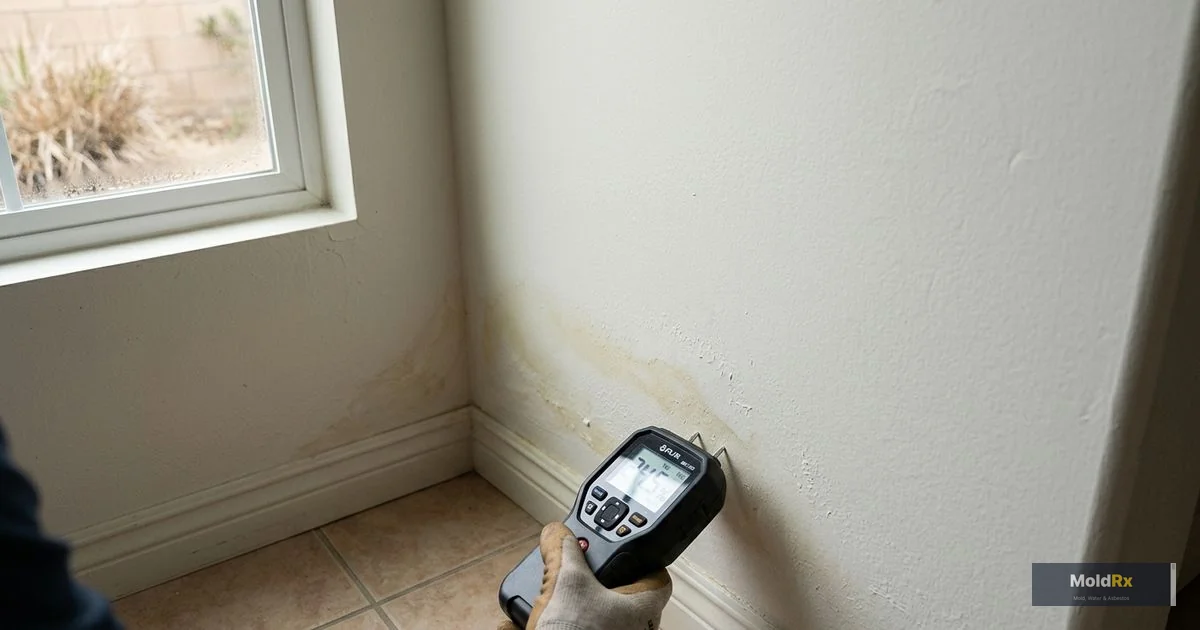
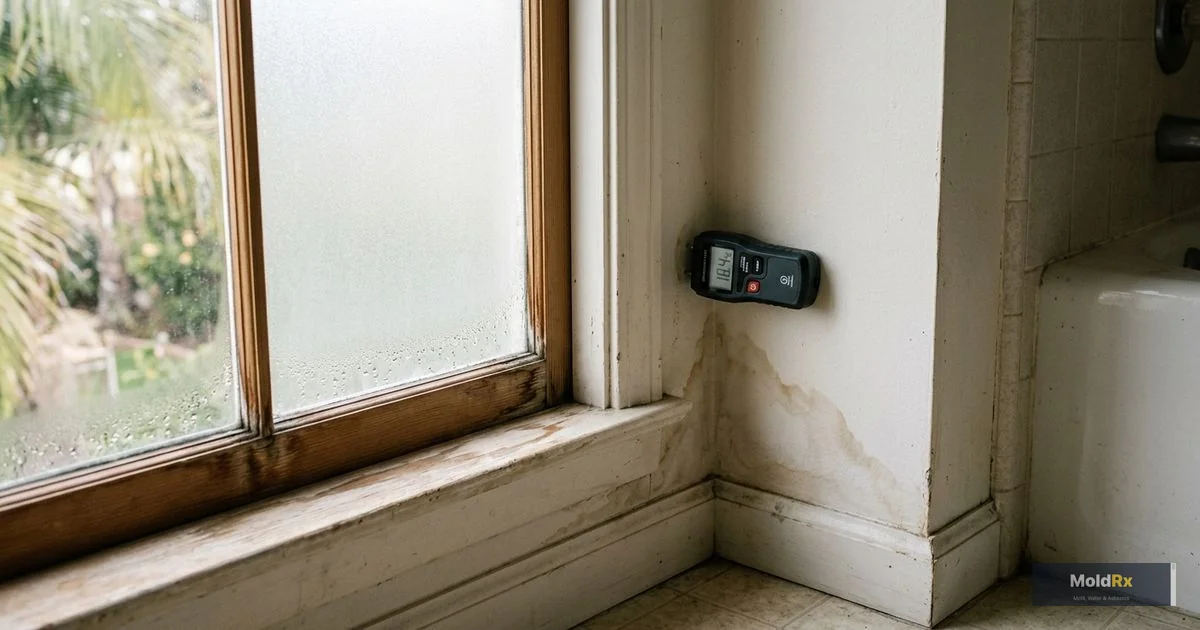
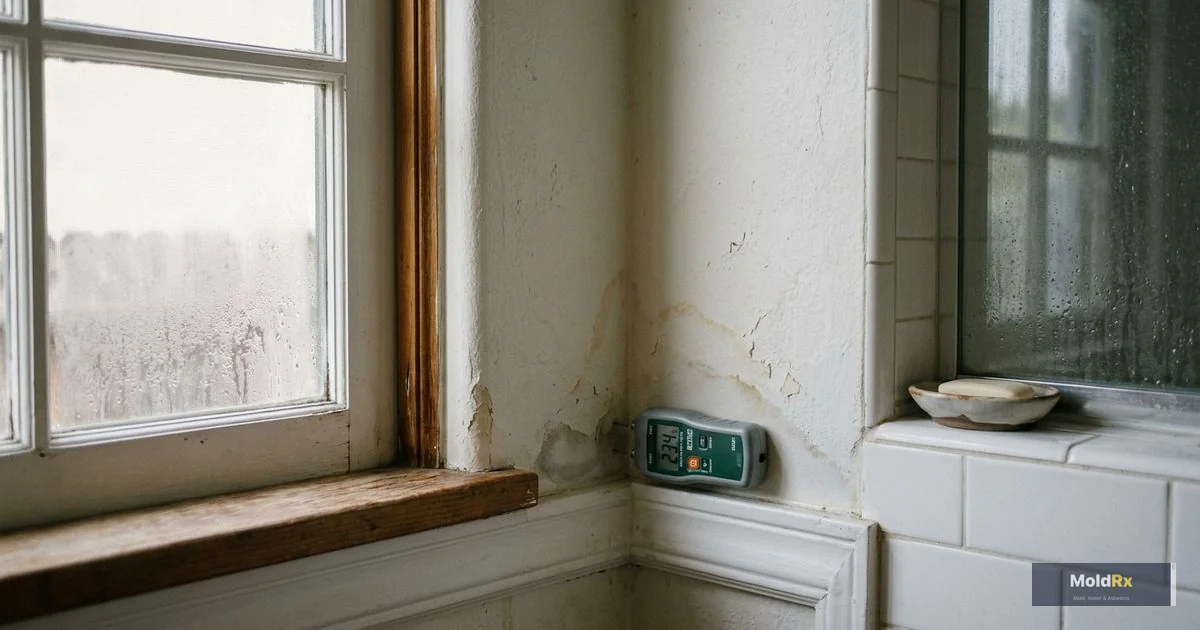
While not a biological test, professional moisture assessment using infrared thermal imaging and calibrated moisture meters is essential to any thorough mold evaluation. Moisture mapping identifies active water intrusion pathways — slab moisture migration from corroding copper lines, hillside drainage wicking into canyon foundations, condensation inside wall cavities during seasonal temperature swings, and irrigation overspray saturating exterior grade. Identifying the moisture source determines whether any needed remediation will be permanent or temporary.
Our Testing Process in Rancho Santa Margarita
When you schedule mold testing with MoldRx, our vetted specialists follow a systematic, five-step approach designed to give you accurate, defensible results.
Step 1: Consultation and Scope
Before arriving, we discuss your concerns, symptoms, timeline, and what prompted the request. This conversation shapes the assessment approach — a real estate transaction requires different documentation than a health investigation. For RSM properties, we ask about construction year, slab leak history, HVAC age, landscaping proximity to the foundation, and whether previous remediation or plumbing repairs have been performed.
Step 2: Visual Inspection and Moisture Assessment
On-site, our specialist conducts a thorough visual inspection focusing on areas prone to moisture — bathrooms, kitchens, laundry areas, HVAC systems, garage water heater closets, window frames, and areas adjacent to hillside grade. Infrared thermal imaging and calibrated moisture meters identify concealed moisture that visual inspection cannot detect — particularly important in RSM homes where slab leaks create moisture patterns invisible to the eye but clearly visible on thermal imaging.
Step 3: Strategic Sample Collection
Based on the inspection findings, samples are collected from targeted locations — air cassettes for airborne spore concentrations, surface tape lifts or swabs for visible or suspected growth, and ERMI dust samples when a comprehensive fungal profile is warranted. An outdoor baseline air sample is always collected for comparison. Sample locations, quantities, and methods are documented for the laboratory report.
Step 4: AIHA-Accredited Laboratory Analysis
All samples are submitted to an AIHA-accredited, NVLAP-certified laboratory — accreditation ensuring analytical methods, quality controls, and reporting meet established scientific requirements. Results are typically available within three to five business days.
Step 5: Results Interpretation and Written Report
We do not hand you a lab report and walk away. Our specialists review findings with you, explain what the numbers mean in plain language, and provide a written report with clear recommendations. If results are normal, you will know. If elevated levels indicate an active moisture problem, you will understand the scope and your options. Reports include sample data, laboratory certifications, outdoor comparisons, and recommendations — documentation suitable for insurance, HOA, real estate, and healthcare purposes.
DIY Mold Test Kits vs. Professional Testing
Home mold test kits are available at hardware stores for $10 to $50. They typically involve placing a petri dish in a room for a set period and mailing it to a laboratory. While the concept is straightforward, there are important limitations to understand.
No calibrated air volume. Professional air sampling draws a measured volume through a calibrated cassette, producing spore counts per cubic meter comparable to outdoor baselines. Settle plates collect whatever lands on the dish over an arbitrary period — the result cannot be quantified or meaningfully compared to outdoor conditions.
No outdoor baseline. Professional testing always includes outdoor samples collected simultaneously. A DIY result of "mold present" tells you nothing useful — mold spores exist in every home. The question is whether indoor concentrations significantly exceed outdoor baselines, and DIY kits cannot answer it.
No professional inspection. The trained assessment — identifying moisture sources, evaluating concealed cavities — is the most valuable component. A DIY kit placed in the living room while mold grows above a slab leak in the hallway misses the problem entirely.
No chain of custody. AIHA-accredited results carry documented chain of custody essential for insurance claims, real estate disputes, and legal proceedings. DIY results generally do not meet evidentiary standards.
For RSM homes with aging copper plumbing and concealed moisture pathways beneath slab-on-grade foundations, professional testing is the practical choice when you need answers you can act on.
Understanding Your Mold Test Results
Laboratory reports contain technical data that requires context to interpret correctly. Here is what the key elements mean.
Spore Counts and Outdoor Comparisons
The most important comparison in any mold test report is indoor versus outdoor spore concentrations. Mold spores are naturally present in outdoor air — in inland South Orange County, outdoor counts typically range from hundreds to low thousands of spores per cubic meter depending on season. RSM's foothill position near the Cleveland National Forest means outdoor fungal ecology includes species from both chaparral and developed landscapes. Indoor counts at or below outdoor levels indicate normal conditions (IICRC S520 Condition 1). Indoor counts significantly exceeding outdoor levels — particularly of species not dominant outdoors — indicate an active indoor source.
Species Identification and Significance
Not all mold species carry the same implications. Cladosporium is the most common outdoor mold in Southern California — not concerning indoors unless counts significantly exceed outdoor baselines. Penicillium/Aspergillus (grouped in spore trap analysis because spores appear similar under microscopy) are common both indoors and outdoors; elevated indoor levels suggest a moisture problem. Stachybotrys requires sustained moisture on cellulose materials and is rarely found outdoors — any confirmed indoor presence indicates concealed water damage. Chaetomium has similar implications. Species identification guides the urgency and scope of any response.
What "Normal" Looks Like
There is no single universal standard for "safe" indoor mold levels. The EPA, AIHA, and IICRC S520 all use the principle of comparison: indoor fungal ecology should approximate outdoor conditions in both species and concentration. When it does, conditions meet Condition 1 (normal). When indoor counts significantly exceed outdoor baselines, or when moisture-dependent species are confirmed indoors, conditions have shifted toward Condition 2 or 3 — indicating contamination or active colonization. Our reports translate these classifications into plain-language recommendations.
Health Risks Associated with Indoor Mold
The EPA, CDC, and WHO Guidelines for Indoor Air Quality: Dampness and Mould document that prolonged exposure to elevated indoor mold is associated with respiratory symptoms, allergic reactions, and asthma aggravation. Mold produces allergens, irritants, and in some species mycotoxins.
The concern arises when concealed colonies above slab leaks, inside ductwork, or beneath flooring produce spore concentrations that occupants breathe continuously. Populations at higher risk include children, adults with asthma, pregnant women, elderly residents, and immunocompromised individuals. RSM is a family-oriented community — the lake and beach club, 22 parks, top-rated schools, and events like the annual Rancho Family Fest reflect a population where indoor air quality carries particular weight.
Mold testing does not diagnose medical conditions. It provides objective environmental data that you and your healthcare provider can use to evaluate whether indoor air quality may be contributing to symptoms. If testing reveals elevated levels, remediation returns conditions to normal baselines. If results are normal, that information is equally valuable — it rules out mold and directs investigation elsewhere.
What Sets MoldRx Apart
- Straight talk, not sales talk. We report what the testing actually finds — including when results are normal and no action is needed. No inflated findings, no manufactured urgency. If your property does not have a mold problem, we will tell you.
- AIHA-accredited, NVLAP-certified laboratories. Every sample MoldRx submits goes to a laboratory meeting AIHA and NVLAP accreditation standards — the same standards referenced by the EPA, IICRC, and Cal/OSHA for defensible indoor air quality analysis.
- Full documentation on every test. Inspection notes, sample locations, chain of custody, certified analytical results, outdoor comparisons, species identification, plain-language interpretation, and written recommendations — documentation that stands up for insurance, HOA, real estate, and healthcare purposes.
- Licensed, insured, locally vetted. Every professional MoldRx sends to a Rancho Santa Margarita property is verified through the CSLB (Contractors State License Board) and carries full liability insurance for Orange County work.
Get your free estimate — no obligations, no pressure.
Rancho Santa Margarita Neighborhoods We Serve
MoldRx provides mold testing across every neighborhood in Rancho Santa Margarita — ZIP code 92688 — including single-family homes, townhomes, condominiums, and commercial properties throughout this master-planned South Orange County community.
-
Dove Canyon — Gated community on the eastern edge with large homes often exceeding 3,000 square feet. Canyon-floor position traps morning fog and marine layer moisture. Hillside drainage directs water toward downslope lots during winter storms, and golf course irrigation raises soil moisture year-round. Early-to-mid-1990s construction with original copper plumbing subject to chloramine corrosion.
-
Robinson Ranch — Family neighborhood in the northeastern Trabuco Canyon area, built by William Lyon Homes on larger lots. Higher elevation with Santa Ana Mountain wind exposure stresses stucco and window seals. Extensive landscaping creates irrigation-related moisture loads at foundation perimeters.
-
Rancho Cielo — Gated hilltop community at the higher elevations of the Plano Trabuco plateau. Greater wind exposure during Santa Ana events drives rain laterally into stucco. Temperature differentials produce condensation inside wall cavities during weather transitions — a concealed moisture source testing frequently identifies.
-
Trabuco Highlands — Larger neighborhood surrounding the 22-acre Central Park. Mixed housing includes single-family homes and townhomes from the 1990s, now past 30 years old. Shared walls in townhome sections create concealed moisture pathways between units.
-
Melinda Heights — Established neighborhood in western RSM with 1990s-era homes. Aging HVAC systems, original plumbing, and 30-year-old building envelopes are the primary moisture risk factors. Stucco walls develop micro-cracking over decades, allowing concealed rain penetration.
-
Arroyo Vista and Walden — Communities along the southern and western edges. Arroyo Vista includes townhome and condo sections where shared walls create complex moisture pathways. Walden communities include a mix of housing types with similar aging-infrastructure concerns.
-
Town Center and Santa Margarita Parkway Corridor — Commercial and mixed-use properties. Cal/OSHA Title 8 standards apply to employee-occupied spaces, and testing documentation must meet commercial lease and regulatory requirements.
Related Services in Rancho Santa Margarita
- Mold Removal in Rancho Santa Margarita
- Water Damage Restoration in Rancho Santa Margarita
- Asbestos Removal in Rancho Santa Margarita
- Asbestos Testing in Rancho Santa Margarita
→ All remediation services in Rancho Santa Margarita
Frequently Asked Questions
How much does mold testing cost in Rancho Santa Margarita?
Costs depend on property size, number of samples needed, and testing type. A standard assessment for a typical RSM single-family home differs in scope from a comprehensive evaluation of a large Dove Canyon estate or a multi-unit townhome investigation in Trabuco Highlands. Contact us to discuss your situation and we will provide a clear estimate before any work begins.
When should I get mold testing in Rancho Santa Margarita?
Consider testing if you notice persistent musty odors, visible discoloration, recent or past water damage, or unexplained respiratory symptoms that improve away from home. Testing is also valuable for real estate transactions and post-remediation verification. In RSM specifically, testing is warranted after any slab leak repair — chloramine-induced corrosion makes slab leaks one of the most common water damage sources in these homes, and moisture beneath the slab can reach wall cavities before any surface signs appear.
What is the difference between air testing and surface testing?
Air testing measures airborne mold spore concentrations per cubic meter and compares indoor levels against outdoor baselines — it tells you what you are breathing. Surface testing identifies specific mold species growing on materials — it confirms whether a discoloration is active mold and identifies the organism. Most thorough assessments include both methods, as they answer different questions.
Can I do mold testing myself with a home kit?
DIY kits produce results that cannot be compared to outdoor baselines, lack calibrated air volume measurements, and carry no chain of custody for insurance or legal purposes. For RSM properties — where concealed slab leaks and aging building envelopes create moisture problems invisible from the surface — professional testing with AIHA-accredited laboratory analysis is the practical choice.
What mold levels are considered dangerous?
There is no single universal "safe" mold level. Results are interpreted by comparing indoor spore counts and species against outdoor baseline samples collected at the same time. Indoor counts at or below outdoor levels generally indicate normal conditions (IICRC S520 Condition 1). Indoor counts significantly exceeding outdoor baselines — particularly of moisture-indicating species like Stachybotrys or Chaetomium — indicate an active problem. Our reports explain results in plain language with specific recommendations.
My home had a slab leak repaired — should I test for mold?
Yes. Slab leaks are extremely common in RSM due to chloramine-induced corrosion in the copper plumbing installed during the 1986-1999 construction period. Water from a slab leak migrates upward through concrete and wicks into wall framing, insulation, and drywall before any surface evidence appears. Even after the plumbing is repaired, materials that remained damp for days or weeks may harbor active mold growth. Testing determines whether colonization occurred and at what scope — preventing the scenario where a homeowner fixes the plumbing but continues breathing elevated spore levels from concealed colonies.
How long does mold testing take?
On-site inspection and sample collection typically takes one to three hours depending on property size. Laboratory results are usually available within three to five business days. Rush processing is available for time-sensitive real estate transactions.
Does mold testing damage my walls or property?
Standard air and surface sampling is non-invasive — air cassettes sample ambient air, and tape lifts collect material from accessible surfaces. If concealed mold is suspected behind walls, we discuss any investigative access needed before proceeding. We do not cut into walls without your approval.
Should I test before or after mold removal?
Both. Pre-remediation testing establishes the baseline — species, concentrations, and locations — defining the remediation scope. Post-remediation clearance testing (per IICRC S520 Condition 1 criteria) verifies that work was completed successfully and indoor fungal ecology has returned to normal. Clearance testing is essential documentation for insurance, HOA, and real estate purposes.
Get Mold Testing in Rancho Santa Margarita
If you are dealing with unexplained odors, visible discoloration, health symptoms that seem worse at home, water damage or slab leak history, or a real estate transaction that needs documentation — professional mold testing provides objective answers.
MoldRx only sends vetted professionals who understand RSM's construction — the 1986-1999 build era, copper plumbing susceptible to chloramine corrosion, the foothill position trapping humidity, hillside drainage in canyon communities, and aging building envelopes now past their third decade. Accurate data from AIHA-accredited laboratories, plain-language interpretation, and honest recommendations about whether action is needed.
No manufactured urgency. No unnecessary services. Just the information you need to make the right decision for your property and your family.
Call (888) 609-8907 or request your free estimate online — clear answers, honest guidance, accurate results.