Asbestos Testing in Rancho Santa Margarita, CA — MoldRx
Licensed Asbestos Testing Professionals Serving Rancho Santa Margarita and South Orange County
Planning a kitchen remodel in Dove Canyon, replacing flooring in your Robinson Ranch townhome, or tearing out that textured ceiling in a Melinda Heights condo? Before any of that work begins, you need laboratory confirmation of what is inside your walls, ceilings, and floors. Rancho Santa Margarita may feel like a modern community — it did not incorporate until 2000 — but the first homes here were sold in 1986, and development continued aggressively through the 1990s. That puts a significant portion of RSM's roughly 17,500 housing units within the window when asbestos-containing materials were still being installed in Southern California homes. Asbestos is invisible to the naked eye, impossible to identify without lab analysis, and hazardous only when disturbed — which is precisely what renovation does. SCAQMD Rule 1403 requires an asbestos survey before renovation or demolition, and extends the requirement to structures of any age before demolition. MoldRx only sends vetted asbestos testing professionals who understand the construction patterns found across Rancho Santa Margarita and South Orange County.
Request your free consultation — we'll help you determine if testing is needed for your project.
Why Rancho Santa Margarita Properties Carry Asbestos Risk
Rancho Santa Margarita is a carefully planned community of approximately 48,000 residents nestled in the foothills of the Santa Ana Mountains, bordered by the Cleveland National Forest to the east and Trabuco Canyon to the north. The city's specific construction timeline creates an asbestos risk profile that homeowners need to understand before picking up a sledgehammer.
A Master-Planned Community Built at the Tail End of the Asbestos Era
The land that became Rancho Santa Margarita was part of the historic Rancho Mission Viejo — one of the last great working cattle ranches in Orange County. In 1986, the Rancho Santa Margarita Company began transforming approximately 4,000 acres of former ranchland into a master-planned suburban community. The first homes were sold that year, and the late-1980s economic boom fueled rapid development across the core community and neighboring enclaves of Dove Canyon, Robinson Ranch, Rancho Cielo, Trabuco Highlands, and Walden. Lake Santa Margarita was created in 1989. Road infrastructure improved in 1992 when extensions of Oso, Antonio, and Alicia Parkways connected the community to the rest of Orange County. In November 1999, voters incorporated the community as Orange County's 33rd city.
This timeline matters because it overlaps with the final years of asbestos use in American residential construction. Here is what many RSM homeowners do not realize: asbestos was never fully banned in the United States. The EPA restricted spray-applied asbestos products in 1978, and California banned asbestos-containing insulation materials in construction that same year. But those restrictions did not apply to existing product inventory already sitting in warehouses and supply rooms throughout Southern California.
The practical result: asbestos-containing building materials continued to be installed in homes well into the 1980s — and in some product categories, into the 1990s. Stockpiles of asbestos-containing floor tiles, joint compound, roofing felt, and cement products found their way into construction projects years after the initial bans. Laboratory testing of 1980s-era homes across Southern California consistently confirms the presence of asbestos in materials installed after the regulatory cutoff dates.
For Rancho Santa Margarita, homes built during the earliest development phase — 1986 through the early 1990s — have a meaningful probability of containing asbestos in floor tiles, mastic adhesives, joint compound, textured ceilings, pipe insulation, and roofing products. The probability is lower than in a 1970s Mission Viejo home, but it is high enough that testing before renovation is the only responsible approach.
South Orange County Climate and Material Preservation
Rancho Santa Margarita's warm Mediterranean climate — summer highs in the low to mid-80s, roughly 18 inches of annual rainfall, and virtually no precipitation from May through October — creates a specific dynamic for asbestos-containing materials. Building materials in RSM homes tend to stay physically intact far longer than they would in regions with freeze-thaw cycling or high humidity. Materials installed in the late 1980s may still be in essentially original condition inside a Rancho Santa Margarita home.
That is good news for day-to-day safety but creates a false sense of security during renovations. Well-preserved materials contain asbestos at the same concentrations as the day they were installed. A homeowner who scrapes a textured ceiling that looks perfectly fine can release a cloud of microscopic fibers — measured in microns, invisible to the naked eye — that remain suspended in indoor air for hours. Santa Ana wind events, which channel through the canyons and foothills surrounding RSM, can further redistribute airborne fibers through a home's HVAC system if materials have already been disturbed.
Homes That Are Now 30 to 40 Years Old
RSM's housing stock is reaching the age where major renovations become both desirable and necessary. Homes built in 1986 are now 40 years old. Kitchens and bathrooms from this era are being gutted. Popcorn ceilings are being scraped. Aging HVAC systems are being replaced. Every one of these activities involves cutting, drilling, scraping, or demolishing building materials — and if any of those materials contain asbestos, the renovation becomes both a health hazard and a regulatory violation unless proper testing comes first.
When Asbestos Testing Is Necessary in Rancho Santa Margarita
Not every project requires asbestos testing, but more situations call for it than most homeowners expect.
Before Any Renovation or Demolition (California Law)
SCAQMD Rule 1403 requires an asbestos survey before renovation or demolition — residential and commercial, regardless of building age. The only narrow exception is single-unit dwelling renovation disturbing less than 100 square feet of intact material. Kitchen tearouts, flooring replacement, ceiling removal, bathroom remodels, and roof replacements all routinely exceed that threshold. Non-compliance fines can exceed $20,000 per day.
Before Buying or Selling a Property
California disclosure laws require sellers to report known hazards. A pre-purchase asbestos test gives buyers a clear picture of what they are acquiring and what renovation costs will look like after closing. Sellers benefit too — a clean test removes a potential objection and demonstrates transparency.
When Materials Are Visibly Damaged or Deteriorating
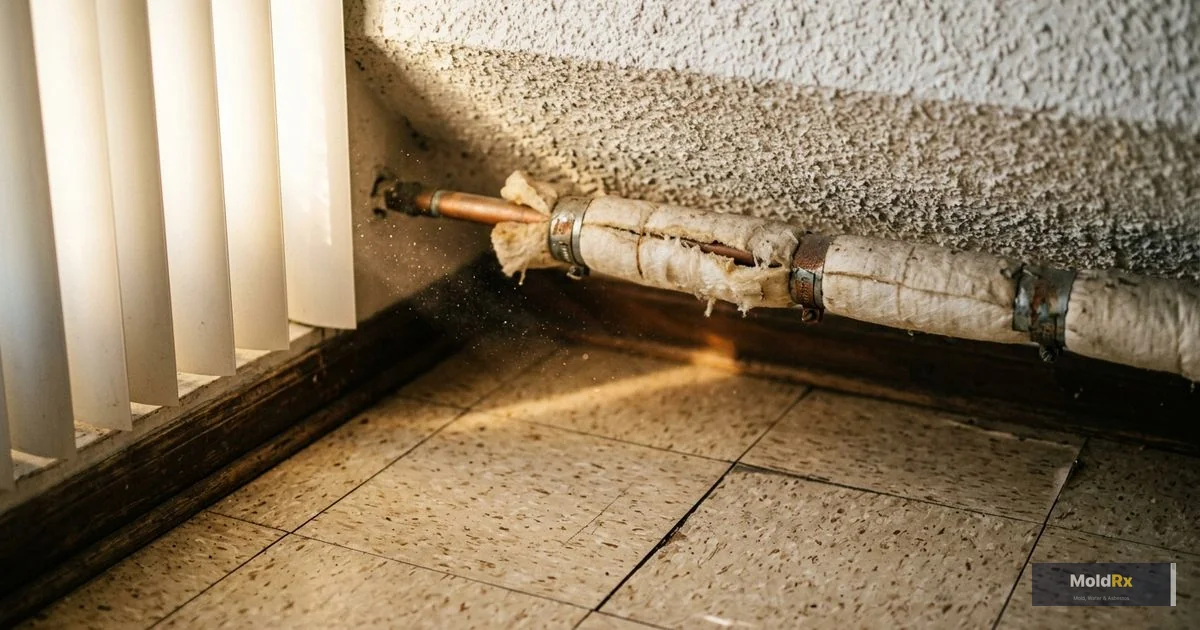
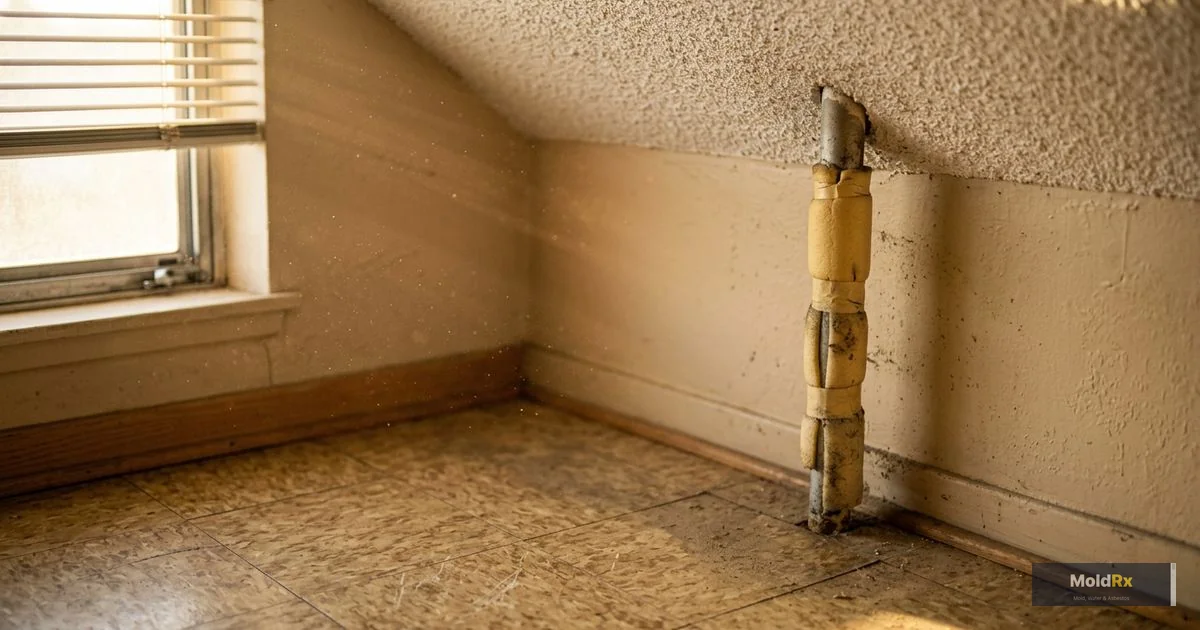
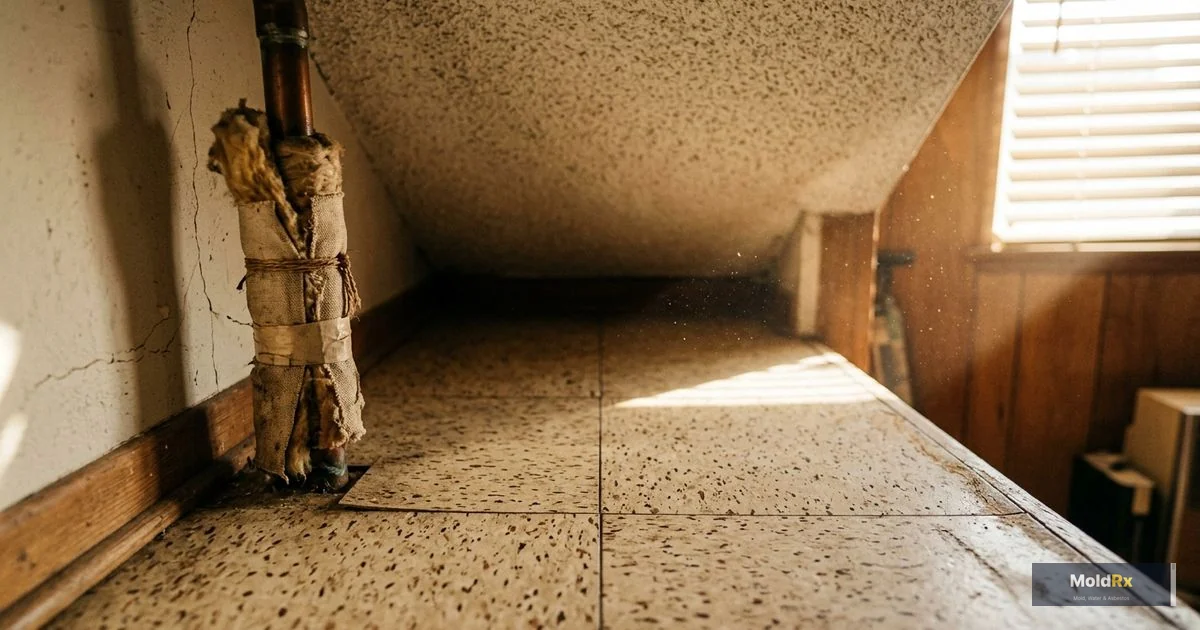
Crumbling pipe insulation, flaking ceiling texture, cracked floor tiles lifting at the edges — if materials in your RSM home show visible deterioration, damaged ACM can release fibers during normal daily activity without anyone swinging a hammer. Testing identifies whether the damaged material contains asbestos so you can make informed decisions.
Before Re-Roofing an Original Roof
Many RSM homes still have their original roofs from the late 1980s and early 1990s. Roofing felt, shingles, and flashing materials from this era can contain asbestos. Roof tear-off generates enormous quantities of debris — if that debris contains asbestos without proper procedures, the consequences include fiber release, regulatory violations, and potential contamination of the home's interior through open attic spaces.
Common Asbestos-Containing Materials in Rancho Santa Margarita Homes
Rancho Santa Margarita's housing was built primarily during a single development era — the late 1980s through the mid-1990s — which gives the community a more uniform asbestos risk profile than older cities with housing spanning multiple decades. Here are the materials most likely to contain asbestos in RSM homes.
Floor Tiles and Mastic Adhesive
Vinyl floor tiles manufactured through the early 1980s commonly contained 5% to 70% chrysotile asbestos. The black cutback adhesive (mastic) beneath them frequently contains asbestos as well. Existing inventory continued to be installed into the mid-1980s. In RSM homes from the 1986-1990 construction window, original floor tiles — particularly in laundry rooms, kitchens, and bathrooms — warrant testing before removal.
Popcorn and Textured Ceilings
The EPA banned asbestos in spray-applied surfacing in 1978, but the ban did not apply to existing product inventory. Textured ceiling material already in the supply chain continued to be applied well after 1978. RSM's earliest-phase homes may have received ceiling treatments from asbestos-containing stock. Scraping textured ceilings without testing is one of the most common — and most avoidable — sources of residential asbestos exposure.
Joint Compound and Drywall Tape
Pre-1980 drywall joint compound frequently contained asbestos. Joint compound is applied at every seam, corner, and screw hole — even a small remodel can disturb a surprising quantity. For RSM homes built between 1986 and 1990, most products had been reformulated, but regional supply chains varied and older stock was not recalled. Testing eliminates the guesswork.
Pipe, Duct Insulation, and Roofing Materials
Corrugated paper wrap, calcium-silicate blocks, and fiberglass with asbestos-containing binders were used on HVAC and plumbing components through the early 1980s. These materials are often found in garages, mechanical closets, and attic spaces. Similarly, asbestos-cement roofing shingles, felt underlayment, and flashing were widely used in California construction through the 1980s — valued for fire resistance in RSM's wildland-urban interface location. Original roofing materials are now 35 to 40 years old and approaching the end of their service life, making testing before roof replacement essential.
Vermiculite Attic Insulation
A significant portion of vermiculite insulation sold in the United States came from the Libby, Montana mine, contaminated with tremolite asbestos. It appears as small, accordion-shaped granules (gray-brown or gold) in attic spaces. The EPA recommends treating all vermiculite insulation as potentially contaminated until tested. Some RSM homes may have received it as a builder specification or energy-efficiency upgrade.
How Asbestos Testing Works
Understanding the process helps you plan your project timeline and know what to expect at each stage.
1. Pre-Testing Consultation
Testing begins with a conversation about your property and your project — when the home was built, what materials you plan to disturb, and whether you have noticed any damage or deterioration. This information determines which areas need sampling and how many samples are required. For a straightforward renovation in a Rancho Santa Margarita home, the inspector can usually scope the work during a brief phone consultation.
2. Bulk Sample Collection
A certified inspector collects bulk samples following EPA procedures — wetting the material to suppress fiber release, removing a small section, and sealing it in a labeled container. Homogeneous materials require a minimum of three samples per distinct area. The process is minimally invasive, and each collection point is sealed after sampling.
3. NVLAP-Accredited Laboratory Analysis
Samples are analyzed at an NVLAP-accredited laboratory using PLM (Polarized Light Microscopy), which identifies asbestos fiber type and concentration. When PLM results are negative but low-level asbestos is suspected, TEM (Transmission Electron Microscopy) provides higher sensitivity. Standard turnaround is 3 to 5 business days; rush service (24 to 48 hours) is available.
4. Results Interpretation and Recommendations
You receive a written report identifying each material sampled, whether asbestos was detected, fiber type, and estimated concentration. We walk you through what each result means for your project: which materials require abatement, which can be managed in place, and which areas are clear for standard construction work.
What Happens If Asbestos Is Found?
A positive test result does not automatically mean your home is dangerous or that expensive removal is your only option. The appropriate response depends on the condition of the material, your project scope, and applicable regulations.
When Removal Is Required
Removal is required when renovation will physically disturb ACM. SCAQMD Rule 1403 requires notification at least 10 working days before removal, and all abatement must be performed by a DOSH-registered contractor. There are no exemptions for homeowner self-abatement on multi-unit residential properties — and RSM's numerous condo and townhome communities fall under this provision.
When Encapsulation or Management in Place Is an Option
Not every positive result requires removal. Encapsulation — applying a sealant over intact ACM — prevents fiber release without physical removal. It works for materials in good condition that will remain in place, such as floor tiles being covered rather than torn out. If ACM is undamaged and will not be disturbed by renovation or normal use, leaving it in place with a documented management plan is often the safest and most cost-effective option. Many RSM homeowners discover asbestos during testing for one project and manage materials in unaffected areas rather than removing everything at once.
Why Asbestos Exposure Is Serious
Asbestos is not dangerous sitting inside a wall or under a floor tile. The risk comes from airborne fibers — released when materials are cut, drilled, scraped, or demolished during renovation. Once inhaled, asbestos fibers lodge permanently in lung tissue. The body cannot break them down. Prolonged or repeated exposure is linked to asbestosis (progressive lung scarring), lung cancer, and mesothelioma — a rare, aggressive cancer with a latency period of 10 to 50 years. A homeowner exposed during a renovation in their 30s may not develop symptoms until their 60s or 70s. There is no safe threshold of exposure. Testing before renovation is the single most effective way to prevent exposure from ever occurring.
Rancho Santa Margarita Asbestos Risk by Construction Era
Rancho Santa Margarita's development occurred in a relatively compressed timeframe compared to older South Orange County cities, but distinct construction phases still carry different risk levels.
1986-1990 (Original Development Phase): Homes from this period — now 36 to 40 years old — carry the highest asbestos risk in the city. Existing asbestos product inventory continued to be installed, and regional supply chains varied. Floor tiles, mastic, joint compound, textured ceilings, pipe insulation, and roofing materials all warrant testing before disturbance. This phase includes early sections of the core community and portions of Robinson Ranch.
1990-1995 (Peak Growth Phase): Dove Canyon, Rancho Cielo, Trabuco Highlands, Walden, and additional core community phases were built during this period. Asbestos risk is lower but not negligible — roofing materials, imported floor tiles, and specialty insulation continued to contain asbestos after initial EPA bans. Testing is recommended before interior renovation involving ceilings, flooring, or insulation.
1995-2005 (Later Development and Infill): Minimal asbestos risk from original materials. However, SCAQMD Rule 1403 still requires a survey before demolition regardless of building age.
Post-2005: Negligible asbestos risk. Testing not required for typical renovation unless demolition triggers Rule 1403 requirements.
What Sets MoldRx Apart
- Honest assessment. If testing is not necessary for your project, we will tell you. We have no financial incentive to recommend testing or abatement you do not need.
- NVLAP-accredited lab partners. Every sample is analyzed by a nationally accredited laboratory using PLM and, when warranted, TEM methods that meet EPA and Cal/OSHA standards.
- Clear, actionable results. No jargon-filled reports that leave you guessing. Plain language, specific recommendations, and a clear path forward for your Rancho Santa Margarita project.
- Family-owned accountability. We only send vetted asbestos testing professionals we stand behind. No subcontractor roulette — the people who show up are the people we trust with our own homes.
Get your free consultation — no obligations.
Rancho Santa Margarita Neighborhoods and Communities We Serve
Our asbestos testing services cover all residential and commercial properties in Rancho Santa Margarita, including:
- Dove Canyon — Guard-gated enclave of approximately 1,200 homes with a Jack Nicklaus signature golf course. Earliest phases (late 1980s) carry moderate asbestos risk; later phases progressively lower.
- Robinson Ranch — One of RSM's oldest neighborhoods in the Trabuco Canyon area, bordered by the Cleveland National Forest. Includes sub-communities: Trabuco Crossings, Trabuco Ridge, Trabuco Springs, Homestead, Fieldstone, The Meadows, Lyon Estates, and Promontory. Late-1980s homes warrant testing before renovation.
- Rancho Cielo — Hillside community with homes primarily from the early 1990s. Testing recommended before major renovations.
- Trabuco Highlands — Family-friendly neighborhood adjacent to Robinson Ranch, developed late 1980s through early 1990s. Original materials in earliest-phase homes should be tested before disturbance.
- Walden — Early 1990s homes carry lower but not negligible asbestos risk. Testing before major renovation remains prudent.
- Melinda Heights — Mix of single-family homes and condominiums. Original ceiling texture and flooring in older units should be tested before renovation.
- Tijeras Creek — Community bordering Tijeras Creek Golf Club. Early to mid-1990s homes carry lower risk but testing is recommended for comprehensive renovations.
- Rancho Carrillo — Core planned community neighborhood. Testing recommended for homes from the initial 1986-1992 construction phase.
ZIP Code Coverage
We serve all of 92688 and surrounding unincorporated areas.
Nearby Communities
We also serve neighboring South Orange County communities including Mission Viejo to the west, Ladera Ranch to the south, Coto de Caza to the east, Lake Forest to the northwest, Laguna Niguel to the southwest, and San Juan Capistrano to the south.
Related Services in Rancho Santa Margarita
- Asbestos Removal in Rancho Santa Margarita
- Mold Removal in Rancho Santa Margarita
- Mold Testing in Rancho Santa Margarita
- Water Damage Restoration in Rancho Santa Margarita
-> All services in Rancho Santa Margarita
Frequently Asked Questions
Is asbestos testing required before renovation in Rancho Santa Margarita?
Yes. SCAQMD Rule 1403 requires an asbestos survey before renovation or demolition in the South Coast Air Quality Management District, which includes all of Rancho Santa Margarita and Orange County. The survey must be performed by a certified consultant. The only exception is single-unit dwelling renovation involving less than 100 square feet of intact material. Most residential projects — kitchens, bathrooms, flooring, ceilings, roof replacements — exceed that threshold and require testing.
How many samples need to be collected?
EPA procedures require a minimum of three samples per homogeneous material in each distinct area. A typical Rancho Santa Margarita home undergoing a comprehensive renovation might need 8 to 15 samples across ceiling texture, floor tile, mastic, joint compound, insulation, and roofing material. Larger homes or those with additions may require additional samples. Your inspector determines the exact number based on your property's age, construction, and project scope.
How long do asbestos test results take?
Standard PLM analysis through an NVLAP-accredited laboratory takes 3 to 5 business days from the time samples arrive at the lab. Rush service is available with turnaround as fast as 24 hours when your project timeline demands it. TEM analysis, if needed, typically requires 5 to 7 business days for standard service. Your inspector can advise on which turnaround option fits your schedule.
Can I collect asbestos samples myself?
California does not prohibit homeowners from collecting samples in their own single-family home, but improper technique can release fibers into your living space. Additionally, samples collected by uncertified individuals may not be accepted for regulatory compliance. If you need results for a permit, SCAQMD notification, or real estate transaction, use a certified inspector.
What does a positive asbestos test mean for my renovation?
A positive result means asbestos was detected above 1% — the federal and California threshold for ACM classification. It does not mean immediate danger. Intact, undisturbed ACM does not release fibers. But if your renovation will disturb that material, licensed abatement must be performed before construction can proceed.
My Rancho Santa Margarita home was built after 1990 — do I still need testing?
Risk is significantly lower but not zero — some products (roofing materials, imported tiles) contained asbestos after initial bans. SCAQMD Rule 1403 requires a survey before demolition regardless of building age. Your inspector can assess whether testing is warranted based on the specific materials involved.
Will my contractor handle asbestos testing?
Some general contractors coordinate testing, but many do not. Getting testing done independently before your contractor starts is the most reliable approach — if asbestos is discovered mid-project, all work stops until abatement is complete, adding weeks and significant cost.
What happens if my HOA requires documentation?
Many RSM communities — particularly gated neighborhoods like Dove Canyon — require documentation before approving renovation work. An asbestos testing report from a certified inspector satisfies this requirement. Having your report ready before submitting HOA applications streamlines the approval process.
Get Asbestos Testing in Rancho Santa Margarita
Whether your home is from the original 1986 development phase, the peak growth years of the early 1990s, or a later addition you want to verify, the process is straightforward and the results are definitive. In a community where homes are reaching the age when major renovations become necessary, asbestos testing is not an obstacle to your project — it is the first step in doing it right.
Call MoldRx to schedule your asbestos test — (888) 609-8907. Know before you start.