Mold Testing in Rancho Mirage, CA — MoldRx
IICRC-Certified Mold Testing Professionals Serving Rancho Mirage and the Coachella Valley
Rancho Mirage sits at roughly 250 feet elevation in the central Coachella Valley, where annual rainfall averages under five inches and summer temperatures routinely exceed 115 degrees. Known as the "Playground of Presidents" for its long history of hosting U.S. presidents from Eisenhower through Obama, this affluent community of approximately 18,000 permanent residents is defined by world-class country clubs, resort living, and a seasonal population that swells well beyond those numbers each winter. That seasonal rhythm is exactly what creates Rancho Mirage's distinctive mold risk. Thousands of homeowners close their properties between April and October, leaving sealed, climate-controlled homes dormant through the hottest and most humid months of the desert calendar. When those homes reopen in the fall, stale air meets sudden HVAC demand, and conditions that quietly developed behind walls, inside ductwork, and beneath bathroom vanities during months of vacancy can surface through musty odors, visible staining, or respiratory symptoms that begin the first week back. Add the extensive irrigation infrastructure supporting Thunderbird, Tamarisk, The Springs, Mission Hills, and the city's many other country club communities, pool and spa equipment running year-round, and a housing stock spanning mid-century estates from the 1950s through contemporary luxury construction, and you have an environment where mold finds opportunity in places most residents never think to look. Professional mold testing identifies what is actually present in your home's air and on its surfaces, quantifies the severity, determines the species involved, and gives you factual evidence to decide whether remediation is warranted. MoldRx only sends vetted, IICRC-certified mold testing professionals who use AIHA-accredited laboratories for every sample.
Request your free consultation — we'll help you determine if testing is right for your situation.
When Mold Testing Makes Sense in Rancho Mirage
Not every concern requires testing, and an honest assessment company will tell you that. But there are specific situations where professional mold testing delivers information you genuinely cannot get any other way.
Seasonal Vacancy and Property Reopening
Rancho Mirage has one of the highest concentrations of seasonal-use homes in the Coachella Valley. Snowbirds from the Pacific Northwest, Midwest, Canada, and Mountain West close their properties each spring and return each fall — leaving homes sealed for five to seven months through the valley's most extreme heat and the July-through-September monsoon season. During those months, air conditioning systems may cycle intermittently on thermostat hold while no one monitors for condensate drain clogs, refrigerant leaks, or drain pan overflow. Humidity from monsoon storms can infiltrate through aging weatherstripping, stucco micro-cracks, and plumbing vent penetrations, with no occupant present to notice musty odors or water staining until weeks or months later. Pool and spa equipment often runs on maintenance schedules that keep moisture circulating near the structure throughout the vacancy period. Country club communities like Thunderbird, Tamarisk, The Springs, Sunrise, and Rancho Mirage Country Club all feature extensive landscape irrigation that maintains soil moisture near foundations throughout the summer — regardless of whether anyone is home. When seasonal residents return to Rancho Mirage each fall, a professional mold test establishes whether the property maintained healthy indoor air quality during the absence or whether hidden contamination developed while the home sat empty. This is one of the most common and most valuable reasons Rancho Mirage homeowners schedule testing — and it is the single most cost-effective precaution available for a property that spends months unoccupied.
Unexplained Health Symptoms That Improve Away from Home
If anyone in your household experiences persistent nasal congestion, eye irritation, recurring cough, throat scratchiness, or worsening respiratory symptoms that ease when they leave the property, airborne mold may be a contributing factor. The CDC and the WHO's Guidelines for Indoor Air Quality: Dampness and Mould both identify indoor mold exposure as a potential trigger for respiratory symptoms in otherwise healthy individuals. Rancho Mirage has a median resident age of approximately 66 — among the highest of any city in California — and a large proportion of residents are retirees managing chronic respiratory conditions, cardiovascular concerns, or age-related immune changes that increase sensitivity to indoor air quality. Eisenhower Health, the Coachella Valley's premier medical center located directly in Rancho Mirage, serves many of these residents for conditions where environmental factors matter. Air sampling determines whether indoor spore concentrations are elevated compared to outdoor baselines collected at the same time — providing data you can share with your physician rather than speculation. The Coachella Valley's persistent desert wind carries outdoor allergens year-round, including dust, pollen, and native mold species like Alternaria and Cladosporium, making it especially important to distinguish between ambient desert exposure and an active indoor mold source amplifying spore counts inside your home.
Musty Odors Without Visible Mold
A persistent musty or earthy smell that cleaning does not resolve almost always indicates mold growing somewhere you cannot see — inside wall cavities, beneath flooring, behind cabinetry, within ductwork, or in areas where irrigation lines run adjacent to the structure. Rancho Mirage homes rely on central air conditioning systems running 14 to 18 hours per day during summer months, and that continuous cycling creates condensation within the air handler, along supply plenums, and on the interior surfaces of ductwork — particularly where insulation has deteriorated or where connections have loosened over decades of thermal expansion and contraction. The city's older estates along Frank Sinatra Drive and around Thunderbird Heights often feature original HVAC ductwork from the 1950s and 1960s that has been patched and extended rather than replaced. Pool equipment rooms, outdoor kitchen enclosures, and covered patio areas trap moisture that can migrate into the main structure through shared walls. Air sampling and targeted surface sampling identify the source without tearing open walls or dismantling mechanical systems prematurely.
Real Estate Transactions and Pre-Renovation Assessment
Mold testing provides documentation that buyers, sellers, lenders, and insurers rely on during property transactions. If you are purchasing a Rancho Mirage home — particularly mid-century estates near Thunderbird or Tamarisk dating to the 1950s and 1960s, country club residences built during the 1970s and 1980s development era, or newer luxury construction in communities like The Springs or Mirada Estates — a pre-purchase assessment establishes baseline conditions and identifies contamination before you close. Rancho Mirage median home values are among the highest in Riverside County, making a pre-purchase mold test one of the most cost-effective protections available for a significant investment. California Civil Code Section 1102 requires sellers to disclose known material facts affecting property value, including known mold contamination, and a clean laboratory report removes ambiguity from both sides of the transaction. If you are planning a renovation — updating a 1960s-era kitchen in a Thunderbird Heights estate, converting a guest casita, or modernizing HVAC systems in an older home — pre-renovation testing identifies hidden mold that demolition could release into your breathing space.
What Mold Testing Reveals That Visual Inspection Cannot
A visual inspection tells you what is on the surface. Professional testing tells you what is in the air, what is behind the walls, and what species are involved. The distinction matters because the most damaging contamination is often invisible.
Airborne spore counts compare indoor concentrations against outdoor baseline samples collected simultaneously — standard practice under AIHA assessment guidelines. This comparison reveals whether your home has an indoor amplification source even when no growth is visible. In Rancho Mirage, where outdoor desert species like Cladosporium and Alternaria are naturally present in the ambient air year-round, a professionally collected outdoor control sample is the only reliable way to separate normal desert infiltration from an active indoor problem.
Species identification determines exactly which molds are present and at what concentrations. A lab report showing elevated Aspergillus/Penicillium around HVAC supply registers tells a fundamentally different story than outdoor Cladosporium entering through patio doors during a windstorm — and the remediation approach, health implications, and urgency differ accordingly.
Baseline readings establish a documented reference point. If remediation is performed later, these initial results provide the comparison data needed to verify that conditions returned to normal per IICRC S520 Condition 1 standards. The EPA (EPA 402-K-01-001) recommends professional assessment when contamination is suspected but not visible, when symptoms suggest exposure, and when documentation is needed for informed decision-making.
Types of Mold Testing We Perform
Air Sampling (Spore Trap Analysis)
The foundation of most residential assessments. A calibrated pump draws a measured volume of air across a collection cassette that captures airborne spores on a sticky medium. Samples are collected from indoor locations of concern and at least one outdoor control location. All cassettes go to AIHA-accredited, NVLAP-certified laboratories for microscopic analysis — identifying genera present, quantifying concentrations per cubic meter of air, and comparing indoor levels to the outdoor baseline. In Rancho Mirage homes, we typically sample near HVAC supply registers, in primary bedrooms and guest suites where occupants report symptoms, in areas with known moisture history such as bathrooms and pool equipment rooms, and in spaces that have been closed during seasonal vacancy. Outdoor baselines in the Coachella Valley reflect a distinctly different spore profile than coastal Southern California communities — local experience matters because a spore count that would raise concern in Newport Beach may be entirely normal in Rancho Mirage, and vice versa.
Surface Sampling (Tape Lift, Swab, Bulk)
Collects material directly from suspect areas — discolored drywall, stained grout, visible growth, suspect deposits inside ductwork, or any surface where contamination is suspected. Tape lifts press adhesive against the surface to capture spores and fragments. Swab samples collect from textured or irregular surfaces like stucco, natural stone, or rough wood framing. Bulk samples remove a small piece of material — drywall, insulation, carpet pad — for comprehensive lab examination. Lab analysis identifies species and confirms whether discoloration is actually mold versus mineral staining, efflorescence, hard water deposits, or the fine desert dust that Rancho Mirage homes accumulate on every surface. Particularly useful in homes where calcium and mineral buildup from the Coachella Valley's hard water supply closely resembles early mold colonization on tile, grout, and glass shower enclosures.
ERMI Testing (Environmental Relative Moldiness Index)
A DNA-based assessment tool developed by the EPA and HUD. ERMI analyzes settled dust for 36 mold species using quantitative PCR (Mold Specific Quantitative Polymerase Chain Reaction), producing a single numerical score that ranks your home against a national reference database. The index includes 26 species associated with water-intrusion events — including Stachybotrys chartarum, Aspergillus fumigatus, Aspergillus versicolor, and Chaetomium globosum — and 10 common outdoor species as controls. Scores range from approximately -10 to 20, with higher numbers indicating greater mold burden. ERMI captures species that may not be airborne at the moment of testing, providing a more comprehensive picture than air sampling alone. We recommend ERMI when standard air sampling results are inconclusive, when symptoms persist despite normal spore trap results, when a property has been sealed for an extended seasonal vacancy, or when medical or legal documentation requires deeper analysis than conventional methods provide.
Moisture Mapping and Thermal Imaging
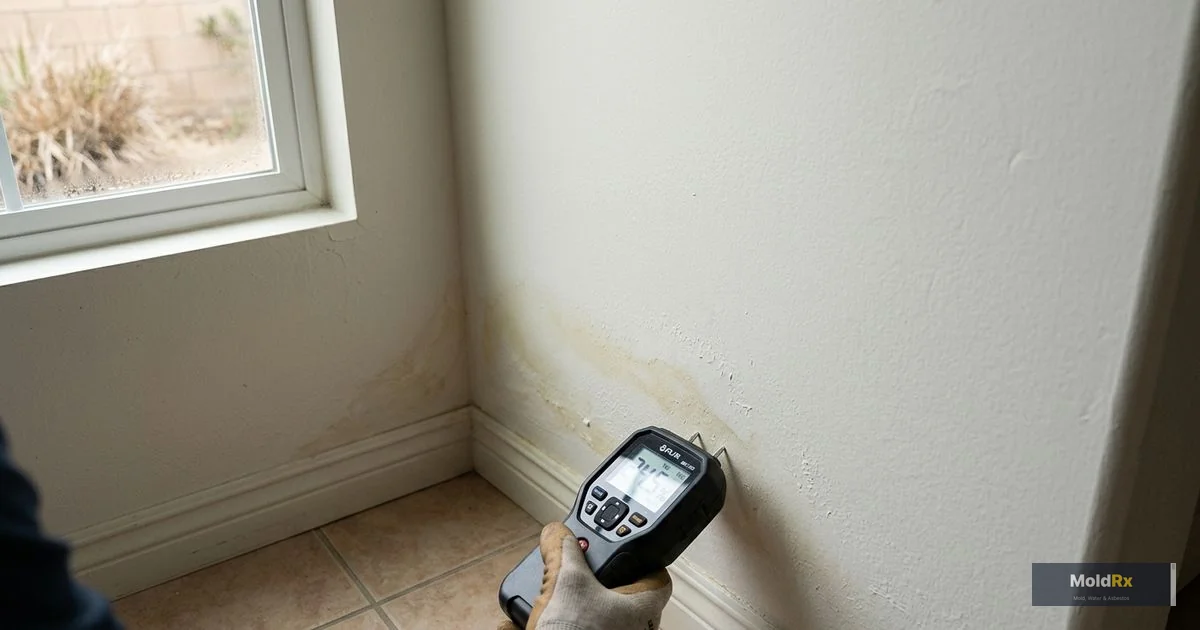
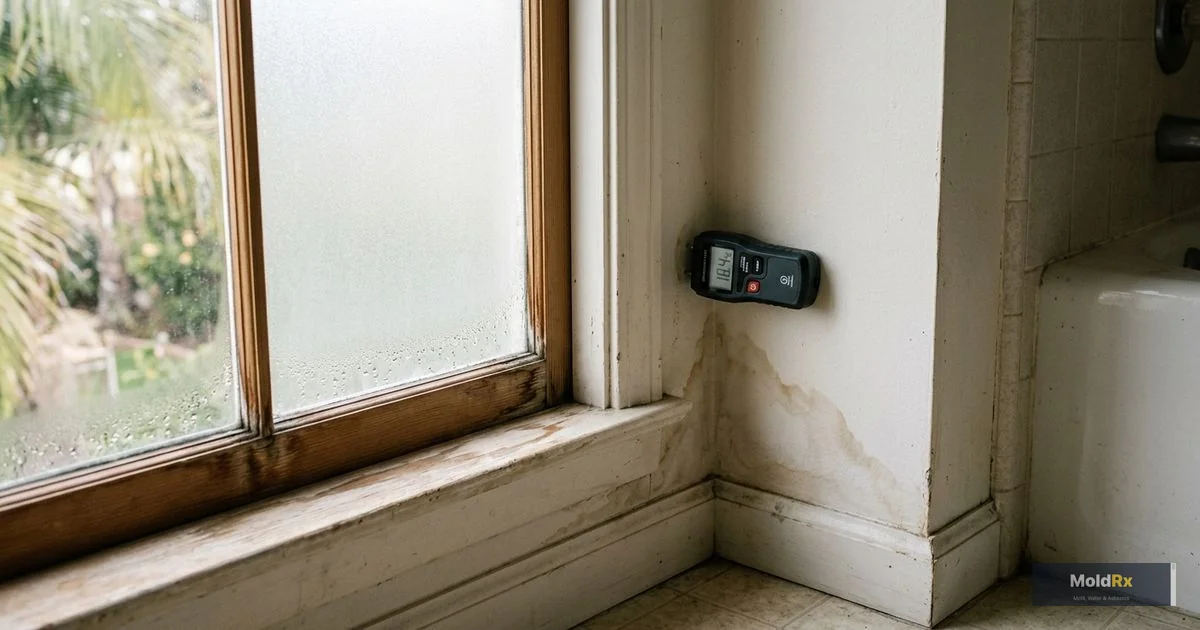
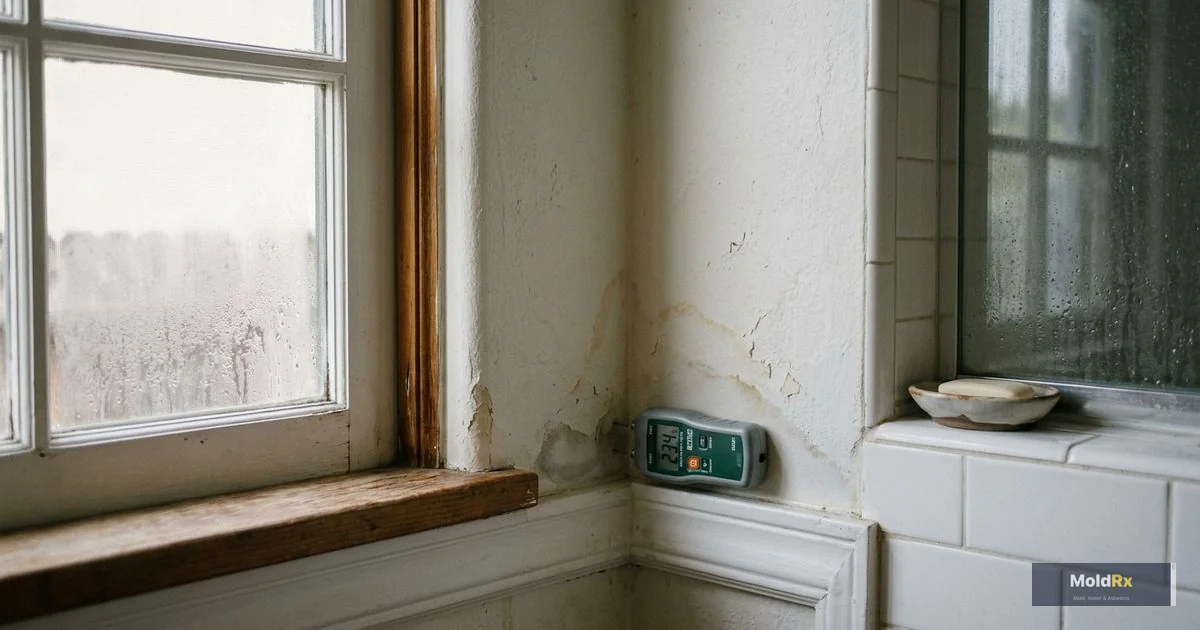
Non-destructive diagnostic tools that identify the conditions enabling mold growth before visible damage appears. Infrared cameras detect temperature differentials that indicate hidden moisture behind finished surfaces — a cold spot on an interior wall may reveal condensation accumulating within the wall cavity. Pin and pinless moisture meters measure moisture content in building materials to determine whether drywall, framing, or subfloor materials have absorbed water. In Rancho Mirage, thermal imaging is especially valuable for locating condensation zones where heavily air-conditioned interiors meet superheated exterior walls during summer months, identifying slab moisture migrating upward through concrete foundations, tracing irrigation leak paths where landscaping lines run adjacent to the structure in country club communities, detecting moisture accumulation around pool and spa plumbing penetrations through shared walls, and mapping moisture patterns in homes that have been sealed for months during seasonal vacancy. These tools tell us precisely where to sample — turning a general concern into targeted, efficient testing that saves time and provides focused results.
Our Mold Testing Process in Rancho Mirage
1. Initial Consultation and Property Assessment
We start by understanding your specific situation — symptoms, visible issues, odors, water history, vacancy duration, or transaction requirements — and evaluate your property's construction era, HVAC configuration, plumbing age, and moisture history. A 1950s Thunderbird Country Club estate with original ductwork gets a fundamentally different assessment approach than a 2010 custom build in The Springs or a recently renovated condominium near The River shopping district. Following EPA 402-K-01-001 assessment protocols, our professionals identify the areas of highest concern, determine the number and type of samples needed, and explain what testing will and will not reveal before any work begins.
2. Sample Collection
Samples are collected following IICRC S520 protocols — proper techniques, calibrated equipment, and full chain-of-custody documentation. In Rancho Mirage homes, sampling locations reflect property-specific risk factors: near HVAC supply registers and return air grilles, along exterior walls where condensation forms from the extreme temperature differential between desert heat and air-conditioned interiors, in bathrooms and kitchens with aging plumbing, in rooms that were sealed during seasonal vacancy, in pool equipment rooms and adjacent living spaces, and in areas with known water damage alongside unaffected comparison locations. Every sample is documented with exact location, collection time, environmental conditions, and a unique laboratory identifier.
3. Accredited Laboratory Analysis
All samples go to AIHA-accredited, NVLAP-certified laboratories — the same accreditation standards required by federal agencies, insurance companies, and the courts. Analysis methods include spore trap microscopy for air samples, direct microscopy and culture analysis for surface samples, and quantitative PCR for ERMI panels. Standard turnaround is 3 to 5 business days, with rush processing available for time-sensitive real estate transactions, escrow deadlines, or insurance claim requirements.
4. Results Interpretation
A lab report listing Latin names and spore concentrations does not help without context. Our professionals translate every result into plain language — which species were found, whether indoor concentrations are elevated compared to the outdoor baseline, what ERMI scores indicate relative to the national database, and what it all means for your specific property and household. Not every elevated reading demands remediation, and not every normal reading means you are entirely in the clear. You will understand what the data says and what it does not.
5. Recommendations and Next Steps
If results show normal conditions, we tell you clearly — no manufactured urgency, no upselling. If results indicate elevated mold levels or the presence of moisture-indicator species, we explain what remediation would involve, what the appropriate scope should be, and what documentation you will need going forward. We identify the underlying moisture source when possible — a condensate drain line failure, hidden irrigation leak migrating toward the foundation from an adjacent golf course fairway, pool plumbing weeping through a shared wall, or condensation accumulating inside an aging air handler — and recommend corrections that address the root cause rather than just the symptoms. Every client receives a complete written report with laboratory results, professional interpretation, photographs, moisture readings, and actionable recommendations.
DIY Mold Test Kits vs. Professional Testing
Home mold test kits are widely available at hardware stores and online, and understanding their limitations helps you decide when a kit is enough versus when professional testing is the better investment.
What DIY kits can do: Confirm the presence of viable mold on a specific surface. Settle-plate kits collect airborne spores over a set period and grow them on a nutrient medium. If something grows, mold is present — which it virtually always will be, because mold spores exist in every environment on earth.
What DIY kits cannot do: Measure airborne spore concentrations quantitatively. Identify species reliably. Establish indoor-versus-outdoor baseline comparisons. Provide chain-of-custody documentation accepted by insurers, lenders, or courts. Detect hidden mold behind walls or inside HVAC systems. Quantify the severity of contamination. Distinguish between normal background mold and active indoor amplification.
In Rancho Mirage, where outdoor spores from desert soil and native vegetation — particularly Alternaria and Cladosporium — blow through every gap in weatherstripping and door seals at significant concentrations, a DIY kit will virtually always produce a "positive" result that tells you nothing useful about whether you have an actual indoor problem. The persistent Coachella Valley wind ensures a steady supply of outdoor spores that will grow on any settle plate regardless of your home's condition. And for a home that has been sealed for five months of seasonal vacancy, a DIY kit opened in October cannot distinguish between spores that drifted in through micro-gaps during a windstorm and an active colony growing inside the air handler that served the empty house all summer. Distinguishing between normal outdoor infiltration and an active indoor amplification source requires calibrated sampling equipment, controlled collection procedures, simultaneously collected outdoor baselines, and AIHA-accredited lab analysis with professional interpretation.
For a straightforward question — "Is this discoloration on my shower grout actually mold?" — a DIY kit may be sufficient. For health concerns, insurance documentation, real estate transactions, or determining whether professional remediation is warranted, professional testing provides the quantitative, defensible data you need.
Understanding Your Mold Test Results
What Spore Counts Mean
Spore counts are reported as spores per cubic meter of air (spores/m3). There is no single "safe" or "dangerous" threshold — the EPA has not established numerical indoor air quality standards for mold, and neither has the state of California. Instead, results are interpreted by comparing indoor concentrations to the outdoor baseline collected at the same time and location. When indoor counts significantly exceed outdoor levels for the same species, or when species appear indoors that are absent from the outdoor control sample, an indoor amplification source is indicated.
Rancho Mirage's outdoor baseline varies by season. Spring windstorms and Santa Ana events carry higher outdoor spore loads than midsummer or midwinter readings. Monsoon season from July through September introduces humidity spikes that temporarily alter the valley's spore profile. A spore count that looks elevated in January may be entirely normal during a windy March. This is why same-day outdoor control samples and local interpretation experience are essential — a laboratory in another state can analyze the sample, but understanding what those numbers mean in the context of Coachella Valley air quality requires a professional who works this area regularly and understands the seasonal patterns specific to the low desert.
Common Mold Species Found in Rancho Mirage Homes
Rancho Mirage's central Coachella Valley location at approximately 250 feet elevation produces a mold profile distinct from both coastal Southern California and the higher-elevation High Desert communities:
- Cladosporium — The most common outdoor desert mold species. Elevated indoor levels indicate moisture intrusion, poor ventilation, or failing window and door seals. Frequently found around single-pane windows in mid-century homes, in guest suites and casitas that remain closed for months during vacancy, and in rooms with inadequate airflow where moisture from the HVAC system lingers.
- Aspergillus/Penicillium — Grouped together in spore trap analysis because their spores are visually identical under standard microscopy. Elevated indoor concentrations frequently correlate with HVAC system contamination — condensate drain pan moisture, biological growth on evaporator coils, and accumulated debris within ductwork that has not been professionally cleaned in years. This is the most common finding in Rancho Mirage properties we assess, particularly in older country club estates where original HVAC systems have operated continuously for 30 to 50 years with minimal duct cleaning.
- Alternaria — A dominant outdoor Coachella Valley species carried indoors by wind and through gaps around doors and windows. Indoor levels exceeding outdoor concentrations suggest water-damaged drywall, ceiling materials, or window framing providing a food source and moisture environment for active indoor growth. Commonly found around irrigation leak points where golf course and residential landscaping water has migrated toward the structure over time.
- Stachybotrys — Commonly referred to as "black mold." Requires sustained moisture on cellulose-based materials — wet drywall, cardboard, paper-backed insulation, ceiling tiles — and is not typically airborne in large quantities. Its presence on a surface sample indicates a chronic moisture condition that has persisted for weeks or months, warranting IICRC S520 Condition 3 remediation protocols. More common in Rancho Mirage homes with undetected slab leaks, long-term irrigation line failures adjacent to the structure, or hidden plumbing leaks behind bathroom walls that went unnoticed during months of seasonal vacancy.
When Results Indicate Remediation Is Needed
IICRC S520 defines three conditions for interpreting mold assessment results:
- Condition 1 (Normal Fungal Ecology): Indoor mold levels are consistent with outdoor levels. No remediation needed. Routine maintenance, humidity management, and regular HVAC servicing are sufficient to maintain healthy conditions.
- Condition 2 (Settled Spores): Elevated mold spore levels on surfaces or in settled dust, but no active visible growth. This often indicates a past moisture event that has since dried — common in Rancho Mirage homes where a monsoon-season leak dried on its own before the homeowner returned from seasonal absence. Professional cleaning of affected surfaces and correction of the underlying moisture source are typically appropriate.
- Condition 3 (Active Growth): Visible mold growth or confirmed active contamination with significantly elevated airborne levels. Professional remediation following IICRC S520/R520 protocols is recommended, particularly when the affected area exceeds 10 square feet per EPA guidance, involves HVAC or ductwork systems, affects structural materials, or involves species of particular health concern such as Stachybotrys or Aspergillus fumigatus.
Your report will clearly state which condition your property falls under and explain exactly what that classification means for next steps.
Health Risks That Warrant Testing
Mold testing is a diagnostic step, not an emergency response. Understanding the health context helps you determine when testing is a sound investment versus when other actions are more appropriate.
The EPA identifies mold exposure as a cause of allergic reactions, respiratory irritation, and asthma exacerbation. The CDC notes that mold can produce symptoms in otherwise healthy individuals and potentially more serious effects in vulnerable populations — including infants and young children, elderly adults, and anyone with compromised immune function or chronic respiratory conditions. The WHO's Guidelines for Indoor Air Quality: Dampness and Mould links prolonged indoor mold exposure to increased risk of respiratory infections and asthma development, particularly in susceptible individuals.
Rancho Mirage has a median resident age of approximately 66 — one of the oldest in all of California. The city's population includes a significant concentration of retirees managing conditions that increase sensitivity to indoor air quality — COPD, asthma, post-surgical recovery, immune suppression from cancer treatment, or the gradual decline in immune function that accompanies aging. Eisenhower Health, one of the most respected medical facilities in the desert region, is located directly within Rancho Mirage and serves many of these residents for exactly these conditions. The Betty Ford Center, also situated in Rancho Mirage at the Eisenhower campus, treats patients whose recovery processes can be complicated by environmental irritants. For this older demographic, indoor mold exposure carries meaningful health implications that extend beyond the sniffles and eye irritation a younger, healthy adult might experience and quickly attribute to seasonal allergies. Cal/OSHA Title 8 regulations apply to commercial properties, country club facilities, resort operations, and any residential property where domestic employees — housekeepers, property managers, groundskeepers — work regularly. Mold testing does not diagnose health conditions, but it identifies environmental factors that may be contributing to symptoms — giving you and your physician the factual evidence needed for informed medical decisions rather than speculation.
What Sets MoldRx Apart
-
Honest assessment, not manufactured urgency. If testing is not necessary for your situation, we will tell you directly. If results come back normal, you will hear that clearly — not a vague concern engineered to sell remediation you do not need.
-
IICRC-certified professionals, AIHA-accredited labs. Our vetted mold testing specialists hold current IICRC certifications and carry proper CSLB (Contractors State License Board) licensing for work in Riverside County. Every sample is analyzed by AIHA-accredited, NVLAP-certified laboratories meeting the same evidentiary standards required by federal agencies, insurance carriers, and the courts.
-
Clear, plain-language results. No jargon-filled reports left for you to interpret alone. We walk you through exactly what the numbers mean, what they do not mean, and what your realistic options are — whether that conversation happens in person, by phone, or via detailed written summary.
-
Coachella Valley knowledge, not a generic call center. MoldRx only sends vetted mold testing professionals who work the Coachella Valley regularly and understand Rancho Mirage's specific combination of seasonal vacancy dynamics, extreme temperature differential condensation patterns, country club irrigation proximity, aging luxury housing stock spanning 1950s estates to contemporary construction, pool and spa moisture risks, and the desert mold species profile that makes this area fundamentally different from coastal Southern California.
Get your free consultation — no obligations, no pressure.
Rancho Mirage Neighborhoods We Serve
MoldRx provides mold testing across every neighborhood and community in Rancho Mirage — ZIP code 92270 — including single-family estates, country club residences, condominiums, and commercial properties.
- Thunderbird Country Club / Thunderbird Heights — Established in 1950, Thunderbird is the Coachella Valley's original country club community and one of Rancho Mirage's most storied addresses. Homes here include original mid-century construction from the 1950s and 1960s with aging plumbing, original HVAC ductwork, and roof assemblies that have endured decades of extreme temperature cycling. The electric golf cart is rumored to have been invented here. Thunderbird's legacy estates have hosted presidents from Eisenhower to Obama, and many of these properties remain seasonal residences with extended vacancy periods — making reopening assessments especially valuable for residents returning each fall.
- Tamarisk Country Club — Established in the 1950s and long associated with Frank Sinatra, Dean Martin, and the Rat Pack era. Tamarisk's housing stock includes older single-family estates built during the community's formative decades, many with original construction materials, single-pane windows, and aging mechanical systems. Extensive golf course irrigation keeps soil saturated near foundations year-round, and the community's seasonal character means many homes sit empty through the monsoon months when unmonitored moisture can accumulate quietly.
- The Springs Country Club — A gated community featuring a mix of construction eras from the 1970s through recent updates. Larger custom homes with multiple bathrooms, extended HVAC duct runs, and extensive covered outdoor living areas create multiple potential moisture pathways that warrant professional assessment, particularly in homes that have not undergone major plumbing or HVAC updates in decades.
- Mission Hills Country Club — Established in 1979, Mission Hills is one of Rancho Mirage's larger country club communities with over 500 residences. The community has hosted the LPGA Tour (Chevron Championship) and features a housing stock ranging from original 1980s construction to recent renovations. Golf course irrigation adjacent to residences, shared-wall condominiums where plumbing failures in one unit affect neighbors, and older HVAC systems are the most common assessment drivers.
- Sunrise Country Club — Opened in 1974, Sunrise features single-family homes and condominiums built primarily during the 1970s and 1980s. Properties of this vintage often feature original polybutylene plumbing, early-generation central air systems, and flat-roof construction prone to ponding water during monsoon storms — all conditions that create hidden moisture sources mold exploits.
- Rancho Las Palmas — A 249-acre resort and residential community in the center of Rancho Mirage with Spanish architecture, Saltillo tile, and a 27-hole golf course. Older condominium units here share walls, plumbing runs, and HVAC infrastructure, meaning a moisture event in one unit can quietly affect adjacent properties. The resort's extensive irrigation and water features maintain a humid microclimate near residential structures year-round.
- Magnesia Falls / Frank Sinatra Drive Corridor — Residential properties along the foothills of the Santa Rosa Mountains and the city's iconic Frank Sinatra Drive. This area includes some of Rancho Mirage's most distinctive mid-century modern homes. The canyon's natural drainage path means properties here are subject to flash flood runoff during monsoon events, and the proximity to Magnesia Spring Creek introduces groundwater moisture conditions not found in other parts of the city.
Nearby Communities We Also Serve
Our vetted professionals cover the surrounding Coachella Valley:
- Palm Desert — Adjacent community to the southeast with comparable desert conditions and similar housing stock
- Cathedral City — Neighboring community to the north sharing similar HVAC and irrigation challenges
- Indian Wells — Comparable luxury resort community to the east with similar country club culture and seasonal vacancy patterns
- Palm Springs — Adjacent community to the northwest with extensive mid-century housing stock
Related Services in Rancho Mirage
- Mold Removal in Rancho Mirage
- Water Damage Restoration in Rancho Mirage
- Asbestos Testing in Rancho Mirage
- Asbestos Removal in Rancho Mirage
→ All remediation services in Rancho Mirage
Frequently Asked Questions
Do I need mold testing if I can already see mold growing?
Not always. If visible mold covers a small area on a non-porous surface — a patch of mildew on bathroom tile or grout — EPA guidance allows homeowner cleanup without formal testing. Testing becomes valuable when growth exceeds 10 square feet, when you suspect contamination extends behind walls or into HVAC ductwork, when you need species identification to guide the remediation approach, or when documentation is required for insurance or real estate purposes. Testing also establishes whether airborne spore levels throughout the entire home are elevated — visible growth in one bathroom does not mean exposure is limited to that room, particularly in Rancho Mirage homes with central air conditioning systems that circulate air across every room in the house.
Should I test my Rancho Mirage home when I return from seasonal absence?
This is one of the most common reasons Rancho Mirage homeowners schedule professional testing, and it is arguably the highest-value application in a community where a substantial portion of homes sit vacant for extended periods. A property sealed from April through October has endured five to seven months of extreme heat, monsoon humidity, potential HVAC malfunctions, and possible plumbing events — all without an occupant present to notice warning signs. A professional mold test at reopening establishes whether the property maintained healthy conditions during your absence or whether hidden contamination developed. Many seasonal residents incorporate an annual reopening assessment into their property management routine alongside HVAC servicing, pool startup, and landscape evaluation — treating it as standard operating procedure for a desert home that spends months unoccupied.
How accurate are home mold test kits compared to professional testing?
DIY settle-plate kits confirm mold exists, but mold spores are present virtually everywhere — a positive result is nearly guaranteed regardless of whether you have an actual indoor problem. Home kits cannot measure airborne concentrations quantitatively, compare indoor levels against outdoor baselines, reliably identify species, or provide chain-of-custody documentation accepted by insurers or courts. In Rancho Mirage, where desert species like Alternaria and Cladosporium blow through every gap in weatherstripping on a daily basis, a DIY kit cannot distinguish between what entered from outdoors and what is actively growing inside your walls. Professional testing with calibrated equipment and AIHA-accredited laboratory analysis provides the quantitative, defensible data needed for meaningful decisions.
What types of mold are most common in Rancho Mirage homes?
The species we detect most frequently in Rancho Mirage properties are Aspergillus/Penicillium (strongly associated with HVAC system contamination and interior moisture sources), Cladosporium (the dominant outdoor Coachella Valley mold species), and Alternaria (carried indoors from desert vegetation and disturbed soil). Less common but more concerning species like Stachybotrys chartarum appear in homes with chronic moisture on cellulose-based materials — water-damaged drywall that stayed wet during months of vacancy, irrigation leaks that slowly saturated foundation-adjacent walls over an entire season, or hidden plumbing failures behind bathroom walls. Your property's specific mold profile depends on its moisture sources, construction materials, HVAC system condition, and vacancy history.
Is mold a real concern in the desert, or is this just dry climate?
Absolutely a real concern. The Coachella Valley's extreme heat drives aggressive air conditioning use that creates substantial condensation within HVAC systems and along exterior wall cavities. The July-through-September monsoon season introduces sudden humidity spikes into an environment not designed to handle moisture. Extensive golf course and residential irrigation — a defining feature of Rancho Mirage's country club lifestyle — keeps soil saturated near foundations year-round. Pool and spa equipment rooms generate localized humidity. And the sealed, climate-controlled construction necessary for desert comfort traps any moisture that enters the building envelope. Rancho Mirage homes face different mold risks than coastal properties, but they face real and measurable risks nonetheless.
Are elderly residents at greater risk from mold exposure?
The CDC and WHO both identify elderly adults as a population with increased vulnerability to mold-related health effects. Age-related changes in immune function, higher prevalence of chronic respiratory conditions like COPD and asthma, and medications that suppress immune response can all increase sensitivity to airborne mold spores. In Rancho Mirage, where the median resident age is approximately 66 and Eisenhower Health serves a large population of retirees managing chronic conditions, these considerations are particularly relevant. Mold testing does not replace medical evaluation, but it provides the environmental data your physician needs to assess whether indoor air quality may be contributing to respiratory or allergic symptoms.
How long does it take to get mold test results back?
Standard laboratory turnaround for air and surface samples is 3 to 5 business days from receipt. ERMI testing typically requires 5 to 7 business days due to the DNA analysis involved. Rush processing is available for time-sensitive real estate transactions, escrow deadlines, or insurance claim requirements. We schedule a results review — in person or by phone — to walk you through the findings as soon as the laboratory report is available.
Is mold testing required when selling a home in California?
California does not mandate mold testing as a condition of sale. However, California Civil Code Section 1102 requires sellers to disclose known material facts affecting property value, including known mold contamination. Many buyers and their lenders request testing as part of standard due diligence, particularly for older properties, seasonal-use homes with extended vacancy histories, or any property showing visible water staining or musty odors. In Rancho Mirage's luxury real estate market, where transaction values routinely reach into the millions, a clean test report from an AIHA-accredited laboratory smooths the transaction process and removes contingencies that might otherwise delay or derail closing.
Will my homeowner's insurance cover mold testing?
Coverage depends on your specific policy and the circumstances that triggered the need for testing. Mold testing associated with a covered water damage event — such as a burst pipe, water heater failure, or storm damage — is often reimbursable as part of your property damage claim. Testing for general health concerns, real estate transactions, or routine seasonal reopening assessment is typically an out-of-pocket expense. Our testing documentation meets the evidentiary standards that insurance adjusters require for claim processing. We recommend contacting your insurance provider to confirm coverage specifics before scheduling.
What is an ERMI test and when is it recommended?
The ERMI (Environmental Relative Moldiness Index) is a DNA-based assessment tool developed jointly by the EPA and HUD. It analyzes settled dust collected from your home for 36 specific mold species using quantitative PCR technology, producing a single numerical score that ranks your home's mold burden against a national reference database. The index evaluates 26 species associated with water intrusion events and 10 common outdoor species as controls. We recommend ERMI when standard air sampling results are inconclusive, when household members report persistent symptoms despite normal spore trap results, when a property has been sealed for an extended seasonal vacancy and a comprehensive assessment is warranted, or when medical or legal documentation requires the deepest available level of analysis.
Get Mold Testing in Rancho Mirage
Knowledge is the first step toward addressing any indoor air quality concern — and sometimes that knowledge confirms there is no problem at all. Either outcome replaces uncertainty with documented facts you can act on. Whether you are returning to your Rancho Mirage property after months of seasonal absence, investigating unexplained respiratory symptoms, evaluating a luxury real estate purchase, assessing conditions after a water damage event, or simply want to know what is in the air your household is breathing, professional testing eliminates guesswork and gives you clear, defensible answers.
MoldRx only sends vetted mold testing professionals who understand Coachella Valley properties — the seasonal vacancy dynamics that define Rancho Mirage living, the condensation patterns created by extreme temperature differentials across air-conditioned desert homes, the irrigation and pool moisture risks inherent to country club communities like Thunderbird, Tamarisk, and The Springs, the luxury housing stock spanning 1950s mid-century estates to contemporary construction, and the desert mold species profile that makes the low desert fundamentally different from coastal Southern California. No pressure. No manufactured urgency. Just honest assessment and clear results.
Call MoldRx to schedule your mold test — (888) 609-8907. Clear results. Honest guidance. No guesswork.