Mold Removal in Needles, CA — MoldRx
IICRC-Certified Mold Removal Professionals Serving Needles and the Eastern Mojave
Needles sits at 495 feet on the western bank of the Colorado River, where summer highs routinely push past 115 degrees and occasionally break 120. Most people assume mold cannot survive here. That assumption is exactly why mold damage in Needles properties often goes undetected until walls are coming apart. Swamp coolers pump moisture into every room for five months straight, monsoon storms dump water faster than aging drainage can handle, and the river itself raises ambient humidity along the corridor. When those moisture sources meet a housing stock built largely in the 1960s and 1970s, hidden mold colonization is not a question of if but when. MoldRx only sends vetted, IICRC-certified mold removal professionals who follow IICRC S520/R520 remediation standards and EPA federal mold guidance — specialists who work Needles and the Eastern Mojave every week.
Request your free estimate — we'll assess your property and give you straight answers.
Why Mold Grows in Needles Homes
Needles is a city of roughly 4,900 residents in eastern San Bernardino County, California, perched along the Colorado River at the California-Arizona border. Its elevation of 495 feet places it in one of the lowest, hottest corridors in the continental United States. Annual rainfall averages under four inches, yet indoor moisture problems are surprisingly common. Understanding why requires looking at the specific ways water enters and stays inside Needles structures.
Colorado River Proximity and Corridor Humidity
The Colorado River flows directly alongside Needles, and the riparian corridor generates localized humidity that interior desert areas never see. Homes within a mile of the river experience higher ambient moisture levels, particularly during summer evenings when temperatures drop from daytime extremes and condensation forms on cooler interior surfaces. The EPA recommends maintaining indoor humidity between 30 and 50 percent, but river-corridor homes in Needles can exceed that range without mechanical dehumidification. Once indoor surfaces stay damp, mold colonizes within 24 to 48 hours — a timeline documented in both the IICRC S520 Standard and EPA publication 402-K-01-001 on mold remediation.
Swamp Coolers and Indoor Moisture Loading
Most Needles homes depend on evaporative coolers rather than refrigerated air conditioning. These systems cool air by passing it through water-saturated pads, adding substantial moisture to the indoor environment. During the five-to-six-month cooling season, a swamp cooler can introduce several gallons of water vapor into a home every day. In older construction with limited ventilation, that moisture accumulates in wall cavities, attic spaces, and beneath flooring — areas homeowners rarely inspect. Swamp cooler drain lines also clog and leak, sending water directly into the structure.
Aging Housing Stock
Needles has approximately 2,850 housing units with a median construction year of 1977. Nearly half the homes in the 92363 ZIP code are more than fifty years old. Older galvanized plumbing corrodes and develops pinhole leaks behind walls. Original ductwork degrades in extreme heat, creating condensation points. Construction materials from that era — including certain insulation types and drywall compounds — hold moisture longer than modern alternatives. Mobile homes, which make up roughly 15 percent of Needles housing, are particularly vulnerable to undercarriage moisture accumulation and poor subfloor ventilation.
Monsoon Storms and Flash Flooding
The North American Monsoon brings sudden, high-intensity storms to Needles between July and September. Flash flooding overwhelms storm drains and pushes water against foundations, through window wells, and into crawl spaces. Homes in low-lying areas near the river or along the Interstate 40 corridor face the highest flood risk. Because post-storm temperatures immediately return to triple digits, trapped water creates a warm, humid micro-environment inside wall cavities — ideal conditions for rapid mold growth behind surfaces that appear dry from the outside.
Signs You Need Professional Mold Removal
Not every dark spot on a wall requires a remediation crew. But certain signs indicate the problem has moved beyond what a homeowner can handle safely or effectively.
Visible Growth Beyond a Small Area
The EPA's Mold Remediation in Schools and Commercial Buildings (EPA 402-K-01-001) uses 10 square feet as a general threshold — mold contamination exceeding that size typically warrants professional remediation rather than DIY cleanup. In Needles, visible growth often appears around swamp cooler vents, along river-facing exterior walls where corridor humidity drives condensation, inside bathroom cabinets, and on ceiling drywall in homes within a mile of the Colorado River. River-adjacent properties along River Road and the marina area are especially prone to mold colonization that starts small and spreads behind surfaces before homeowners notice.
Persistent Musty Odor Without Visible Mold
If the smell returns after cleaning, mold is likely growing in a concealed space — behind drywall, under vinyl flooring, inside wall cavities, or within HVAC ductwork. Swamp cooler systems in Needles homes are particularly prone to harboring hidden mold that circulates through the house without any visible sign. A professional inspection with moisture mapping locates the source without unnecessary demolition.
Recurring Mold After Previous Cleanup
Mold that keeps coming back means the moisture source was never resolved. Surface cleaning with bleach or household products kills what's visible but does nothing about the colony growing behind the surface or the water feeding it. If you've cleaned the same area more than once, the underlying condition needs professional diagnosis.
Water Damage History
Any previous water event — a monsoon flash flood, a Colorado River corridor flooding event, a swamp cooler overflow, or slow plumbing leak — can leave residual moisture that supports mold growth for months. Needles faces particular risk from river flooding that pushes water against foundations in low-lying areas near the I-40 corridor and along the riverbank. If your property has experienced water intrusion and was not professionally dried within the 24-to-48-hour window identified by IICRC S520 standards, a mold assessment is warranted.
Health Symptoms That Worsen Indoors
Nasal congestion, eye irritation, persistent cough, or worsening asthma symptoms that improve when you leave the house may indicate airborne mold exposure. The CDC notes that mold exposure can cause respiratory symptoms in otherwise healthy individuals and more severe reactions in people with existing conditions. These symptoms alone don't confirm mold — but combined with any of the signs above, they justify a professional evaluation.
Health Risks of Mold Exposure
Mold exposure is a legitimate health concern backed by federal agency guidance — not a marketing tactic. Understanding the actual risks helps you make an informed decision about remediation urgency.
According to the EPA, inhaling or touching mold spores can cause allergic reactions including sneezing, runny nose, red eyes, and skin rash. The CDC identifies additional respiratory effects including coughing, wheezing, and throat irritation. The World Health Organization's Guidelines for Indoor Air Quality: Dampness and Mould links prolonged indoor mold exposure to increased risk of respiratory infections, asthma development in children, and exacerbation of existing respiratory disease.
Populations at Higher Risk
- Children — Needles has a significant share of family households, and developing respiratory systems are more susceptible to mold-related irritation. The WHO guidelines specifically identify children as a vulnerable population for dampness-related health effects.
- Elderly residents — Needles has a notable retirement-age population. Weakened immune function increases susceptibility to respiratory infections that mold exposure can facilitate.
- Individuals with asthma or allergies — Mold is a known asthma trigger. The CDC recommends that people with mold allergies avoid exposure to mold.
- Immunocompromised individuals — People undergoing chemotherapy, organ transplant recipients, and those with HIV/AIDS face elevated risk of fungal infections from mold exposure.
The goal is not to create alarm — it's to provide the factual basis for why timely remediation matters, particularly in homes with vulnerable occupants.
When DIY Mold Removal Isn't Enough
For small surface mold on non-porous materials — a patch on a tile wall, mold on a glass window frame — the EPA guidance allows homeowner cleanup with proper protective equipment. But several conditions require professional intervention:
- Contamination exceeding 10 square feet — EPA 402-K-01-001 recommends professional remediation for areas this size or larger
- Mold inside HVAC systems or ductwork — Swamp cooler contamination in Needles homes falls squarely in this category. Cleaning individual vents does nothing when the source is inside the system. NADCA (National Air Duct Cleaners Association) standards apply here
- Structural involvement — Mold growing behind drywall, under subfloor materials, or inside wall cavities requires controlled demolition, containment, and HEPA filtration that homeowners are not equipped to perform safely
- Toxic species suspected — While not all mold is dangerous, species like Stachybotrys chartarum (black mold) produce mycotoxins that require IICRC S520-compliant removal procedures and proper PPE beyond what's available at hardware stores
- Water category 2 or 3 involvement — If the moisture source involves sewage, gray water, or contaminated flooding per IICRC S500 water damage categories, the mold remediation requires professional protocols to address both the biological and water contamination
- Insurance or real estate documentation needed — DIY cleanup produces no documentation. Professional remediation generates the scope-of-work records, moisture readings, and post-remediation verification that insurers, lenders, and buyers require
When in doubt, a professional assessment tells you whether the situation warrants full remediation or a simpler cleanup. That assessment is part of our free estimate.
How We Remove Mold in Needles Properties
Every remediation project MoldRx coordinates in Needles follows the IICRC S520/R520 standard for professional mold remediation and complies with Cal/OSHA Title 8 regulations for worker and occupant safety. The process is methodical, documented, and designed to solve the problem permanently.
1. Inspection and Moisture Mapping
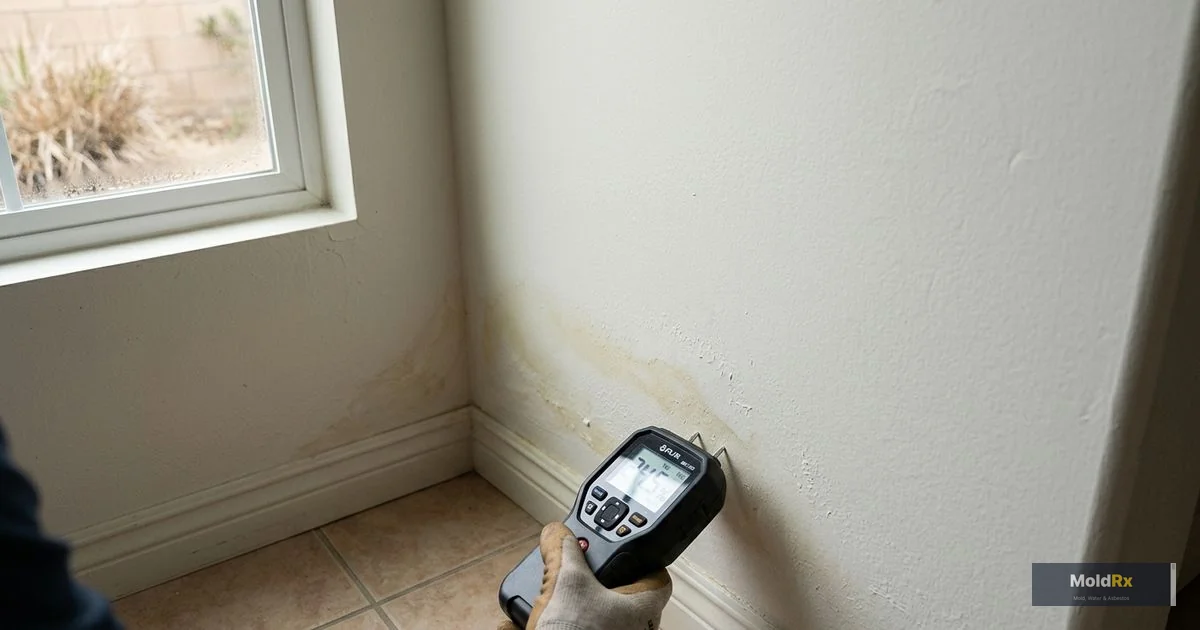
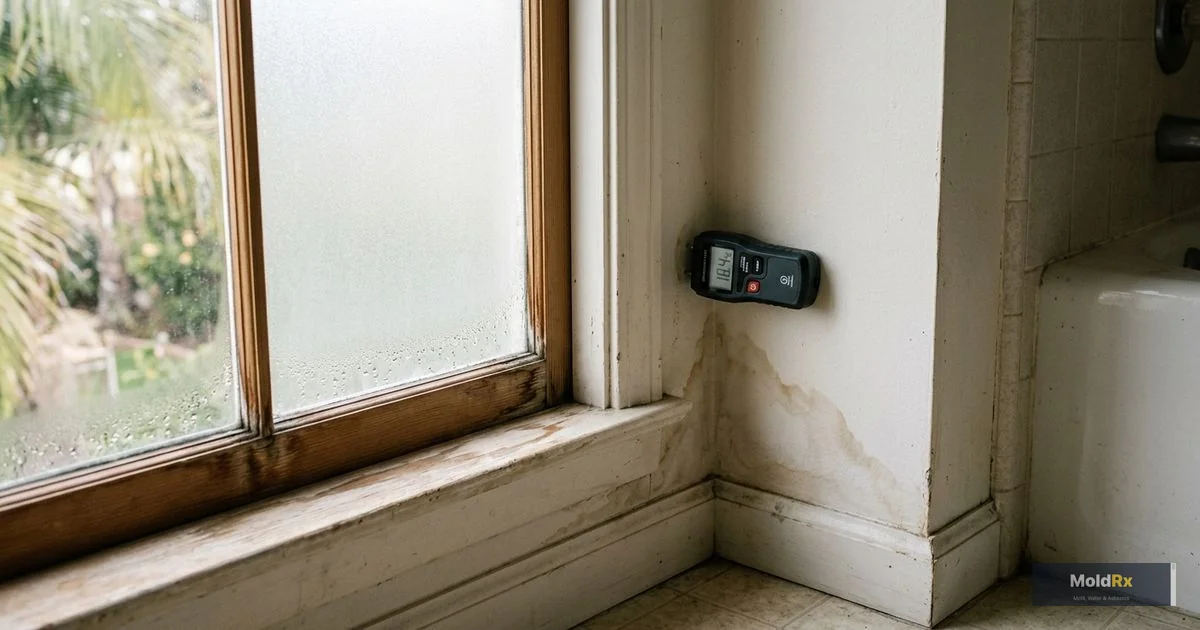
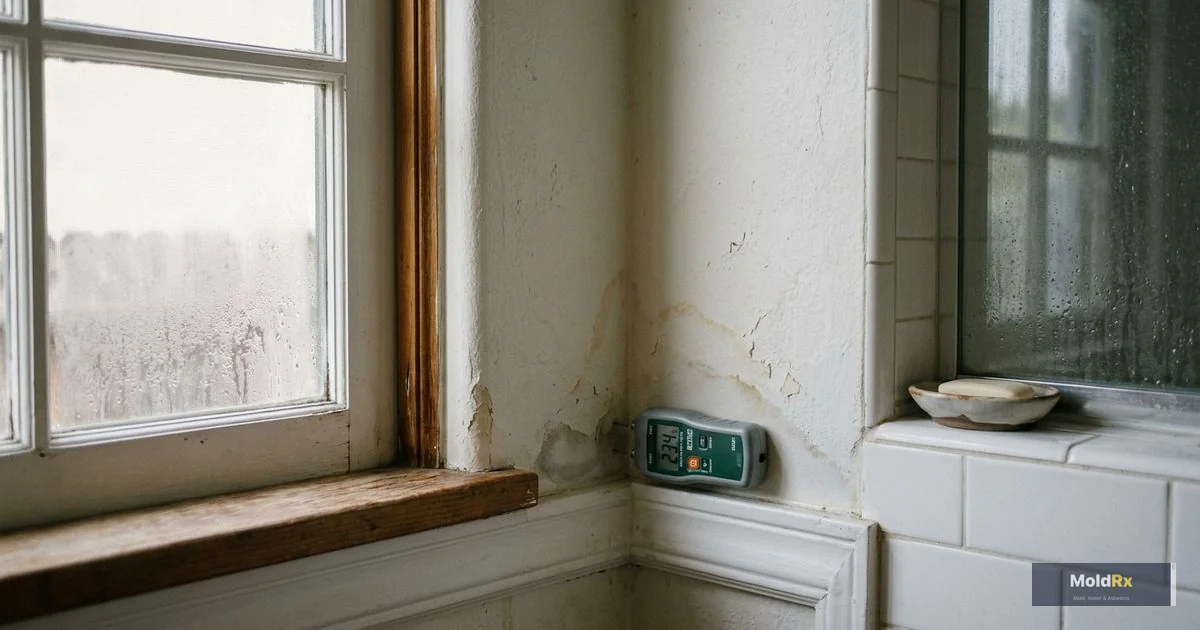
A thorough inspection comes before any removal work begins. Our professionals use infrared thermal imaging and pin-type moisture meters to identify all affected areas — not just the visible mold, but hidden colonies behind drywall, under flooring, and inside HVAC systems. In Needles, inspectors pay particular attention to swamp cooler supply plenums, bathroom exhaust paths, river-facing exterior walls, and slab-on-grade foundations where soil moisture migrates upward. This step follows the assessment protocols in EPA 402-K-01-001, ensuring nothing is missed before a scope of work is finalized.
2. Containment
Before any mold is disturbed, affected areas are sealed off using polyethylene sheeting and negative air pressure machines equipped with HEPA filtration rated to capture particles as small as 0.3 microns. This prevents spores from migrating into clean areas of the home during removal. Containment protocols follow IICRC S520 guidelines for Condition 2 and Condition 3 environments. For households with children, the CDC and EPA both advise minimizing exposure to disturbed mold, and the WHO Guidelines for Indoor Air Quality: Dampness and Mould specifically note elevated respiratory risks for children in mold-contaminated spaces. Our containment barriers stay in place until post-remediation verification confirms the area is clear.
3. Removal and Treatment
Mold-colonized porous materials — drywall, insulation, carpet padding, ceiling tiles — are removed, bagged, and disposed of according to IICRC S520 protocols and Cal/OSHA Title 8 section 5155 standards for airborne contaminant control. Salvageable structural components and non-porous surfaces are cleaned using HEPA vacuums and treated with EPA-registered antimicrobial agents that prevent recolonization. In Needles homes, technicians commonly address mold in swamp cooler housings, ductwork interiors, and the wall cavities behind river-facing exterior sheathing — areas where moisture has often been present for months before detection.
4. Moisture Correction
Removing mold without fixing the moisture source guarantees recurrence. In Needles, moisture correction typically involves one or more of the following: repairing or replacing leaking swamp cooler drain lines, upgrading from evaporative cooling to refrigerated air in heavily affected properties, sealing foundation penetrations against Colorado River corridor humidity, regrading soil around foundations to direct monsoon runoff away from the structure, and replacing corroded galvanized plumbing with modern materials. Each correction is tailored to the specific moisture pathway identified during inspection.
5. Post-Remediation Verification
After remediation is complete, the project undergoes verification to confirm the property meets IICRC S520 Condition 1 — normal fungal ecology with no visible mold growth and no elevated spore counts. Documentation provided to the homeowner includes before-and-after photographs, moisture readings at each stage, a detailed scope of work, materials used, clearance results, and a written summary of the moisture corrections performed. This documentation package supports insurance claims, real estate transactions, and long-term property records.
What Sets MoldRx Apart
- Straight talk, not sales talk. We tell you what the inspection finds — including when the problem is smaller than you expected. No inflated scopes, no manufactured urgency.
- Licensed, insured, IICRC-certified. Every professional MoldRx sends to a Needles property holds active credentials verified through the CSLB (Contractors State License Board) and carries full liability and workers' compensation insurance for San Bernardino County work.
- Full documentation on every job. Inspection reports, scope of work, moisture readings, clearance testing, photo documentation — every project produces a complete written record.
- Family-owned accountability. We only send vetted remediation professionals we stand behind. If something is not right, you call us directly and we make it right.
Get your free estimate — no obligations, no pressure.
Needles Neighborhoods We Serve
MoldRx provides mold removal across every neighborhood in Needles — ZIP code 92363 — including residential, commercial, and multi-family properties.
- Downtown / Historic Route 66 District — The city's commercial core along Broadway and Front Street, home to the landmark El Garces Hotel (1908, National Register of Historic Places) and other early-20th-century structures. Buildings in this corridor are among the oldest in Needles, with original plumbing, minimal moisture barriers, and flat-roof commercial construction that traps monsoon water in ceiling cavities. Mold colonization in these aging structures often goes undetected behind historic plaster walls.
- Riverview / River Road — Residential properties along the Colorado River's western bank, including homes on River Road and near the Needles Marina. River proximity creates the highest ambient humidity in the city, and these homes experience more condensation on interior surfaces than any other Needles neighborhood. Flooding risk from river-level fluctuations and monsoon runoff compounds the moisture exposure.
- South of I-40 Residential Area — The largest concentration of single-family homes in Needles, situated between Interstate 40 and the river. Much of this housing dates from the 1960s and 1970s, with aging galvanized plumbing, original ductwork, and slab-on-grade foundations that wick soil moisture upward. Swamp cooler use is near-universal, and the combination of indoor moisture loading and 50-plus-year-old construction materials creates persistent hidden mold risk.
- West Side / Route 66 Corridor — The western residential area along the historic Route 66 alignment, with a mix of older single-family homes and mobile home communities. Mobile and manufactured homes — roughly 15 percent of Needles housing — are particularly vulnerable to undercarriage moisture accumulation, poor subfloor ventilation, and condensation beneath vinyl flooring where mold establishes unseen.
- Marina / Jack Smith Park Area — Properties near the Needles Marina and Jack Smith Park at the southern edge of the city. Direct river adjacency and lower elevation make this area the most flood-prone in Needles during both monsoon events and occasional Colorado River high-water periods. Homes here face the double moisture exposure of river corridor humidity and periodic water intrusion against aging foundations.
Nearby Communities We Also Serve
Our vetted professionals also cover the surrounding Eastern Mojave and Colorado River corridor, carrying the CSLB licensing and IICRC credentials required for residential and commercial mold remediation in San Bernardino County:
- Blythe — South along the Colorado River in Riverside County, another river-corridor desert city where aging housing stock and agricultural irrigation create similar mold conditions
Related Services in Needles
- Mold Removal in Needles
- Asbestos Removal in Needles
- Water Damage Restoration in Needles
- Mold Testing in Needles
- Asbestos Testing in Needles
→ All remediation services in Needles
Frequently Asked Questions
How quickly can mold grow after a monsoon storm in Needles?
Mold can begin colonizing damp materials within 24 to 48 hours after water intrusion. In Needles, post-storm temperatures regularly exceed 100 degrees, which accelerates microbial growth inside wall cavities and under flooring. If your property has taken on water during a monsoon event, contact MoldRx promptly for an assessment.
My swamp cooler area smells musty — does that mean I have mold?
A persistent musty odor near the cooler housing, supply plenum, or in rooms directly served by the evaporative system is a strong indicator of mold colonization. Swamp coolers introduce significant moisture into the structure, and the dark, damp interior of the unit and ductwork provides ideal conditions for fungal growth. A professional inspection can confirm the source and extent.
Is mold common in Needles even though it is a desert?
Yes. Desert cities along water corridors face specific mold risks that inland desert locations do not. The Colorado River raises local humidity, swamp coolers add moisture indoors, and older housing stock lacks modern moisture barriers. Mold remediation professionals working in Needles encounter active mold colonies regularly.
Do I need to leave my home during mold removal?
For most contained projects, occupants can remain in unaffected areas of the home. If the contamination is extensive, involves HVAC systems that serve the entire house, or if household members include young children or individuals with respiratory conditions, our team may recommend temporary relocation during the most intensive removal phases.
How do I prevent mold from coming back after remediation?
Ongoing moisture management is the key. In Needles, that means maintaining swamp cooler drain lines and pads, ensuring bathroom and kitchen exhaust fans vent to the exterior, monitoring indoor humidity with a hygrometer (keeping levels between 30 and 50 percent), inspecting plumbing annually for leaks, and maintaining positive drainage away from your foundation during monsoon season.
Will MoldRx handle my insurance paperwork?
MoldRx provides complete documentation of the remediation process — inspection findings, scope of work, moisture readings, clearance results, and photographs — which gives your insurance adjuster the information needed to process a claim. Call for a free estimate to discuss your specific situation.
Get Mold Removal in Needles
Call MoldRx for your free estimate — (888) 609-8907. Clear answers. Honest guidance. Work done right.