Asbestos Testing in Murrieta, CA
Vetted Asbestos Testing Specialists Serving Murrieta and the Temecula Valley
Murrieta is one of the Inland Empire's most dramatic growth stories. In the 1980 Census, the area registered an estimated 2,200 residents — a quiet country town whose economy once depended on hot springs tourism and ranching. By the time Murrieta officially incorporated as a city on July 1, 1991, the population had already surpassed 24,000. Growth accelerated further through the 1990s and 2000s: by 2005, more than 85,000 people called Murrieta home, and the 2010 Census recorded 103,466 residents, representing a 133.7 percent population increase over the prior decade. Today the city is home to over 115,000 people, making it one of the five largest communities in Riverside County.
That rapid growth trajectory means tens of thousands of homes went up in a relatively compressed window. While Murrieta is often considered a "newer" city, a meaningful share of its housing stock was built during a period when asbestos-containing materials were still circulating through construction supply chains. The conventional wisdom that only pre-1980 homes carry asbestos risk actually undersells the reality. Homes built through the early 1990s in the Inland Empire can and do test positive for asbestos in certain materials. If you are planning renovations, purchasing property, or simply want to understand what is inside your walls before starting any work, professional asbestos testing is the only way to get definitive answers.
Request your free consultation — we will help you determine if testing is needed for your Murrieta project.
Understanding Asbestos: What It Is and Why It Ended Up in Homes
Asbestos is a group of six naturally occurring silicate minerals composed of thin, needle-like fibers. For most of the twentieth century, the construction industry treated asbestos as a near-perfect building additive — fireproof, chemically resistant, and strong. Manufacturers incorporated it into hundreds of residential products, from roofing shingles and vinyl floor tiles to pipe insulation, drywall joint compound, and textured ceiling coatings.
The EPA began restricting certain asbestos products in 1973 and expanded those restrictions through the 1980s, culminating in a broader ban in 1989 that was partially overturned by a federal court. In practice, asbestos-containing materials continued to be installed well into the late 1980s and early 1990s as existing inventory worked through distribution channels. This is essential context for Murrieta homeowners: the transitional period between 1980 and the early 1990s — precisely when much of Murrieta was being built — still produced homes with asbestos-containing materials in specific products.
Why Murrieta's Construction History Creates Asbestos Risk
Murrieta's modern growth story began in the early 1980s when the extension of Interstate 15 through the Temecula Valley opened the area to commuters from San Diego and Orange County. Thousands of families moved inland seeking affordable suburban housing, and residential construction accelerated at a pace few expected. The city's first General Plan was adopted in 1994, and by then the suburban transformation was well underway.
That growth timeline creates distinct risk categories across Murrieta's neighborhoods:
Pre-1980 Construction (High Risk)
Established properties in and around Old Town Murrieta — along with rural acreage and ranch-style homes predating the suburban boom — were built during the peak of asbestos use. Floor tiles, popcorn ceilings, pipe insulation, transite siding, roof felt, furnace duct tape, and joint compound from this era have a high probability of containing asbestos.
1980s Construction (Moderate Risk)
The first wave of subdivision development in Murrieta coincided with a transitional period for building materials. Some manufacturers had already switched to asbestos-free formulations; others had not. Products manufactured before the late-1970s restrictions continued to sit in warehouses and on supplier shelves. Homes from this decade may contain asbestos in some materials but not others, making assumptions dangerous. A vinyl floor tile installed in a 1985 Murrieta home could test positive or negative depending entirely on which manufacturer produced it and when. Testing is the only way to sort it out.
1990s and 2000s Construction (Lower but Not Zero Risk)
The median construction year for a Murrieta home is approximately 2000, and roughly 40 percent of the housing stock was added between 2000 and 2009. While homes from this era are significantly less likely to contain asbestos, the risk is not zero — asbestos was never fully banned in the United States. If you are renovating a 1990s home and plan to disturb textured ceiling coatings, original floor tiles, or original roofing, testing provides certainty for minimal cost.
Commercial and Institutional Buildings
Schools, churches, strip malls, and offices constructed before the early 1990s can contain asbestos in fire-rated insulation, acoustic ceiling panels, floor mastics, and fireproofing. SCAQMD Rule 1403 and Cal/OSHA Section 1529 may require testing before renovation or demolition.
Common Asbestos-Containing Materials in Murrieta Homes
Not every building product from the asbestos era actually contains asbestos, but many do. Here is a comprehensive guide to materials that frequently test positive in Southern California homes:
Ceilings: Popcorn (acoustic) texture applied before the mid-1980s is one of the most common asbestos-containing materials in Inland Empire homes. Knockdown textures and certain ceiling tiles also test positive.
Floors: 9-by-9-inch vinyl floor tiles are a classic indicator. The black mastic adhesive beneath them also frequently contains asbestos, sometimes even when the tiles themselves do not. Sheet vinyl with asbestos-containing backing is another common find.
Walls: Drywall joint compound used through the early 1980s often contained chrysotile asbestos. Some plaster and stucco formulations also test positive.
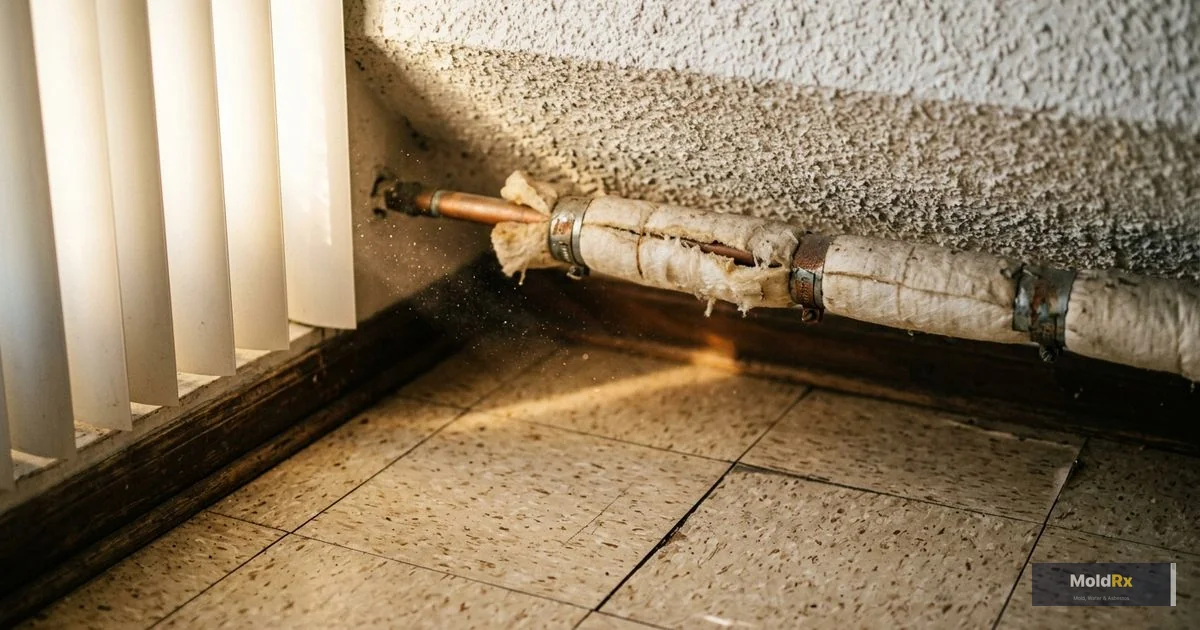
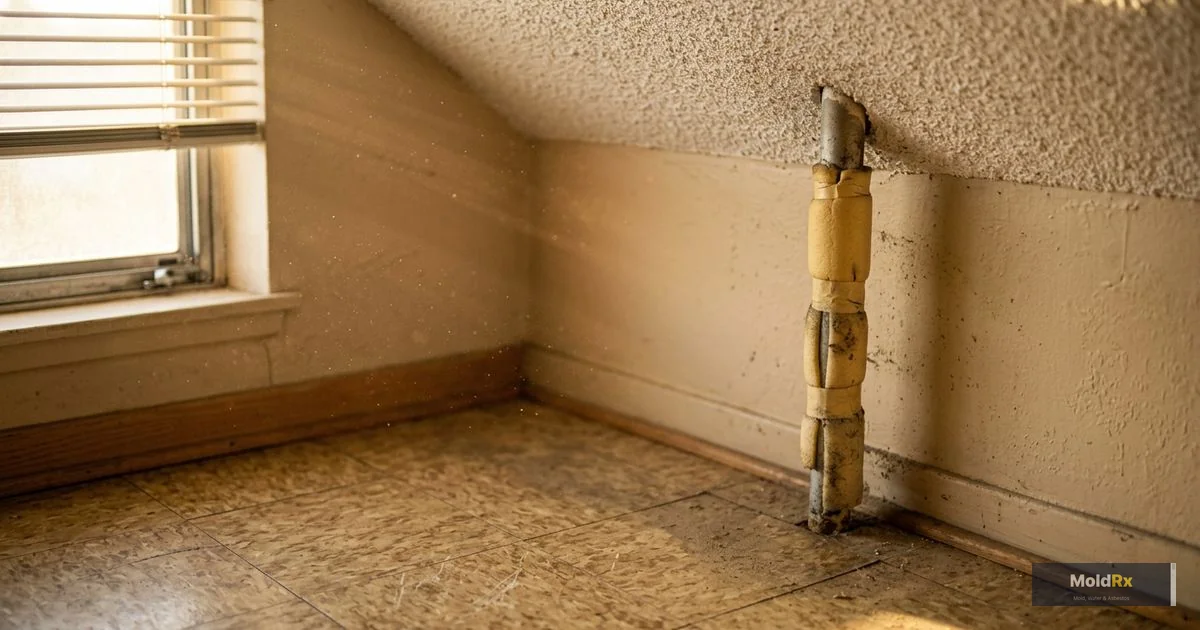
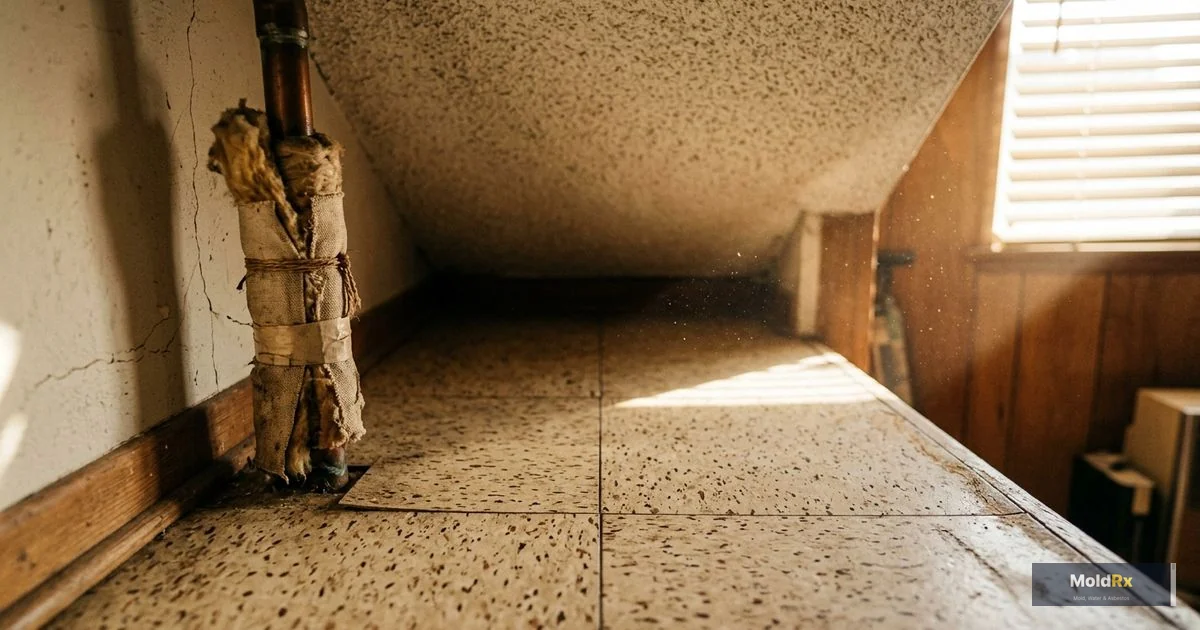
Insulation: Pipe wrapping, boiler insulation, and HVAC duct tape are common culprits. Vermiculite attic insulation is a significant concern because much of it came from a mine contaminated with tremolite asbestos.
Roofing: Asphalt shingles, roof felt, and roofing cement from pre-1990 installations may contain asbestos.
Exterior: Transite siding (a cement-asbestos composite), exterior stucco mixes, window glazing compound, and caulking have all tested positive in Riverside County homes.
Mechanical systems: Furnace flue pipes, HVAC duct insulation, gaskets, and ductwork tape are frequently positive in older homes.
Visual inspection cannot determine whether any of these materials contain asbestos. Only laboratory analysis provides a definitive answer.
Health Risks of Asbestos Exposure
Asbestos fibers are extraordinarily small — up to 700 times thinner than a human hair. When inhaled, they penetrate deep into lung tissue and become permanently embedded. The body cannot dissolve, break down, or expel them.
Mesothelioma is an aggressive cancer of the membrane lining the lungs or abdomen, caused almost exclusively by asbestos exposure. The latency period is 20 to 50 years. There is no cure, and median survival after diagnosis is 12 to 21 months.
Lung cancer risk increases significantly with asbestos exposure, and the combination of asbestos and cigarette smoking multiplies the risk far beyond what either factor causes alone.
Asbestosis is a progressive, irreversible scarring disease of the lungs that causes worsening shortness of breath and reduced lung function over time.
There is no established safe threshold for mesothelioma. Renovation projects that disturb asbestos-containing materials in enclosed spaces can expose family members, contractors, and visitors to hazardous fiber concentrations. Testing identifies the risk before exposure occurs.
Murrieta's Climate and Material Deterioration
Murrieta sits in southwestern Riverside County at the heart of the Temecula Valley, experiencing a semi-arid Mediterranean climate with summer highs commonly reaching the upper 80s to mid-90s and winter lows dropping into the low-to-mid 40s. The city averages about 15 inches of annual rainfall, nearly all concentrated between November and March, and approximately 275 sunny days per year.
That thermal cycling — expansion during hot days, contraction during cooler nights — stresses building materials over decades. Roof shingles crack, pipe insulation becomes friable (easily crumbled), and textured coatings develop hairline fractures. When asbestos-containing materials deteriorate, they can release fibers into indoor air without anyone cutting, sanding, or demolishing anything. The transition from an intact, stable material to a friable, fiber-releasing one can happen gradually over 30 to 40 years of exposure to Murrieta's climate.
Homes with original HVAC systems, aging insulation, or visible material deterioration deserve professional evaluation regardless of whether renovation is planned.
Regulations Governing Asbestos in Murrieta
California has some of the strictest asbestos regulations in the country. Three overlapping frameworks apply to Murrieta properties.
SCAQMD Rule 1403 — Asbestos Emissions from Demolition and Renovation
The South Coast Air Quality Management District enforces Rule 1403 across its jurisdiction, which includes Riverside County and the City of Murrieta. Key requirements:
- A mandatory asbestos survey before any demolition of any structure, without exception
- A survey before renovation projects disturbing 100 square feet or more of suspect material
- Surveys performed by AHERA-certified building inspectors — professionals who have completed the EPA Model Accreditation Plan training program and maintain current certification through annual refresher courses
- Written notification to SCAQMD at least 10 working days before asbestos removal begins, submitted through the district's online notification system
- Specific work practices for containment, wet methods, removal, and disposal
- Violations carry fines of up to $20,000 per day and potential criminal penalties if negligence leads to environmental or bodily harm
OSHA 1926.1101 — Federal Asbestos Standard for Construction
The federal construction standard applies to all asbestos-related work nationwide:
- A permissible exposure limit (PEL) of 0.1 fibers per cubic centimeter of air averaged over an 8-hour workday
- An excursion limit of 1.0 fiber per cubic centimeter averaged over any 30-minute period
- Classification of asbestos work into four classes (I through IV) with escalating requirements for containment, worker protection, and air monitoring
- A designated competent person on every worksite where asbestos may be disturbed
- Requirements for regulated areas, decontamination procedures, medical surveillance, and record-keeping
- Building owners must identify the presence, location, and quantity of asbestos and notify contractors before work begins
Cal/OSHA Section 1529 — California's Asbestos Construction Standard
California's standard mirrors and in several areas exceeds the federal requirements:
- Mandatory asbestos surveys for all structures built before 1980 prior to renovation or demolition
- Materials in pre-1980 buildings are presumed to contain asbestos (classified as PACM — Presumed Asbestos-Containing Material) until laboratory testing proves otherwise
- Disturbances exceeding 100 square feet of material containing more than 0.1 percent asbestos must be performed by a contractor holding a CSLB C-22 asbestos abatement license
- The C-22 classification requires at least four years of journey-level experience in asbestos abatement, passage of trade and law examinations, and registration with Cal/OSHA's Division of Occupational Safety and Health (DOSH)
- Workers must receive asbestos-specific training and ongoing medical monitoring
- Exposure records and medical records must be maintained for at least 30 years
What This Means for Murrieta Property Owners
For pre-1980 properties in Old Town Murrieta and surrounding areas, these regulations make testing a legal prerequisite for renovation. For 1980s-era homes, many experienced Murrieta contractors will not begin work without a current asbestos survey covering the materials in the project area. For real estate transactions, California law requires sellers to disclose known material defects — which includes the presence of asbestos — making professional testing beneficial for both buyers and sellers.
The MoldRx Asbestos Testing Process in Murrieta
Step 1: Visual Assessment and Sample Planning
A vetted asbestos specialist visits your Murrieta property and conducts a thorough visual assessment. The specialist identifies materials that may contain asbestos based on the home's construction date, material appearance, condition, and location. If you have specific renovation plans, the assessment focuses on materials that will be disturbed during your project. If you want a comprehensive evaluation, the specialist examines all accessible suspect materials throughout the property.
This step determines exactly where samples need to be collected. A well-planned sampling strategy covers every suspect material type in each area of the home without unnecessary duplication or expense.
Step 2: Safe Sample Collection
Samples are collected following EPA and Cal/OSHA protocols designed to prevent fiber release:
- Suspect materials are misted with water to suppress fibers before any cutting or extraction
- Small sections — typically one to two square inches — are carefully removed with specialized tools
- Each sample is placed in a sealed, labeled container and documented by exact location
- Multiple samples may be collected from the same material type across different rooms, because asbestos content can vary between manufacturing batches
- Personal protective equipment is worn throughout, and collection sites are sealed after sampling
For a typical Murrieta single-family home, on-site collection takes one to two hours. This is not a DIY task — improper sampling can contaminate your living space. Professional collection by an AHERA-certified inspector is both safer and required by regulation for many property types.
Step 3: NVLAP-Accredited Laboratory Analysis
Samples are submitted to an NVLAP-accredited laboratory for analysis. NVLAP — the National Voluntary Laboratory Accreditation Program, administered by NIST — certifies that the laboratory meets rigorous quality standards and participates in proficiency testing. This accreditation is required under AHERA and ensures your results are legally defensible.
Polarized Light Microscopy (PLM) is the standard method for bulk samples. PLM identifies asbestos fiber type — chrysotile, amosite, crocidolite, tremolite, actinolite, or anthophyllite — and estimates concentration. It is cost-effective, well-established, and sufficient for most residential testing.
Transmission Electron Microscopy (TEM) provides higher resolution at the nanometer scale. TEM is used for inconclusive PLM results, air monitoring, and post-abatement clearance testing.
Standard turnaround is three to five business days. Rush analysis is available for time-sensitive projects.
Step 4: Clear Results and Practical Guidance
When results come back, we explain exactly what they mean for your situation in plain language. If no asbestos is detected, you can proceed with your renovation, sale, or project knowing the tested materials are clear. If asbestos is detected, we walk you through your options:
- Leave in place: Intact, undamaged asbestos-containing materials that will not be disturbed pose minimal risk. Monitoring the material's condition over time is often the most practical approach.
- Encapsulation: Coating or enclosing the material with a sealant can prevent fiber release without full removal. This is sometimes appropriate for materials in good condition that need a protective barrier.
- Professional removal: If the material is damaged, deteriorating, or in the direct path of renovation work, removal by a contractor holding a California CSLB C-22 asbestos abatement license is the appropriate path. California law requires licensed professionals for all asbestos abatement work.
MoldRx only sends vetted testing specialists. We do not perform abatement. If removal is needed, we connect you with licensed C-22 contractors, but there is no pressure to bundle services and no conflict of interest in our recommendations.
Get your free consultation — no obligations, just honest answers about your Murrieta property.
Common Triggers for Testing in Murrieta
Home renovations of any scope — kitchen remodels, bathroom updates, flooring replacement, room additions, and whole-house renovations — involve disturbing materials that may contain asbestos, particularly in homes built before the mid-1990s.
Popcorn ceiling removal is one of the most popular cosmetic updates and one of the most dangerous to perform without testing. Scraping textured ceiling material generates massive quantities of airborne particulate that, if the texture contains asbestos, creates hazardous exposure throughout the home.
HVAC system upgrades are common in Murrieta, where effective cooling is essential for several months each year. Replacing ductwork, upgrading insulation, or installing new systems can disturb asbestos-containing duct tape, insulation, and mechanical gaskets in older installations.
Real estate transactions for pre-1990 homes increasingly involve asbestos testing as part of the buyer's due diligence. Sellers who provide testing results proactively demonstrate transparency and avoid surprises that can delay closings.
Roof replacement or repair on homes with pre-1990 roofing materials should be preceded by testing. Asphalt shingles, roof felt, and roofing cement from this era may contain asbestos, and removing them without testing exposes roofing crews and anyone nearby to potential fiber release.
Damaged or deteriorating materials discovered during routine maintenance — crumbling pipe insulation, cracked floor tiles, peeling textured ceilings, or aging siding — warrant professional evaluation and testing before any repair work begins.
Murrieta Neighborhoods and Areas We Serve
Our vetted asbestos testing specialists serve all Murrieta neighborhoods and surrounding communities. Whether your home is in Greer Ranch, The Oaks, Bear Creek, Copper Canyon, Vineyard, the historic Old Town Murrieta area, or one of the many master-planned communities developed since the 1990s, we cover it. We serve all properties in ZIP codes 92562 and 92563, including single-family homes, condominiums, townhomes, and commercial buildings.
Murrieta sits at the heart of the Temecula Valley, and we regularly serve neighboring communities including Temecula to the south, Wildomar and Lake Elsinore to the north, and Menifee to the northwest.
Related Services in Murrieta
In addition to asbestos testing, we also offer Mold Removal in Murrieta, Asbestos Removal in Murrieta, Water Damage Restoration in Murrieta, and Mold Testing in Murrieta services to Murrieta property owners.
-> Learn more about remediation services in Murrieta
Frequently Asked Questions
When is asbestos testing required in Murrieta?
Under Cal/OSHA Section 1529, an asbestos survey is required before renovation or demolition work in buildings constructed before 1980. SCAQMD Rule 1403 requires an asbestos survey before any demolition regardless of building age and before renovation disturbing 100 or more square feet of suspect material. Beyond legal requirements, testing is strongly recommended before renovating pre-1990 homes, purchasing older properties, upgrading HVAC systems in older buildings, or whenever you want clarity about what is in your home before starting a project.
Can I collect asbestos samples myself?
Self-collection is not recommended and, in many circumstances, not permitted under SCAQMD Rule 1403, which requires surveys to be performed by AHERA-certified inspectors. Improper sampling — cutting into dry material without wetting, using household tools, or failing to seal the site — can release asbestos fibers into your living space, contaminating your home and exposing your family. The cost of professional sampling by a vetted, AHERA-certified specialist is minimal compared to the cost and health risk of improper handling.
What materials in my Murrieta home are most likely to contain asbestos?
The most commonly positive materials in Temecula Valley homes include popcorn ceiling texture, 9-by-9-inch vinyl floor tiles and their black mastic adhesive, drywall joint compound, pipe and duct insulation, HVAC duct tape, roof shingles and felt, and transite siding. In pre-1980 homes, any original building material should be considered suspect until tested. In homes built during the 1980s and early 1990s, the risk is lower but present in specific products from manufacturers that were slow to reformulate.
What happens if asbestos is found in my Murrieta home?
A positive result does not automatically mean expensive removal. The appropriate response depends on the material's condition and your plans. Intact, undamaged asbestos-containing materials that will not be disturbed can often be managed in place through periodic monitoring. Materials that are damaged, deteriorating, or in the path of planned renovation work typically need to be addressed through encapsulation or professional removal by a CSLB C-22 licensed contractor following Cal/OSHA Section 1529 and SCAQMD Rule 1403 procedures. Your report will clearly explain the options for each material tested.
What is the difference between PLM and TEM analysis?
PLM (Polarized Light Microscopy) is the standard method for bulk material samples, identifying asbestos type and concentration. It is cost-effective and sufficient for most residential testing. TEM (Transmission Electron Microscopy) offers much higher resolution, detecting fibers at the nanometer scale. TEM is used for inconclusive PLM results, air monitoring, and post-abatement clearance testing. Both are performed at NVLAP-accredited laboratories meeting AHERA quality standards.
How long does the asbestos testing process take?
On-site collection takes one to two hours. NVLAP-accredited lab results arrive within three to five business days, with rush options available. From scheduling to final report, most Murrieta residential projects are completed within one week.
Schedule Asbestos Testing in Murrieta
Finding out whether your Murrieta home contains asbestos should not be complicated. You need straightforward answers from professionals who know what they are looking at — not a sales pitch designed to push unnecessary work.
MoldRx only sends vetted testing specialists who understand Temecula Valley construction patterns, know what to look for in homes from different eras, and provide honest guidance about what your results actually mean. Whether you are planning renovations, buying or selling a home, upgrading HVAC systems, or simply want to understand what is behind that textured ceiling, we are here to help.
Asbestos-related diseases — mesothelioma, lung cancer, asbestosis — develop over years of exposure but are not reversible once they take hold. Testing is the straightforward, affordable first step that tells you whether your home poses a risk and, if so, exactly what to do about it. Every sample goes to an NVLAP-accredited laboratory. Every inspection follows EPA and Cal/OSHA protocols. Every report gives you clear, actionable information.
Do not guess. Get tested.
Call MoldRx to schedule your asbestos test — (888) 609-8907. Know before you start.