Mold Testing in Mission Viejo, CA — MoldRx
Vetted Mold Testing Specialists Serving Mission Viejo and South Orange County
Mission Viejo is a master-planned city of roughly 96,000 residents in the Saddleback Valley of South Orange County — ZIP codes 92691, 92692, and 92694. The city spans 18 square miles of rolling hills between Lake Forest to the northwest, Rancho Santa Margarita to the northeast, and Laguna Niguel and Laguna Hills to the west. Development began in the late 1960s under Donald Bren's master plan that placed roads in the valleys and houses on the hills, with the bulk of construction through the 1970s, 1980s, and 1990s — placing most homes at 30 to 55 years old. The borderline semi-arid Mediterranean climate brings roughly 14 inches of annual rainfall concentrated between November and March, while marine layer influence pushes relative humidity between 65 and 74 percent from late spring through early summer. When a mold question arises in a Mission Viejo property — a musty odor in a lower-level room, discoloration on a hillside-facing wall, respiratory symptoms that improve when you leave — professional testing provides the data you need to make an informed decision rather than guessing.
MoldRx only sends vetted mold testing professionals who follow IICRC S520 assessment protocols and use AIHA-accredited, NVLAP-certified laboratories for all sample analysis.
Request your free estimate — we will assess your property and give you straight answers.
When Mold Testing Makes Sense in Mission Viejo
Not every concern requires lab analysis. But certain situations call for professional testing to determine what you are dealing with — the species present, concentration levels, and whether indoor readings exceed normal outdoor baselines for the Saddleback Valley.
After Water Intrusion Events
Per IICRC S520 and EPA publication 402-K-01-001, mold colonizes damp materials within 24 to 48 hours. Mission Viejo properties face specific water intrusion risks tied to the city's hilly topography and aging infrastructure: Oso Creek corridor flooding during heavy rain events, storm runoff overwhelming hillside grading and retaining wall drainage, Santa Ana winds driving rain into aging stucco, polybutylene and galvanized plumbing reaching end-of-life in 1970s and 1980s homes, and slab-on-grade foundations where expansive soils shift during wet-dry cycles. When seasonal storms stack up, hillside soil saturates, gutter systems clog, and runoff enters structures through foundation cracks and retaining wall failures. If your property has experienced any water event — even one that appeared minor — testing determines whether colonization occurred before you can see it on surfaces.
Persistent Musty Odors Without Visible Growth
A musty smell that persists despite cleaning typically means mold is growing concealed — inside wall cavities behind retaining walls, in bathroom exhaust ducts terminating in attic spaces, behind cabinetry on downhill-facing exterior walls, or inside HVAC plenums where original ductwork has never been replaced. Mission Viejo's hillside construction creates temperature differentials between uphill and downhill walls of the same house, producing condensation in cavities that never fully dry. The Spanish mission-style stucco and barrel-tile roofs are durable, but stucco cracks propagate over decades — once moisture enters the wall cavity, it stays there. Testing identifies the source and severity rather than leaving you guessing.
Real Estate Transactions
Mold testing is not legally required in California real estate transactions, but it is increasingly common in South Orange County — particularly for properties built in the 1970s and 1980s where aging plumbing and original building envelopes create disclosure concerns. Buyers want to know what they are inheriting. Sellers providing pre-listing clearance reports (IICRC S520 Condition 1) eliminate a negotiation point and reduce escrow delays. Post-remediation clearance testing verifies previous work was completed to standard.
Unexplained Health Symptoms
The CDC documents that mold exposure can cause nasal stuffiness, throat irritation, coughing, and wheezing. The WHO Guidelines for Indoor Air Quality identify children as a priority population for dampness-related protection. If household members experience symptoms that improve when they leave and return when they come back — particularly in homes where HVAC circulates air from concealed wall cavities through every room — testing provides objective data.
What Mold Testing Reveals
Professional mold testing produces specific, actionable information that visual inspection alone cannot provide.
Testing identifies the species present — Cladosporium and Penicillium are common outdoor species in the Saddleback Valley, while elevated indoor Aspergillus, Stachybotrys, or Chaetomium indicate active moisture problems. Testing quantifies spore concentrations per cubic meter and compares indoor readings against outdoor baselines collected simultaneously. Counts significantly exceeding outdoor levels indicate an active indoor source.
Testing also determines whether remediation is necessary and at what scope. A small colony of Cladosporium on a bathroom ceiling may need only improved ventilation. Elevated Stachybotrys behind a hillside-facing wall indicates concealed water intrusion requiring professional remediation with containment. Without testing, you are guessing — and in a community where homes were built into contoured hillsides with graded fill, guessing means either overreacting or underreacting.
Types of Mold Testing
Different sampling methods answer different questions. Professional assessments typically combine multiple methods based on inspection findings and the concerns driving the test.
Air Sampling (Spore Trap Analysis)
Air sampling captures airborne spores on a calibrated cassette using a Bio-Pump at a controlled flow rate. Samples are collected from indoor locations of concern and outdoors as a baseline. The laboratory identifies spore types and counts per cubic meter. Air sampling reveals what you are breathing — including spores from concealed colonies with no visible presence. In Mission Viejo homes where hillside wall cavities and aging HVAC systems harbor hidden growth, air sampling often detects problems that surface inspection misses.
Surface Sampling (Tape Lift and Swab)
Surface sampling collects material directly from suspected growth using adhesive tape lifts or sterile swabs. The laboratory identifies the specific species — confirming whether a discoloration is active mold or staining and documenting organisms like Stachybotrys that require enhanced containment during remediation per IICRC S520.
ERMI Testing (Environmental Relative Moldiness Index)
ERMI analysis, developed by the EPA, uses dust samples analyzed via qPCR DNA technology to detect 36 mold species simultaneously. The result is a numerical score comparing your home's mold burden against a national reference database. ERMI is useful for baseline assessments, chronic health investigations, and situations where standard spore trap results are inconclusive. For Mission Viejo properties with long-standing drainage concerns, ERMI provides a deeper picture of cumulative fungal exposure that single-point air sampling may not capture.
Moisture Mapping (Supporting Assessment)
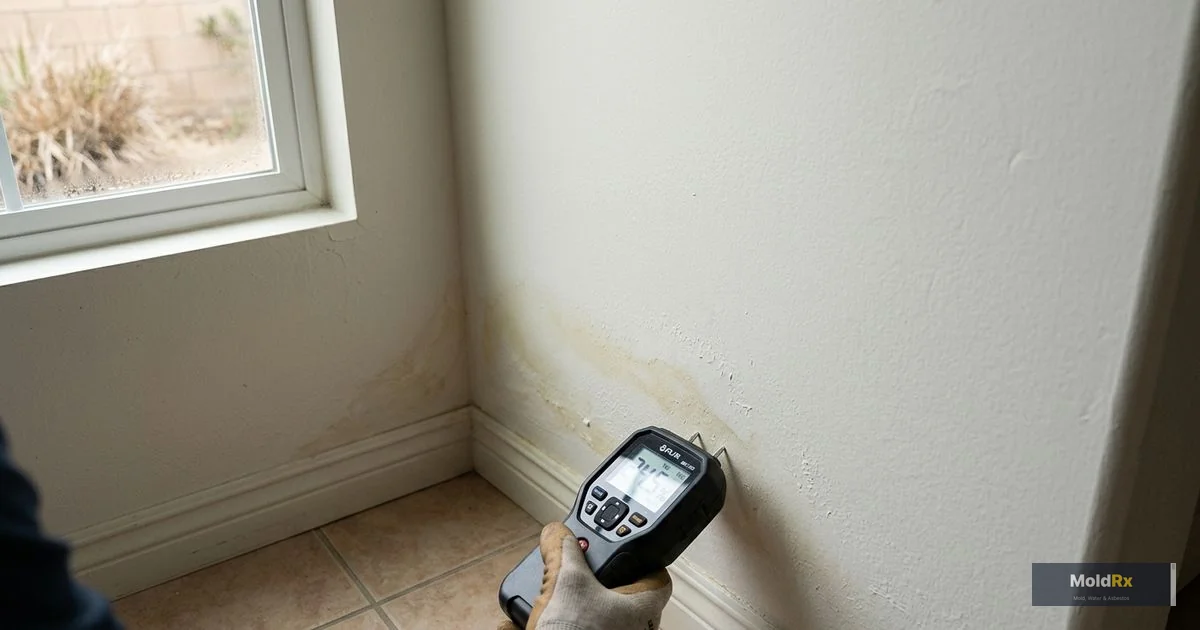
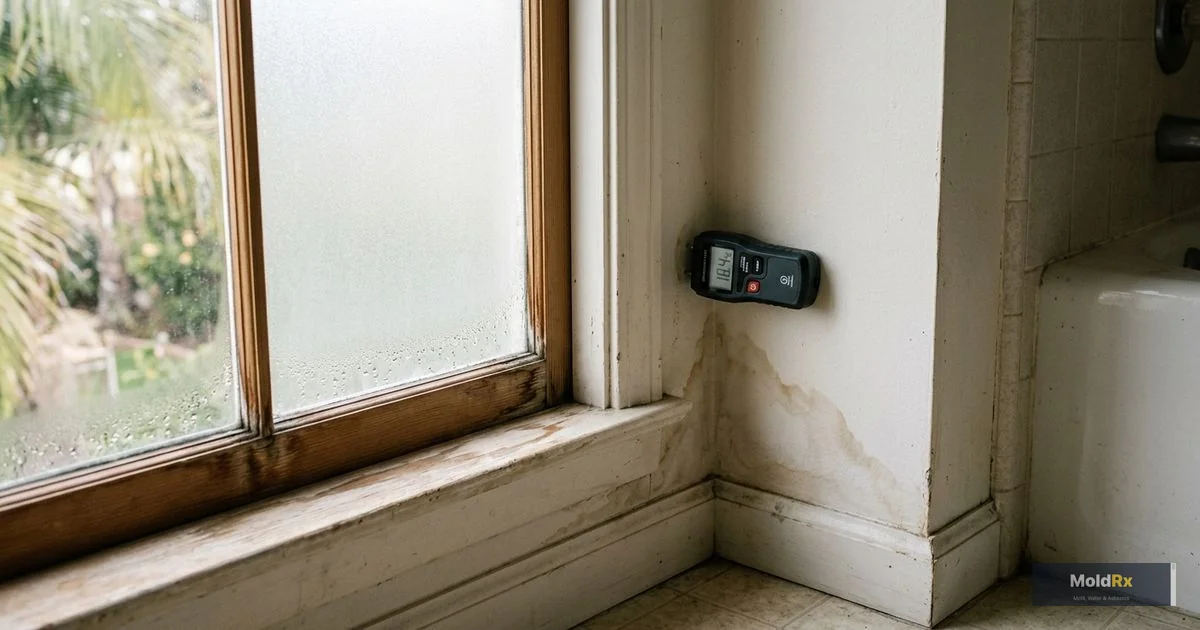
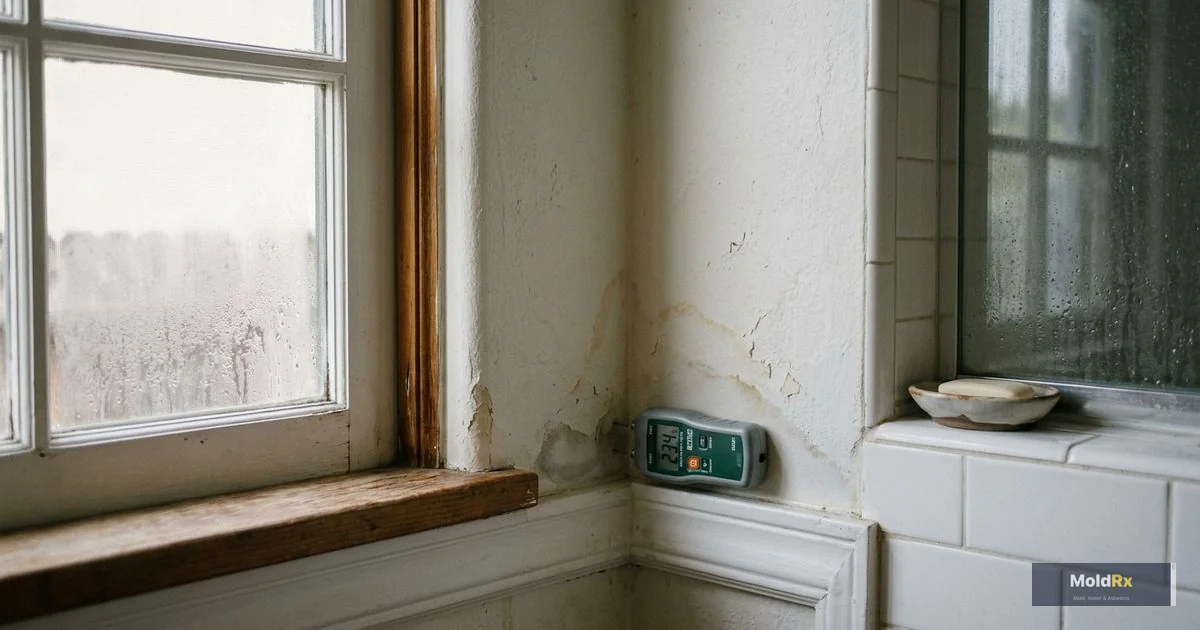
While not a biological test, professional moisture assessment using infrared thermal imaging and calibrated moisture meters is essential to any thorough mold evaluation. Moisture mapping identifies active water intrusion pathways — condensation on hillside-facing walls, retaining wall seepage, slab moisture migration on expansive soils, stucco penetration from Santa Ana rain events, and plumbing leaks in aging supply lines. Identifying the moisture source determines whether any needed remediation will be permanent or temporary.
Our Testing Process in Mission Viejo
Our vetted specialists follow a systematic, five-step approach designed to give you accurate, defensible results.
Step 1: Consultation and Scope
Before arriving, we discuss your concerns, symptoms, timeline, and what prompted the request. This conversation shapes the assessment approach — a real estate transaction requires different documentation than a health investigation. For Mission Viejo properties, we ask about the home's position on the hillside, construction decade, and whether you have noticed seasonal changes in odors or moisture — especially during marine layer months or after heavy winter storms.
Step 2: Visual Inspection and Moisture Assessment
On-site, our specialist conducts a thorough visual inspection focusing on areas prone to moisture accumulation — bathrooms with original plumbing, kitchens, laundry areas, HVAC systems, window frames, hillside-facing exterior walls, retaining wall contact points, and lower-level rooms built into grade. Infrared thermal imaging and calibrated moisture meters identify concealed moisture that visual inspection cannot detect — particularly valuable in Mission Viejo's contoured construction for revealing moisture migrating through hillside grading and aging slab foundations.
Step 3: Strategic Sample Collection
Based on inspection findings, samples are collected from targeted locations — air cassettes for airborne spore concentrations, surface tape lifts or swabs for visible or suspected growth, and ERMI dust samples when warranted. An outdoor baseline air sample is always collected for comparison. All sample locations, quantities, and methods are documented.
Step 4: AIHA-Accredited Laboratory Analysis
All samples go to an AIHA-accredited, NVLAP-certified laboratory — ensuring analytical methods, quality controls, and reporting meet established scientific requirements. Results are typically available within three to five business days.
Step 5: Results Interpretation and Written Report
We do not hand you a lab report and walk away. Our specialists review findings with you in plain language and provide a written report with clear recommendations — including sample data, laboratory certifications, outdoor comparisons, and next steps. Documentation is suitable for insurance, real estate, and healthcare purposes.
DIY Mold Test Kits vs. Professional Testing
Home mold test kits ($10 to $50 at hardware stores) involve placing a petri dish in a room and mailing it to a laboratory. The limitations are significant.
No calibrated air volume. Professional air sampling draws a measured volume through a calibrated cassette, producing spore counts per cubic meter comparable to outdoor baselines. Settle plates cannot be quantified per unit volume.
No outdoor baseline comparison. Professional testing always includes outdoor samples collected simultaneously. A DIY result of "mold present" tells you nothing — mold spores exist in every home. The question is whether indoor concentrations significantly exceed outdoor baselines.
No professional inspection. In Mission Viejo, where hillside grading, aging slab foundations on expansive soils, and decades-old plumbing create moisture pathways invisible without professional equipment, a DIY kit placed in the wrong room misses the problem entirely.
No chain of custody. AIHA-accredited results carry documented chain of custody essential for insurance claims, real estate disputes, and legal proceedings. DIY results generally do not meet evidentiary standards.
Understanding Your Mold Test Results
Laboratory reports contain technical data that requires context to interpret. Here is what the key elements mean.
Spore Counts and Outdoor Comparisons
The most important comparison is indoor versus outdoor spore concentrations. Mold spores are naturally present in outdoor air — in the Saddleback Valley, outdoor counts typically range from hundreds to low thousands per cubic meter depending on season. Indoor counts at or below outdoor levels indicate normal conditions (IICRC S520 Condition 1). Counts significantly exceeding outdoor levels — particularly of species not dominant outdoors — indicate an active indoor source.
Species Identification and Significance
Not all mold species carry the same implications. Cladosporium is the most common outdoor mold in Southern California — generally not concerning unless indoor counts significantly exceed outdoor baselines. Penicillium/Aspergillus (grouped in spore trap analysis) are common both indoors and outdoors; elevated indoor levels suggest a moisture problem. Stachybotrys ("black mold") requires sustained moisture on cellulose materials and is rarely found outdoors — any indoor presence indicates concealed water damage. Chaetomium carries similar implications. Species identification guides the urgency and scope of any response.
What "Normal" Looks Like
There is no single universal standard for "safe" indoor mold levels. The EPA, AIHA, and IICRC S520 all use the principle of comparison: indoor fungal ecology should approximate outdoor conditions in both species and concentration. When it does, conditions meet Condition 1 (normal). When indoor counts significantly exceed outdoor baselines, or when moisture-dependent species are confirmed indoors, conditions have shifted toward Condition 2 or 3 — indicating contamination or active colonization. Our reports translate these into plain-language recommendations.
Health Risks Associated with Indoor Mold
The EPA, CDC, and WHO Guidelines for Indoor Air Quality: Dampness and Mould document that prolonged exposure to elevated indoor mold is associated with respiratory symptoms, allergic reactions, and asthma aggravation. Mold produces allergens, irritants, and in some species mycotoxins.
The concern arises when concealed colonies behind hillside-facing walls, inside ductwork, or beneath flooring produce spore concentrations that occupants breathe continuously. Higher-risk populations include children, adults with asthma, pregnant women, elderly residents, and immunocompromised individuals. Mission Viejo's large population of families with school-age children and the substantial senior community in neighborhoods like Casta del Sol make indoor air quality a broad concern.
Mold testing does not diagnose medical conditions. It provides objective data that you and your healthcare provider can use to evaluate whether indoor air quality may be contributing to symptoms.
What Sets MoldRx Apart
- Straight talk, not sales talk. We report what the testing finds — including when results are normal and no action is needed. No inflated findings, no manufactured urgency.
- AIHA-accredited, NVLAP-certified laboratories. Every sample goes to a laboratory meeting AIHA and NVLAP accreditation standards — the same standards referenced by the EPA, IICRC, and Cal/OSHA for defensible indoor air quality analysis.
- Full documentation on every test. Inspection notes, sample locations, chain of custody, certified analytical results, outdoor comparisons, species identification, and written recommendations — documentation that stands up for insurance, real estate, and healthcare purposes.
- Licensed, insured, locally vetted. Every professional MoldRx sends to a Mission Viejo property is verified through the CSLB (Contractors State License Board) and carries full liability insurance for Orange County work.
Get your free estimate — no obligations, no pressure.
Mission Viejo Neighborhoods We Serve
MoldRx provides mold testing across every neighborhood in Mission Viejo — ZIP codes 92691, 92692, and 92694 — including single-family homes, townhomes, condominiums, and commercial properties throughout this master-planned South Orange County community.
-
Deane Homes — One of Mission Viejo's earliest neighborhoods, built by the Deane Brothers in the mid-to-late 1960s with 732 detached homes. These 55-plus-year-old homes have original copper and galvanized plumbing, single-pane windows, and building envelopes that predate modern moisture barriers. Slab foundations on expansive soils have had decades to shift and crack. Testing frequently identifies moisture pathways through aged slab joints and deteriorating supply lines.
-
Casta del Sol — A gated 55-and-older community spanning 480 acres with approximately 1,900 homes built between 1972 and 1987. Original HVAC, plumbing, and roof assemblies are at or beyond expected service life. Reduced ventilation in closed-up homes during summer and low occupancy during travel seasons elevates interior humidity. Testing frequently reveals elevated readings in bathrooms and laundry areas where original exhaust fans no longer move adequate air volume.
-
Pacific Hills — Custom homes built in the 1980s and 1990s on elevated lots with views toward Saddleback Mountain. Larger floor plans with multiple levels built into hillside grades create concealed wall cavities where moisture migrates from exterior grading. Retaining walls supporting tiered lots develop drainage failures after 30 to 40 years — when weep holes clog, hydrostatic pressure drives moisture into lower-level rooms.
-
Aegean Hills — Family-oriented neighborhood with larger lots and mature landscaping, homes built primarily in the 1980s. The mature tree canopy reduces air circulation around foundations and creates leaf debris that clogs drainage. Some homes include polybutylene plumbing, prone to pinhole leaks and fitting failures after decades of service.
-
El Dorado — One of the city's original neighborhoods with homes from the late 1960s through the 2010s. The wide age range means neighboring properties can have dramatically different infrastructure. Older homes face the same challenges as Deane Homes — original slab foundations, aging plumbing, and five decades of wet-dry cycling on expansive soils.
-
Montevideo and Cordova — Central neighborhoods along the Oso Creek corridor, homes and townhomes built in the 1970s and 1980s. Lower elevation and creek proximity create higher ambient humidity around foundations. Attached townhome units share walls and plumbing risers — moisture events in one unit affect adjacent properties. Homes near Oso Creek Trail are in or adjacent to FEMA flood zones.
-
Robinson Ranch and Trabuco Highlands — Northeastern neighborhoods adjacent to the Trabuco Canyon foothills, built in the late 1980s and 1990s. Canyon proximity brings seasonal runoff, and homes backing to slopes are susceptible to subsurface water migration through graded fill during extended rain events.
-
Pavion and La Paz — Neighborhoods along the La Paz Road corridor with single-family homes, condominiums, and townhomes from the late 1970s through the 1990s. Multi-unit buildings share structural elements and drainage — when one component fails, moisture problems cascade across units. Original low-slope roofing on condominium buildings is a common intrusion point after 30-plus years.
Related Services in Mission Viejo
- Mold Removal in Mission Viejo
- Water Damage Restoration in Mission Viejo
- Asbestos Removal in Mission Viejo
- Asbestos Testing in Mission Viejo
→ All remediation services in Mission Viejo
Frequently Asked Questions
How much does mold testing cost in Mission Viejo?
Costs depend on property size, number of samples needed, and testing type. A standard assessment for a typical Mission Viejo home differs in scope from evaluating a large hillside property with multiple retaining walls. Contact us to discuss your situation and we will provide a clear estimate before any work begins.
When should I get mold testing in Mission Viejo?
Consider testing if you notice persistent musty odors, visible discoloration, water damage, or unexplained respiratory symptoms that improve away from home. Testing is also valuable for real estate transactions — particularly in a city where most homes are 30 to 55 years old. In hillside homes, testing is warranted after heavy rain seasons when subsurface drainage may have been overwhelmed, even without visible water intrusion.
What is the difference between air testing and surface testing?
Air testing measures airborne spore concentrations per cubic meter and compares indoor levels against outdoor baselines — it tells you what you are breathing. Surface testing identifies specific species growing on materials — confirming whether a discoloration is active mold. Most thorough assessments include both methods.
Can I do mold testing myself with a home kit?
DIY kits produce results that cannot be compared to outdoor baselines, lack calibrated air volume, and carry no chain of custody for insurance or legal purposes. For Mission Viejo's hillside properties with aging infrastructure, professional testing with AIHA-accredited lab analysis is the practical choice.
What mold levels are considered dangerous?
There is no universal "safe" mold level. Results compare indoor spore counts against outdoor baselines collected simultaneously. Indoor counts at or below outdoor levels indicate normal conditions (IICRC S520 Condition 1). Counts significantly exceeding outdoor baselines — particularly of species like Stachybotrys — indicate an active problem. Our reports explain results in plain language with specific recommendations.
My home was built in the 1970s and I smell something musty in the downstairs bathroom — should I test?
Yes. Homes built in Mission Viejo during the 1970s are now over 50 years old — original plumbing, HVAC ductwork, and building envelopes are at or past expected service life. Musty odors in lower-level bathrooms often indicate concealed growth where slow plumbing leaks or slab moisture have created colonization conditions. Testing identifies the species and concentration, determines whether remediation is needed, and pinpoints the moisture source so repairs address the cause rather than just the symptom.
How long does mold testing take?
On-site inspection and sample collection typically takes one to three hours depending on property size. Laboratory results are usually available within three to five business days. Rush processing is available for time-sensitive real estate transactions.
Does mold testing damage my walls or property?
Standard air and surface sampling is non-invasive — air cassettes sample ambient air, and tape lifts collect material from accessible surfaces. If concealed mold is suspected behind walls, we discuss any investigative access before proceeding. We do not cut into walls without your approval.
Should I test before or after mold removal?
Both. Pre-remediation testing establishes the baseline — species, concentrations, and locations — defining the remediation scope. Post-remediation clearance testing (per IICRC S520 Condition 1 criteria) verifies that indoor fungal ecology has returned to normal. Clearance testing is essential for insurance claims, real estate transactions, and your own records.
Does the marine layer cause mold problems in Mission Viejo?
The marine layer itself does not cause mold, but it creates conditions that promote it. From May through July, Mission Viejo's relative humidity regularly reaches 70 percent or higher as coastal fog pushes inland through the Saddleback Valley. In homes with inadequate ventilation or aging window seals, this sustained humidity raises moisture levels in wall cavities above the threshold where mold colonizes. Testing determines whether elevated humidity has progressed to active fungal growth — an important distinction that guides the appropriate response.
Get Mold Testing in Mission Viejo
If you are dealing with unexplained odors, visible discoloration, health symptoms that seem worse at home, water damage history, or a real estate transaction that needs documentation — professional mold testing provides objective answers.
MoldRx only sends vetted professionals who understand Mission Viejo's hillside construction, aging building envelopes, expansive soils, and marine layer humidity. Accurate data, plain-language interpretation, and honest recommendations.
No manufactured urgency. No unnecessary services. Just the information you need to make the right decision for your property and your family.
Call (888) 609-8907 or request your free estimate online — clear answers, honest guidance, accurate results.