Asbestos Testing in Lake Elsinore, CA — MoldRx
Vetted Asbestos Testing Professionals Serving Lake Elsinore and Southwestern Riverside County
Lake Elsinore is built around the largest natural freshwater lake in Southern California — a body of water that has drawn settlers, tourists, and developers since the 1880s. Incorporated in 1888, the city is one of the oldest municipalities in Riverside County, but its population stayed remarkably small for most of the 20th century. In 1950, Lake Elsinore had just 2,068 residents. By 1970, that number had grown to only 3,530. Then came the suburban explosion. Between 1980 and 2010, the population surged from under 6,000 to over 52,000, and today the city is home to approximately 75,000 people.
That growth pattern creates a specific asbestos risk profile. A compact core of homes built between the 1940s and late 1970s near the lake and downtown was constructed during the peak era of asbestos use in American building products. A much larger wave of construction followed in the 1990s and 2000s using post-asbestos materials. Knowing which era your property belongs to is the foundation of any sound testing decision. MoldRx only sends vetted asbestos testing professionals who follow EPA sampling protocols, use NVLAP-accredited laboratories, and deliver results that satisfy SCAQMD Rule 1403 and Cal/OSHA Section 1529 requirements.
Request your free estimate — we will help you determine if testing is needed for your Lake Elsinore project.
When Asbestos Testing Is Necessary in Lake Elsinore
Before Any Renovation or Demolition (California Law)
SCAQMD Rule 1403 requires an asbestos survey before renovation or demolition of any structure within the South Coast Air Quality Management District — residential and commercial, regardless of building age. A certified consultant must complete the survey before you pull a permit. The only narrow exception is single-unit dwelling renovation disturbing less than 100 square feet of intact material. Kitchen remodels, bathroom tearouts, flooring replacement, popcorn ceiling removal — all require testing first. Non-compliance fines can exceed $20,000 per day.
Before Buying or Selling a Property
California disclosure laws require sellers to report known hazards. A pre-purchase asbestos test gives buyers factual data about what they are acquiring. In Lake Elsinore's market, where a 1960s ranch near the lake and a 2006 Mediterranean in Tuscany Hills may be listed on the same day, the construction era defines asbestos risk — and that information directly affects negotiations and renovation budgets.
When Materials Are Visibly Damaged or Deteriorating
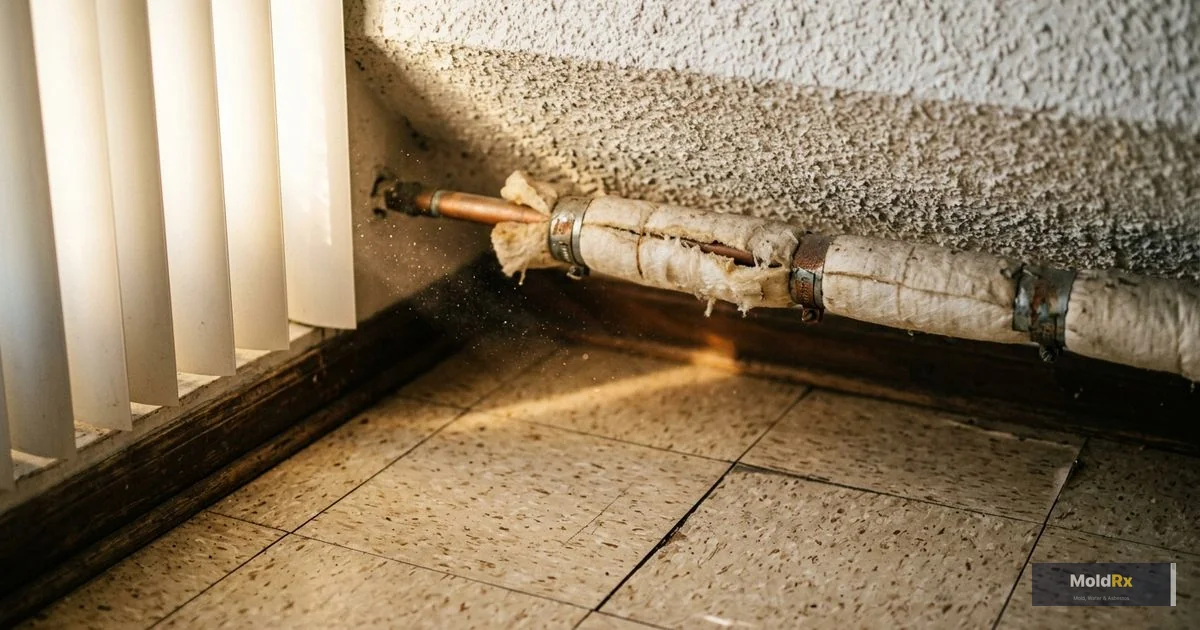
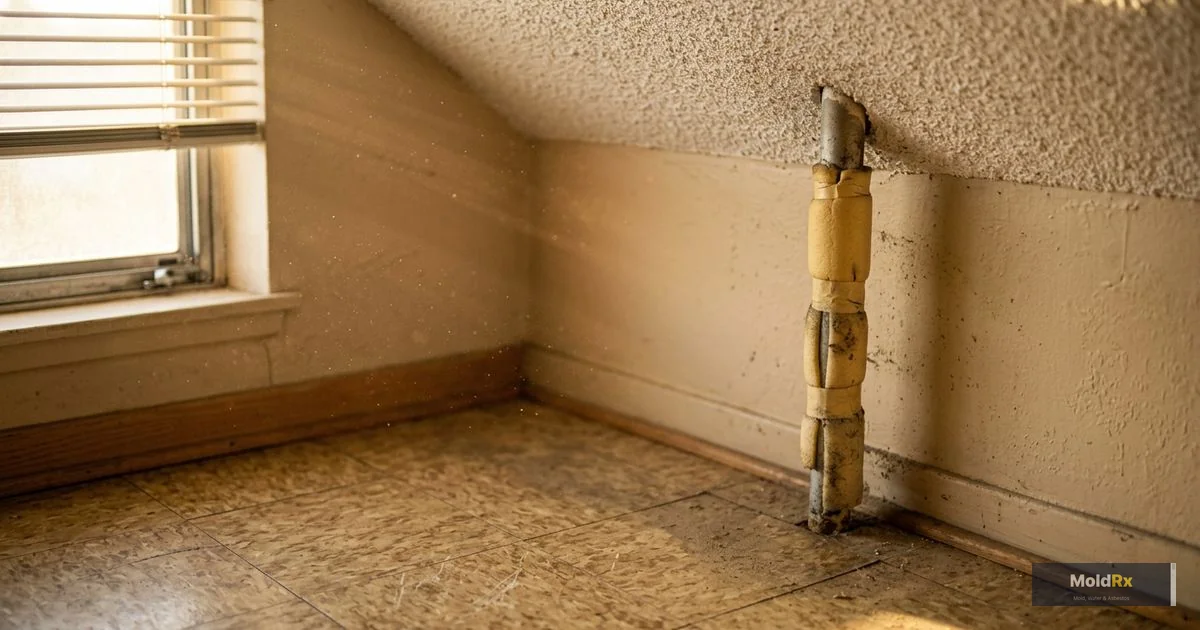
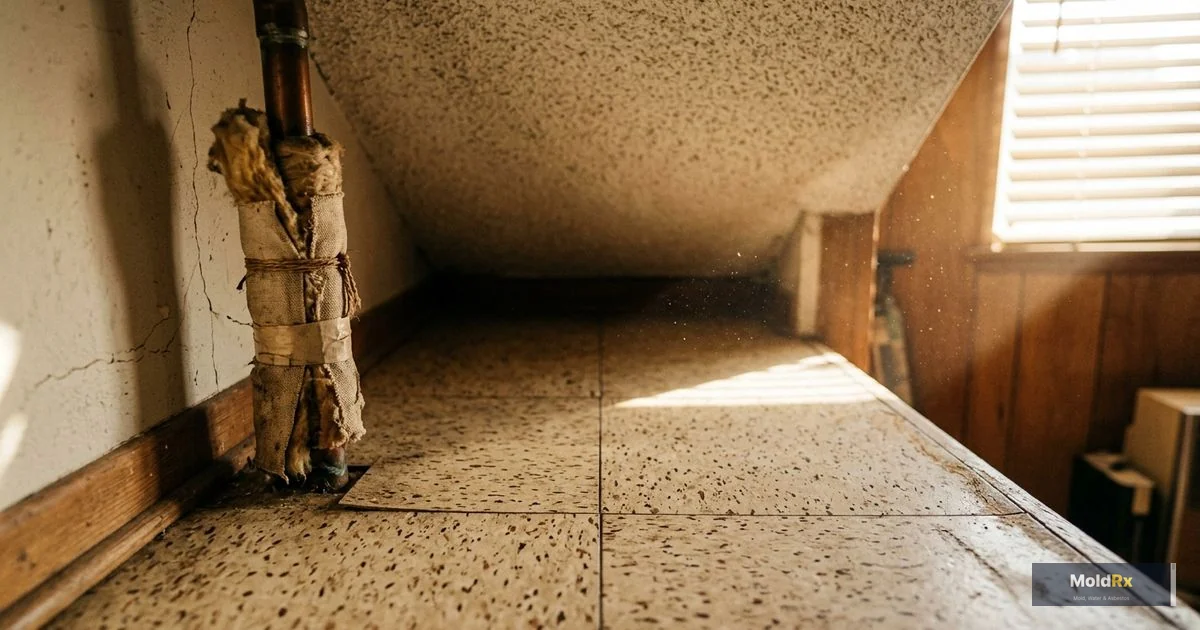
Crumbling pipe insulation, flaking ceiling texture, cracked floor tiles pulling away from the subfloor — if materials in a pre-1980 Lake Elsinore home show visible deterioration, the risk of fiber release increases. Lake Elsinore's inland climate subjects building materials to decades of thermal cycling, with summer highs regularly reaching the upper 90s and record temperatures exceeding 110 degrees. Testing identifies whether the damaged material contains asbestos so you can respond appropriately.
Before Roof Replacement, Flooring Updates, or Remodeling
Roofing felt and flashing cement from the 1940s through 1970s often contain asbestos. Vinyl floor tiles and their black mastic adhesive are among the most common ACM in residential construction. Duct insulation, pipe wrap, and furnace components in older HVAC systems were routinely manufactured with asbestos. Pre-1980 Lake Elsinore homes are likely to contain multiple ACM categories.
How Lake Elsinore's Development History Created Two Distinct Risk Zones
The population data tells the story:
- 1950: 2,068 residents
- 1960: 2,432 residents
- 1970: 3,530 residents
- 1980: 5,982 residents
- 1990: 18,285 residents
- 2020: 70,265 residents
The Original Town: Lakeside and Downtown (Pre-1980)
Before Lake Elsinore became a bedroom community for commuters to Orange County and the Inland Empire, it was a small resort and agricultural town centered on the lake. The streets closest to the water — along Lakeshore Drive, through the Historic District radiating outward from Main Street, and into the established lakeside neighborhoods — contain the city's oldest residential structures. Many date to the 1940s, 1950s, and 1960s, with some from the early 1900s. Armory Hall (1887) and the Crescent Bath House (1887) still stand in the historic downtown, anchoring a district where century-old commercial buildings share blocks with mid-century residential properties.
The lake itself dried up completely in the 1950s before being artificially refilled with Colorado River water in 1964. The town supported a modest year-round population, and homes were built with the standard materials of their time — which meant asbestos was a routine ingredient in ceiling textures, floor tiles, pipe insulation, and roofing shingles. These pre-1980 lakeside and downtown properties carry the highest probability of containing asbestos-bearing materials.
The Suburban Expansion: Hillside Communities (Post-1990)
Starting in the late 1980s and accelerating through the 2000s, Lake Elsinore transformed into a sprawling suburban city. Master-planned communities rose in the surrounding hills:
- Tuscany Hills — gated hillside community, homes primarily late 1990s through 2006
- Canyon Hills — established 2001, over 3,000 homes
- Rosetta Canyon — planned community between the Ortega Mountains and the freeway corridor
- Summerly — lakeside community, development beginning around 2012
- Alberhill Ranch — northern edge of the city, construction from 2005 onward
These communities were built after asbestos had been eliminated from mainstream residential construction. Their original materials carry low asbestos risk. However, SCAQMD Rule 1403 still requires a survey before demolition regardless of building age.
The Transitional Era: Early 1980s
Lake Elsinore's population tripled during the 1980s as new subdivisions spread outward from the original town center. Homes from this period occupy an intermediate risk zone — the regulatory phase-out was underway but not complete, so some products installed between 1980 and approximately 1985 still contained asbestos fibers.
Common Asbestos-Containing Materials in Lake Elsinore's Older Homes
For homes built before 1980 — particularly those in the lakeside and downtown neighborhoods — the following materials are priority testing targets.
Popcorn and textured ceilings. Spray-applied textured ceilings from the mid-1960s through 1980 frequently contain chrysotile asbestos. The EPA banned asbestos in spray-applied surfacing in 1978, but existing stock continued to be installed into the early 1980s. Scraping textured ceilings without testing is one of the most common sources of residential asbestos exposure.
Floor tiles and mastic. Both 9-inch and 12-inch vinyl floor tiles manufactured before 1980 frequently contained 5% to 70% chrysotile asbestos. The black cutback adhesive beneath them often contains asbestos as well. These tiles are commonly found beneath newer flooring layers in older Lake Elsinore homes.
Pipe and duct insulation. Corrugated paper wrap, calcium-silicate blocks, and air-cell insulation on heating pipes, water heater connections, and HVAC ductwork commonly contain asbestos. Lake Elsinore's hot summers mean these systems have worked hard for decades, and pipe insulation in garages and crawl spaces is often the most deteriorated ACM in a home.
Roofing materials. Asbestos-cement shingles, felt underlayment, and ridge flashing were standard mid-century roofing products. Lake Elsinore's intense sun exposure — summer temperatures routinely in the upper 90s, occasionally exceeding 110 degrees — accelerates cracking and potential fiber release.
Joint compound and drywall mud. Pre-1980 joint compound frequently contained asbestos and is present on virtually every wall and ceiling surface in affected homes.
Vermiculite attic insulation. Loose-fill vermiculite, especially products from the Libby, Montana mine (Zonolite brand), may contain tremolite asbestos. Attic temperatures in Lake Elsinore homes can exceed 140 degrees during summer months.
Exterior cladding and siding. Cement-asbestos board (transite siding) was common on mid-century homes. Dry, dusty wind conditions and decades of UV exposure cause gradual surface erosion.
Window glazing, caulking, and putty. Sealants around windows, bathtubs, and sinks in pre-1980 construction can contain asbestos and are frequently disturbed during even minor repair work.
Why Lake Elsinore's Climate Accelerates Asbestos Deterioration
Lake Elsinore's semi-arid inland climate places unique stresses on building materials. Summer temperatures regularly reach the mid-90s to low 100s, with an all-time record of 118 degrees. Attic spaces and roofing materials endure even greater extremes, accelerating aging of asbestos-containing products. Air conditioning systems in older homes have run hard for decades, and leaking duct insulation can distribute fibers throughout the home.
Properties near the lake itself experience elevated humidity from roughly 3,000 acres of surface water, accelerating deterioration of ACM in foundations, crawl spaces, and lower walls. The lake's history of dramatic water-level fluctuations — including completely drying up in the 1950s — has subjected lakeside structures to cycles of moisture and drought that compound material degradation. Wind-driven dust and arid conditions cause gradual erosion of exterior asbestos-containing siding and roofing, potentially releasing fibers during Santa Ana wind events.
Health Risks of Asbestos Exposure
Asbestos fibers are microscopic, odorless, and tasteless. Once inhaled, the human body cannot break them down or expel them. Over 10 to 50 years, embedded fibers cause chronic inflammation, scarring, and cellular damage leading to severe diseases: mesothelioma (aggressive cancer with a median survival of 12 to 21 months), asbestosis (irreversible lung scarring), and lung cancer (risk compounded synergistically by smoking).
The critical point is that exposure produces no immediate symptoms. A homeowner who spends a weekend scraping an asbestos-containing popcorn ceiling will feel fine that day and for years afterward. The damage accumulates silently. Testing before disturbance is the only reliable prevention.
Schedule your free estimate — know what is in your walls before work begins.
Regulations That Govern Asbestos Testing in Lake Elsinore
SCAQMD Rule 1403
The regulation most directly relevant to Lake Elsinore homeowners. SCAQMD Rule 1403 requires an asbestos survey by a certified consultant before any renovation or demolition, regardless of building age. If ACM is found, SCAQMD must be notified at least 10 working days before removal begins. Penalties for non-compliance can exceed $20,000 per day.
Cal/OSHA Title 8, Section 1529
Cal/OSHA Section 1529 requires determining the presence and quantity of ACM before any construction, alteration, or renovation of structures built before 1980. All thermal system insulation, surfacing material, and resilient flooring in pre-1980 buildings is presumed to contain asbestos until laboratory testing proves otherwise. Your contractor has a legal obligation to comply before starting work.
Federal OSHA 1926.1101
OSHA 1926.1101 establishes permissible exposure limits of 0.1 fibers per cubic centimeter over an 8-hour average, defines work classifications, and requires medical surveillance for workers with potential exposure. All testing, abatement, and disposal must be performed by certified professionals.
EPA AHERA
AHERA establishes inspection and management protocols for asbestos in public and commercial buildings. While it does not directly regulate single-family homes, its accreditation requirements form the foundation for residential testing practices. Inspectors performing surveys in Lake Elsinore hold AHERA-accredited certifications.
CSLB C-22 Asbestos Abatement License
When removal is required, California law mandates all abatement be performed by a contractor holding a valid CSLB C-22 asbestos abatement license — ensuring demonstrated competency in safe removal, containment, air monitoring, and waste disposal.
How Asbestos Testing Works
1. Pre-Testing Consultation
Every Lake Elsinore property has a unique testing profile based on its age, location, and planned work. A 1960s ranch in the Historic District undergoing a full renovation requires comprehensive multi-material testing. A 2005 home in Canyon Hills with a single bathroom update may need no testing at all. We scope the inspection to your circumstances.
2. Bulk Sample Collection
Our vetted specialists collect samples following EPA 600/R-93/116 procedures. The inspector wets each material to suppress fiber release, extracts a small representative section, and seals it in a labeled container with chain-of-custody documentation. Homogeneous materials require a minimum of three samples per distinct area. Personal protective equipment ensures the process does not release fibers into your living space.
3. NVLAP-Accredited Laboratory Analysis
Samples go to an NVLAP-accredited laboratory meeting ISO 17025 standards. The primary method is PLM (Polarized Light Microscopy), which identifies all six regulated fiber types — chrysotile, amosite, crocidolite, tremolite, actinolite, and anthophyllite — and estimates concentration as a percentage of total material. When PLM results are negative but low-level asbestos is suspected, TEM (Transmission Electron Microscopy) provides higher sensitivity. TEM is also the required method for air clearance samples after abatement. Standard PLM turnaround is 3 to 5 business days; rush service is available within 24 hours.
4. Results and Actionable Guidance
Your report identifies each material tested, whether asbestos was detected, the fiber type and concentration, and what it means for your project:
- Materials your renovation will disturb require removal by a licensed CSLB C-22 contractor before other work begins
- Intact materials in good condition can often be managed in place through monitoring or encapsulation
- Damaged materials already releasing fibers should be addressed promptly
- Regulatory steps for any removal, including SCAQMD Rule 1403 notification timelines
What Happens If Asbestos Is Found?
A positive result does not automatically mean expensive removal. When removal is required — your renovation will disturb ACM — all abatement must be performed by a DOSH-registered CSLB C-22 contractor, with SCAQMD Rule 1403 notification at least 10 working days before work begins. When encapsulation is viable — intact ACM in good condition that will not be disturbed — a sealant can prevent fiber release without removal. When leaving it undisturbed — intact ACM not affected by your project — monitoring is often the safest approach.
Lake Elsinore Asbestos Risk by Construction Era
1940s-1960s (Lakeside Core and Downtown): Highest asbestos risk. Properties along Lakeshore Drive, through the Historic District, and near Main Street were built during the peak of asbestos use. Expect potential asbestos in virtually every material category. Comprehensive testing required before any renovation.
1970s (Expanded Residential Areas): High risk. Asbestos was still used extensively. The 1978 EPA ban on spray-applied surfacing reduced but did not eliminate use. Homes built before 1978 have high risk; 1978-1982 moderate risk.
1980s (Transitional Growth): Moderate risk. Some products still contained asbestos through the mid-1980s. Testing recommended before major renovation.
1990s-2000s (Tuscany Hills, Canyon Hills, Rosetta Canyon): Low risk. Most manufacturers had eliminated asbestos. SCAQMD Rule 1403 still requires a survey before demolition.
2010s-Present (Summerly, Alberhill Ranch): Minimal risk. Testing generally unnecessary unless materials of uncertain origin have been introduced.
What Sets MoldRx Apart
- We only send vetted professionals. No subcontractor roulette — the people who show up are professionals we stand behind.
- NVLAP-accredited lab partners. Every sample analyzed using PLM and, when needed, TEM methods meeting EPA, OSHA 1926.1101, and Cal/OSHA Section 1529 standards.
- Honest assessment. If testing is unnecessary for your project, we will tell you.
- Full regulatory compliance. Reports meet SCAQMD Rule 1403, Cal/OSHA Section 1529, AHERA, and OSHA 1926.1101 requirements.
Get your free estimate — no obligations, honest answers.
Lake Elsinore Neighborhoods We Serve
- Historic District / Downtown — Oldest part of the city along Main Street and Graham Avenue. Structures dating to the 1880s. Highest asbestos probability.
- Lakeshore Drive and Lakeside Neighborhoods — Mid-century homes from the 1940s through 1970s closest to the lake.
- Country Club Heights — Older residential area, homes from the 1960s and 1970s.
- East Lake — Mixed-era housing with varying risk by construction date.
- Tuscany Hills — Gated hillside community, homes late 1990s through 2006. Low risk.
- Canyon Hills — Master-planned community established 2001. Low risk.
- Rosetta Canyon — Planned community between the Ortega Mountains and the freeway corridor.
- Summerly — Lakeside community, development from 2012. Minimal risk.
- Alberhill Ranch — Northern edge, construction from 2005 onward. Minimal risk.
We serve both 92530 and 92532 ZIP codes and all 11 planning districts, including areas along Railroad Canyon Road, Lakeshore Drive, and Main Street.
Nearby Communities
We also serve Wildomar, Menifee, Perris, Canyon Lake, Corona, Murrieta, and the Temescal Valley area.
Related Services in Lake Elsinore
- Asbestos Removal in Lake Elsinore
- Mold Removal in Lake Elsinore
- Mold Testing in Lake Elsinore
- Water Damage Restoration in Lake Elsinore
→ All services in Lake Elsinore
Frequently Asked Questions
Is asbestos testing required before renovation in Lake Elsinore?
Yes. SCAQMD Rule 1403 requires an asbestos survey before renovation or demolition in the South Coast district, which includes Lake Elsinore. The only exception is single-unit dwelling renovation involving less than 100 square feet of intact material. Cal/OSHA Section 1529 separately requires identification of ACM before construction activities in pre-1980 buildings.
My home was built in 2003. Do I need testing?
Homes built after 2000 are generally low risk for asbestos in original materials. If you are working only with original materials, testing is typically unnecessary for renovation. However, SCAQMD Rule 1403 still requires a survey before demolition regardless of building age.
Which neighborhoods have the highest asbestos risk?
The oldest areas closest to the lake and downtown — along Lakeshore Drive, through the Historic District, and near Main Street — contain the highest concentration of pre-1980 homes. Properties from the 1940s through 1970s have high asbestos probability. Newer communities like Canyon Hills, Tuscany Hills, and Summerly are generally low risk.
How many samples are needed?
EPA procedures require a minimum of three samples per homogeneous material in each distinct area. A typical full-renovation test for a three-bedroom home might involve 10 to 20 samples across ceiling texture, floor tile, mastic, joint compound, insulation, and roofing material.
How long do results take?
Standard PLM analysis takes 3 to 5 business days. Rush service is available within 24 hours. TEM analysis typically requires 5 to 7 business days.
Can I collect samples myself?
California does not prohibit it for single-family homeowners, but it is strongly discouraged. Improper technique can release fibers. Samples from uncertified individuals may not be accepted for SCAQMD Rule 1403 or Cal/OSHA Section 1529 compliance.
What does a positive result mean?
Asbestos detected above 1% classifies the material as ACM. A positive result does not mean immediate danger — intact, undisturbed ACM does not release fibers. But if your renovation will disturb that material, licensed abatement by a CSLB C-22 contractor must be performed first.
What is the difference between friable and non-friable asbestos?
Friable ACM can be crumbled by hand pressure — pipe insulation, spray-applied ceiling texture. It releases fibers more readily and faces stricter handling under OSHA 1926.1101 and Cal/OSHA Section 1529. Non-friable ACM is bound in a solid matrix — floor tiles, cement siding. Non-friable materials become friable through cutting, grinding, or sanding, which is why renovation triggers testing.
Get Asbestos Testing in Lake Elsinore
Lake Elsinore's development history has produced a city where 1880s lakefront structures and brand-new hillside communities exist within the same municipal boundary. For the older share of this housing stock — homes built between the 1940s and late 1970s — professional testing is the only reliable way to know what is in your walls, floors, ceilings, and mechanical systems before renovation begins.
Our vetted specialists understand the construction patterns specific to Lake Elsinore's different neighborhoods and eras. They will assess your property honestly, test what needs testing, and give you clear answers backed by NVLAP-accredited laboratory analysis using PLM and TEM methods that meet every applicable standard — OSHA 1926.1101, Cal/OSHA Section 1529, SCAQMD Rule 1403, and AHERA protocols.
No guesswork. No runaround. Just answers.
Call MoldRx to schedule asbestos testing for your Lake Elsinore property — (888) 609-8907.