Mold Removal in Laguna Woods, CA — MoldRx
IICRC-Certified Mold Removal Professionals Serving Laguna Woods and South Orange County
Discovering mold in your Laguna Woods home is unsettling — especially when your primary concern is protecting your health and maintaining the home you've built your life around. Laguna Woods Village is one of the largest 55+ communities in the country, and its 1960s-1970s construction, shared-wall housing, and coastal climate create conditions that quietly sustain mold growth behind walls, under cabinets, and inside aging HVAC systems. MoldRx only sends vetted, IICRC-certified mold removal professionals who follow IICRC S520/R520 remediation standards and EPA federal mold guidance (EPA 402-K-01-001) — specialists who understand the unique construction of this community and the health priorities of its residents.
Request your free estimate — we'll assess your property and give you straight answers.
Why Mold Grows in Laguna Woods Homes
Laguna Woods sits at roughly 1,250 feet elevation in South Orange County, five miles inland from the Pacific. The city's population of approximately 17,000 is predominantly 55 and older, and its housing — built almost entirely between 1964 and 1981 as the original Leisure World development — is now 45 to 60+ years old.
Aging 1960s-1970s Construction
The median construction year for Laguna Woods housing is 1969. United Laguna Woods Mutual's co-op units were built between 1964 and 1969; Third Laguna Hills Mutual's condominiums followed through the 1970s. Original plumbing in the oldest units has been in service for over 60 years. Galvanized supply lines corrode internally, copper joints develop pinhole leaks, and cast-iron waste pipes deteriorate — all behind walls where moisture feeds mold for weeks before anyone notices. Original bathroom exhaust fans, where they exist at all, no longer move adequate air volume. Builder-grade caulking around tub surrounds and kitchen sinks cracked years ago. According to IICRC S520 guidelines and the EPA's Mold Remediation in Schools and Commercial Buildings (EPA 402-K-01-001), mold colonizes within 24 to 48 hours once moisture and organic material are present.
Marine Layer and Coastal Humidity
Despite being five miles inland, Laguna Woods receives consistent marine-layer influence. Average relative humidity runs 65-73% depending on the season — well above the 30-50% indoor range the EPA recommends. Late spring mornings bring fog that penetrates older building envelopes through deteriorated window seals, cracked stucco, and aging roof flashings. That exterior moisture meets interior condensation on cold surfaces, feeding hidden mold colonies in wall cavities, closets, and under-cabinet spaces.
Poor Ventilation in Attached Units
Laguna Woods Village is predominantly attached housing — condominiums, co-ops, and manor-style units sharing walls, ceilings, and sometimes HVAC infrastructure. Many units have only one or two exterior-facing walls, reducing airflow to interior bathrooms and kitchens. Older exhaust fans vent into attic spaces rather than outdoors, trapping warm humid air where it does the most damage. In 1960s co-op units, some bathrooms were built without mechanical exhaust at all, relying on windows that residents often keep closed.
Santa Ana Winds
Orange County's Santa Ana winds bring hot, dry air between October and March. While low-humidity themselves, they create rapid temperature differentials — exterior surfaces heat up while interior spaces stay cool, driving condensation onto walls, around single-pane windows, and inside attic spaces. After the winds pass, returning marine-layer humidity hits a home that may already have condensation damage in progress.
Signs You Need Professional Mold Removal
Not every dark spot requires a remediation crew. But certain signs — especially in housing as old as Laguna Woods Village — indicate the problem has moved beyond what a homeowner can handle safely.
Visible Growth Beyond a Small Area
The EPA's Mold Remediation in Schools and Commercial Buildings (EPA 402-K-01-001) uses 10 square feet as the general threshold for professional remediation. In Laguna Woods units, visible growth commonly appears along bathroom walls, around kitchen sink cabinets, along shared-wall baseboards, and on closet walls backed by exterior surfaces.
Persistent Musty Odor Without Visible Mold
A chronic musty smell near bathrooms, closets, or HVAC vents often signals mold in a concealed space — behind drywall, under vinyl flooring, or within aging ductwork. In attached units, that smell can migrate from a neighboring unit through shared wall cavities.
Recurring Mold After Previous Cleanup
Mold that returns after cleaning means the moisture source was never resolved. Surface cleaning eliminates what you see but does nothing about the colony behind the surface or the water feeding it.
Water Damage or Staining
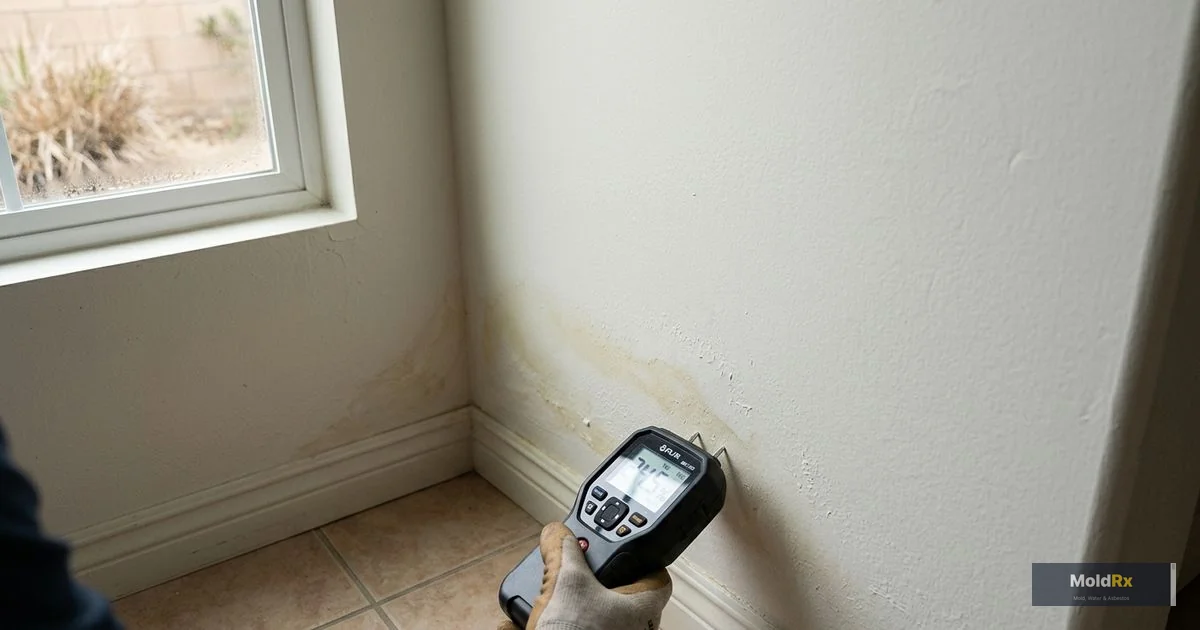
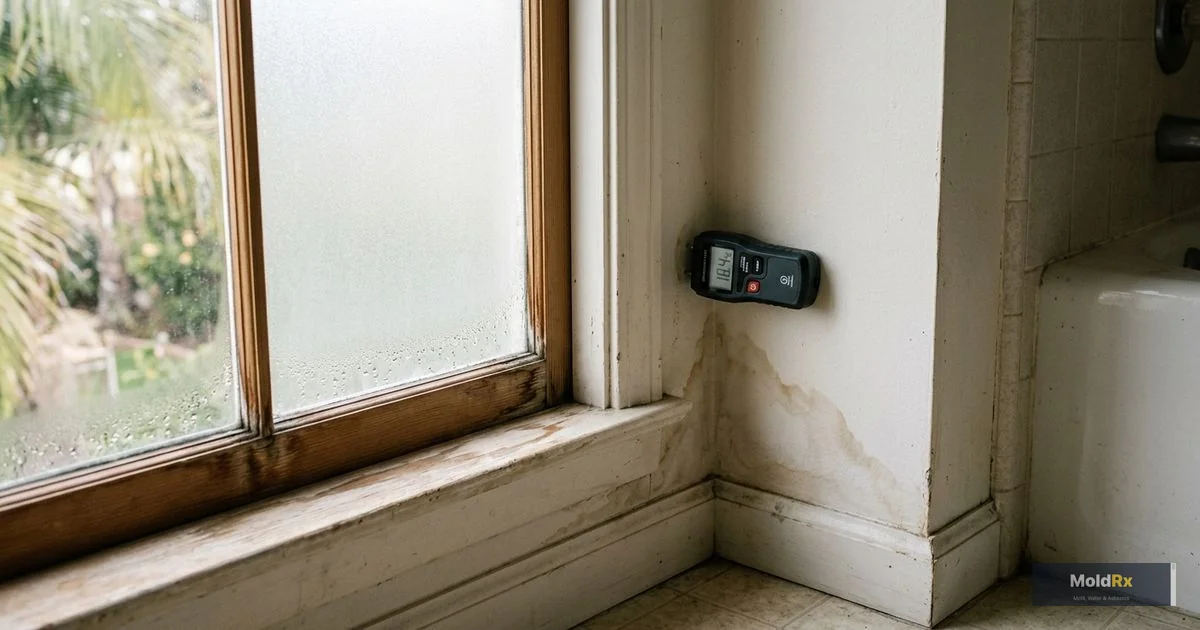
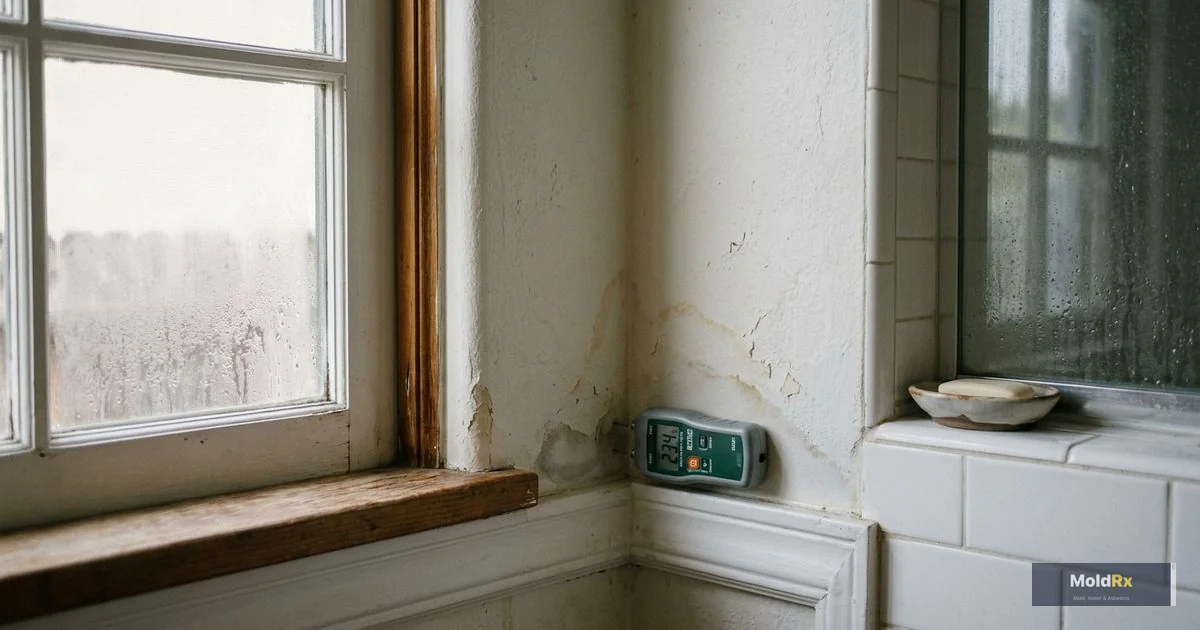
Any water staining on ceilings, walls, or flooring may indicate moisture intrusion that has produced hidden mold. In Laguna Woods, common sources include slow plumbing leaks, failed shower pan membranes, condensation from uninsulated pipes, and flat-roof drainage issues.
Health Symptoms That Worsen Indoors
Nasal congestion, persistent cough, worsening asthma, or unexplained fatigue that improve when you leave your unit may indicate mold exposure. The EPA and CDC both identify mold as a cause of respiratory symptoms — and effects are more pronounced in older adults.
Health Risks of Mold Exposure
Mold exposure is a well-documented health concern — not a scare tactic. Understanding actual risks helps you make informed decisions about remediation urgency, and this matters especially in Laguna Woods.
The EPA links mold spore exposure to allergic reactions including sneezing, runny nose, and skin rash. The CDC identifies respiratory effects including coughing, wheezing, and throat irritation. The World Health Organization's Guidelines for Indoor Air Quality: Dampness and Mould links prolonged exposure to respiratory infections and asthma exacerbation.
Why Laguna Woods Residents Face Greater Risk
Laguna Woods has one of the highest median ages of any U.S. city — approximately 75 years. The majority of residents are seniors, many living with conditions that increase vulnerability to airborne contaminants:
- Age-related respiratory changes — Lung tissue loses elasticity, supporting muscles weaken, and the ribcage becomes less flexible, reducing the lungs' ability to clear inhaled mold spores. The WHO Guidelines for Indoor Air Quality specifically identify elderly populations as vulnerable to dampness-related health effects.
- Chronic respiratory conditions — COPD, asthma, and chronic bronchitis are prevalent in senior populations. Mold can trigger acute exacerbations requiring emergency care.
- Immunocompromised residents — Individuals undergoing cancer treatment, organ transplant recipients, and those managing autoimmune conditions face elevated risk of invasive fungal infections. Even common species like Aspergillus can cause serious illness.
- Cardiovascular strain — Prolonged exposure to mold-contaminated air can place additional stress on the cardiovascular system.
- Cognitive effects — Emerging research identifies links between chronic mycotoxin exposure and brain fog, memory difficulty, and fatigue — symptoms that may be mistakenly attributed to aging.
The goal is not alarm. It is to provide the factual basis for why timely remediation matters more in this community than in a typical housing market.
When DIY Mold Removal Isn't Enough
For small surface mold on non-porous materials, EPA guidance allows homeowner cleanup. But several conditions require professional intervention:
- Contamination exceeding 10 square feet — EPA 402-K-01-001 recommends professional remediation at this threshold
- Mold inside HVAC systems or ductwork — NADCA (National Air Duct Cleaners Association) standards apply; cleaning individual vents does nothing when the source is inside the system
- Structural involvement — Mold behind drywall, under flooring, or inside shared wall cavities requires controlled demolition, containment, and HEPA filtration
- Shared-wall contamination — In attached housing, mold can spread through shared cavities into adjacent units, requiring coordinated remediation
- Water category 2 or 3 involvement — Sewage backup or contaminated water per IICRC S500 categories requires professional protocols
- Insurance, HOA, or real estate documentation — Professional remediation generates scope-of-work records, moisture readings, and post-remediation verification that insurers, HOA boards, and buyers require
When in doubt, a professional assessment tells you whether full remediation is warranted. That assessment is part of our free estimate.
How We Remove Mold in Laguna Woods Properties
Every remediation follows IICRC S520 standards and the companion ANSI/IICRC R520 Reference Guide — the industry benchmarks recognized by insurers, public health agencies, and the courts.
1. Inspection and Moisture Mapping
Before anything is disturbed, our specialists map the full scope following EPA 402-K-01-001 assessment protocols. In Laguna Woods units, that means checking behind bathroom walls where 60-year-old plumbing runs, inspecting under-cabinet spaces, mapping moisture along shared walls, examining HVAC ductwork, and determining whether the moisture source is active or resolved.
2. Containment
Physical barriers and negative air pressure isolate the affected area per IICRC S520 Condition 2 and Condition 3 containment protocols. HEPA air scrubbers capture airborne spores down to 0.3 microns. This is critically important in Laguna Woods' attached housing, where shared infrastructure could carry spores to adjacent units. The CDC, EPA, and the World Health Organization's WHO Guidelines for Indoor Air Quality: Dampness and Mould all emphasize protecting elderly and immunocompromised populations from airborne mold during remediation. Proper containment ensures the process itself does not create a health risk for neighboring residents.
3. Removal and Treatment
Mold-damaged materials are removed following IICRC S520 procedures and Cal/OSHA permissible exposure limits under Title 8 §5155 for airborne contaminants. Remaining structural surfaces are treated with EPA-registered antimicrobial solutions that eliminate residual spores and inhibit regrowth.
4. Moisture Correction
Removing mold without fixing the water source guarantees it returns. Our specialists resolve the underlying cause — whether that's a corroded plumbing joint, a failed shower pan, inadequate bathroom exhaust, or water intrusion through deteriorated building components.
5. Post-Remediation Verification
Affected areas are checked against IICRC S520 Condition 1 (normal fungal ecology) clearance standards. You receive full documentation — scope of work, materials removed, treatments applied, moisture readings, and verification results. This meets the standards insurers, HOA management, and real estate professionals require.
Mold Removal vs. Mold Remediation: What's the Difference?
Mold removal refers to physically eliminating mold growth — cutting out contaminated drywall, HEPA-vacuuming surfaces, applying antimicrobials. It addresses the mold already present.
Mold remediation is the broader process defined by IICRC S520: assessment, containment, removal, moisture correction, and post-remediation verification. Remediation addresses both the mold and the conditions that caused it, verifying return to IICRC S520 Condition 1 (normal fungal ecology).
When MoldRx sends professionals to your Laguna Woods property, they perform full remediation — not surface removal. The leaking plumbing gets traced, the failed exhaust fan gets identified, the ventilation deficiency gets documented. Any company offering "mold removal" without addressing the moisture source is selling a temporary fix.
Preventing Mold After Remediation
These prevention measures are tailored to Laguna Woods' senior housing, attached-unit construction, and coastal climate:
Upgrade Bathroom Ventilation
Many units have original exhaust fans that no longer function or vent into attic spaces. Replacing them with modern units that vent directly outdoors is one of the most effective prevention steps. For units without mechanical exhaust, a humidity-sensing fan switch ensures automatic operation. Check with your mutual's maintenance department, as modifications may require approval.
Monitor Indoor Humidity
A standalone hygrometer lets you track conditions in real time. The EPA recommends 30-50% indoor humidity. In Laguna Woods, the marine layer regularly pushes outdoor humidity above 65%, and that moisture migrates indoors through aging building envelopes. If readings exceed 50% consistently, a portable dehumidifier reduces risk significantly.
Coordinate with Your HOA and Maintenance Department
Laguna Woods Village's three mutual housing corporations — United Laguna Woods Mutual, Third Laguna Hills Mutual, and Mutual No. Fifty — each maintain shared building components: roofing, exterior walls, plumbing risers, and common-area HVAC. Report water intrusion or moisture accumulation promptly. Early intervention on shared infrastructure prevents problems affecting multiple units.
Address Water Intrusion Promptly
Standing moisture must be eliminated within the 24-to-48-hour colonization window identified by IICRC S520. In older construction, even slow drips behind walls can saturate drywall within days. If you notice staining, dripping sounds, or unexplained moisture, report it immediately.
Schedule Periodic Inspections
For units with previous mold history, an annual moisture inspection catches developing problems early. This is especially valuable for co-op units in United Mutual — the oldest housing in the Village, with plumbing exceeding 55 to 60 years of service.
What Sets MoldRx Apart
-
Straight talk, not sales talk. If your mold situation is smaller than you feared, we'll tell you. If it's more involved, you'll hear that too. Honest guidance in clear language.
-
Licensed, insured, IICRC-certified. Our vetted professionals carry IICRC certifications and proper California contractor licensing through the CSLB (Contractors State License Board). They have the credentials and field experience for Laguna Woods' specific challenges — from 60-year-old plumbing to shared-wall contamination in Orange County.
-
Full documentation on every job. Detailed records designed for HOA management, insurance carriers, and real estate transactions — the three audiences that matter most in Laguna Woods.
-
Family-owned accountability. MoldRx is not a call center. We only send vetted remediation professionals we stand behind.
Get your free estimate — no obligations, no pressure. Just a clear picture of your situation.
Laguna Woods Communities We Serve
MoldRx provides mold removal across all of Laguna Woods — ZIP code 92637 — including every mutual, gate, and housing type within Laguna Woods Village.
Roughly 90% of the city's housing is within Laguna Woods Village, a gated 55+ community spanning 2,100 acres with 14 guarded entry gates and over 12,700 residences under three mutual housing corporations. Each presents distinct remediation considerations:
-
United Laguna Woods Mutual (Co-ops) — 6,323 stock cooperative units built 1964-1969. The oldest residences in the Village with original plumbing exceeding 55-60 years. Co-op units near Gates 1 through 6 include Phase I and II construction. Common mold vectors: corroded galvanized supply lines, deteriorated cast-iron waste pipes, bathrooms without adequate mechanical exhaust, and single-pane windows generating condensation. These units require the most careful assessment — aging infrastructure means hidden moisture sources behind walls patched multiple times over decades.
-
Third Laguna Hills Mutual (Condos) — 6,102 condominium units built 1969-1981, including one- to three-bedroom floor plans and detached manor homes. Still 45-55+ years old with plumbing, roofing, and HVAC at or beyond expected service life. Units near Gates 10-14 share era-specific vulnerabilities: aging copper joints, degraded roof membranes, and inadequate exhaust systems. CSLB-licensed professionals with experience in this specific housing era are essential.
-
Mutual No. Fifty (The Towers) — 311 high-rise condos in two towers inside Gate 10. Shared plumbing risers mean a leak on one floor can affect units above and below, and interior units depend entirely on mechanical ventilation.
-
Gate 1 / Clubhouse Area — Phase I co-op construction (mid-1960s) with the oldest systems in the community. Proximity to landscaped common areas keeps ambient moisture elevated.
-
Gate 2 / Golf Course Area — Adjacent to the 27-hole course. Irrigation maintains higher soil moisture near foundations, increasing moisture migration risk through aging slab-on-grade construction.
-
Gate 11 / Western Village — Along Moulton Parkway with mature landscaping. Western-facing orientation captures afternoon marine-layer moisture, and mature tree roots can compromise underground plumbing.
-
Gate 14 / Southern Village — Near El Toro Road with later-phase construction, but still 40+ years old and approaching end of original system life spans.
Nearby Communities We Also Serve
Our vetted professionals cover South Orange County with CSLB licensing and IICRC credentials:
- Laguna Hills — Directly north, similar 1970s construction and climate
- Irvine — Northeast, Orange County's largest residential footprint
- Aliso Viejo — Southwest, canyon-influenced humidity patterns
- Laguna Beach — Coastal, direct ocean exposure and marine-layer risk
- Mission Viejo — East, comparable age-related infrastructure concerns
- Lake Forest — North, aging 1970s-80s neighborhoods
Related Services in Laguna Woods
Mold rarely exists in isolation. If you're dealing with water damage, need testing, or own a pre-1980 property that may contain asbestos in insulation, popcorn ceilings, or floor tiles:
- Water Damage Restoration in Laguna Woods
- Mold Testing in Laguna Woods
- Asbestos Removal in Laguna Woods
- Asbestos Testing in Laguna Woods
→ All remediation services in Laguna Woods
Frequently Asked Questions
How long does mold remediation take in Laguna Woods?
Most projects take 2 to 5 days. A single-bathroom issue may finish in a day; multi-room remediation with plumbing-related damage can take a week or longer. We'll give you a realistic timeline after assessment.
Do I need mold testing before removal starts?
If mold is visible, testing isn't always required — the priority is removal and moisture correction. Testing becomes valuable when you suspect hidden mold behind shared walls, need HOA or insurance documentation, or are involved in a real estate transaction.
Is mold more dangerous for older adults?
Yes. As the body ages, lung capacity decreases, immune response weakens, and the ability to clear inhaled particles diminishes. The WHO Guidelines for Indoor Air Quality: Dampness and Mould specifically identifies elderly populations as more vulnerable. Residents with COPD, asthma, heart conditions, or compromised immune systems face additional risk. Timely remediation reduces a known health exposure for people who are statistically more susceptible.
How does remediation work in a co-op or condo with HOA/mutual maintenance?
The mutual corporation typically maintains shared components — roofing, exterior walls, plumbing risers. Interior remediation may require coordination with your mutual's maintenance department, especially if the moisture source involves shared infrastructure. MoldRx provides documentation your mutual board needs: scope of work, moisture source identification, and post-remediation verification.
Can mold spread through shared walls to my neighbor's unit?
Yes. In attached housing, mold grows through shared wall cavities, ceiling spaces, and plumbing chases. A slow leak in one unit can sustain mold extending into adjacent units. Professional moisture mapping identifies the full extent, and we coordinate across unit boundaries when needed.
Will my homeowner's insurance cover mold removal?
It depends on the cause. Mold from a sudden covered event — like a burst pipe — is often covered. Mold from gradual deterioration typically is not. In Laguna Woods, the distinction between your personal policy and the mutual's master policy also affects coverage.
Can I stay in my unit during remediation?
Usually, yes. Containment and HEPA filtration keep spores isolated. For larger projects or if you have respiratory conditions, we may recommend staying elsewhere during intensive removal phases.
How do I know if I have mold behind my walls?
Indicators include persistent musty smell, water staining, peeling paint, and symptoms that worsen at home. In Laguna Woods, check behind bathroom walls where original plumbing runs, under sinks, along shared walls at baseboard level, and around HVAC vents.
What's the difference between mold removal and mold remediation?
Removal is physical elimination of mold. Remediation is the complete IICRC S520 process — assessment, containment, removal, moisture correction, and verification. MoldRx performs full remediation on every job.
Do you offer emergency mold removal in Laguna Woods?
If you've experienced sudden water intrusion, time matters — mold colonization begins within 24 to 48 hours. Contact MoldRx immediately at (888) 609-8907. In Laguna Woods' older plumbing systems, pipe failures can release significant water volume quickly. Rapid response protects both your unit and your neighbors'.
Get Mold Removal in Laguna Woods
Mold in a 60-year-old building doesn't resolve on its own. The plumbing continues to age, the marine layer continues to push humidity into your unit, and the ventilation limitations of attached housing won't change without intervention.
MoldRx only sends vetted remediation professionals who understand Laguna Woods properties — the 1960s co-op plumbing, the shared-wall dynamics, the ventilation realities of attached senior housing. No guesswork. No runaround.
Call MoldRx for your free estimate — (888) 609-8907. Clear answers. Honest guidance. Work done right.