Mold Removal in Laguna Niguel, CA — MoldRx
IICRC-Certified Mold Removal Professionals Serving Laguna Niguel and South Orange County
Discovering mold in your Laguna Niguel home raises real questions — how far has it spread, what's feeding it, and who can you trust to handle it properly. This is a master-planned hillside community where most homes date to the 1970s-1990s, and the combination of marine layer humidity, hillside drainage, aging construction, and proximity to Aliso Creek and Salt Creek creates conditions that quietly feed mold behind walls and inside HVAC ductwork. MoldRx only sends vetted, IICRC-certified mold removal professionals who follow IICRC S520/R520 remediation standards and EPA federal mold guidance (EPA 402-K-01-001) — specialists who understand the specific challenges Laguna Niguel's terrain and housing stock present.
Request your free estimate — we'll assess your property and give you straight answers.
Why Mold Grows in Laguna Niguel Homes
Laguna Niguel covers 14.7 square miles of hilly terrain in South Orange County, with elevations ranging from near sea level to 936 feet at Niguel Hill. Approximately 64,000 residents live within ZIP code 92677 across a landscape shaped by the San Joaquin Hills. Incorporated in 1989 as one of California's first master-planned communities, major residential construction ran from the early 1970s through the mid-1990s. The city's roughly 27,500 housing units are now 30 to 55 years old — where original plumbing, ventilation, and roofing begin failing in ways that invite mold.
Marine Layer Humidity and Coastal Moisture
Laguna Niguel's western neighborhoods sit just two to three miles from the Pacific, and even the highest points are within the marine layer's nightly reach. Average humidity peaks around 74% in June and stays above 60% most of the year. That persistent moisture infiltrates homes through gaps in aging stucco, around deteriorated window seals, and through ventilation systems drawing in coastal air. Per IICRC S520 guidelines and EPA 402-K-01-001, mold can colonize within 24 to 48 hours once moisture and organic material converge — a timeline Laguna Niguel's humidity baseline makes realistic year-round.
Hillside Drainage and Retaining Wall Moisture
Homes throughout Beacon Hill, Niguel Summit, Monarch Summit, and Bear Brand Ranch are built on graded slopes that channel water downhill during rain events. Retaining walls — ubiquitous in hillside construction — trap moisture against their uphill face, creating damp zones that wick into adjacent foundation walls and ground-floor slabs. During the November-through-March rainy season, when Laguna Niguel receives most of its roughly 14 inches of annual rainfall, these drainage pathways push water into wall cavities and subfloor spaces faster than evaporation can remove it.
Aging 1970s-1990s Housing Stock
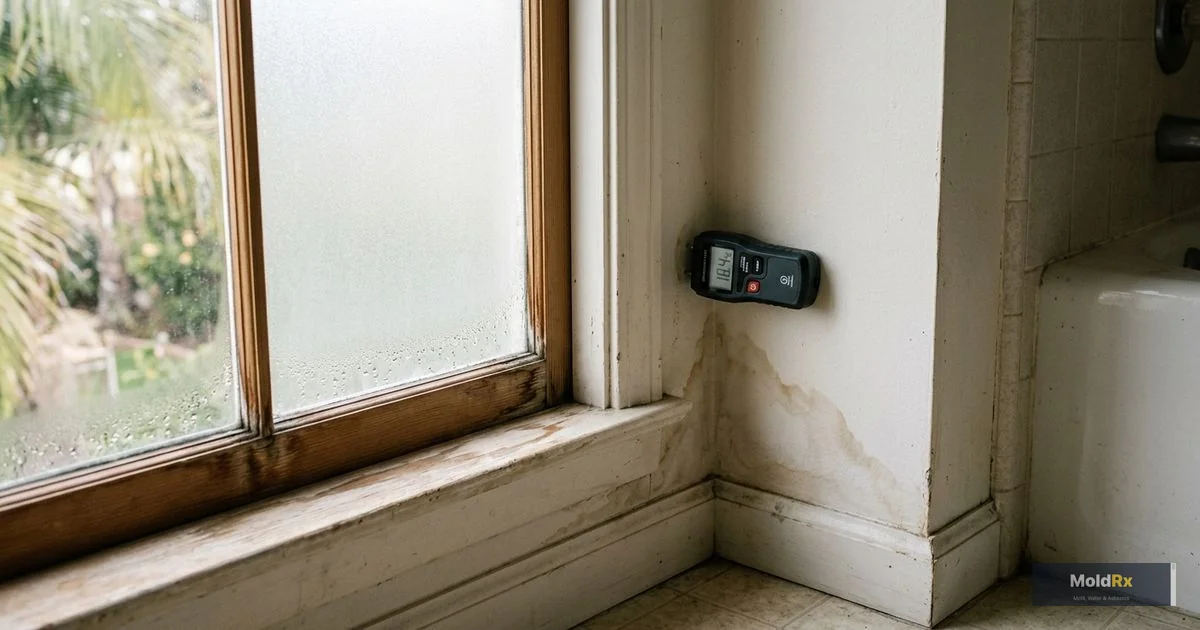
The homes that define Laguna Niguel — ranch-style single-family houses, Mediterranean-style developments, townhomes, and hillside condominiums — share common vulnerabilities. Original copper plumbing develops pinhole leaks. Polybutylene pipes common in 1980s construction fail at joints. Builder-grade stucco cracks and separates from the lath, allowing moisture to wick into wall cavities. Single-pane windows create condensation zones. HVAC ductwork from this era lacks modern vapor barriers. With 54.7% of housing consisting of detached single-family homes and another 19.6% in attached townhomes, these aging building systems represent a city-wide mold vulnerability.
Salt Creek and Aliso Creek Corridor Moisture
About two-thirds of the Salt Creek watershed lies within Laguna Niguel, and Aliso Creek runs along the city's western boundary. Properties near these waterways sit where subsurface moisture and runoff keep soil consistently damper than hilltop neighborhoods. With roughly 70% of the original land now under impermeable surfaces, runoff enters these creeks far faster than the natural landscape absorbed — pooling against foundations, saturating fill behind retaining walls, and pushing moisture through slabs into ground-floor living spaces.
Signs You Need Professional Mold Removal
Not every discoloration on a bathroom wall requires a remediation crew. But certain signs indicate the problem has moved beyond what a homeowner can safely handle.
Visible Growth Beyond a Small Area
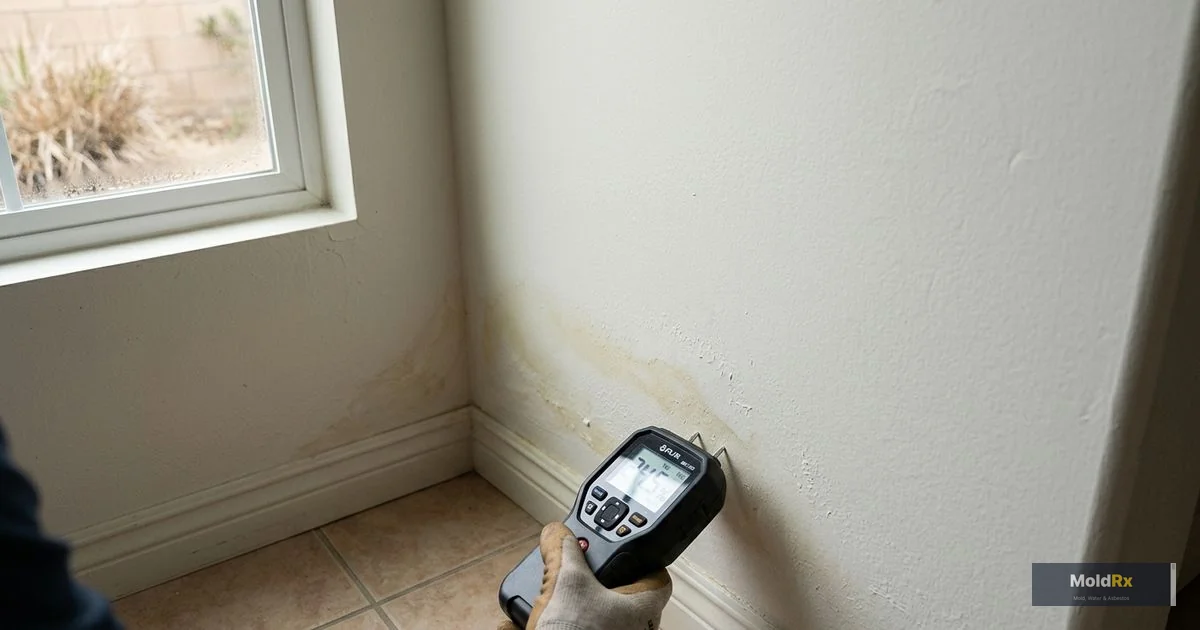
EPA 402-K-01-001 uses 10 square feet as a general threshold — contamination exceeding that size warrants professional remediation. In Laguna Niguel homes, visible growth commonly appears along baseboards on downhill exterior walls, inside bathroom cabinets, on ceiling drywall beneath aging roofs, and around sliding glass doors where decades-old weather stripping has failed.
Persistent Musty Odor Without Visible Mold
If a musty smell persists after cleaning, mold is likely growing in a concealed space — behind drywall, under flooring, or within HVAC ductwork. Attached housing in Laguna Niguel's planned communities is particularly prone to moisture accumulation in shared walls where ventilation is restricted. Professional moisture mapping locates the source without unnecessary demolition.
Recurring Mold After Previous Cleanup
Mold that keeps returning means the moisture source was never resolved. Surface cleaning addresses what's visible but does nothing about the colony behind the surface. If you've cleaned the same area more than once, the underlying condition — often hillside drainage pushing moisture against a foundation wall — needs professional diagnosis.
Water Damage History
Any previous water event — a plumbing failure, a roof leak, condensation behind stucco, or creek corridor drainage intrusion — can leave residual moisture that supports mold for months. If water intrusion was not professionally dried within the 24-to-48-hour window identified by IICRC S520, a mold assessment is warranted.
Health Symptoms That Worsen Indoors
Nasal congestion, eye irritation, persistent cough, or worsening asthma that improve when you leave the house may indicate mold exposure. The CDC notes that mold can cause respiratory symptoms in healthy individuals and more severe reactions in people with existing conditions. Combined with any of the signs above, these symptoms justify professional evaluation.
Health Risks of Mold Exposure
Mold exposure is a legitimate health concern backed by federal agency guidance — not a marketing tactic. According to the EPA, inhaling or touching mold spores can cause allergic reactions including sneezing, runny nose, red eyes, and skin rash. The CDC identifies coughing, wheezing, and throat irritation. The World Health Organization's Guidelines for Indoor Air Quality: Dampness and Mould links prolonged exposure to increased respiratory infections, asthma development in children, and exacerbation of existing respiratory disease.
Populations at Higher Risk
Laguna Niguel is a family community with a median age of 47.6. The WHO guidelines identify several groups at elevated risk:
- Children — Developing respiratory systems are more susceptible. The WHO identifies children as vulnerable to dampness-related health effects, including increased asthma risk.
- Individuals with asthma or allergies — Mold is a known asthma trigger. The CDC recommends people with mold allergies avoid exposure.
- Elderly residents — Weakened immune function increases susceptibility to respiratory infections.
- Immunocompromised individuals — Chemotherapy patients, transplant recipients, and those with autoimmune conditions face elevated risk of fungal infections.
The goal is not alarm — it's providing the factual basis for why timely remediation matters.
When DIY Mold Removal Isn't Enough
For small surface mold on non-porous materials, EPA guidance allows homeowner cleanup with proper protective equipment. But several conditions require professional intervention:
- Contamination exceeding 10 square feet — EPA 402-K-01-001 recommends professional remediation for areas this size or larger
- Mold inside HVAC systems or ductwork — Older systems in Laguna Niguel homes frequently harbor mold in ductwork and air handlers. NADCA (National Air Duct Cleaners Association) standards apply
- Structural involvement — Mold behind drywall, under subfloor materials, or inside wall cavities requires controlled demolition, containment, and HEPA filtration
- Toxic species suspected — Species like Stachybotrys chartarum produce mycotoxins requiring IICRC S520-compliant removal and PPE beyond hardware-store equipment
- Water category 2 or 3 involvement — If the moisture source involves sewage or gray water per IICRC S500 categories, professional protocols are required
- Insurance or real estate documentation needed — DIY cleanup produces no documentation. Professional remediation generates scope-of-work records and verification that insurers and buyers require
A professional assessment tells you whether full remediation is warranted. That assessment is part of our free estimate.
How We Remove Mold in Laguna Niguel Properties
Every remediation follows IICRC S520 standards and the companion ANSI/IICRC R520 Reference Guide — benchmarks recognized by insurers, public health agencies, and the courts. Our professionals also adhere to Cal/OSHA Title 8 regulations for worker and occupant safety.
1. Inspection and Moisture Mapping
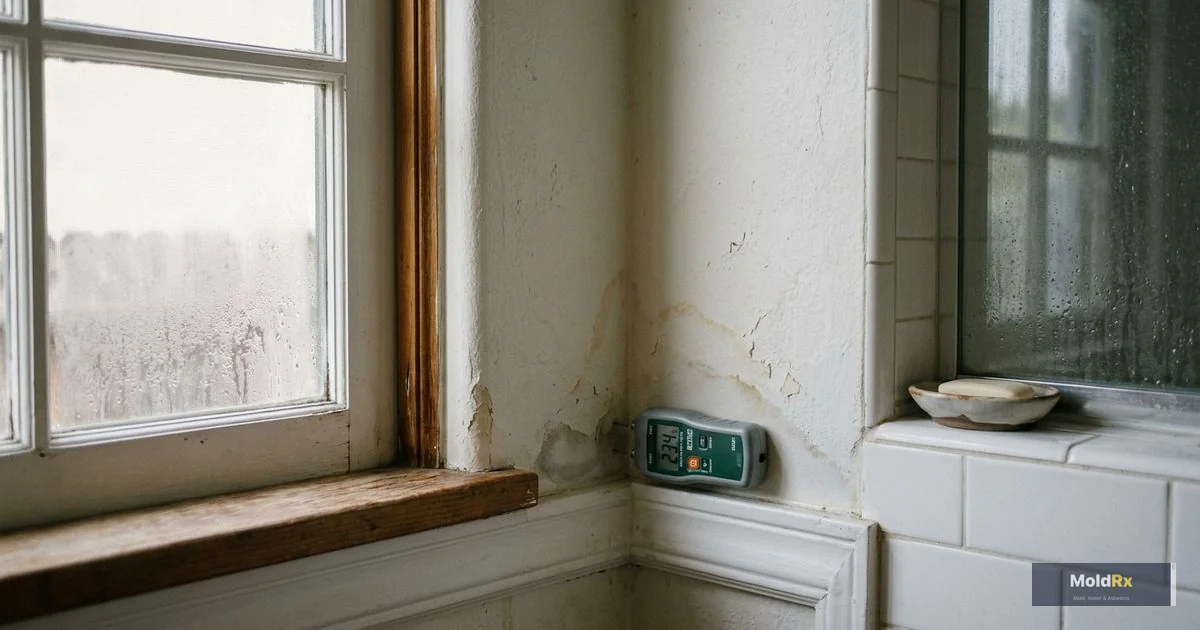
Before anything is torn out, our specialists map the full scope following EPA 402-K-01-001 assessment protocols. In Laguna Niguel homes, that means checking plumbing for pinhole leaks, inspecting behind stucco for moisture intrusion, examining retaining wall interfaces for seepage, and identifying whether the moisture source is active or resolved. Thermal imaging and moisture meters trace water pathways that visual inspection alone would miss.
2. Containment
Physical barriers and negative air pressure isolate the affected area per IICRC S520 Condition 2 and Condition 3 containment protocols. HEPA air scrubbers run continuously to capture airborne spores down to 0.3 microns — especially important in a family community where children are present. The CDC, EPA, and the World Health Organization's WHO Guidelines for Indoor Air Quality: Dampness and Mould all identify children as more vulnerable to mold-related respiratory effects. In attached housing common throughout Laguna Niguel, proper containment also prevents spore migration to adjacent units through shared walls.
3. Removal and Treatment
Mold-damaged materials — drywall, insulation, carpet padding, porous surfaces that can't be decontaminated — are removed following IICRC S520 procedures and Cal/OSHA permissible exposure limits under Title 8 §5155. Remaining structural surfaces are treated with EPA-registered antimicrobial solutions that eliminate residual spores and inhibit regrowth. Every surface in the containment zone gets addressed, including surrounding areas where microscopic colonization may have begun.
4. Moisture Correction
Removing mold without fixing the water source guarantees it returns. Our specialists identify and resolve the underlying cause — whether that's a failed plumbing joint, inadequate ventilation, marine layer moisture entering through deteriorated stucco, or hillside drainage overwhelming a retaining wall.
5. Post-Remediation Verification
Work isn't finished until conditions are verified against IICRC S520 Condition 1 (normal fungal ecology) clearance standards. You receive full documentation — scope of work, materials removed, treatments applied, moisture readings, and verification results.
Mold Removal vs. Mold Remediation: What's the Difference?
The terms get used interchangeably, but they describe different scopes of work.
Mold removal refers to physically eliminating mold growth — cutting out contaminated drywall, HEPA-vacuuming surfaces, applying antimicrobial treatments.
Mold remediation is the broader process defined by IICRC S520: assessment, containment, removal, moisture correction, and verification that conditions return to Condition 1 (normal fungal ecology). Remediation addresses both the mold and the conditions that caused it.
When MoldRx sends professionals to your Laguna Niguel property, they perform full remediation. The hillside drainage gets evaluated, the stucco intrusion point gets sealed, the ventilation deficiency gets corrected. The mold is gone and the reason it grew is resolved. Any company offering "mold removal" without addressing the moisture source is selling a temporary fix.
Preventing Mold After Remediation
Once remediation is complete, the right maintenance keeps mold from returning.
Hillside Drainage Maintenance
Laguna Niguel's hilly terrain means your drainage systems are the first line of defense against mold. French drains, surface drains, and hillside swales need annual inspection — leaves, silt, and root intrusion reduce flow capacity until water backs up against foundations. After heavy rains, walk your property's downhill perimeter and check for standing water, saturated soil, or new erosion channels redirecting runoff toward the structure.
Humidity Control
The EPA recommends indoor humidity between 30% and 50%. Marine layer moisture pushes Laguna Niguel above 60% for much of the year. A standalone hygrometer lets you monitor conditions. If indoor humidity consistently exceeds 50% — especially in bathrooms, laundry areas, and ground-floor rooms on the downhill side — a dehumidifier is a worthwhile investment. Air conditioning helps by removing moisture as it cools.
Retaining Wall Maintenance
When retaining wall weep holes clog or waterproofing membranes degrade, moisture builds behind the wall and migrates into the adjacent foundation. Inspect weep holes annually, check for cracks or bulging that indicates hydrostatic pressure, and ensure the soil behind the wall has proper drainage material rather than compacted clay. A retaining wall failure is both a structural concern and a mold trigger.
Water Intrusion Response
Roof leaks, plumbing failures, and creek corridor drainage issues should be addressed within 24 to 48 hours — the IICRC S520 window before mold colonization begins. Keep towels and a wet/dry vacuum accessible, and know where your main water shut-off is located.
Periodic Inspections
For properties with previous mold history or homes built before 1985, an annual moisture inspection catches developing problems before they become full remediation projects. Especially valuable for homes with original plumbing, aging stucco, retaining walls over 30 years old, or locations near the Salt Creek or Aliso Creek corridors.
What Sets MoldRx Apart
-
Straight talk, not sales talk. If your situation is smaller than you feared, we'll tell you. If it's more involved, you'll hear that too.
-
Licensed, insured, IICRC-certified. Our vetted professionals hold IICRC certifications, carry proper California contractor licensing through the CSLB (Contractors State License Board), and maintain the insurance coverage required for remediation work in Orange County — with field experience specific to Laguna Niguel's hillside drainage, marine layer moisture, and aging plumbing challenges.
-
Full documentation on every job. Detailed records of work completed, materials removed, treatments applied, and moisture readings — for insurance, real estate transactions, and your peace of mind.
-
Family-owned accountability. MoldRx is not a call center. We only send vetted remediation professionals we stand behind.
Get your free estimate — no obligations, no pressure. Just a clear picture of your situation.
Laguna Niguel Neighborhoods We Serve
MoldRx provides mold removal across every neighborhood in Laguna Niguel — ZIP code 92677 — including single-family homes, townhomes, condominiums, and commercial properties.
- Beacon Hill — Developed from the 1980s through early 2000s with condos, townhomes, and single-family homes on rolling hillsides. Ocean-facing stucco bears full marine layer moisture. Shared walls restrict ventilation, and hillside grading channels runoff toward lower units during storms
- Bear Brand Ranch — Prestigious gated community with estate homes on elevated terrain. Large lots mean extensive irrigation and pool infrastructure keeping soil moisture elevated year-round. Retaining walls require regular drainage maintenance to prevent hydrostatic moisture from migrating into living spaces
- Monarch Summit — Hilltop community including Belle Maison and Crown Valley Highlands. Elevation brings direct exposure to wind-driven rain, forcing moisture behind stucco and under roofline flashing. Steep terrain requires aggressive drainage management around foundations
- Marina Hills — Single-family homes and townhomes from the late 1980s through 1990s. Planned density creates shared-wall ventilation dead zones where marine layer humidity accumulates. Proximity to Salt Creek adds subsurface moisture during the wet season
- Niguel Summit — Elevated 1980s single-family homes sitting directly in the fog zone during late spring and summer. Original stucco and window seals develop gaps admitting persistent coastal moisture. North-facing walls are the most common locations for concealed mold
- Kingsgate — Among Laguna Niguel's oldest housing stock, with 1970s-1980s single-family homes and townhomes. Pinhole copper leaks, degraded polybutylene plumbing, single-pane window condensation, and aging HVAC create the highest concentration of age-related moisture pathways
- Moulton Meadows — 1980s-1990s homes near Crown Valley Parkway at lower elevation, receiving drainage runoff from uphill neighborhoods during rain events. Mature landscaping keeps soil moisture high and reduces drying on north-facing walls
Nearby Communities We Also Serve
Our vetted professionals also cover surrounding South Orange County, carrying CSLB licensing and IICRC credentials for residential and commercial remediation:
- Dana Point — Directly south, with oceanfront humidity intensifying mold risk
- Laguna Beach — Coastal neighbor where ocean proximity drives humidity-related mold in canyon homes
- Laguna Hills — Northern neighbor with comparable housing stock and shared Aliso Creek corridor challenges
- Aliso Viejo — Northwest neighbor sharing Aliso Creek watershed moisture exposure
- Mission Viejo — Eastern neighbor with similar-era housing and Lake Mission Viejo ambient moisture
- San Juan Capistrano — Southeast neighbor sharing Salt Creek watershed drainage
Related Services in Laguna Niguel
If you're dealing with water damage, need testing, or own a pre-1980s property that may contain asbestos:
- Water Damage Restoration in Laguna Niguel
- Mold Testing in Laguna Niguel
- Asbestos Removal in Laguna Niguel
- Asbestos Testing in Laguna Niguel
→ All remediation services in Laguna Niguel
Frequently Asked Questions
How long does mold remediation take in Laguna Niguel?
Most projects take 2 to 5 days. A single-room bathroom issue may wrap in a day; multi-room remediation involving hillside drainage failures or stucco intrusion can take a week or longer. We'll provide a realistic timeline after assessment.
Do I need mold testing before removal starts?
If mold is visible, testing isn't always required — the priority is removal and moisture correction. Testing becomes valuable when you suspect hidden mold, need insurance documentation, or are in a real estate transaction.
Will my homeowner's insurance cover mold removal?
It depends on the cause. Mold from a sudden covered event like a burst pipe is often covered; mold from long-term deferred maintenance typically is not. Our documentation supports legitimate claims with clear evidence of cause, scope, and remediation performed.
Can I stay home during remediation?
Usually, yes. Proper containment and HEPA filtration keep spores isolated from living areas. For larger projects or if anyone has asthma or respiratory sensitivities, we may recommend staying elsewhere during intensive removal phases.
Does hillside drainage really cause mold in Laguna Niguel homes?
Yes — and it's one of the most common sources we see. Nearly every Laguna Niguel home has graded slopes, retaining walls, or drainage systems directing water away from the structure. When these systems age or clog, water accumulates against foundations, migrating through concrete into wall cavities. The moisture is often invisible from inside until mold has colonized significantly. Homes on cut-and-fill lots are particularly vulnerable because fill soil holds water longer than native terrain.
Does the marine layer cause mold problems in Laguna Niguel?
The marine layer doesn't cause mold directly, but it creates the elevated humidity baseline that makes colonization fast once any secondary moisture source appears. In drier inland communities, a minor plumbing drip or small stucco crack often dries out before mold takes hold. In Laguna Niguel, those same issues provide sustained moisture that mold needs to colonize within 24 to 48 hours. Homes at higher elevations like Niguel Summit and Monarch Summit sit directly in the fog zone during late spring and summer, receiving the most concentrated exposure.
How do I know if I have mold behind my walls?
Common indicators: persistent musty smell, water staining or discoloration on walls or ceilings, peeling paint or bubbling wallpaper, and worsening allergy symptoms indoors. In Laguna Niguel homes, check along downhill exterior walls, near bathrooms with poor ventilation, along baseboards in ground-floor rooms, against retaining wall interfaces, and anywhere plumbing runs through walls. A professional inspection with moisture mapping can confirm what's there without unnecessary demolition.
Is mold more common in townhomes and condos than single-family homes?
Attached housing carries higher risk because shared walls limit cross-ventilation and plumbing failures in one unit can affect adjacent units through common wall cavities. If you live in a Laguna Niguel townhome or condo, pay attention to bathroom ventilation, closets on shared walls, and any signs of moisture from neighboring units. Your HOA may have remediation protocols that affect how the work is performed.
What's the difference between mold removal and mold remediation?
Mold removal is the physical elimination of growth. Mold remediation is the complete IICRC S520 process — assessment, containment, removal, moisture correction, and verification. MoldRx professionals perform full remediation on every job.
Do you offer emergency mold removal in Laguna Niguel?
If you've experienced sudden water intrusion — a burst pipe, hillside drainage failure, or storm flooding — time matters. Mold colonization begins within 24 to 48 hours. Contact MoldRx at (888) 609-8907 and we'll dispatch vetted professionals to assess and contain the situation.
Get Mold Removal in Laguna Niguel
Mold spreads. The longer moisture stays unchecked, the further contamination reaches into your walls, your HVAC system, and your air quality. In a hillside community built on 1970s-1990s construction surrounded by coastal humidity and creek corridor drainage, that risk is real and persistent.
MoldRx only sends vetted remediation professionals who understand South Orange County properties — the marine layer, the hillside drainage, the aging plumbing, the stucco intrusion points. No guesswork. No runaround.
Call MoldRx for your free estimate — (888) 609-8907. Clear answers. Honest guidance. Work done right.