Mold Testing in La Quinta, CA — MoldRx
IICRC-Certified Mold Testing Professionals Serving La Quinta and the Coachella Valley
La Quinta sits at the southern edge of the Coachella Valley, surrounded on three sides by the Santa Rosa Mountains, where summer temperatures routinely exceed 115 degrees and annual rainfall barely tops three inches. The roughly 41,000 residents of this desert resort city — ZIP code 92253 — live in one of Southern California's most deceptive mold environments. Championship golf courses, gated estates, and thousands of residential pools collectively irrigate an ecosystem that receives almost no natural moisture. That irrigation, combined with air conditioning running 14 to 18 hours per day during summer, a large seasonal population that leaves homes sealed and vacant for months, and housing stock spanning 1980s golf community construction through contemporary luxury builds, creates conditions where mold finds opportunity behind walls, inside ductwork, and around pool equipment rooms. When monsoon storms drop an inch of rain in 30 minutes and floodwater channels down Santa Rosa Mountain arroyos into neighborhoods at the base of those slopes, the water damage that follows can seed contamination that remains hidden for months. Professional mold testing identifies what is present in your home's air and on its surfaces, quantifies severity, determines species, and gives you factual evidence for decision-making. MoldRx only sends vetted, IICRC-certified professionals who use AIHA-accredited laboratories for every sample.
Request your free consultation — we'll help you determine if testing is right for your situation.
When Mold Testing Makes Sense in La Quinta
Not every concern requires testing, and an honest company will tell you that. But specific situations exist where professional testing delivers information you cannot get any other way.
Seasonal Vacancy and Property Reopening
A substantial portion of La Quinta homes sit vacant for extended stretches each year. Seasonal residents close properties between April and October, leaving them sealed through the valley's extreme heat and July-through-September monsoon season. Air conditioning cycles intermittently on thermostat hold while no one monitors for condensate drain clogs, refrigerant leaks, or drain pan overflow. Humidity from monsoon storms infiltrates through aging weatherstripping, stucco micro-cracks, and plumbing vent penetrations with no occupant present to notice. Pool and spa equipment keeps moisture circulating near the structure throughout the vacancy period. A professional mold test at reopening establishes whether hidden contamination developed while the home sat empty — the single most cost-effective precaution for a property that spends months unoccupied.
Unexplained Health Symptoms That Improve Away from Home
Persistent nasal congestion, eye irritation, recurring cough, or worsening respiratory symptoms that ease away from the property may indicate airborne mold. The CDC and the WHO's Guidelines for Indoor Air Quality: Dampness and Mould identify indoor mold as a potential trigger for respiratory symptoms. La Quinta's retirement community includes many residents managing conditions that increase sensitivity to indoor air quality. Air sampling determines whether indoor spore concentrations are elevated compared to outdoor baselines — providing data for your physician rather than speculation. The valley's persistent wind carries native species like Alternaria and Cladosporium year-round, making it critical to distinguish between ambient desert exposure and an active indoor source.
Musty Odors Without Visible Mold
A persistent musty smell that cleaning does not resolve almost always indicates mold growing where you cannot see it — inside wall cavities, beneath flooring, within ductwork, or where irrigation lines run adjacent to the structure. La Quinta's continuously running HVAC systems create condensation within air handlers, along supply plenums, and on ductwork interiors. Pool equipment rooms, outdoor kitchens, and covered patios trap moisture that migrates into the main structure through shared walls. Air sampling and surface sampling identify the source without tearing open walls prematurely.
Real Estate Transactions and Pre-Renovation Assessment
If you are purchasing a La Quinta home — particularly 1980s-1990s golf community construction in PGA West and La Quinta Country Club, or newer builds in Griffin Ranch and Tradition — a pre-purchase assessment establishes baseline conditions before closing. California Civil Code Section 1102 requires sellers to disclose known mold contamination, and a clean lab report removes ambiguity from both sides. Pre-renovation testing identifies hidden mold that demolition could release into your breathing space.
What Mold Testing Reveals
A visual inspection shows what is on the surface. Professional testing reveals what is in the air, behind walls, and which species are involved — the most damaging contamination is often invisible.
Airborne spore counts compare indoor concentrations against simultaneously collected outdoor baselines per AIHA guidelines. In La Quinta, where outdoor Cladosporium and Alternaria are naturally present year-round, an outdoor control sample is the only reliable way to separate normal desert infiltration from an active indoor problem. Species identification determines exactly which molds are present — elevated Aspergillus/Penicillium near HVAC registers tells a fundamentally different story than outdoor Cladosporium entering through patio doors. Baseline readings provide the comparison data needed to verify post-remediation results per IICRC S520 Condition 1 standards. The EPA (EPA 402-K-01-001) recommends professional assessment when contamination is suspected but not visible.
Types of Mold Testing We Perform
Air Sampling (Spore Trap Analysis)
A calibrated pump draws air across a collection cassette capturing airborne spores. Samples from indoor locations and at least one outdoor control go to AIHA-accredited, NVLAP-certified laboratories for microscopic analysis — identifying genera, quantifying concentrations per cubic meter, and comparing indoor levels to the outdoor baseline. In La Quinta, we sample near HVAC registers, in bedrooms where symptoms are reported, in areas with moisture history, and in spaces closed during vacancy. Coachella Valley baselines differ significantly from coastal communities — local interpretation experience matters.
Surface Sampling (Tape Lift, Swab, Bulk)
Collects material directly from suspect areas — discolored drywall, stained grout, deposits inside ductwork. Lab analysis identifies species and confirms whether discoloration is mold versus mineral staining, efflorescence, or hard water deposits. Particularly useful where calcium buildup from the valley's hard water closely resembles early mold colonization on tile and grout.
ERMI Testing (Environmental Relative Moldiness Index)
A DNA-based tool developed by the EPA and HUD analyzing settled dust for 36 mold species via quantitative PCR, producing a score ranking your home against a national database. The index includes 26 water-intrusion species — Stachybotrys chartarum, Aspergillus fumigatus, Aspergillus versicolor, Chaetomium globosum — and 10 outdoor controls. ERMI captures species that may not be airborne at the moment of testing. Recommended when air sampling is inconclusive, symptoms persist despite normal spore trap results, or documentation requires deeper analysis.
Moisture Mapping and Thermal Imaging
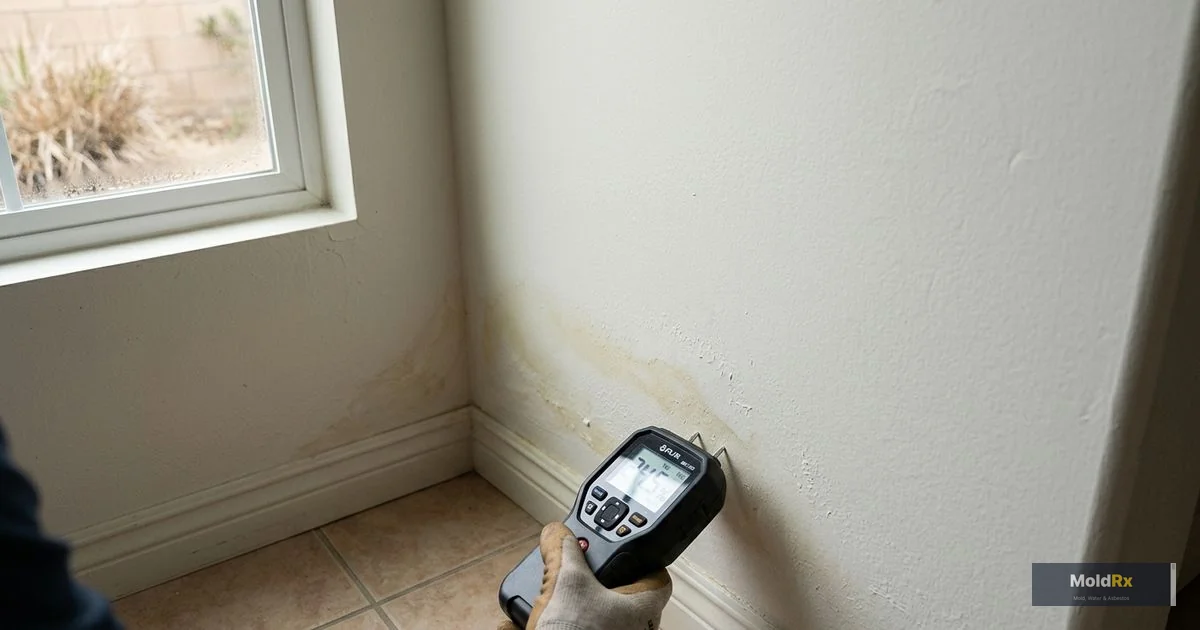
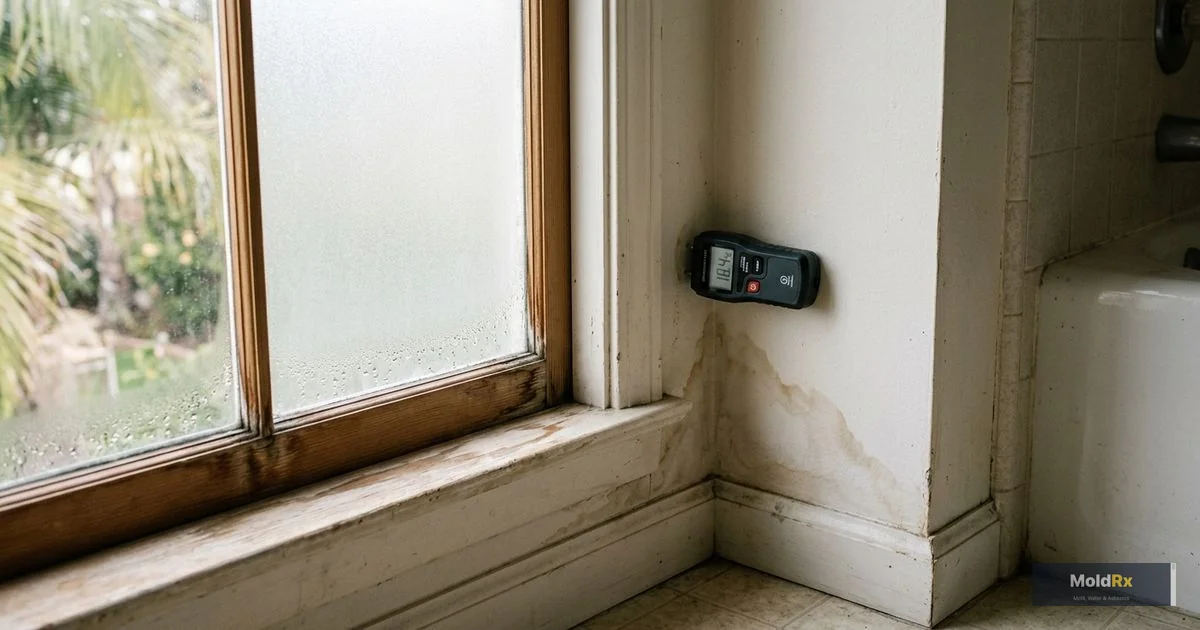
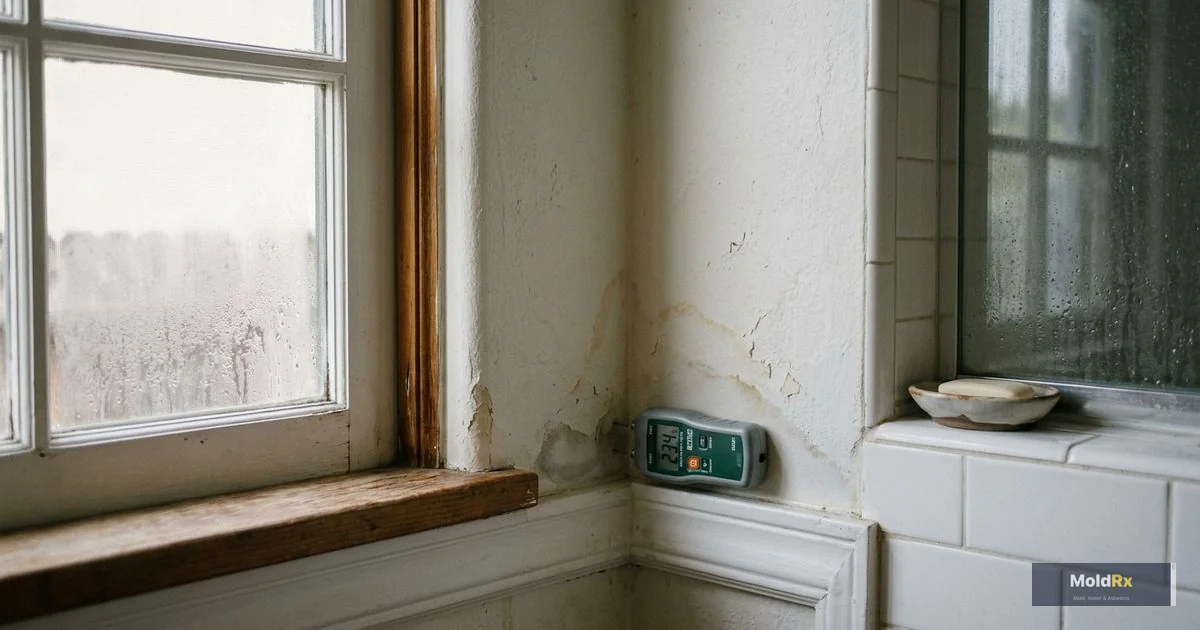
Infrared cameras detect temperature differentials indicating hidden moisture. Moisture meters measure water content in building materials. In La Quinta, thermal imaging locates condensation zones where air-conditioned interiors meet superheated exterior walls, traces irrigation leak paths near the structure, detects moisture around pool plumbing penetrations, and maps patterns in homes sealed during vacancy. These tools direct sampling to precise locations for efficient, focused results.
Our Mold Testing Process in La Quinta
1. Initial Consultation and Property Assessment
We evaluate your property's construction era, HVAC configuration, plumbing age, and moisture history. A 1986 PGA West villa with original ductwork gets a different approach than a 2015 Griffin Ranch build or a condominium near SilverRock. Following EPA 402-K-01-001 protocols, we identify areas of concern and explain what testing will and will not reveal.
2. Sample Collection
Samples are collected following IICRC S520 protocols with calibrated equipment and chain-of-custody documentation. Locations reflect La Quinta risk factors: HVAC registers, exterior walls with condensation potential, aging plumbing areas, rooms sealed during vacancy, and pool equipment spaces. Every sample is documented with exact location, time, conditions, and a unique lab identifier.
3. Accredited Laboratory Analysis
All samples go to AIHA-accredited, NVLAP-certified laboratories. Methods include spore trap microscopy, direct microscopy and culture analysis, and quantitative PCR for ERMI. Standard turnaround is 3 to 5 business days, with rush processing available for real estate and insurance deadlines.
4. Results Interpretation
We translate every result into plain language — which species were found, whether indoor concentrations exceed the outdoor baseline, what ERMI scores indicate, and what it means for your property. Not every elevated reading demands remediation, and not every normal reading means total clearance.
5. Recommendations and Next Steps
If results are normal, we tell you clearly. If elevated, we explain remediation scope and identify the underlying moisture source — condensate drain failure, irrigation leak, pool plumbing, or HVAC condensation — recommending corrections that address root cause. Every client receives a written report with lab results, professional interpretation, photographs, moisture readings, and recommendations.
DIY vs. Professional Testing
DIY settle-plate kits confirm mold exists — but mold spores are present everywhere, so a "positive" result is nearly guaranteed. Home kits cannot measure airborne concentrations quantitatively, establish indoor-versus-outdoor comparisons, identify species reliably, or provide chain-of-custody documentation accepted by insurers or courts. In La Quinta, where desert spores blow through every gap in weatherstripping daily, a DIY kit cannot distinguish between outdoor infiltration and active indoor growth. For a question like "Is this grout discoloration actually mold?" — a kit may suffice. For health concerns, insurance claims, real estate transactions, or remediation decisions, professional testing provides the quantitative, defensible data you need.
Understanding Your Mold Test Results
What Spore Counts Mean
Spore counts are reported as spores per cubic meter (spores/m3). No single "safe" threshold exists — the EPA has not established numerical standards for mold. Results are interpreted by comparing indoor concentrations to the outdoor baseline. La Quinta's baseline varies by season: spring windstorms carry higher spore loads than midwinter readings, and monsoon season alters the valley's profile. Same-day outdoor control samples and local interpretation experience are essential.
Common Species in La Quinta Homes
- Cladosporium — Most common outdoor desert species. Elevated indoors indicates moisture intrusion or poor ventilation. Found around windows in homes closed during vacancy and in rooms with inadequate airflow.
- Aspergillus/Penicillium — Most common indoor finding. Correlates with HVAC contamination — condensate pan moisture, coil growth, dirty ductwork. Especially prevalent in 1980s-90s golf community homes with original HVAC systems running 30-40 years.
- Alternaria — Dominant outdoor valley species. Indoor levels exceeding outdoors suggest water-damaged drywall or framing. Common around irrigation leak points.
- Stachybotrys — "Black mold." Requires sustained moisture on cellulose materials. Indicates chronic moisture lasting weeks or months, warranting IICRC S520 Condition 3 protocols. Found in homes with slab leaks, irrigation failures, mountain runoff intrusion, or hidden plumbing leaks unnoticed during vacancy.
When Results Indicate Remediation
IICRC S520 defines three conditions:
- Condition 1 (Normal): Indoor levels consistent with outdoors. No remediation needed.
- Condition 2 (Settled Spores): Elevated surface levels without active growth — often a past moisture event that dried, common after monsoon-season leaks. Professional cleaning and moisture source correction recommended.
- Condition 3 (Active Growth): Confirmed contamination with elevated airborne levels. Professional remediation per IICRC S520/R520 protocols recommended, especially when exceeding 10 square feet per EPA guidance or involving concerning species.
Health Risks That Warrant Testing
The EPA identifies mold exposure as a cause of allergic reactions, respiratory irritation, and asthma exacerbation. The CDC notes potentially more serious effects in vulnerable populations — infants, elderly adults, and immunocompromised individuals. The WHO links prolonged exposure to increased respiratory infection risk.
La Quinta's retirement community includes many residents managing COPD, asthma, post-surgical recovery, or immune suppression — conditions where indoor mold carries meaningful health implications beyond typical seasonal allergy symptoms. Cal/OSHA Title 8 regulations apply to commercial properties, golf club facilities, and residences where domestic employees work regularly. Testing identifies environmental factors that may contribute to symptoms, giving you and your physician factual evidence for informed decisions.
What Sets MoldRx Apart
-
Honest assessment, not manufactured urgency. If testing is unnecessary, we say so. If results are normal, you hear that clearly.
-
IICRC-certified professionals, AIHA-accredited labs. Current IICRC certifications, proper CSLB licensing for Riverside County, and AIHA-accredited NVLAP-certified laboratories meeting federal evidentiary standards.
-
Clear, plain-language results. We walk through what numbers mean and what your realistic options are — no jargon left for you to decode.
-
Coachella Valley knowledge, not a generic call center. Our professionals understand La Quinta's seasonal vacancy patterns, extreme temperature differential condensation, golf course irrigation proximity, mountain runoff flooding from the Santa Rosa foothills, and the desert mold species profile that makes this area different from coastal Southern California.
Get your free consultation — no obligations, no pressure.
La Quinta Neighborhoods We Serve
MoldRx provides mold testing across every neighborhood in La Quinta — ZIP code 92253 — including single-family estates, golf community residences, condominiums, and commercial properties.
- PGA West — The valley's largest golf community, spanning 2,200+ acres with six championship courses and over 2,900 properties ranging from 1980s condos to multimillion-dollar estates. First-generation HVAC systems, original plumbing, decades of thermal cycling, and extensive golf course irrigation maintaining soil moisture near foundations year-round create persistent hidden moisture pathways.
- Griffin Ranch — Equestrian-oriented community in South La Quinta with newer luxury construction. Equestrian wash areas, irrigated paddock perimeters, and covered arenas introduce unique moisture sources. Homes backing the Santa Rosa foothills face mountain runoff exposure during monsoon events.
- Tradition Golf Club — 450 acres in South La Quinta, among the valley's most exclusive communities. Wine cellars, outdoor kitchens, resort-style pools and spas each add moisture sources. High seasonal vacancy makes reopening assessments especially valuable.
- La Quinta Country Club — Homes dating from the late 1970s through the 1990s with original plumbing, ductwork, and weatherproofing enduring decades of desert extremes. Adjacent golf course irrigation adds continuous foundation-area soil moisture.
- SilverRock and Surrounding Developments — The SilverRock Resort area includes newer construction near 200 acres of irrigated fairways and massive water features, creating proximity-related moisture challenges.
- La Quinta Cove — The city's original residential area against the Santa Rosa Mountains. Its position at the base of steep slopes makes it particularly vulnerable to flash flooding — about 63 percent of La Quinta buildings carry flood risk. Older homes here combine mountain runoff exposure with aging infrastructure.
Nearby Communities We Also Serve
- Indian Wells — Adjacent to the northwest, sharing seasonal vacancy patterns and luxury golf culture
- Indio — Neighboring city to the east
- Palm Desert — Nearby to the west with similar housing stock and irrigation challenges
- Coachella — Neighboring community to the southeast
Related Services in La Quinta
- Mold Removal in La Quinta
- Water Damage Restoration in La Quinta
- Asbestos Testing in La Quinta
- Asbestos Removal in La Quinta
→ All remediation services in La Quinta
Frequently Asked Questions
Do I need mold testing if I can already see mold growing?
Not always. If visible mold covers a small area on a non-porous surface, EPA guidance allows homeowner cleanup without formal testing. Testing becomes valuable when growth exceeds 10 square feet, extends behind walls or into HVAC ductwork, or requires species identification. It also reveals whether airborne spore levels are elevated throughout the entire home — visible growth in one bathroom does not mean exposure is limited to that room, particularly with central air systems circulating across the house.
Should I test my La Quinta home when I return from seasonal absence?
This is one of the most common and highest-value reasons La Quinta homeowners schedule testing. A property sealed from April through October endured extreme heat, monsoon humidity, potential HVAC malfunctions, and possible plumbing events without an occupant present. A professional test at reopening determines whether hidden contamination developed. Many seasonal residents incorporate annual reopening assessments alongside HVAC servicing and pool startup.
Can mountain runoff and flash flooding cause mold problems in La Quinta?
Yes — this distinguishes La Quinta from most Coachella Valley communities. The Santa Rosa Mountains surround the city on three sides, and monsoon storms can drop an inch or more per hour on those slopes. Runoff channels through arroyos directly into residential neighborhoods, particularly La Quinta Cove and foothill-adjacent developments. About 63 percent of La Quinta buildings carry flood risk. Even modest water intrusion saturates drywall and insulation in hidden spaces. Testing four to six weeks after a storm event determines whether contamination developed.
How accurate are home mold test kits compared to professional testing?
DIY kits confirm mold exists, but spores are present everywhere — a positive result is nearly guaranteed. Kits cannot measure airborne concentrations, compare indoor-to-outdoor baselines, identify species, or provide documentation accepted by insurers or courts. In La Quinta, where desert spores blow through weatherstripping daily, a DIY kit cannot distinguish outdoor infiltration from active indoor growth.
What types of mold are most common in La Quinta homes?
Aspergillus/Penicillium (HVAC contamination), Cladosporium (dominant outdoor desert species), and Alternaria (carried indoors from desert soil). More concerning species like Stachybotrys chartarum appear in homes with chronic moisture — water-damaged drywall during vacancy, irrigation failures saturating foundation walls, mountain runoff intrusion, or hidden plumbing leaks.
Is mold a real concern in the desert?
Absolutely. Extreme heat drives aggressive AC use creating HVAC condensation. Monsoon season introduces sudden humidity spikes. Golf course and residential irrigation keeps soil saturated near foundations. Pool equipment rooms generate localized humidity. Mountain runoff during storms introduces floodwater. Sealed, climate-controlled construction traps any moisture that enters the building envelope. Different risks than coastal properties — but real risks.
Does my home need testing if it was vacant during monsoon season but shows no visible damage?
Monsoon moisture enters sealed homes through stucco micro-cracks, aging weatherstripping, plumbing penetrations, and foundation seams without visible evidence. Condensation accumulates inside wall cavities, ductwork, and beneath flooring — spaces invisible to walk-through inspection. Air sampling and moisture mapping determine whether hidden intrusion occurred and whether colonization has begun.
How long does it take to get mold test results back?
Standard turnaround is 3 to 5 business days for air and surface samples. ERMI requires 5 to 7 business days. Rush processing is available for real estate and insurance deadlines. We schedule a results review to walk you through findings as soon as the lab report arrives.
Is mold testing required when selling a home in California?
California does not mandate testing as a condition of sale, but Civil Code Section 1102 requires disclosure of known mold contamination. Many buyers and lenders request testing during due diligence, particularly for older properties or seasonal-use homes. A clean AIHA-accredited lab report smooths the transaction and removes contingencies.
Will my homeowner's insurance cover mold testing?
Coverage depends on your policy and circumstances. Testing associated with a covered water damage event — burst pipe, water heater failure, storm damage — is often reimbursable. Testing for health concerns, real estate transactions, or seasonal reopening is typically out-of-pocket. Our documentation meets insurer evidentiary standards. Contact your provider to confirm coverage before scheduling.
Get Mold Testing in La Quinta
Whether you are returning after seasonal absence, investigating respiratory symptoms, evaluating a purchase in PGA West or Griffin Ranch, assessing conditions after monsoon runoff, or simply want to know what is in your air, professional testing eliminates guesswork and gives you defensible answers.
MoldRx only sends vetted professionals who understand Coachella Valley properties — seasonal vacancy dynamics, extreme temperature condensation patterns, golf course irrigation risks, mountain runoff exposure from the Santa Rosa range, and the desert mold profile that makes the low desert different from coastal Southern California. No pressure. No manufactured urgency. Honest assessment and clear results.
Call MoldRx to schedule your mold test — (888) 609-8907. Clear results. Honest guidance. No guesswork.