Mold Removal in La Quinta, CA — MoldRx
IICRC-Certified Mold Removal Professionals Serving La Quinta and the Coachella Valley
La Quinta sits at the southern end of the Coachella Valley in Riverside County — roughly 41,000 residents at 56 feet elevation, nestled against the Santa Rosa Mountains. Known as the "Gem of the Desert," the city is home to PGA West, La Quinta Resort & Club, and some of the most sought-after residential communities in the Palm Springs region. The arid climate — barely four inches of annual rainfall, summer highs routinely exceeding 115 degrees — creates an assumption that mold cannot gain a foothold here. That assumption is wrong. HVAC systems running around the clock generate condensation. Pool and spa equipment introduces persistent moisture. Mountain runoff from the Santa Rosa canyons floods foothill properties during monsoon season. Seasonal vacancy leaves homes unmonitored for months. Once moisture reaches a concealed wall cavity in desert heat, mold can colonize within 24 to 48 hours per IICRC S520/R520 remediation standards and EPA 402-K-01-001 federal mold guidance. MoldRx only sends vetted, IICRC-certified mold removal professionals who understand Coachella Valley moisture dynamics.
Request your free estimate — we'll assess your property and give you straight answers.
Why Mold Grows in La Quinta Homes
La Quinta's population is approximately 41,000 permanent residents, with seasonal residents increasing the total by 30 to 40 percent from November through April. Annual rainfall averages three to four inches and winter lows rarely dip below the mid-40s. The climate is classified as hot desert (Koppen BWh). Despite the aridity, La Quinta's housing, infrastructure, and geography create moisture traps that sustain hidden mold behind walls and under floors.
HVAC Condensation and Year-Round Cooling
La Quinta's cooling season runs nine months of the year, with air conditioning operating almost continuously from April through November. That volume of mechanical cooling generates condensation on evaporator coils, inside ductwork, in drain pans, and along supply lines in unconditioned attic spaces. A clogged drain line, cracked drip pan, or ductwork with failing insulation creates sustained dampness in concealed locations. Many La Quinta homes were built during the 1980s and 1990s growth boom with HVAC installations now 30 to 40 years old. When indoor humidity crosses the 50 percent threshold the EPA identifies as the upper safe limit, mold colonizes within 24 to 48 hours per IICRC S520 and EPA 402-K-01-001 guidance.
Pool, Spa, and Water Feature Moisture
La Quinta has one of the highest residential pool densities in Southern California. Nearly every home in PGA West, Andalusia, and The Citrus includes a pool, spa, or both, plus water features, misters, and irrigated landscaping against property walls. Pool equipment rooms sustain elevated humidity year-round. Evaporation adds moisture to the microclimate surrounding the home, and that moisture migrates indoors through sliding doors, windows, and the building envelope. Combined with continuous air conditioning, the temperature differential between humid outdoor air and chilled interior surfaces creates condensation on walls, window frames, and inside adjacent wall cavities.
Mountain Runoff and Flash Flooding
The Santa Rosa Mountains rise sharply along La Quinta's southern and western edges. Foothill communities — portions of PGA West, SilverRock, and hillside estates along Avenida Bermudas — sit directly in canyon drainage paths. During the North American Monsoon from July through September, thunderstorms can drop an inch or more in under an hour. Hurricane Hilary in August 2023 demonstrated the severity across the Coachella Valley. Properties near canyon mouths face water intrusion through foundations, garage entries, and landscape grading that channels runoff toward the structure. Post-flood moisture trapped behind stucco or under tile sustains mold growth that goes undetected for months.
Housing Stock and Seasonal Vacancy
La Quinta's housing stock consists of approximately 24,700 units — 76 percent detached single-family homes with a median construction year of 1999. At 27 years old, builder-grade materials are deteriorating, plumbing connections developing slow leaks, and HVAC systems losing efficiency. The city's role as a premier second-home destination means a substantial share of properties sit vacant from May through October — peak heat and monsoon season. The homeowner vacancy rate exceeds six percent; many seasonal properties remain unoccupied five to seven months. A pinhole leak, failed water heater, or monsoon intrusion in an unattended home feeds mold growth undisturbed until the owner returns in November.
Signs You Need Professional Mold Removal
Visible Growth Beyond a Small Area
EPA publication 402-K-01-001 uses ten square feet as the threshold for professional remediation. In La Quinta homes, colonies commonly appear along baseboards near pool equipment rooms, inside HVAC closets, behind bathroom tile where moisture migrated from spa plumbing, and on garage walls where flood water dried incompletely. Growth beyond a three-by-three-foot patch, or in multiple locations, warrants professional containment.
Persistent Musty Odor Without Visible Mold
A musty smell you cannot trace often indicates concealed mold — wall cavities adjacent to pool plumbing, inside HVAC ductwork, beneath flooring near outdoor water features, or inside casitas closed during summer. If the odor intensifies when the AC cycles on, hidden mold is a strong possibility.
Recurring Mold After Previous Cleanup
If mold returns after treatment, the moisture source is unresolved. A slow leak behind pool equipment, condensation from aging ductwork, or persistent humidity from an adjacent spa will recolonize the area. Recurring growth requires professional moisture mapping and source correction.
Water Damage History
Mold colonizes damp materials within 24 to 48 hours per IICRC S520 and EPA guidance. Properties that have experienced monsoon flooding, a plumbing failure during vacancy, or a pool equipment leak should be evaluated even if dry to the eye.
Health Symptoms That Worsen Indoors
The CDC notes that mold exposure can cause nasal stuffiness, coughing, wheezing, and eye or skin irritation. If symptoms improve when you leave and return when you come back, indoor mold is worth investigating — especially in homes closed during summer months.
Health Risks of Mold Exposure
The EPA, CDC, and WHO Guidelines for Indoor Air Quality: Dampness and Mould document that prolonged exposure to elevated indoor mold is associated with respiratory symptoms, allergic reactions, and asthma aggravation. This is not cause for alarm — mold is natural and brief exposure to background levels is unavoidable. The concern arises when a colony behind a wall or inside ductwork releases spores continuously above normal outdoor baselines.
Populations at Higher Risk
- Older adults — La Quinta's median age is 53.3 years, well above the national average. Age-related changes in immune and respiratory function increase mold sensitivity. The WHO identifies older adults as a priority population.
- Children and families — Family neighborhoods in The Citrus, PGA West, and newer developments include school-age children with developing respiratory systems more susceptible to irritants.
- Adults with asthma or allergies — The CDC reports that mold can trigger asthma attacks and may contribute to asthma development in children.
- Immunocompromised individuals — Chemotherapy patients, transplant recipients, and those with chronic immune conditions face elevated risk from species like Aspergillus.
The goal of remediation is returning indoor fungal ecology to normal levels — IICRC S520 Condition 1. That is a measurable outcome, not a marketing claim.
When DIY Mold Removal Isn't Enough
- Area exceeds ten square feet — EPA 402-K-01-001 threshold for professional remediation.
- Mold inside HVAC ductwork — NADCA recommends professional cleaning; improper handling distributes spores to every room.
- Growth has penetrated structural materials — Framing, subfloor, or roof decking requires containment and selective demolition.
- Suspected Stachybotrys (black mold) — IICRC S520 requires specific containment due to mycotoxins. Species ID requires lab analysis.
- Category 2 or 3 water source — IICRC S500 classifies sewage and flood water as requiring biohazard protocols.
- Documentation needed for insurance or real estate — DIY cleanup does not produce the reports buyers and insurers require.
Request a free estimate — we will tell you what you actually need.
How We Remove Mold in La Quinta Properties
Every project follows the IICRC S520/ANSI R520 Standard for Professional Mold Remediation and Cal/OSHA Title 8 regulations.
1. Inspection and Moisture Mapping
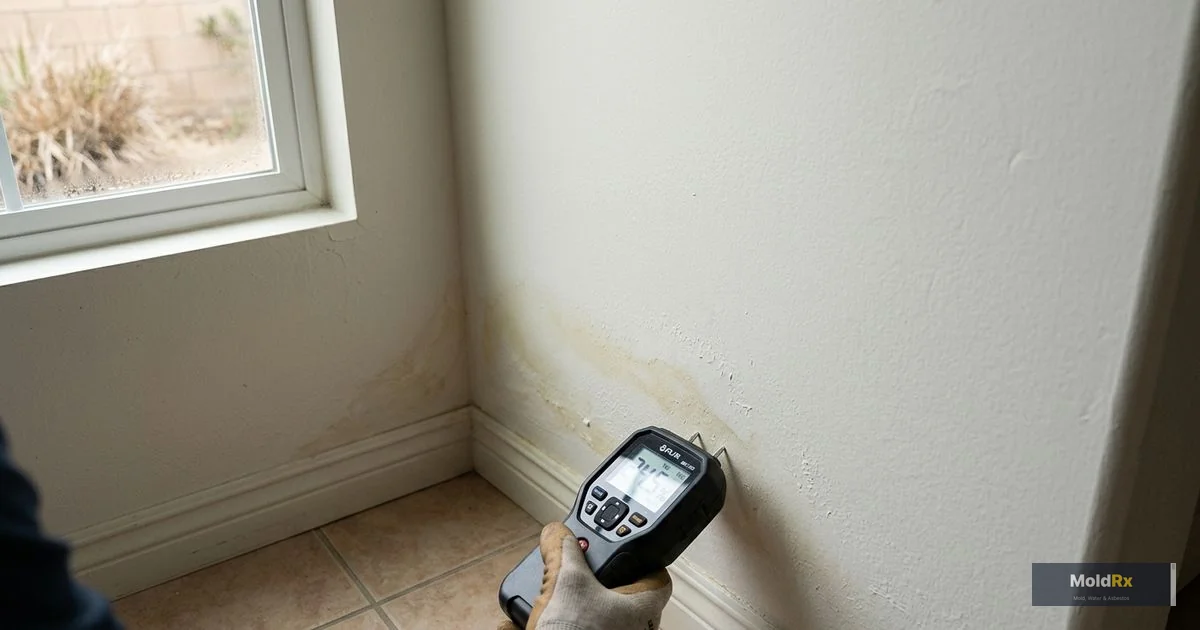
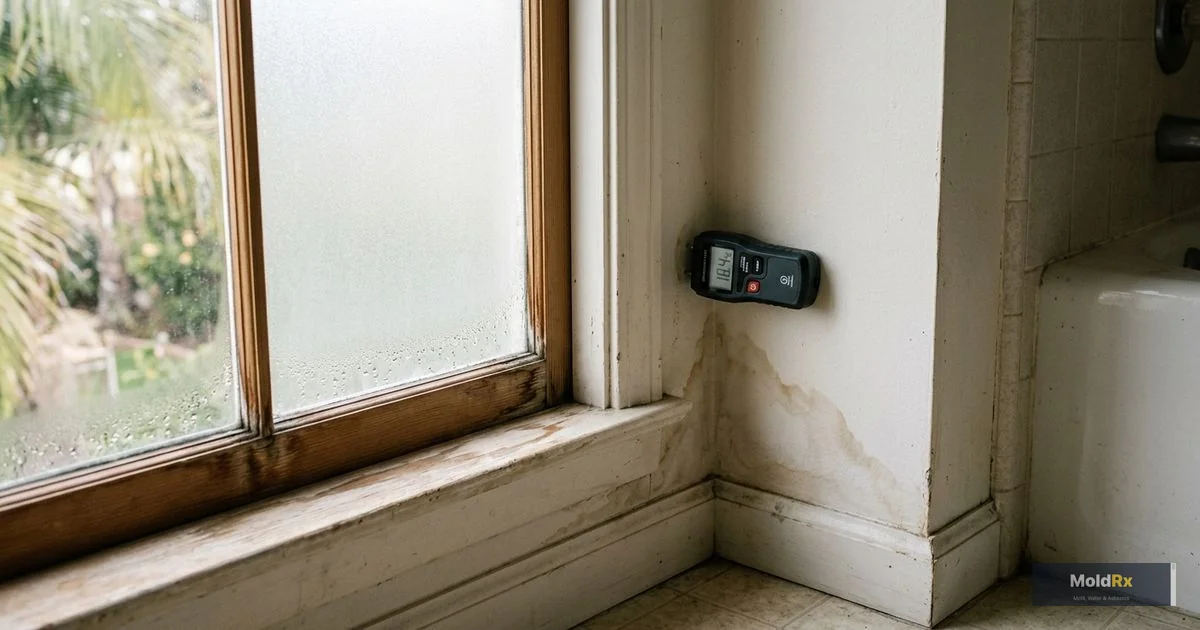
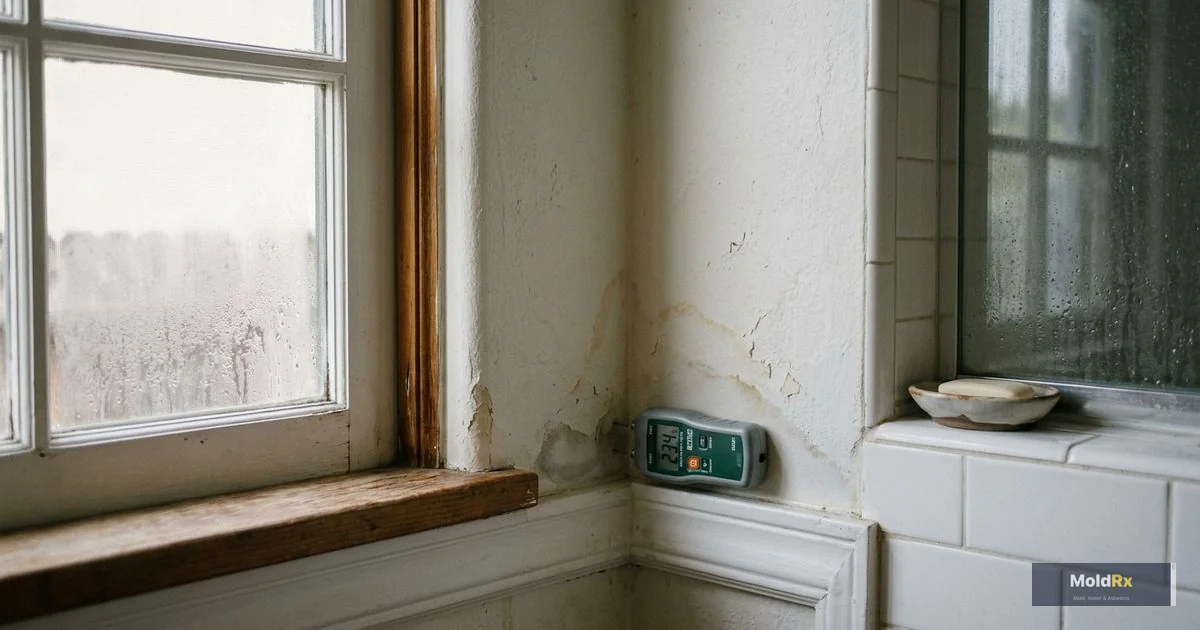
A comprehensive assessment aligned with EPA 402-K-01-001 protocols: infrared thermal imaging, pin and pinless moisture meters, and targeted checks for La Quinta moisture vectors — HVAC condensate systems, pool and spa plumbing penetrations, wall cavities adjacent to water features, and foundation areas near canyon drainage. You receive a clear scope of work before removal begins.
2. Containment
The work zone is sealed under IICRC S520 Condition 2 or 3 containment. Polyethylene barriers and HEPA-filtered negative-air machines prevent spore migration. The CDC and EPA both emphasize containment, and WHO Guidelines for Indoor Air Quality: Dampness and Mould highlight the importance of limiting exposure in households with vulnerable residents.
3. Removal and Treatment
Colonized porous materials are cut out and double-bagged inside containment per IICRC S520. Non-porous surfaces are cleaned and treated with EPA-registered antimicrobials. Air monitoring confirms concentrations remain within Cal/OSHA Title 8 Section 5155 permissible exposure limits throughout the process.
4. Moisture Correction
Our team traces water to its origin — failing HVAC condensate drain, pool equipment leak, poorly insulated ductwork, or landscape grading directing monsoon runoff toward the foundation — and coordinates repair. For seasonally vacant properties, we recommend monitoring strategies and closure protocols to prevent future events.
5. Post-Remediation Verification
The project closes at IICRC S520 Condition 1 — normal fungal ecology. Verification includes visual confirmation, moisture readings, and when warranted, independent air sampling by a third-party hygienist. You receive complete documentation: scope, photos, moisture logs, containment records, and clearance results.
Mold Removal vs. Mold Remediation: What's the Difference?
Mold removal is the physical elimination of colonized materials. Mold remediation is the full IICRC S520 protocol: assessment, containment, removal, moisture source correction, structural drying, and post-remediation verification to achieve Condition 1 — normal fungal ecology.
Removal without remediation is incomplete. Without correcting the moisture source, mold returns. Without containment, spores migrate. Without verification, there is no confirmation the space is safe. MoldRx coordinates full remediation on every La Quinta project from assessment through Condition 1 clearance.
Preventing Mold After Remediation
Maintain Your HVAC System
Schedule professional service twice yearly — before cooling season and midseason. Clear the condensate drain, inspect the drip pan, check duct insulation for gaps, and replace filters monthly during peak months. A maintained system manages its moisture; a neglected one deposits it inside your walls.
Manage Pool and Spa Moisture
Keep equipment enclosures ventilated, not sealed. Check plumbing penetrations through exterior walls for deteriorated caulking or failed pipe boots. Use spa covers consistently. Evaluate misting systems for overspray reaching building surfaces.
Seasonal Home Closure Protocol
Set the thermostat to 82 to 84 degrees with interior doors open. Shut off the main water supply. Arrange monthly property checks. Install Wi-Fi leak sensors and humidity monitors near the water heater, under sinks, and in the HVAC closet. A few sensors are far simpler than a remediation project triggered by months of undetected water.
Mountain Drainage Awareness
Properties along the Santa Rosa foothills should have grading evaluated to confirm runoff flows away from the structure. Clean on-property storm drains and catch basins before monsoon season in July. After any significant rain, check garages, lowest rooms, and downslope areas for water entry. Address intrusion within 24 to 48 hours to prevent colonization.
Fix Water Intrusion Promptly
Mold colonization begins within 24 to 48 hours per IICRC S520. Whether the source is monsoon flooding, a burst line, HVAC overflow, or pool equipment failure, dry affected materials immediately with fans, dehumidifiers, or professional extraction.
What Sets MoldRx Apart
- Straight talk, not sales talk. We tell you what you need — and what you do not. If the scope is smaller than you feared, you hear that first.
- Licensed, insured, IICRC-certified. Every professional holds credentials verified through the CSLB (Contractors State License Board) and is insured to work in Riverside County.
- Full documentation on every job. Scope, photos, moisture logs, containment records, clearance results — for insurance, resale, or your own files.
- Family-owned accountability. We only send vetted remediation professionals we stand behind.
Get your free estimate — no obligations, no pressure. Just a clear picture of your situation.
La Quinta Neighborhoods We Serve
MoldRx provides mold removal across every neighborhood in La Quinta — ZIP codes 92253 and 92247 — including residential, commercial, and multi-family properties.
- PGA West — The largest golf community in the Palm Springs area: 2,200 acres, 1,400-plus homes built between the mid-1980s and 2009 across seven neighborhoods. Homes from the earliest phases are now 40 years old with original HVAC, aging pool plumbing, and extensive water features. Upper-elevation parcels face canyon runoff during monsoon season.
- Griffin Ranch — A 221-home equestrian community conceived by Merv Griffin, opened 2007. At roughly 19 years old, builder-grade HVAC components and plumbing connections are reaching failure age. Equestrian facilities and landscape irrigation add ambient moisture around structures.
- Andalusia at Coral Mountain — Exclusive private golf community at the base of the Santa Rosa Mountains. Hillside positioning places homes in mountain drainage paths. Large footprints with multiple HVAC zones and extensive outdoor water features create persistent moisture near the building envelope.
- The Citrus — Private community within La Quinta Resort & Club, named for the citrus grove that once stood here. Mature landscaping, pool infrastructure, and HVAC systems now well into their second decade of service create the same moisture challenges as any desert property of this vintage.
- SilverRock — A 525-acre development at the mountain base, home to the public SilverRock golf course. Lower-terrain residential areas collect mountain runoff. Properties range from established homes to newer construction, each with distinct moisture profiles.
- Old Town La Quinta — The commercial and residential core near Main Street and Calle Tampico. Some of the city's oldest housing stock, with original plumbing and HVAC installations predating modern moisture standards.
- La Quinta Cove — Foothill community south of the city center. Canyon proximity creates direct flash flood risk, and the mix of older custom homes includes structures with original materials approaching 50 years of age.
Nearby Communities We Also Serve
Related Services in La Quinta
- Water Damage Restoration in La Quinta
- Mold Testing in La Quinta
- Asbestos Removal in La Quinta
- Asbestos Testing in La Quinta
→ All remediation services in La Quinta
Frequently Asked Questions
How quickly can mold grow in a La Quinta home?
Within 24 to 48 hours of water exposure. La Quinta's warm interiors accelerate the process. A failed HVAC condensate line, pool plumbing leak, or monsoon intrusion can establish a colony behind drywall before there is any visible sign.
My home sits vacant from May through October. How do I prevent mold?
Set the thermostat to 82 to 84 degrees with interior doors open, shut off the main water supply, and arrange monthly property checks. Wi-Fi leak and humidity sensors near the water heater, under sinks, and in the HVAC closet provide remote monitoring. Have the property professionally inspected before reoccupation each fall.
Can pool or spa equipment cause mold inside my home?
Yes. Equipment rooms sustain elevated humidity, and pool evaporation adds moisture to the air surrounding the home. That humidity migrates indoors and condenses on cold air-conditioned surfaces — walls, window frames, and inside wall cavities. Water features and misters amplify the risk.
Should I worry about mold after a flash flood from the Santa Rosa Mountains?
Any property that takes water during a monsoon event should be evaluated. Canyon runoff pushes moisture deep into building materials — behind stucco, under tile, into slab foundations. A professional assessment with thermal imaging after any significant storm is a practical step.
How do I know if mold is hiding inside my HVAC system?
A musty smell when the AC cycles on is the most common indicator. Discoloration around supply registers, residue on vent covers, and respiratory symptoms that worsen indoors are additional signals. In homes where the handler runs nine months a year, contaminated ductwork distributes spores to every room.
Do I need mold testing before remediation?
Not always. If mold is visible, the priority is containment and removal. Testing is most valuable when you suspect hidden growth, need documentation for insurance or real estate, or want post-remediation verification.
How long does mold removal take in La Quinta?
Most residential projects take two to five days. Larger homes with multiple affected zones may take longer. We provide a realistic timeline during assessment.
What is the difference between mold removal and mold remediation?
Removal is the physical elimination of colonized materials. Remediation is the full IICRC S520 protocol: assessment, containment, removal, moisture correction, drying, and Condition 1 verification. MoldRx coordinates full remediation on every project.
Is black mold more dangerous than other types?
Stachybotrys chartarum produces mycotoxins and requires specific IICRC S520 containment during removal. However, the CDC notes that mold color is not a reliable species indicator. Any colony exceeding ten square feet warrants professional remediation regardless of color.
Does MoldRx provide emergency mold removal in La Quinta?
Yes. Monsoon flooding, burst pipes, HVAC failures, and pool equipment leaks all require prompt response. Call (888) 609-8907 to reach our team for rapid assessment and containment.
Get Mold Removal in La Quinta
Discovering mold in a desert home is disorienting — most La Quinta homeowners never expected to deal with it. But aging HVAC systems, pool infrastructure, seasonal vacancy, and mountain runoff create conditions the desert climate alone cannot prevent. Once a colony establishes behind drywall, inside ductwork, or under flooring, it does not resolve on its own.
MoldRx only sends vetted, IICRC-certified professionals who follow documented remediation standards, explain what they find without jargon, and do the work correctly the first time. Whether you are dealing with visible growth, a persistent odor, a property reopening after summer vacancy, or flood damage from the Santa Rosa canyons, the process starts with a straightforward assessment. We will tell you what you actually need.
Call MoldRx for your free estimate — (888) 609-8907. Clear answers. Honest guidance. Work done right.