Mold Removal in La Palma, CA — MoldRx
IICRC-Certified Mold Removal Professionals Serving La Palma and North Orange County
La Palma is Orange County's smallest city — 1.8 square miles and roughly 15,600 residents in one of Southern California's best-maintained residential communities. The "City of Gracious Living" earns best-places-to-live recognition for its low crime and top-rated schools. But nearly every home here was built from the early 1960s through the mid-1970s, when dairy farms became wall-to-wall suburban tract housing. That uniformly aging stock — now 50 to 65 years old — combined with marine layer humidity, flat terrain at 46 feet elevation, aging plumbing, and original ventilation creates ideal conditions for mold behind walls, under flooring, and inside ductwork. MoldRx only sends vetted, IICRC-certified mold removal professionals who follow IICRC S520/R520 remediation standards and EPA federal mold guidance (EPA 402-K-01-001) — specialists who work North Orange County every week and understand La Palma's specific challenges.
Request your free estimate — we'll assess your property and give you straight answers.
Why Mold Grows in La Palma Homes
La Palma sits in northwest Orange County at 46 feet elevation, covering 1.8 square miles under ZIP code 90623. Incorporated in 1955 as "Dairyland" by dairy farmers resisting annexation by Buena Park, the city renamed itself La Palma in 1965 and converted from farmland to tract housing almost overnight — population went from 633 in 1960 to over 12,000 by 1970. Today there are approximately 5,270 housing units (68% detached single-family), with a median construction year of 1972 and median home value exceeding $920,000. Homeowners invest heavily, but the underlying infrastructure is half a century old.
Marine Layer Humidity and Coastal Moisture
La Palma sits roughly 10 miles from the Pacific — well within the marine layer's reach from late spring through early fall. Average annual humidity hovers around 60%, climbing to 67% in June when morning fog rolls across flat terrain and lingers until midday. That persistent moisture migrates through gaps in aging stucco, deteriorated window seals, and ventilation systems that draw in humid coastal air. Per IICRC S520 guidelines and EPA 402-K-01-001, mold colonizes within 24 to 48 hours once conditions are right — a timeline La Palma's humidity makes realistic for months of the year. The flat topography allows humid air to settle and stagnate across residential blocks, unlike hillside communities where drainage and airflow move moisture naturally.
Uniformly Aging 1960s-1970s Housing Stock
This is the core of La Palma's mold vulnerability. Because the entire city developed within roughly a 15-year window, virtually every home faces the same age-related failures simultaneously. Original galvanized and copper plumbing develops pinhole leaks after 50 to 60 years. Slab-on-grade foundations crack and shift, creating pathways for ground moisture. Builder-grade stucco separates from framing. Single-pane aluminum windows create condensation zones. Bathroom exhaust fans — if they exist at all — often vent into attic spaces rather than outside. Original HVAC ductwork lacks modern vapor barriers. Every one of these failures is a moisture pathway, and where moisture lingers in a 60%+ humidity environment, mold follows. Unlike cities with mixed-era housing, there are no "newer sections" of La Palma to escape this pattern.
Aging Plumbing, Slab Leaks, and Original Infrastructure
La Palma's entire plumbing infrastructure is the same age — past the typical service life of every material used. Galvanized supply lines corrode internally, developing pinhole leaks that weep for weeks before detection. Copper joints deteriorate after decades of hard Southern California water. Cast-iron waste pipes crack below slab level. Slab leaks are particularly insidious here because flat terrain and clay-heavy soil keep subsurface moisture from draining — water migrates upward through cracked concrete, saturating flooring and wall assemblies. A slab leak undetected for two weeks can generate mold throughout a room. Failed shower pans, deteriorated tub surrounds, and aging water heaters compound the moisture load.
Signs You Need Professional Mold Removal
Not every discoloration requires a remediation crew. But certain signs indicate the problem has moved past what a homeowner can handle safely.
Visible Growth Beyond a Small Area
EPA 402-K-01-001 uses 10 square feet as the threshold for professional remediation. In La Palma homes, visible growth commonly appears along baseboards on exterior walls, inside bathroom cabinets, on ceiling drywall beneath aging roofs, around sliding glass doors where decades-old weather stripping has failed, and in hallway closets where airflow is nonexistent.
Persistent Musty Odor Without Visible Mold
If a musty smell persists after cleaning, mold is likely growing in a concealed space — behind drywall, under flooring, or within HVAC ductwork. Single-story homes with original ductwork in uninsulated attic spaces are particularly prone to condensation and microbial growth inside the system.
Recurring Mold After Previous Cleanup
Mold that keeps returning means the moisture source was never resolved. In La Palma's older homes, the recurring source is often a slow slab leak, a failed shower pan, or condensation behind stucco — none of which surface cleaning will fix.
Water Damage History
Any previous water event — plumbing failure, roof leak, slab leak — can leave residual moisture that supports mold for months. If your property experienced water intrusion and was not professionally dried within the 24-to-48-hour window identified by IICRC S520, a mold assessment is warranted.
Health Symptoms That Worsen Indoors
Nasal congestion, eye irritation, persistent cough, or worsening asthma that improves when you leave the house may indicate mold exposure. The CDC notes mold can cause respiratory symptoms in healthy individuals and more severe reactions in those with existing conditions.
Health Risks of Mold Exposure
Mold exposure is a legitimate health concern backed by federal agency guidance. The EPA identifies allergic reactions including sneezing, runny nose, red eyes, and skin rash. The CDC identifies coughing, wheezing, and throat irritation. The World Health Organization's Guidelines for Indoor Air Quality: Dampness and Mould links prolonged exposure to respiratory infections, asthma development in children, and exacerbation of existing respiratory disease.
Populations at Higher Risk
La Palma's population is approximately 54% Asian, 21% White, and 17% Hispanic, with a median age of 45 and homeownership near 75%. Multigenerational households are common. The WHO identifies several groups at elevated risk:
- Children — Developing respiratory systems are more susceptible to mold-related irritation. The WHO guidelines identify children as vulnerable to dampness-related health effects, including increased asthma risk.
- Individuals with asthma or allergies — Mold is a known asthma trigger. The CDC recommends that people with mold allergies avoid exposure entirely.
- Elderly residents — La Palma's median age of 45 reflects long-time homeowners who have aged in place. Multigenerational arrangements mean older adults often share homes where mold may be present in aging infrastructure.
- Immunocompromised individuals — People undergoing chemotherapy, transplant recipients, and those with autoimmune conditions face elevated risk of fungal infections.
Timely remediation matters — particularly in homes with vulnerable occupants.
When DIY Mold Removal Isn't Enough
For small surface mold on non-porous materials, EPA guidance allows homeowner cleanup. But these conditions require professional intervention:
- Contamination exceeding 10 square feet — EPA 402-K-01-001 recommends professional remediation beyond this threshold
- Mold inside HVAC systems or ductwork — Original systems in La Palma's 1960s-1970s homes frequently harbor mold in ductwork and air handlers. NADCA (National Air Duct Cleaners Association) standards apply
- Structural involvement — Mold behind drywall, under subfloor materials, or inside wall cavities requires controlled demolition, containment, and HEPA filtration
- Toxic species suspected — Stachybotrys chartarum (black mold) produces mycotoxins requiring IICRC S520-compliant removal and PPE beyond hardware-store equipment
- Category 2 or 3 water involvement — Sewage, gray water, or contaminated flooding per IICRC S500 categories requires professional protocols
- Insurance or real estate documentation needed — Professional remediation generates scope-of-work records, moisture readings, and verification that insurers and buyers require
When in doubt, get a professional assessment — it's part of our free estimate.
How We Remove Mold in La Palma Properties
Every remediation follows IICRC S520/R520 standards — the industry benchmarks recognized by insurers, public health agencies, and the courts — plus Cal/OSHA Title 8 §5155 regulations for worker and occupant safety.
1. Inspection and Moisture Mapping
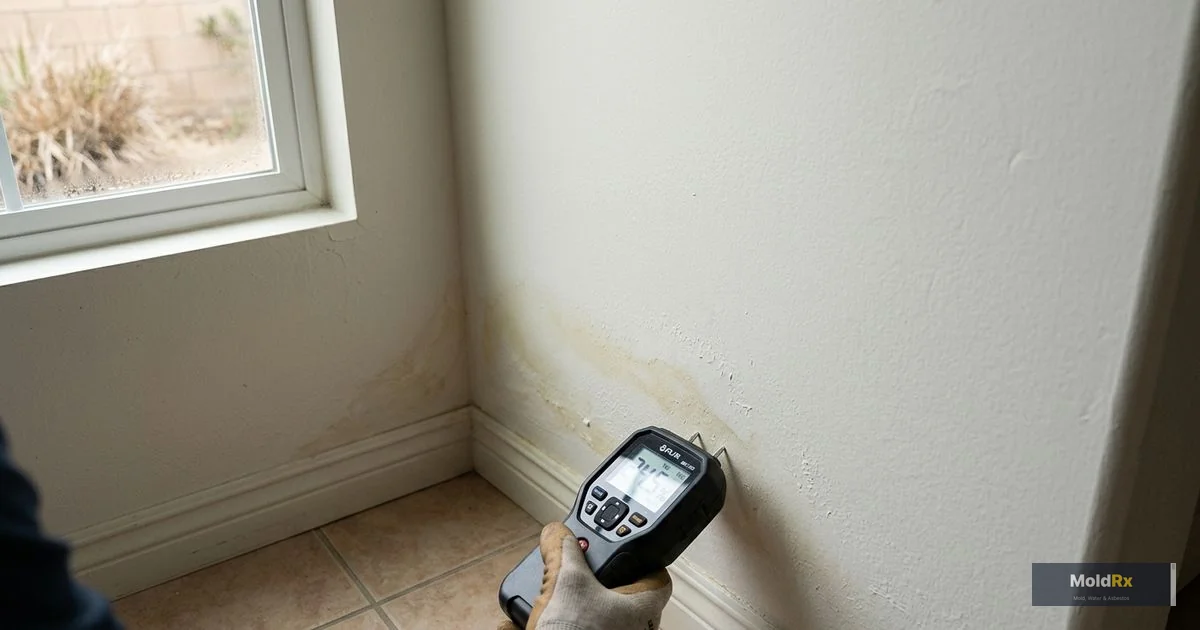
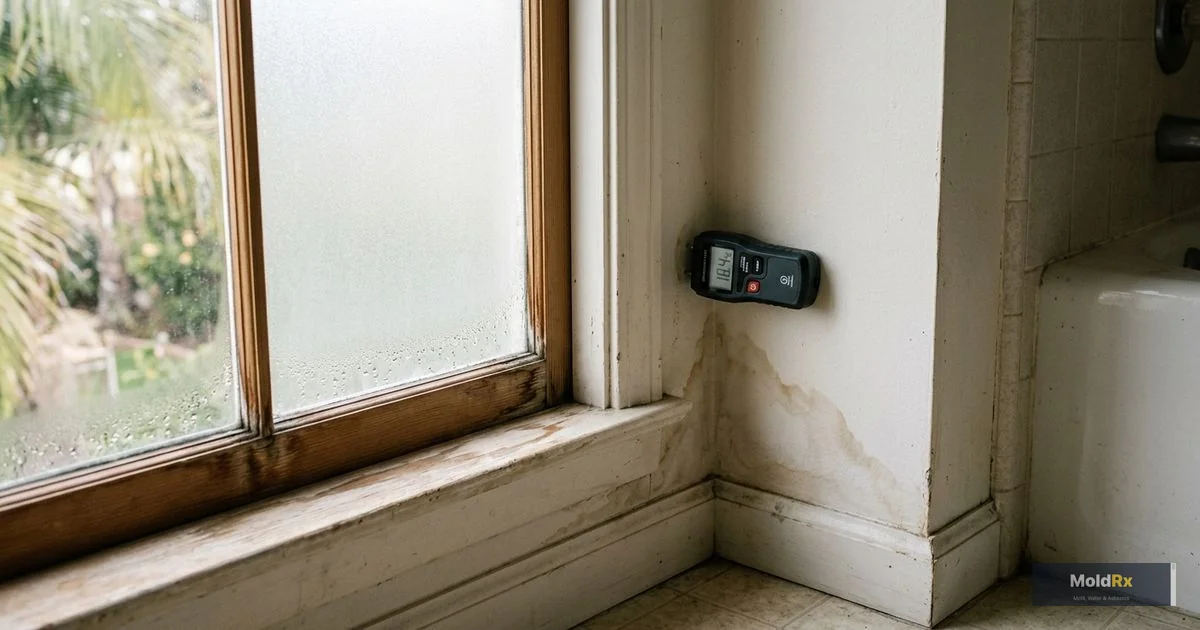
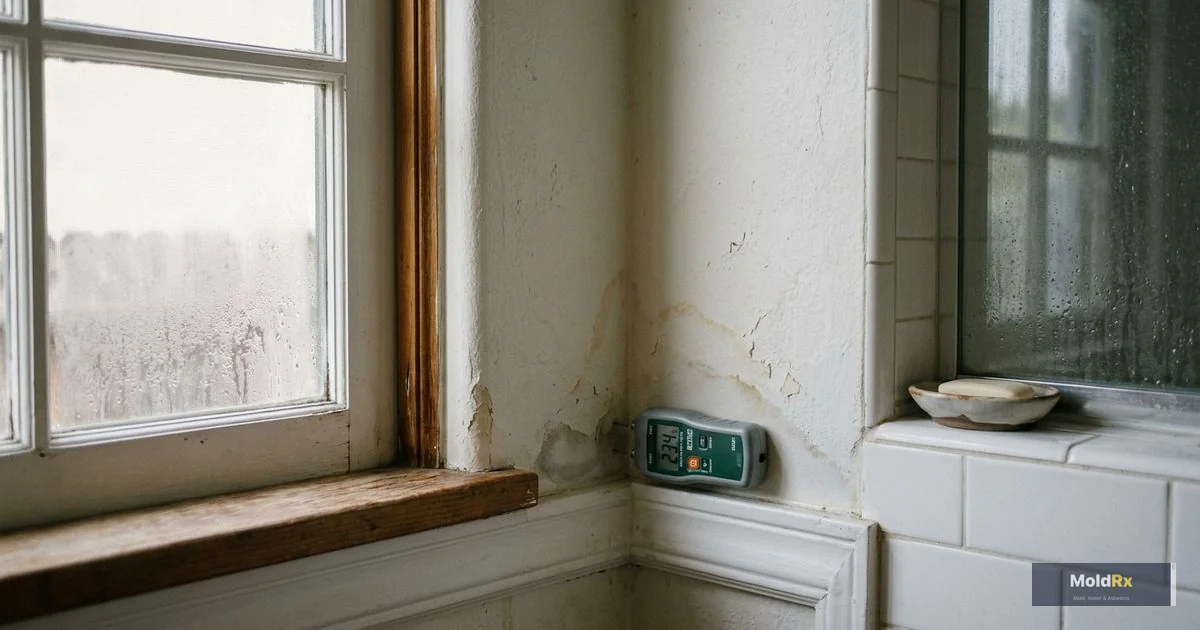
Before anything is torn out, our specialists map the full scope following EPA 402-K-01-001 assessment protocols. In La Palma homes, that means checking plumbing for pinhole leaks common in 50-to-65-year-old systems, inspecting slabs for moisture migration, examining stucco for intrusion points, and testing attic ductwork for condensation. Thermal imaging and moisture meters trace water pathways that visual inspection alone would miss.
2. Containment
Physical barriers and negative air pressure isolate the affected area per IICRC S520 containment protocols. HEPA air scrubbers capture airborne spores down to 0.3 microns, preventing cross-contamination — critical in La Palma's multigenerational households. The CDC, EPA, and the World Health Organization's WHO Guidelines for Indoor Air Quality: Dampness and Mould all identify children and immunocompromised individuals as more vulnerable to mold-related respiratory effects.
3. Removal and Treatment
Mold-damaged materials — drywall, insulation, carpet padding, porous surfaces — are removed following IICRC S520 procedures and Cal/OSHA Title 8 §5155 exposure limits. Remaining structural surfaces are treated with EPA-registered antimicrobial solutions that eliminate residual spores and inhibit regrowth. Every surface in the containment zone gets addressed — not just visible mold, but surrounding areas where microscopic colonization may have begun.
4. Moisture Correction
Removing mold without fixing the water source guarantees it returns. Our specialists identify and resolve the underlying cause — a slab leak in aging plumbing, bathroom exhaust venting into the attic, marine layer moisture entering through deteriorated stucco, ground moisture from flat terrain saturating soil against your foundation, or condensation in uninsulated attic ductwork. In a city where the entire housing stock shares one construction era, these moisture sources are remarkably consistent property to property.
5. Post-Remediation Verification
Work isn't finished until conditions are verified against IICRC S520 Condition 1 (normal fungal ecology) clearance standards. You receive documentation of scope of work, materials removed, treatments applied, moisture readings, and verification results — meeting the evidentiary standards insurers and real estate professionals require.
Mold Removal vs. Mold Remediation: What's the Difference?
The terms get used interchangeably, but they describe different scopes.
Mold removal refers to physically eliminating growth — cutting out contaminated drywall, HEPA-vacuuming surfaces, applying antimicrobial treatments. It addresses what's already there.
Mold remediation is the broader process defined by IICRC S520: assessment, containment, removal, moisture correction, and post-remediation verification. Remediation addresses both the mold and the conditions that caused it, returning the environment to Condition 1 (normal fungal ecology).
When MoldRx sends professionals to your La Palma property, they perform full remediation. The slab leak gets traced, the stucco intrusion point gets sealed, the exhaust ventilation gets corrected. Any company offering "mold removal" without addressing the moisture source is selling a temporary fix.
Preventing Mold After Remediation
Once remediation is complete, targeted maintenance keeps mold from returning. These measures are calibrated to La Palma's flat terrain, uniformly aging housing stock, and marine layer influence.
Ventilation Upgrades in Older Homes
La Palma's 1960s-1970s tract homes were built before modern ventilation standards. Run bathroom fans for at least 30 minutes after showers, and verify that exhaust terminates outside — not into the attic, where many original installations route. Interior bathrooms with no exterior wall benefit from inline exhaust fans ducted through the attic to a roof cap. Kitchens with recirculating range hoods need supplemental ventilation during cooking. Closets on exterior walls benefit from louvered doors or being left open periodically to allow airflow.
Humidity Control
The EPA recommends indoor humidity between 30% and 50%. Marine layer moisture pushes La Palma's ambient humidity to 67% during peak months and stays above 60% through spring and early summer. A standalone hygrometer lets you monitor conditions. If indoor humidity consistently exceeds 50%, a dehumidifier is a worthwhile investment. Air conditioning removes moisture as it cools, but many original La Palma HVAC systems are undersized by modern standards and may not dehumidify effectively.
Plumbing and Slab Monitoring
In homes with original plumbing approaching 55 to 65 years old, leaks are not a question of if but when. Watch for unexplained increases in your water bill, warm spots on slab floors, running water sounds when fixtures are off, and cracks in floor tile. Slab leaks are a leading mold trigger in La Palma because flat terrain and clay soil prevent subsurface moisture from draining — water migrates upward through concrete for weeks before detection. An annual plumbing inspection is a sound investment for any home still running on original supply and waste lines.
Exterior Maintenance
Stucco exteriors, aluminum-frame windows, and sliding glass doors from the 1960s-1970s develop cracks, separations, and failed caulking that allow moisture to penetrate wall cavities without any visible leak. Inspect stucco annually for hairline cracks, check caulking around windows and doors, and ensure grading around your foundation slopes away from the house — La Palma's flat lots are prone to ponding water against foundations after winter rain. Clean gutters and downspouts before each rainy season.
Periodic Inspections
For homes built before 1980 — which is every home in La Palma — an annual moisture inspection catches developing problems before they become full remediation projects. Especially valuable for properties with original plumbing, aging stucco, attic-vented exhaust fans, and any room where musty odors have appeared. In a city where the entire housing stock crossed the 50-year mark within the same decade, proactive monitoring is the most cost-effective protection available.
What Sets MoldRx Apart
-
Straight talk, not sales talk. If your situation is smaller than you feared, we'll tell you. If it's more involved, you'll hear that too. We don't manufacture problems to inflate a job.
-
Licensed, insured, IICRC-certified. Our vetted professionals hold IICRC certifications, carry California contractor licensing through the CSLB (Contractors State License Board), and maintain insurance for remediation in Orange County — with field experience specific to La Palma's marine layer humidity, aging plumbing, flat terrain, and 1960s-1970s construction.
-
Full documentation on every job. Detailed records of work completed, materials removed, treatments applied, and moisture readings — important in a community where median home values exceed $920,000.
-
Family-owned accountability. MoldRx is not a call center routing you to whoever's available. We only send vetted professionals we stand behind.
Get your free estimate — no obligations, no pressure. Just a clear picture of your situation.
La Palma Neighborhoods and Areas We Serve
MoldRx provides mold removal across every neighborhood and residential area in La Palma — ZIP code 90623 — including single-family homes, condominiums, townhomes, and commercial properties.
- Central Park and Walker Street Area — The civic heart of La Palma, centered around Central Park at 7821 Walker Street. Surrounding homes from the late 1960s and early 1970s have original slab foundations, aging plumbing, and mature landscaping that keeps soil moisture elevated against foundations. Park irrigation zones add exterior moisture exposure to adjacent stucco walls.
- La Palma Avenue Corridor — The city's main thoroughfare. Homes north and south of La Palma Avenue were among the earliest built during the 1960s conversion from dairy land — original plumbing, single-pane windows, exhaust fans venting into attics, and stucco weathering six decades of marine layer moisture. Commercial properties face additional risk from aging flat roofs and outdated HVAC.
- Houston Avenue and Miller Elementary Area — The southern zone anchored by George B. Miller Elementary on Furman Road. Quiet streets with late 1960s-1970s homes bordering Cypress, sharing flat terrain and clay-heavy soil that keep subsurface moisture elevated beneath slabs. Particularly susceptible to slab leaks migrating upward into flooring and walls.
- Orangewood Avenue and Northern Boundary — The northern edge bordering Buena Park and Cerritos. Same-era homes sit adjacent to commercial zones where impervious surfaces redirect water toward residential foundations. Original ventilation and aging roofing are common mold contributors.
- Western La Palma and Moody Street Area — Western neighborhoods bordering Cerritos, with ranch homes on cul-de-sacs typical of 1960s-1970s planned design. Commercial development and drainage infrastructure along the Cerritos border can alter subsurface moisture patterns during heavy rain.
Nearby Communities We Also Serve
Our vetted professionals also cover surrounding North Orange County with CSLB licensing and IICRC credentials:
- Buena Park — Northern and eastern neighbor with the same 1950s-1970s housing stock and marine layer humidity
- Cypress — Southern neighbor sharing flat terrain, matching construction era, and identical aging-infrastructure concerns
- La Habra — Northeast of La Palma with similar vintage housing and foothills drainage challenges
- Fullerton — Eastern neighbor with comparable 1960s-1970s neighborhoods and aging plumbing
- Stanton — Southeast neighbor with some of the oldest housing in the area and elevated mold risk from deferred maintenance
Related Services in La Palma
Mold rarely exists in isolation. We also cover:
- Water Damage Restoration in La Palma
- Mold Testing in La Palma
- Asbestos Removal in La Palma
- Asbestos Testing in La Palma
→ All remediation services in La Palma
Frequently Asked Questions
How long does mold remediation take in La Palma?
Most projects take 2 to 5 days. Single-room issues may wrap in a day; multi-room remediation involving slab leak repairs can take a week or longer. We'll give you a realistic timeline after assessment.
Do I need mold testing before removal starts?
If mold is visible, testing isn't always required — the priority is removal and moisture correction. Testing becomes valuable when you suspect hidden mold, need insurance documentation, or are in a real estate transaction. Given La Palma's property values, pre-sale clearance documentation carries significant weight.
Will my homeowner's insurance cover mold removal?
It depends on the cause. Mold from a sudden covered event (burst pipe) is often covered; mold from long-term deferred maintenance typically is not. Our documentation supports legitimate claims with clear evidence of cause, scope, and work performed.
Can I stay home during remediation?
Usually, yes. Proper containment and HEPA filtration keep spores isolated from living areas. For larger projects or if household members have respiratory sensitivities, we may recommend temporary relocation during intensive phases.
Is every home in La Palma at risk for mold?
La Palma's housing stock is unusually uniform — nearly every home was built between the early 1960s and mid-1970s. Original plumbing, slab foundations, single-pane windows, stucco exteriors, and limited ventilation are present citywide. Any home with a moisture source has the conditions mold needs. That doesn't mean every home has mold, but the risk baseline is consistent across the entire city.
Does the marine layer really cause mold problems this far from the coast?
Yes. La Palma is roughly 10 miles from the Pacific, well within the marine layer's reach during late spring through early fall. Humidity peaks at 67% in June and stays above 60% for extended periods — creating a baseline that allows mold to colonize whenever a secondary source appears. In drier inland communities, a minor plumbing drip or hairline stucco crack dries out before mold takes hold. In La Palma, it doesn't.
How do I know if I have mold behind my walls?
Common indicators include a persistent musty smell, water staining, peeling paint, buckled baseboards, and worsening allergy symptoms indoors. In La Palma homes, check exterior-facing walls, bathrooms with poor ventilation, baseboards near slab foundations, areas near plumbing runs, and anywhere you've noticed paint bubbling or drywall softness. A professional inspection with moisture mapping confirms what's there without unnecessary demolition.
What's the difference between mold removal and mold remediation?
Mold removal is the physical elimination of growth. Remediation is the complete process — assessment, containment, removal, moisture correction, and verification per IICRC S520. MoldRx professionals perform full remediation on every job.
Is black mold more dangerous than other types?
Stachybotrys chartarum (black mold) produces mycotoxins that can cause more severe effects than common species. However, the CDC advises treating all mold the same from a remediation standpoint — IICRC S520 protocol doesn't change based on species. Color alone doesn't identify type; lab testing is required.
Do you offer emergency mold removal in La Palma?
If you've experienced sudden water intrusion — burst pipe, slab leak, or storm flooding — time matters. Mold colonization begins within 24 to 48 hours per IICRC S520. Contact MoldRx at (888) 609-8907 and we'll dispatch vetted professionals to contain the situation before mold establishes itself.
Get Mold Removal in La Palma
Mold spreads. The longer moisture stays unchecked, the further contamination reaches into your walls, your HVAC system, and your air quality. In a city built entirely during the 1960s and 1970s — where every property shares the same aging plumbing, slab foundations, and marine layer humidity — that risk is persistent and real.
MoldRx only sends vetted remediation professionals who understand North Orange County — the marine layer moisture, the aging plumbing, the flat terrain, the poor ventilation in older tract homes, the stucco that's been weathering since the Johnson administration. No guesswork. No runaround.
Call MoldRx for your free estimate — (888) 609-8907. Clear answers. Honest guidance. Work done right.