Mold Testing in Indio, CA — MoldRx
IICRC-Certified Mold Testing Professionals Serving Indio and the Eastern Coachella Valley
Indio sits roughly 14 feet below sea level in the eastern Coachella Valley — a city of over 92,000 people known as the "City of Festivals," built on a foundation shaped by over a century of irrigated date palm agriculture dating back to when the Coachella Canal first delivered Colorado River water to the region. That agricultural legacy, combined with a below-sea-level water table, extreme desert heat driving constant air conditioning use, and housing stock spanning from 1950s-era homes near the original downtown to master-planned communities like Shadow Hills and Terra Lago, creates moisture conditions that desert homeowners rarely expect. Professional mold testing identifies what's actually growing in your home, quantifies the severity, determines the species involved, and gives you factual evidence to decide whether remediation is warranted. MoldRx only sends vetted, IICRC-certified mold testing professionals who use AIHA-accredited laboratories for every sample.
Request your free consultation — we'll help you determine if testing is right for your situation.
When Mold Testing Makes Sense in Indio
Not every concern requires testing, and an honest assessment company will tell you that. But there are specific situations where professional mold testing delivers information you genuinely cannot get any other way.
Unexplained Health Symptoms That Improve Away from Home
If anyone in your household experiences persistent nasal congestion, eye irritation, recurring cough, or worsening asthma that eases when they leave the property, airborne mold may be a contributing factor. The CDC and the WHO's Guidelines for Indoor Air Quality: Dampness and Mould both identify indoor mold exposure as a potential trigger for respiratory symptoms. Air sampling determines whether indoor spore concentrations are elevated compared to outdoor baselines — providing data you can share with your physician. Indio's surrounding 9,600 acres of date palm groves and row crop operations stir soil-borne species like Alternaria and Cladosporium into outdoor air constantly, making it essential to distinguish between ambient agricultural exposure and an active indoor mold source.
Musty Odors Without Visible Mold
A persistent musty smell that cleaning doesn't resolve almost always indicates mold growing somewhere concealed — inside wall cavities, beneath flooring, or within ductwork. Many older Indio homes near the Eldorado and Indian Palms areas still use evaporative coolers, whose wet pads, water reservoirs, and connected ductwork create ideal incubation environments for mold when combined with fine agricultural dust. In homes with central air conditioning — standard in Shadow Hills, Terra Lago, and Desert Retreat — the extreme temperature differential between 110-degree-plus outdoor heat and cooled indoor spaces creates condensation on supply registers, within ductwork, and along exterior wall cavities. Air and surface sampling identify the source without tearing open walls prematurely.
After Water Damage or Flood Events
Any water intrusion creates conditions for mold colonization within 24 to 48 hours per IICRC S520 guidelines. About 63 percent of Indio buildings carry some level of flood risk according to FEMA mapping. The $110 million North Indio Regional Flood Control Project removed approximately 2,700 acres from the Special Flood Hazard Area, but monsoon storms from July through September still drive flash flooding against foundations. Indio's below-sea-level elevation means stormwater drains slowly, and the high water table — elevated by continuous agricultural irrigation — pushes groundwater upward through slab foundations during wet seasons, carrying moisture into flooring assemblies from below.
Real Estate Transactions and Pre-Renovation Assessment
Mold testing provides documentation that buyers, sellers, lenders, and insurers rely on during property transactions. Whether you're purchasing older downtown construction, a mid-2000s build in Terra Lago, or new construction in the Desert Retreat community, a pre-purchase assessment establishes baseline conditions before you close. California Civil Code Section 1102 requires sellers to disclose known material facts including mold contamination, and a clean laboratory report removes ambiguity from both sides of the transaction.
What Mold Testing Reveals That Visual Inspection Can't
A visual inspection tells you what's on the surface. Professional testing tells you what's in the air, what's behind the walls, and what species are involved.
Airborne spore counts compare indoor concentrations against outdoor baselines collected simultaneously — standard practice under AIHA assessment guidelines. In Indio, where outdoor Cladosporium and Alternaria are naturally present at significant concentrations due to surrounding date palm orchards, a professionally collected outdoor control sample is the only reliable way to separate normal agricultural infiltration from an active indoor problem.
Species identification determines exactly which molds are present. A lab report showing elevated Aspergillus/Penicillium around swamp cooler vents tells a fundamentally different story than outdoor Cladosporium entering through window gaps — and the remediation approach differs accordingly.
Baseline readings establish a documented reference point for comparison if remediation is performed later, verifying conditions return to normal per IICRC S520 Condition 1 standards. The EPA (EPA 402-K-01-001) recommends professional assessment when contamination is suspected but not visible, when symptoms suggest exposure, and when documentation is needed for informed decision-making.
Types of Mold Testing We Perform
Air Sampling (Spore Trap Analysis)
The foundation of most residential assessments. A calibrated pump draws air across a collection cassette capturing airborne spores. Samples are collected from indoor locations of concern and at least one outdoor control. All cassettes go to AIHA-accredited, NVLAP-certified laboratories for microscopic analysis — identifying genera, quantifying concentrations per cubic meter, and comparing indoor levels to the outdoor baseline. In Indio homes, we typically sample near evaporative cooler supply vents, in bedrooms where occupants report symptoms, and in areas with known moisture history.
Surface Sampling (Tape Lift, Swab, Bulk)
Collects material directly from suspect areas — discolored drywall, stained grout, visible growth, or suspect deposits inside ductwork. Lab analysis identifies species and confirms whether discoloration is actually mold versus mineral staining, efflorescence, or the hard water deposits common in Indio homes receiving the region's calcium- and magnesium-heavy Colorado River supply.
ERMI Testing (Environmental Relative Moldiness Index)
A DNA-based assessment tool developed by the EPA and HUD. ERMI analyzes settled dust for 36 mold species using quantitative PCR, producing a single numerical score ranking your home against a national reference database. The index includes 26 species associated with water intrusion — including Stachybotrys chartarum, Aspergillus fumigatus, and Chaetomium globosum — and 10 common outdoor controls. We recommend ERMI when standard air sampling results are inconclusive or when medical or legal documentation requires deeper analysis.
Moisture Mapping and Thermal Imaging
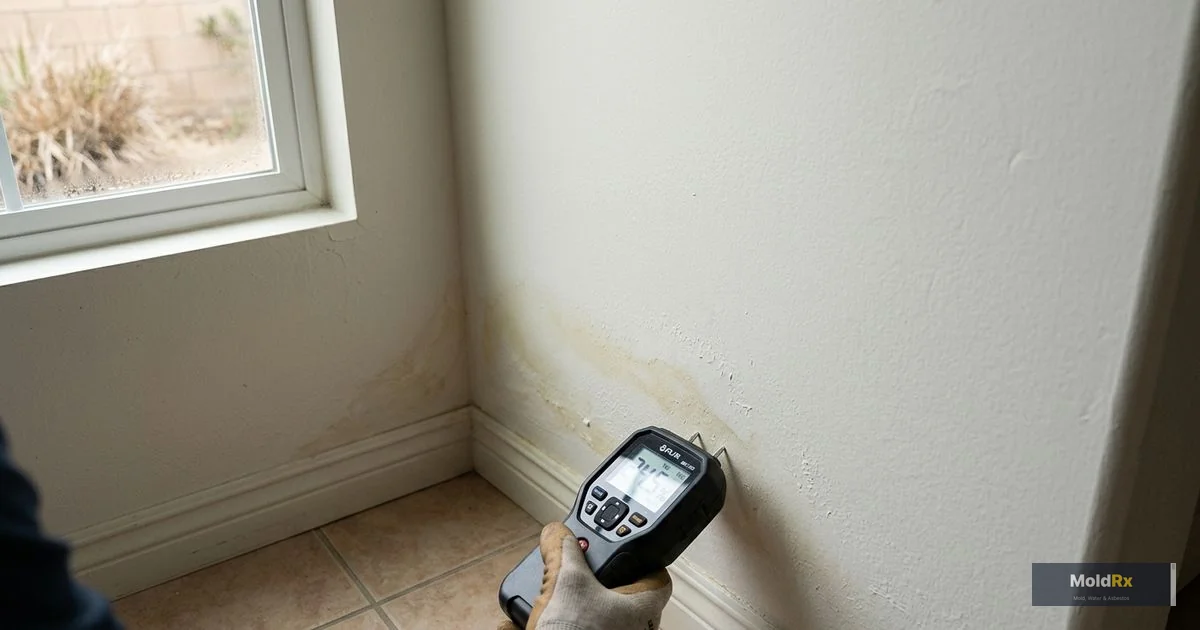
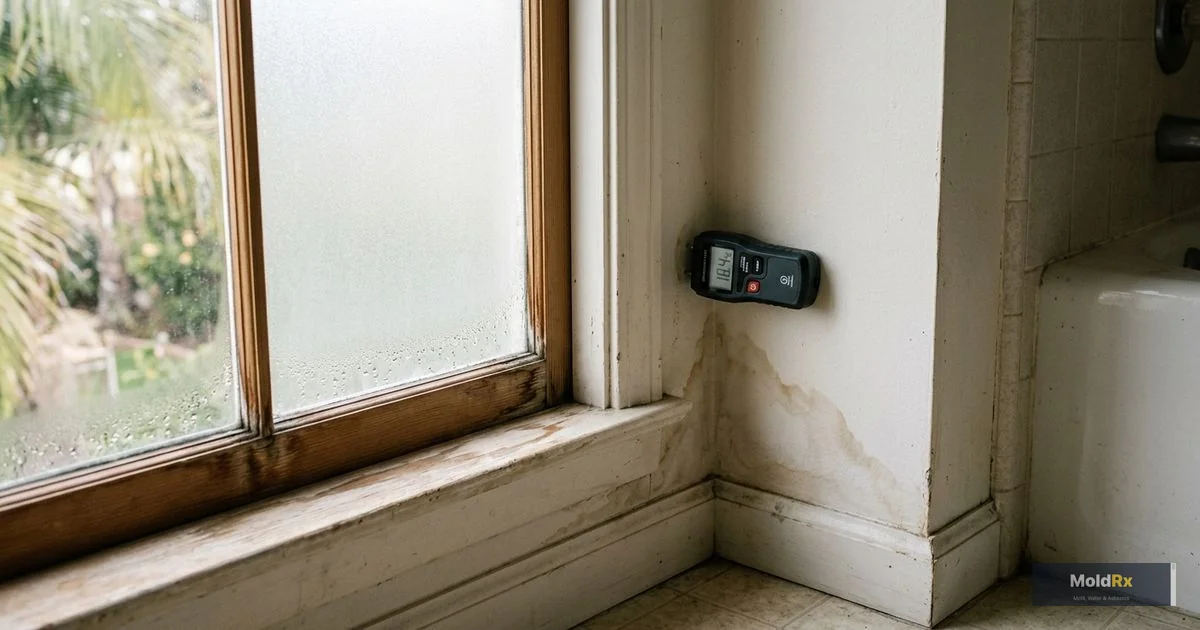
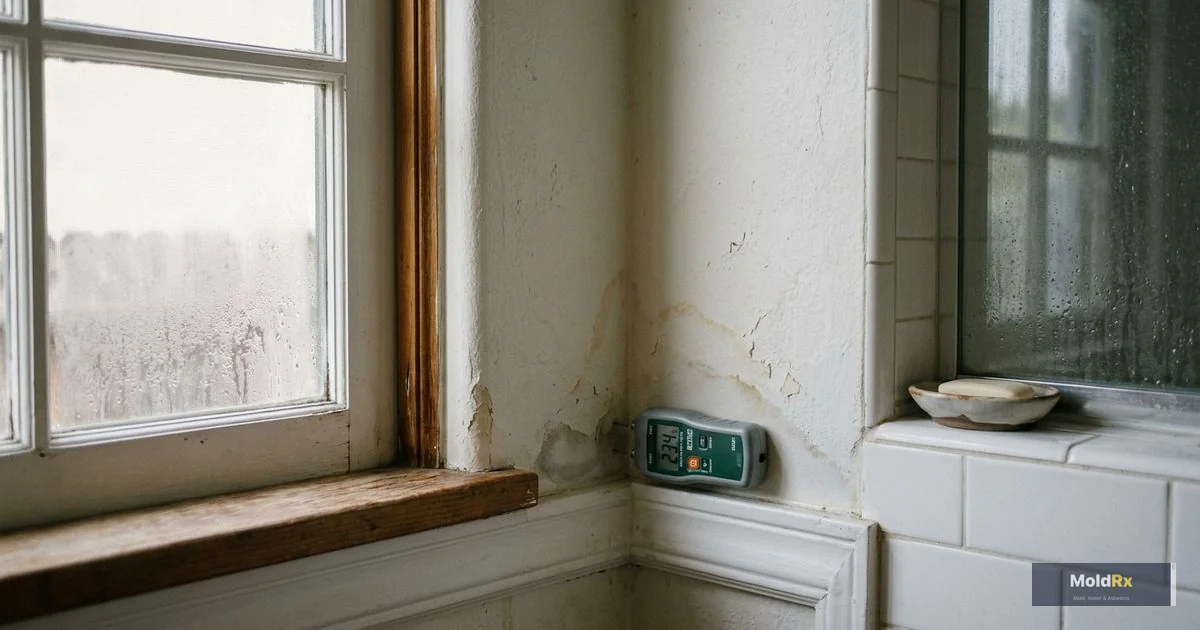
Non-destructive diagnostic tools that identify conditions enabling mold growth before visible damage appears. In Indio, thermal imaging is especially valuable for locating condensation zones on exterior walls where extreme heat drives moisture into wall cavities, identifying slab moisture migrating upward through foundations due to the high water table, and tracing monsoon storm leak paths through aging roof flashing.
Our Mold Testing Process in Indio
1. Initial Consultation and Property Assessment
We start by understanding your specific situation and evaluating your property's construction era, HVAC type, plumbing age, and moisture history. A 1960s home near downtown with its original swamp cooler gets a fundamentally different assessment approach than a 2005 build in Terra Lago or a newer home in the Shadow Hills Del Webb community. Following EPA 402-K-01-001 protocols, our professionals identify areas of highest concern and determine the sampling strategy before any work begins.
2. Sample Collection
Samples are collected following IICRC S520 protocols — proper techniques, calibrated equipment, and full chain-of-custody documentation. Sampling locations reflect property-specific risk factors: near swamp cooler vents, along exterior walls with condensation potential, in bathrooms and kitchens with aging plumbing, and in areas with known water damage alongside unaffected comparison locations.
3. Accredited Laboratory Analysis
All samples go to AIHA-accredited, NVLAP-certified laboratories. Standard turnaround is 3 to 5 business days, with rush processing available for time-sensitive real estate transactions and insurance claim requirements.
4. Results Interpretation
Our professionals translate every result into plain language — which species were found, whether indoor concentrations are elevated compared to the outdoor baseline, and what it means for your specific property. Not every elevated reading demands remediation, and not every normal reading means you're entirely in the clear.
5. Recommendations and Next Steps
If results show normal conditions, we tell you clearly — no manufactured urgency. If results indicate elevated mold, we explain what remediation would involve and identify the underlying moisture source when possible — a failing swamp cooler drain line, slab moisture from the high water table, aging plumbing, or storm damage. Every client receives a complete written report with laboratory results, professional interpretation, photographs, moisture readings, and actionable recommendations.
DIY Mold Test Kits vs. Professional Testing
Home mold test kits confirm viable mold exists on a surface — but mold spores are present virtually everywhere, so a positive result is nearly guaranteed regardless of whether you have an actual indoor problem.
What DIY kits cannot do: Measure airborne spore concentrations quantitatively. Identify species reliably. Establish indoor-versus-outdoor baseline comparisons. Provide chain-of-custody documentation accepted by insurers, lenders, or courts. Detect hidden mold behind walls or inside HVAC systems.
In Indio, where date palm agriculture and desert winds carry soil-borne species through every open window at significant concentrations, a DIY kit cannot distinguish between normal outdoor infiltration and an active indoor amplification source. For a simple question — "Is this discoloration actually mold?" — a DIY kit may suffice. For health concerns, insurance claims, real estate transactions, or determining whether remediation is warranted, professional testing provides the quantitative, defensible data you need.
Understanding Your Mold Test Results
What Spore Counts Mean
Spore counts are reported as spores per cubic meter of air. There is no single "safe" or "dangerous" threshold — the EPA has not established numerical indoor air quality standards for mold. Results are interpreted by comparing indoor concentrations to the outdoor baseline. When indoor counts significantly exceed outdoor levels for the same species, an indoor amplification source is indicated.
Indio's outdoor baseline varies by season — spring wind events and Santa Ana conditions carry higher outdoor loads, while extreme summer heat typically shows lower counts. Agricultural activity cycles also affect baselines, as harvest and field preparation disturb different quantities of soil-borne spores. Same-day outdoor control samples and local interpretation experience are essential.
Common Mold Species Found in Indio Homes
- Cladosporium — The most common outdoor species. Elevated indoor levels indicate moisture intrusion or poor ventilation. Frequently found around leaky windows and in rooms where evaporative cooling moisture accumulates.
- Aspergillus/Penicillium — Elevated indoor concentrations frequently correlate with swamp cooler contamination. The most common finding in Indio properties, particularly in older homes in the Eldorado, Indian Palms, and downtown areas still operating original evaporative cooler systems.
- Alternaria — A dominant outdoor species carried indoors from surrounding date palm groves and row crop operations. Indoor levels exceeding outdoor concentrations suggest water-damaged materials providing a food source for active growth.
- Stachybotrys — Requires sustained moisture on cellulose materials. Its presence indicates a chronic moisture condition persisting for weeks or months, warranting IICRC S520 Condition 3 protocols. More common in homes with undetected slab leaks exacerbated by the high water table.
When Results Indicate Remediation Is Needed
IICRC S520 defines three conditions: Condition 1 (normal fungal ecology — no remediation needed), Condition 2 (settled spores from a past moisture event — professional cleaning and moisture correction), and Condition 3 (active growth with elevated airborne levels — professional remediation per IICRC S520/R520 protocols, particularly when affected area exceeds 10 square feet per EPA guidance or involves HVAC systems). Your report will clearly state which condition applies and what it means for next steps.
Health Risks That Warrant Testing
The EPA identifies mold exposure as a cause of allergic reactions, respiratory irritation, and asthma exacerbation. The CDC notes potentially more serious effects in vulnerable populations — infants, elderly adults, and anyone with compromised immune function. The WHO links prolonged exposure to increased risk of respiratory infections and asthma development in children.
Indio's population includes young families, multi-generational households, retirees in the Shadow Hills and Indian Palms 55-plus communities, and agricultural workers who may carry additional soil-borne allergens into homes. Cal/OSHA Title 8 regulations apply to commercial and multi-family properties where employees or tenants face mold exposure. Mold testing identifies environmental factors contributing to symptoms — giving you and your physician factual evidence rather than speculation.
What Sets MoldRx Apart
-
Honest assessment, not manufactured urgency. If testing isn't necessary, we'll tell you directly. If results come back normal, you'll hear that clearly.
-
IICRC-certified professionals, AIHA-accredited labs. Our vetted specialists hold current IICRC certifications and proper CSLB licensing for Riverside County. Every sample is analyzed by AIHA-accredited, NVLAP-certified laboratories.
-
Clear, plain-language results. We walk you through exactly what the numbers mean, what they don't, and what your realistic options are.
-
Eastern Coachella Valley knowledge, not a generic call center. Our professionals understand Indio's below-sea-level elevation, high water table dynamics, agricultural irrigation moisture, extreme heat condensation patterns, evaporative cooler prevalence, and the agricultural mold species profile that makes this area fundamentally different from the western valley.
Get your free consultation — no obligations, no pressure.
Indio Neighborhoods We Serve
MoldRx provides mold testing across every neighborhood in Indio — ZIP codes 92201, 92202, and 92203 — including residential, commercial, and multi-family properties.
- Shadow Hills (Sun City Shadow Hills) — A gated 55-plus Del Webb community in North Indio. Despite modern construction, homes approaching 20 years old face aging HVAC systems, weakening supply lines, and degrading weatherproofing. The North Indio Regional Flood Control Project addressed flooding here, but homes built before the channel improvements may carry undetected prior water damage.
- Terra Lago — A master-planned gated community developed by SunCal beginning in 2005, with five neighborhoods built by Lennar, Ryland, Ashbrook, and Woodside Homes. Varying builders mean different construction quality, ventilation design, and plumbing configurations. Original HVAC systems and water heaters are reaching end-of-life, creating slow leak risk.
- Indian Palms Country Club — Resort-style community centered around a 27-hole golf course, mixing older 1970s-1980s construction with renovated units. Golf course irrigation keeps soil moisture elevated near foundations year-round. Older units with original plumbing and swamp coolers face the highest concealed contamination risk.
- Eldorado / Central Indio — Established neighborhoods near the city's historic core with housing from the 1950s through 1980s. Original plumbing, outdated ventilation, and proximity to the Coachella Valley Stormwater Channel mean repeated foundation exposure to elevated soil moisture during storms.
- Indio Hills — Semi-rural area northeast of the city center at slightly higher elevation. Desert washes carry flash flood runoff through this area during monsoon storms, depositing water against foundations unexpectedly.
- Desert Retreat / North Indio — The newest growth corridor, where Del Webb's planned 1,500-home community transforms formerly agricultural land. Homes on former irrigated parcels may sit above soil with decades of accumulated moisture, and altered drainage from new development can redirect runoff toward existing properties.
Nearby Communities We Also Serve
- La Quinta — Adjacent to Indio's southern boundary
- Coachella — Southeast, with comparable below-sea-level elevation and agricultural moisture
- Palm Desert — West along Highway 111
- Cathedral City — Northwest along the I-10 corridor
Related Services in Indio
- Mold Removal in Indio
- Water Damage Restoration in Indio
- Asbestos Testing in Indio
- Asbestos Removal in Indio
→ All remediation services in Indio
Frequently Asked Questions
Do I need mold testing if I can already see mold growing?
Not always. If visible mold covers a small area on a non-porous surface, EPA guidance allows homeowner cleanup without formal testing. Testing becomes valuable when growth exceeds 10 square feet, when contamination may extend behind walls or into HVAC ductwork, when species identification is needed, or when documentation is required for insurance or real estate purposes. Visible growth in one room doesn't mean exposure is limited there — forced-air and evaporative cooling systems circulate spores across every room.
How accurate are home mold test kits compared to professional testing?
DIY settle-plate kits confirm mold exists, but a positive result is nearly guaranteed because mold spores are present everywhere. Home kits cannot measure airborne concentrations quantitatively, compare indoor levels against outdoor baselines, identify species, or provide documentation accepted by insurers or courts. In Indio, where agricultural species blow through every gap daily, a DIY kit cannot distinguish between outdoor infiltration and active indoor growth.
What types of mold are most common in Indio homes?
The species we detect most frequently are Aspergillus/Penicillium (associated with swamp cooler contamination), Cladosporium (the dominant outdoor species), and Alternaria (carried indoors from date palm agriculture). Less common but more concerning species like Stachybotrys chartarum appear in homes with chronic moisture on cellulose materials — water-damaged drywall that stayed wet for weeks, or hidden plumbing failures compounded by the high water table.
How long does it take to get mold test results back?
Standard turnaround is 3 to 5 business days. ERMI testing typically requires 5 to 7 business days. Rush processing is available for real estate transactions, escrow deadlines, or insurance claims. We schedule a results review to walk you through findings as soon as the report is available.
Can mold testing detect hidden mold inside walls?
Yes. Air sampling detects elevated spore counts from concealed sources. Thermal imaging identifies temperature anomalies indicating hidden moisture. Targeted wall cavity sampling — drawing an air sample through a small hole in drywall — confirms mold presence without extensive demolition. In Indio homes where extreme heat drives condensation into wall cavities and the high water table pushes moisture through slab foundations, these techniques locate hidden contamination precisely.
Should I test before mold removal, after, or both?
Both, ideally. Pre-remediation testing establishes the baseline guiding scope and protocol selection. Post-remediation clearance testing confirms conditions have returned to IICRC S520 Condition 1 — critical documentation for insurance claims, real estate closings, and your own confidence that the problem is genuinely resolved.
Is mold testing required when selling a home in California?
California does not mandate mold testing for sale. However, California Civil Code Section 1102 requires sellers to disclose known mold contamination. Many buyers and lenders request testing during due diligence, particularly for older properties or those with evaporative coolers. A clean AIHA-accredited lab report removes contingencies that might delay closing.
What is an ERMI test and when is it recommended?
The ERMI is a DNA-based tool developed by the EPA and HUD that analyzes settled dust for 36 mold species, producing a single score ranking your home against a national database. We recommend it when standard air sampling is inconclusive, when symptoms persist despite normal spore trap results, or when medical or legal documentation requires comprehensive analysis.
Will my homeowner's insurance cover mold testing?
Coverage depends on your policy and circumstances. Testing associated with a covered water damage event — burst pipe, water heater failure, storm damage — is often reimbursable. Testing for general concerns or real estate transactions is typically out-of-pocket. Our documentation meets the evidentiary standards insurance adjusters require.
How often should Indio homeowners test for mold?
Routine testing is unnecessary if you maintain proper ventilation, keep humidity below 60 percent, service evaporative coolers annually, and address water intrusion within 24 hours. Consider periodic testing if your property has a mold history, vulnerable household members have respiratory concerns, you rely on an older swamp cooler, or your home has experienced multiple water events. After remediation, a follow-up test at 6 to 12 months confirms moisture corrections are holding.
Get Mold Testing in Indio
Knowledge is the first step toward addressing any indoor air quality concern — and sometimes that knowledge confirms there's no problem at all. Either outcome replaces uncertainty with documented facts you can act on. Whether you're investigating respiratory symptoms, evaluating a real estate purchase, assessing conditions after a monsoon flood event, or simply want to know what's in the air your family breathes, professional testing eliminates guesswork.
MoldRx only sends vetted mold testing professionals who understand eastern Coachella Valley properties — the below-sea-level elevation, the high water table fed by decades of agricultural irrigation, evaporative cooler contamination patterns in older Indio housing, slab moisture migration across the valley floor, monsoon flash flood risk, and the agricultural mold species profile that makes this city fundamentally different from the western valley resort communities. No pressure. No manufactured urgency. Just honest assessment and clear results.
Call MoldRx to schedule your mold test — (888) 609-8907. Clear results. Honest guidance. No guesswork.