Mold Removal in Indian Wells, CA — MoldRx
IICRC-Certified Mold Removal Professionals Serving Indian Wells and the Coachella Valley
Indian Wells is one of the most exclusive communities in the Coachella Valley — an affluent resort city of approximately 5,000 full-time residents at 112 feet elevation between Palm Desert and La Quinta in Riverside County. Home to the BNP Paribas Open and five prestigious country clubs, the city attracts an older demographic with a median age of nearly 68. Over 56 percent of residents are 65 or older, and the 51 percent housing vacancy rate reflects a significant snowbird population present only during cooler months. That seasonal vacancy, combined with luxury construction from the 1980s through 2000s, year-round pool and spa infrastructure, and heavy HVAC reliance, creates mold conditions that catch even careful homeowners off guard. When mold colonizes within the 24-to-48-hour window documented by IICRC S520 and EPA publication 402-K-01-001, you need professionals who understand desert estate properties. MoldRx only sends vetted, IICRC-certified mold removal professionals who follow IICRC S520/R520 remediation standards and EPA federal mold guidance.
Request your free estimate — we'll assess your property and give you straight answers.
Why Mold Grows in Indian Wells Homes
Seasonal Vacancy and Trapped Humidity
A substantial portion of Indian Wells' roughly 5,000 housing units sit unoccupied from late spring through early fall while snowbird owners return to cooler climates. Homes closed for four to six months — particularly during the July-through-September monsoon season when humidity spikes — create ideal mold incubation environments. If air conditioning is turned off or set too high, indoor humidity climbs above the EPA's recommended 30-to-50-percent range. A slow plumbing leak, condensate drip, or moisture migration through slab foundations goes undetected for months. By the time the homeowner returns in fall, mold has colonized wall cavities, closets, and HVAC ductwork far beyond the 24-to-48-hour window cited by IICRC S520.
HVAC Condensation in a Year-Round Cooling Climate
Indian Wells summer temperatures routinely exceed 110 degrees Fahrenheit, and air conditioning runs eight to nine months of the year. These systems condense moisture into drip pans and condensate drain lines every cooling cycle. When components clog or overflow — common in units 15 to 30 years old — water seeps into wall cavities and subfloor assemblies. The problem is amplified in luxury homes with multiple HVAC zones and extensive ductwork running through attic spaces where temperature differentials generate significant condensation. Many properties have mechanical rooms that homeowners rarely inspect, allowing moisture to accumulate unnoticed.
Pool, Spa, and Water Feature Moisture
Nearly every Indian Wells home has a pool, and most have spas, water features, or misting systems. Country club communities are bordered by irrigated fairways that maintain persistent ground moisture. Equipment rooms and plumbing chases adjacent to pool decks create chronic moisture zones. Splash-out and backwash drainage that flows toward structures pushes water against exterior walls and into slab edges. In a city where outdoor living and water features are central to property design, these moisture sources are constant rather than seasonal.
Housing Stock and Construction Era
The median construction year for Indian Wells homes is 1989, with the majority built between the mid-1980s and early 2000s. Plumbing, HVAC, and building envelope components are now 25 to 40 years old. Copper supply lines develop pinhole leaks. ABS and cast-iron drain lines degrade. Slab-on-grade foundations conceal slow leaks for months. Mid-century properties in communities like Eldorado Country Club, built in the 1950s and 1960s, present additional challenges with original plumbing and building materials that predate modern moisture-management practices.
Signs You Need Professional Mold Removal
Visible Growth Beyond a Small Area
EPA publication 402-K-01-001 sets a practical threshold: if mold covers more than about ten square feet, professional remediation is recommended. In Indian Wells' dry climate, visible mold that extensive almost always signals a larger hidden colony behind the surface, particularly in wall cavities and mechanical spaces where moisture can travel considerable distances through building assemblies.
Persistent Musty Odor Without Visible Mold
A stale, earthy smell that lingers even after cleaning often indicates mold growing inside wall cavities, beneath flooring, or within HVAC ductwork. Indian Wells homes are sealed tightly for air-conditioning efficiency, and custom cabinetry, built-in storage, and finished mechanical rooms can conceal the source. These smells often intensify when returning to a property after seasonal absence.
Recurring Mold After Previous Cleanup
If you have cleaned mold off a surface and it returns within weeks, the underlying moisture source has not been resolved. Surface cleaning does not address colonies embedded in porous materials like drywall, insulation, or wood framing. Recurring growth means professional assessment and source correction are needed — particularly in homes where the moisture source may be masked by months of vacancy.
Water Damage History or Post-Vacancy Discovery
Any property that has experienced a plumbing failure, roof leak, appliance overflow, or monsoon wash flooding should be evaluated for mold if remediation did not occur within the 24-to-48-hour window established by IICRC S520. In Indian Wells, this is especially relevant for homes left unoccupied during summer — a water event may not be discovered until the homeowner returns months later.
Health Symptoms That Worsen Indoors
The CDC notes that mold exposure can trigger nasal congestion, coughing, wheezing, and eye irritation. If symptoms improve when you leave the home and return when you come back, indoor mold may be a contributing factor. Given Indian Wells' elderly population, respiratory symptoms deserve prompt attention.
Health Risks of Mold Exposure
Prolonged mold exposure is a recognized indoor air quality concern. The EPA, CDC, and WHO's Guidelines for Indoor Air Quality: Dampness and Mould document respiratory effects ranging from nasal irritation to serious conditions in susceptible individuals. Mold produces allergens, irritants, and in some species mycotoxins that become airborne during normal activity. In a sealed Indian Wells home running recirculated air conditioning, spore concentrations build well above outdoor baselines — particularly in properties closed for months.
Indian Wells' Elderly Population and Elevated Risk
With a median age of nearly 68 and over 56 percent of residents aged 65 or older, Indian Wells' population falls squarely into the category the CDC identifies as higher-risk for mold-related health effects. Older adults are more likely to have respiratory conditions, compromised immune function, or chronic illnesses that mold exposure can aggravate. The WHO's indoor air quality guidelines specifically identify elderly individuals as a vulnerable population requiring prompt remediation. Individuals with asthma, COPD, or immunosuppression face compounded risk. These are factual public health observations — not reasons for alarm, but reasons to address confirmed mold promptly and prioritize indoor air quality in properties occupied by older residents.
Additional resources: CDC mold information and EPA mold guidance.
When DIY Mold Removal Isn't Enough
The EPA acknowledges that small mold problems on hard surfaces can often be handled by homeowners. Professional remediation is the appropriate path when any of the following apply:
- Affected area exceeds ten square feet — the threshold in EPA 402-K-01-001 above which professional methods and containment are recommended.
- Mold is inside HVAC systems or ductwork — NADCA recommends certified professionals for any contamination within air-handling equipment to prevent whole-house spore distribution.
- Growth involves structural materials — mold embedded in wall framing, subfloor sheathing, or roof decking requires controlled removal.
- Stachybotrys or other toxigenic species are suspected — dark, slimy growth on chronically wet materials warrants IICRC S520 containment protocols.
- Water damage involves Category 2 or Category 3 water — sewage backups or monsoon floodwater require the decontamination procedures in IICRC S500.
- Documentation is needed for insurance or real estate transactions — professional remediation provides inspection reports, lab results, and clearance testing.
If any of these situations describe your Indian Wells property, request a free estimate and get a clear picture of what you are dealing with.
How We Remove Mold in Indian Wells Properties
Every MoldRx remediation project follows IICRC S520/R520 protocols and complies with Cal/OSHA Title 8 worker safety requirements. Here is how the process works from start to finish.
1. Inspection and Moisture Mapping
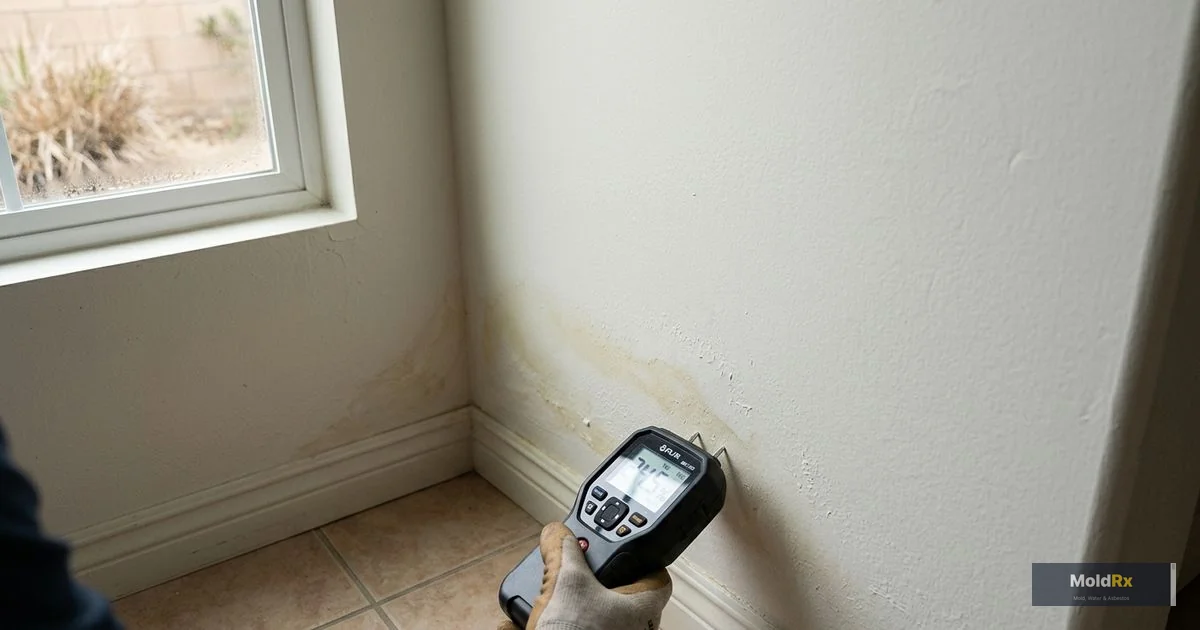
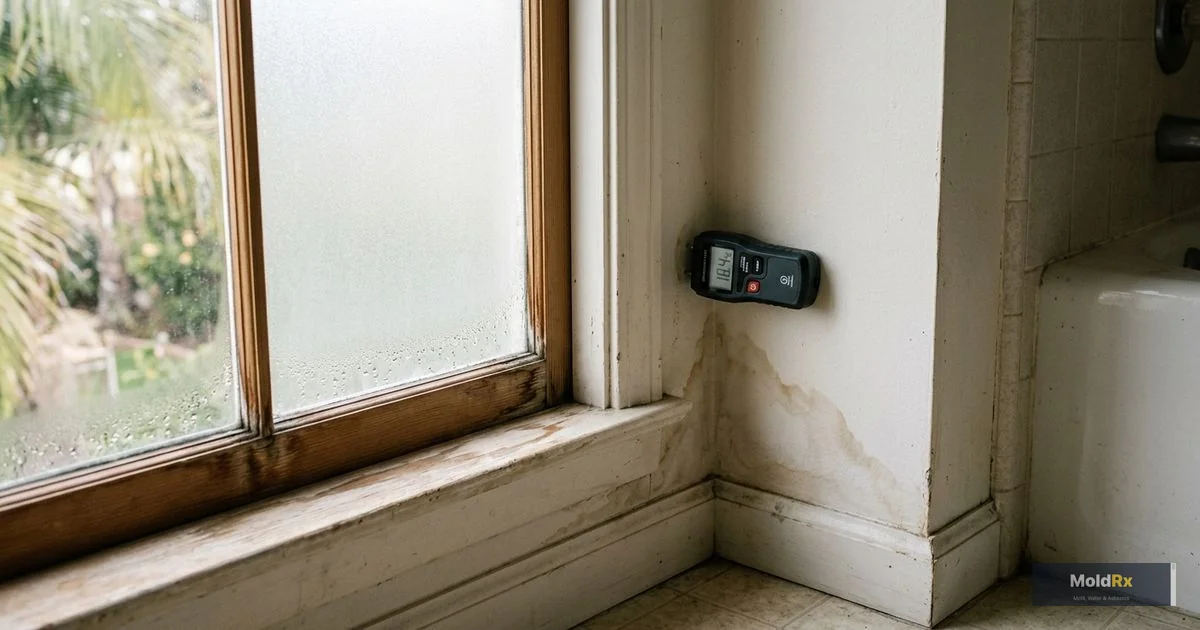
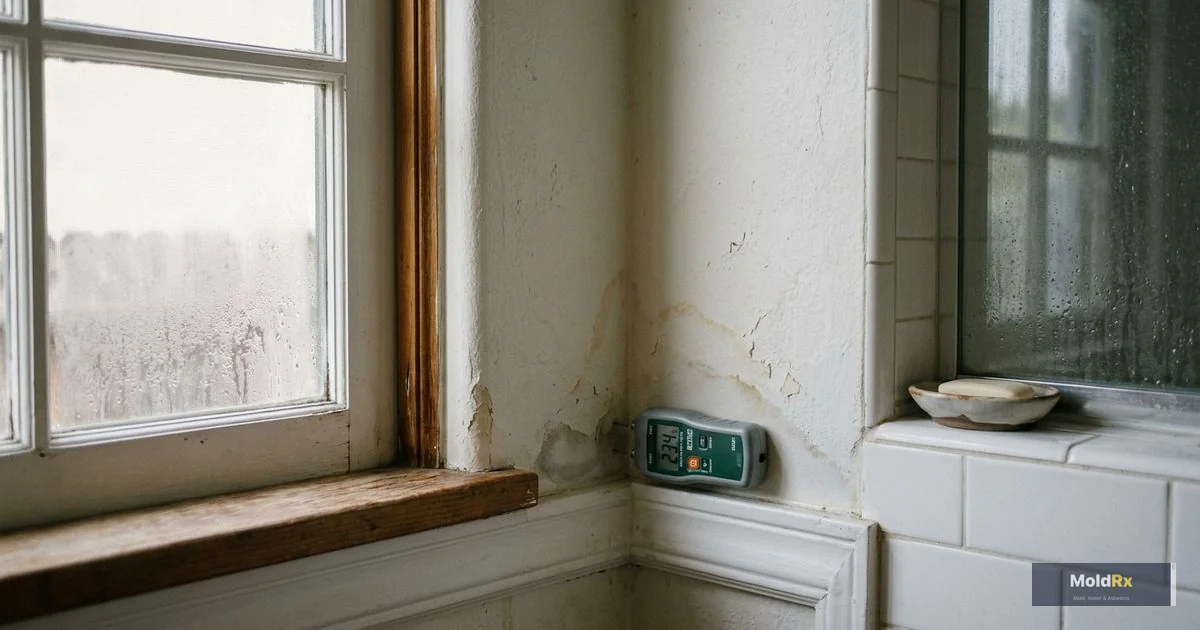
Moisture meters and thermal imaging pinpoint water sources behind walls, under flooring, and within ceiling assemblies. Air and surface samples are collected when lab identification is warranted. This step follows EPA 402-K-01-001 and gives you documented understanding of the full scope before work begins. In Indian Wells homes, particular attention is paid to HVAC mechanical rooms, pool equipment areas, guest casitas, and spaces unmonitored during seasonal vacancy.
2. Containment
Affected areas are isolated using polyethylene sheeting and negative air pressure. For Condition 2 and Condition 3 environments — as defined by IICRC S520 — HEPA-filtered air scrubbers run continuously throughout the work zone. This approach aligns with CDC and EPA guidance. For Indian Wells properties with elderly residents, containment is especially critical — the WHO's indoor air quality guidelines emphasize that older adults require rigorous protection from bioaerosol exposure during remediation.
3. Removal and Treatment
Contaminated porous materials — drywall, insulation, carpet, ceiling tile — are removed under containment and double-bagged for disposal. Non-porous surfaces are treated with EPA-registered antimicrobials. All work follows Cal/OSHA Title 8 Section 5155 exposure limits and IICRC S520 procedures. Our professionals exercise particular care with custom finishes and high-end systems — removing only what is necessary while ensuring complete remediation.
4. Moisture Correction
Removing mold without resolving the moisture source guarantees recurrence. In Indian Wells, this typically involves clearing HVAC condensate lines, repairing aged plumbing, improving ventilation in mechanical rooms, regrading irrigation away from foundations, and sealing slab penetrations. For seasonal properties, we address conditions that allow moisture to accumulate during vacancy.
5. Post-Remediation Verification
Clearance testing confirms that airborne spore counts have returned to Condition 1 (normal fungal ecology) as defined by IICRC S520. You receive a complete documentation package: inspection report, moisture mapping, lab analysis, scope of work, photos, and clearance results — supporting your records, insurance claims, and future real estate transactions.
Mold Removal vs. Mold Remediation: What's the Difference?
The terms describe different scopes. Mold removal means physically taking away contaminated materials. Mold remediation, as defined by IICRC S520, is the full process: assessment, containment, removal, antimicrobial treatment, moisture correction, and verification to restore the environment to Condition 1 (normal fungal ecology). Removal alone does not address the conditions that allowed mold to grow. MoldRx performs full remediation on every project because the goal is to resolve the problem permanently.
Preventing Mold After Remediation
Once your Indian Wells property has been properly remediated, these Coachella Valley-specific practices will help keep mold from returning.
Maintain Your HVAC System
Have condensate drain lines flushed and inspected at least twice a year — once before cooling season and once at midseason. Replace air filters monthly during peak cooling months. Inspect drip pans for standing water or biofilm. In homes with multiple HVAC zones, ensure every unit receives attention — secondary zones serving guest rooms, casitas, or media rooms are easy to overlook.
Control Indoor Humidity
Keep indoor relative humidity between 30 and 50 percent, consistent with EPA guidance. A simple hygrometer lets you monitor levels. In Indian Wells, humidity spikes during monsoon season (July through September) and can rise in homes with water features or spa rooms. Run bathroom and kitchen exhaust fans during and for 15 to 20 minutes after moisture-producing activities.
Seasonal Home Closure and Opening Protocol
For Indian Wells homeowners who leave for the summer, proper home closure is one of the most effective mold prevention measures:
Before departure: Set the thermostat no higher than 80 degrees Fahrenheit to maintain air circulation and humidity control. Have the HVAC system inspected and condensate lines cleared. Turn off the water main unless pool/spa systems require it — and if water remains on, arrange for regular property checks. Leave ceiling fans on low. Install a smart thermostat and leak sensors that send alerts to your phone if possible.
Upon return: Walk the entire property before settling in. Check under sinks, around water heaters, behind toilets, and in HVAC closets for moisture or musty odors. Inspect pool equipment rooms and garages. Run all faucets and flush toilets. If anything seems off, schedule a professional inspection before the issue spreads.
Address Pool, Spa, and Landscape Moisture
Inspect pool and spa equipment enclosures regularly for leaks, condensation, and standing water. Ensure splash-out and backwash drainage flow away from the structure. If your pool deck abuts an exterior wall, check the wall's lower course for moisture wicking or efflorescence. Review irrigation schedules to prevent overwatering near foundations — common in Indian Wells where lush landscaping demands significant water.
Fix Water Intrusion Promptly
The 24-to-48-hour colonization window cited by IICRC S520 is the critical benchmark. Any leak or flood event should be dried within that timeframe. Delay is the most common reason Indian Wells homeowners end up needing full remediation — and the risk multiplies when a property sits vacant.
What Sets MoldRx Apart
- Straight talk, not sales talk. If your problem is minor, we will tell you. If it is extensive, you will understand exactly why before work begins.
- Licensed, insured, IICRC-certified. Every professional holds current IICRC certification and operates under California Contractors State License Board (CSLB) and Riverside County licensing requirements.
- Full documentation on every job. Inspection reports, lab results, scope of work, photos, and clearance testing — all provided in a complete package.
- Discreet, estate-quality service. Indian Wells homeowners value privacy and professionalism. Our vetted professionals treat your home with the same care you do.
Get your free estimate — no obligations, no pressure.
Indian Wells Neighborhoods We Serve
Eldorado Country Club
Established in 1957, Eldorado spans 712 acres at the base of Eisenhower Mountain with homes ranging from mid-century originals to renovated estates. The older construction presents classic mold vectors: original plumbing approaching 60-plus years, window assemblies that promote condensation, and building envelopes that predate modern moisture barriers. Irrigated fairways on two Tom Fazio championship courses add persistent ground moisture near foundations.
The Vintage Club
Nestled against the Santa Rosa Mountains with two Tom Fazio championship courses, The Vintage Club features luxury homes and custom lots. The mountainside setting means some properties sit in the path of monsoon wash runoff. High seasonal vacancy among the club's membership makes the home-closure protocol especially important — many residences sit unoccupied for five or six months.
The Reserve Club
Developed in 1999 at the base of the Santa Rosa Mountains, The Reserve features 250 custom homes and villas surrounding a 21-hole Tom Weiskopf and Jay Morrish championship course. While newer, these properties feature complex mechanical systems — multiple HVAC zones, wine storage rooms — that introduce moisture in ways simpler homes do not. The mountainside setting also directs monsoon runoff toward lower-elevation properties.
Indian Wells Country Club
The original home of the Bob Hope Classic, Indian Wells Country Club offers 36 holes and an active membership. Homes date primarily from the 1970s through 1990s, placing plumbing, HVAC, and building envelope components at or past their expected service life. Pool and spa infrastructure is universal, and irrigated fairways create persistent moisture along property boundaries.
Desert Horizons Country Club
This private membership community features an 18-hole Tom Weiskopf and Jay Morrish course with homes built primarily in the 1980s and 1990s. Like other Indian Wells country club communities, Desert Horizons combines aging plumbing and HVAC systems with irrigated landscapes and significant seasonal vacancy. Equipment rooms and garages that remain closed during summer months are common sites for hidden mold growth.
Highway 111 Corridor and Non-Gated Residences
Not all Indian Wells properties are within gated country club communities. Single-family homes along the Highway 111 corridor and central portion of the city face similar mold risks — aging HVAC systems, slab-on-grade foundations, and seasonal vacancy — without the property management infrastructure that some clubs provide.
We also serve homeowners and businesses in neighboring Coachella Valley communities, including Palm Desert, Rancho Mirage, La Quinta, Palm Springs, and Cathedral City. Our coverage spans ZIP code 92210 and extends throughout the valley.
Related Services in Indian Wells
→ All remediation services in Indian Wells
Frequently Asked Questions
How quickly can MoldRx respond to a mold problem in Indian Wells?
We typically schedule an initial inspection within one to two business days. If you are dealing with active water damage, let us know so we can prioritize within the critical 24-to-48-hour window.
How long does mold remediation take in a typical Indian Wells home?
Most projects take two to five days. Smaller issues may wrap up in a single day, while larger projects involving multiple rooms — common in Indian Wells' spacious homes — can take a week or more. We provide a realistic timeline during the initial assessment.
Do I need mold testing before remediation begins?
If mold is clearly visible, testing is not always necessary — the priority is containment and removal. Testing is valuable when you suspect hidden mold, need documentation for insurance or a real estate transaction, or want species identification. We will recommend the appropriate approach.
Can I stay in my home during the remediation process?
In most cases, yes. Containment barriers and negative air pressure keep the work zone isolated from living areas. For larger projects, or if anyone in the household has respiratory sensitivities — a relevant consideration given Indian Wells' older demographic — we may recommend temporary relocation during the most intensive phases.
Is mold common in desert homes like those in Indian Wells?
More common than most residents expect. Heavy reliance on air conditioning, pool and spa infrastructure, irrigated golf course landscapes, and a housing stock with a median build year of 1989 all introduce moisture into structures built in an arid climate. The high seasonal vacancy rate compounds the problem — homes closed for months provide unmonitored environments where small moisture events become established colonies.
My Indian Wells home was closed for the summer. What should I check when I return?
Walk the entire property before settling in. Inspect under sinks, around water heaters, behind toilets, and in HVAC closets for moisture or musty odors. Check pool equipment rooms and garages. Run all faucets and flush toilets. Open closets and cabinets. If you detect anything concerning, a professional inspection can determine whether remediation is needed before the problem spreads.
Are elderly residents more at risk from mold exposure?
Yes. The CDC and WHO both identify adults aged 65 and older as a population at elevated risk for mold-related health effects. Older adults are more likely to have pre-existing respiratory conditions or reduced immune function that mold exposure can aggravate. With over 56 percent of Indian Wells residents 65 or older, addressing mold promptly is especially important in this community.
What types of mold do you typically find in Coachella Valley homes?
The most frequent species include Cladosporium, Aspergillus, and Penicillium — common indoor molds associated with moisture intrusion and HVAC condensation. Stachybotrys chartarum is less common but appears in homes with prolonged water damage. Lab testing identifies species when needed.
Will my homeowner's insurance cover mold remediation?
Coverage depends on the cause. Mold from a sudden, covered event — a burst pipe or appliance failure — may be covered. Long-term deferred maintenance or gradual leaks are typically excluded. Our documentation supports legitimate claims.
What is the difference between mold testing and mold remediation?
Mold testing identifies what is present — species, spore counts, and locations. Remediation is the full process: removal, treatment, moisture correction, and verification. Testing can be standalone or the first phase of remediation. We offer both through our mold testing and mold removal services.
Get Mold Removal in Indian Wells
Indian Wells' desert setting does not make it immune to mold — it makes it vulnerable in ways most homeowners do not anticipate. Seasonal vacancy, year-round HVAC condensation, pool and spa infrastructure, irrigated country club landscapes, and a housing stock now 25 to 40 years old create conditions where mold establishes itself behind walls long before anyone sees it. For a community where the majority of residents are 65 or older, indoor air quality is a direct health consideration.
MoldRx exists to give Indian Wells homeowners a remediation partner they can trust. Every professional we send is vetted and IICRC-certified. Every project follows S520/R520 protocols. And every conversation starts with honest answers about what you are actually dealing with — not a sales pitch.
Call MoldRx for your free estimate — (888) 609-8907. Clear answers. Honest guidance. Work done right.