Mold Removal in Cypress, CA — MoldRx
IICRC-Certified Mold Removal Professionals Serving Cypress and North Orange County
Cypress is a family-rooted suburb of roughly 50,000 people in North Orange County — tree-lined streets, single-story ranch homes, and a housing stock dating overwhelmingly to the 1950s through 1970s. That older construction gives Cypress its character, but it's also why mold is a persistent problem here. Aging plumbing behind walls, minimal ventilation in original tract designs, flat terrain with a high water table, and marine-layer humidity from the coast seven miles west create conditions where mold colonizes quietly inside wall cavities, under slab foundations, and around deteriorating bathroom infrastructure. MoldRx only sends vetted, IICRC-certified mold removal professionals who follow IICRC S520/R520 remediation standards and EPA federal mold guidance (EPA 402-K-01-001) — specialists who understand the specific construction era and climate challenges of Cypress properties.
Request your free estimate — we'll assess your property and give you straight answers.
Why Mold Grows in Cypress Homes
Cypress occupies 6.6 square miles of flat coastal plain in North Orange County at an elevation of roughly 46 feet above sea level. ZIP code 90630 covers the city. The population of approximately 50,000 lives predominantly in single-family detached homes — 60% of the housing stock — with the remainder split between attached townhomes, condominiums, and a small number of mobile homes. Crucially, the median construction year for Cypress housing is 1971, meaning the average home is now over 50 years old.
Marine Layer and Coastal Humidity
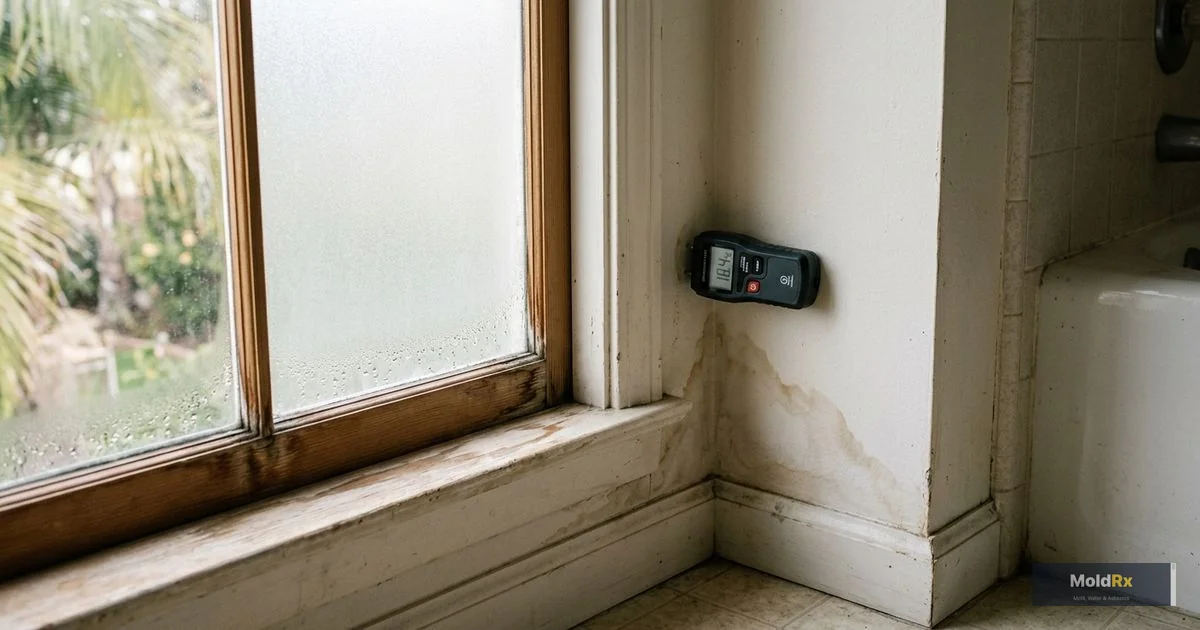
Despite sitting seven miles from the Pacific, Cypress receives consistent marine-layer influence. Average annual humidity runs around 65%, climbing to 73% during May and June when morning fog burns off slowly across the flat terrain. Late spring and early summer bring cool, damp mornings that coat windows in condensation, followed by warmer afternoons that create temperature differentials inside older homes. That exterior moisture migrates through deteriorated window seals, aged stucco, and cracked weatherstripping — penetrating wall cavities where it meets organic materials and stays. The EPA recommends 30-50% indoor relative humidity; Cypress's ambient conditions regularly exceed that range. Per IICRC S520 guidelines and the EPA's Mold Remediation in Schools and Commercial Buildings (EPA 402-K-01-001), mold colonizes within 24 to 48 hours once moisture and an organic food source are present.
Aging 1950s-1970s Housing Stock
Cypress was incorporated in 1956 as "Dairy City" — dairy farmers banding together to resist residential development. Within a decade, the dairies had sold to developers, and by the early 1970s the transformation was complete: thousands of single-story tract homes on concrete slab foundations, built rapidly during Southern California's postwar suburban boom. That housing is now 50 to 70+ years old. Original galvanized supply lines corrode internally and develop pinhole leaks behind walls. Copper joints from the 1960s deteriorate after decades of hard Southern California water. Cast-iron waste pipes crack and seep. Bathroom exhaust fans — where builders installed them at all — no longer move adequate air. Builder-grade caulking around tub surrounds, shower pans, and kitchen sinks failed years ago. These aren't cosmetic issues; they're hidden moisture sources that sustain mold colonies behind drywall for weeks or months before anyone notices.
Flat Terrain and High Water Table
Cypress sits on the flat coastal plain stretching from the San Gabriel River to Seal Beach. There is virtually no natural grade — the entire city sits within a few feet of the same elevation. Surface water drains slowly after winter storms, and the water table sits relatively high beneath slab-on-grade foundations. During the rainy season (November through March, with rainfall concentrated in just a few months), water migrates laterally through soil and upward through concrete slabs via capillary action. Older homes without modern vapor barriers beneath the slab are especially vulnerable. Sub-slab moisture feeds mold under flooring, along baseboards, and inside wall cavities at floor level — locations homeowners rarely inspect.
Santa Ana Wind Cycles
Orange County's Santa Ana winds — named for the Santa Ana Canyon just miles from Cypress — bring hot, dry air from the inland deserts between October and March. While low-humidity themselves, they create rapid temperature swings that drive condensation inside homes. Exterior surfaces heat quickly while interior spaces stay cool, generating moisture on walls, around single-pane windows, and inside poorly insulated attic spaces. When the winds pass, returning marine-layer humidity hits homes that may already have condensation moisture in concealed spaces. This wet-dry-wet cycling accelerates mold colonization in wall cavities and attic sheathing — particularly in Cypress's single-story construction with minimal insulation.
Signs You Need Professional Mold Removal
Not every discolored patch requires a remediation crew. But certain conditions — especially in housing as old as Cypress's — indicate the problem has moved past what a homeowner can address safely.
Visible Growth Beyond a Small Area
The EPA's Mold Remediation in Schools and Commercial Buildings (EPA 402-K-01-001) uses 10 square feet as the general threshold for professional remediation. In Cypress homes, visible growth commonly appears along bathroom walls behind toilets and tub surrounds, under kitchen sink cabinets, along baseboards on exterior-facing walls, and on garage drywall where slab moisture migrates upward.
Persistent Musty Odor Without Visible Mold
A chronic musty smell near bathrooms, closets, or HVAC return vents often signals mold in a concealed space — behind drywall, under vinyl sheet flooring (common in 1960s-70s Cypress construction), or inside aging ductwork. The smell may intensify when the HVAC system cycles on, distributing spores throughout the home.
Recurring Mold After Previous Cleanup
Mold that returns after cleaning means the moisture source was never resolved. Surface cleaning eliminates what you see but does nothing about the colony behind the drywall or the slow plumbing leak feeding it. In Cypress's older homes, the moisture source is almost always hidden — inside a wall, under a slab, or in a deteriorated shower pan.
Water Damage or Staining
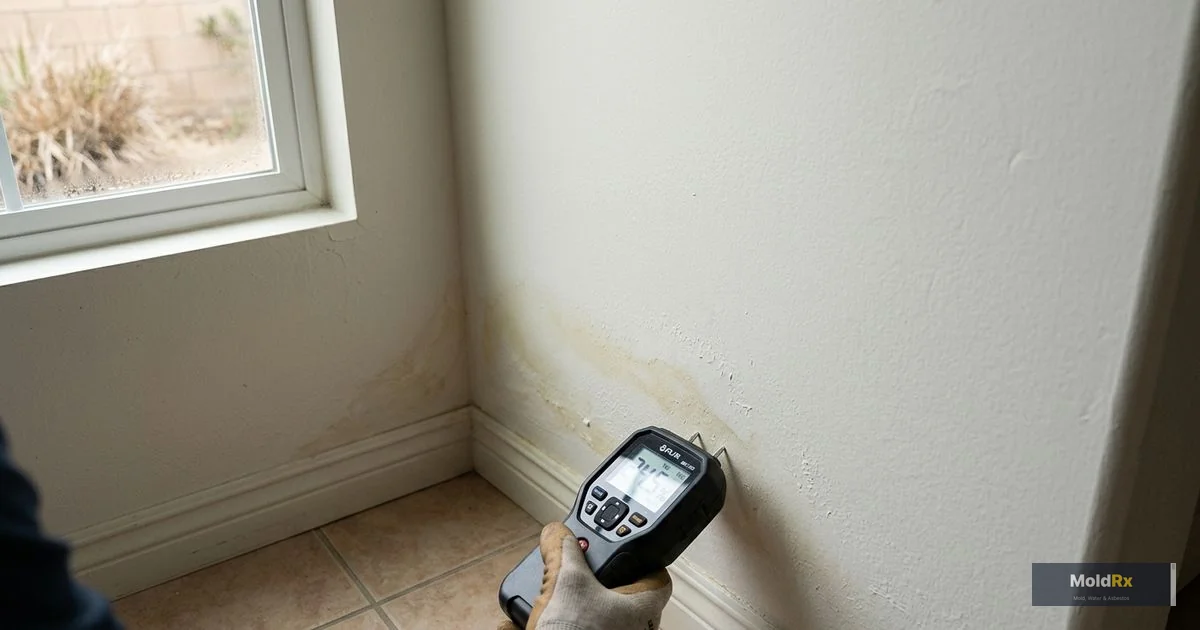
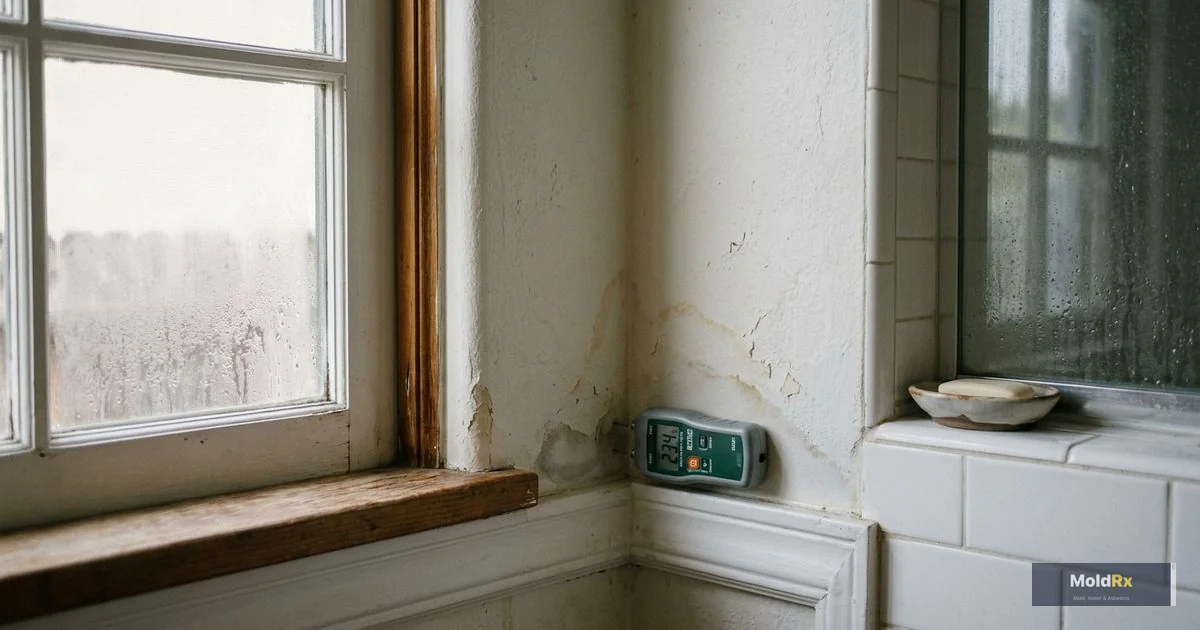
Any water staining on ceilings, walls, or flooring may indicate moisture intrusion that has already produced hidden mold. In Cypress, the most common sources are slab leaks from aging copper or galvanized plumbing, failed shower pan membranes, condensation from uninsulated water heater lines, and roof penetration failures around original vent stacks.
Health Symptoms That Improve When You Leave Home
Nasal congestion, persistent cough, worsening asthma, eye irritation, or unexplained fatigue that improve when you leave the house and return when you come home may indicate mold exposure. The EPA and CDC both identify mold as a cause of respiratory symptoms, and prolonged exposure increases risk.
Health Risks of Mold Exposure
Mold exposure is a well-documented health concern — not a scare tactic. Understanding actual risks helps you make informed decisions about how urgently remediation should happen.
The EPA links mold spore exposure to allergic reactions including sneezing, runny nose, red eyes, and skin rash. The CDC identifies respiratory effects including coughing, wheezing, and throat irritation. The World Health Organization's Guidelines for Indoor Air Quality: Dampness and Mould links prolonged exposure in damp indoor environments to respiratory infections and asthma exacerbation.
Populations at Higher Risk
Certain groups face elevated risk from mold exposure, and Cypress's family-oriented demographics mean many households include at least one:
- Children — Developing respiratory systems are more susceptible to airborne contaminants. The WHO Guidelines for Indoor Air Quality specifically identifies children as vulnerable to dampness-related health effects.
- Older adults — Lung capacity decreases with age and the ability to clear inhaled particles diminishes. Cypress's median age of 41 reflects a community with a substantial population over 65.
- Individuals with asthma or allergies — Mold is a recognized asthma trigger. Chronic exposure can shift seasonal symptoms into year-round respiratory difficulty.
- Immunocompromised individuals — Those undergoing cancer treatment, transplant recipients, and people managing autoimmune conditions face elevated risk of invasive fungal infections from species like Aspergillus.
The goal is not alarm — it is to provide the factual basis for why timely remediation matters in homes where aging construction makes hidden mold more likely.
When DIY Mold Removal Isn't Enough
For small surface mold on non-porous materials, EPA guidance allows homeowner cleanup. But several conditions require professional intervention:
- Contamination exceeding 10 square feet — EPA 402-K-01-001 recommends professional remediation at this threshold
- Mold inside HVAC systems or ductwork — NADCA (National Air Duct Cleaners Association) standards apply; cleaning individual vents does nothing when the source is inside the system or attic-mounted air handler
- Structural involvement — Mold behind drywall, under slab flooring, or inside wall cavities requires controlled demolition, containment, and HEPA filtration
- Slab leak or sub-slab moisture — In Cypress's slab-on-grade homes, moisture rising through concrete requires professional moisture mapping and remediation protocols
- Water category 2 or 3 involvement — Sewage backup or contaminated water per IICRC S500 categories requires professional protocols beyond what any homeowner should attempt
- Insurance or real estate documentation — Professional remediation generates scope-of-work records, moisture readings, and post-remediation verification that insurers and buyers require
When in doubt, a professional assessment tells you whether full remediation is warranted. That assessment is part of our free estimate.
How We Remove Mold in Cypress Properties
Every remediation follows IICRC S520 standards and the companion ANSI/IICRC R520 Reference Guide — the industry benchmarks recognized by insurers, public health agencies, and the courts.
1. Inspection and Moisture Mapping
Before anything is disturbed, our specialists map the full scope following EPA 402-K-01-001 assessment protocols. In Cypress homes, that means checking behind bathroom walls where 50-to-70-year-old plumbing runs, inspecting under-cabinet spaces, mapping moisture along exterior walls and slab-level baseboards, examining attic-mounted HVAC ductwork, and determining whether the moisture source is active or resolved.
2. Containment
Physical barriers and negative air pressure isolate the affected area per IICRC S520 Condition 2 and Condition 3 containment protocols. HEPA air scrubbers capture airborne spores down to 0.3 microns. In Cypress's single-story ranch homes, the open floor plans common to 1960s-70s construction mean spores travel easily if containment isn't established before demolition begins. The CDC, EPA, and the World Health Organization's WHO Guidelines for Indoor Air Quality: Dampness and Mould all emphasize preventing cross-contamination during active remediation.
3. Removal and Treatment
Mold-damaged materials are removed following IICRC S520 procedures and Cal/OSHA permissible exposure limits under Title 8 §5155 for airborne contaminants. In Cypress's older homes, this often means removing sections of original drywall, pulling up vinyl sheet flooring over untreated concrete, and extracting water-damaged attic insulation. Remaining structural surfaces are treated with EPA-registered antimicrobial solutions that eliminate residual spores and inhibit regrowth.
4. Moisture Correction
Removing mold without fixing the water source guarantees it returns. Our specialists resolve the underlying cause — whether that's a corroded galvanized joint behind a bathroom wall, a slab leak beneath the foundation, inadequate exhaust venting, or water intrusion through aged stucco. In Cypress, the moisture source is frequently plumbing-related, given the age of original systems.
5. Post-Remediation Verification
Affected areas are checked against IICRC S520 Condition 1 (normal fungal ecology) clearance standards. You receive full documentation — scope of work, materials removed, treatments applied, moisture readings, and verification results.
Mold Removal vs. Mold Remediation: What's the Difference?
Mold removal refers to physically eliminating mold growth — cutting out contaminated drywall, HEPA-vacuuming surfaces, applying antimicrobials. It addresses the mold already present.
Mold remediation is the broader process defined by IICRC S520: assessment, containment, removal, moisture correction, and post-remediation verification. Remediation addresses both the mold and the conditions that caused it, verifying return to IICRC S520 Condition 1 (normal fungal ecology).
When MoldRx sends professionals to your Cypress property, they perform full remediation — not surface removal. The leaking plumbing gets traced, the failed exhaust fan gets identified, the slab moisture gets mapped. Any company offering "mold removal" without addressing the moisture source is selling a temporary fix.
Preventing Mold After Remediation
These prevention measures are tailored to Cypress's 1950s-1970s housing stock, slab-on-grade construction, and marine-layer climate:
Upgrade Bathroom and Kitchen Ventilation
Many Cypress homes have original exhaust fans that no longer function — or bathrooms built without mechanical exhaust entirely (common in 1950s-60s tract homes). Replacing them with modern units rated at 80-110 CFM that vent directly outdoors is one of the most effective prevention steps. A humidity-sensing switch ensures automatic operation.
Monitor Indoor Humidity
A standalone hygrometer lets you track conditions in real time. The EPA recommends 30-50% indoor humidity. In Cypress, the marine layer regularly pushes outdoor humidity above 65%, and that moisture migrates indoors through aging envelopes — especially around original aluminum-frame windows. If readings exceed 50% consistently, a portable dehumidifier reduces risk significantly.
Address Slab and Plumbing Issues Early
In slab-on-grade homes with 50-to-70-year-old plumbing, attention to water pressure changes, unexplained warm spots on floors, or elevated water bills can catch slab leaks before they sustain mold growth. Annual plumbing inspections are worthwhile in homes with original galvanized or early copper systems.
Maintain Exterior Drainage and Grading
Cypress's flat terrain means water doesn't naturally flow away from foundations. Ensure gutters and downspouts direct water at least four feet from the foundation, and verify that soil grade slopes away from the house — even a slight negative grade channels rainwater toward the slab during winter storms.
Schedule Periodic Inspections
For homes with previous mold history or known plumbing age concerns, an annual moisture inspection catches developing problems early — especially in Cypress's oldest neighborhoods where plumbing now exceeds 60 years of service.
What Sets MoldRx Apart
-
Straight talk, not sales talk. If your mold situation is smaller than you feared, we'll tell you. If it's more involved, you'll hear that too. Honest guidance in clear language — no upselling, no inflated scope.
-
Licensed, insured, IICRC-certified. Our vetted professionals carry IICRC certifications and proper California contractor licensing through the CSLB (Contractors State License Board). They have the credentials and field experience for Cypress's specific challenges — from 1960s galvanized plumbing to slab-leak-driven mold in Orange County's oldest suburban housing.
-
Full documentation on every job. Scope of work, moisture readings, treatments applied, and post-remediation verification — designed for insurance carriers, real estate transactions, and your own records.
-
Family-owned accountability. MoldRx is not a call center. We only send vetted remediation professionals we stand behind.
Get your free estimate — no obligations, no pressure. Just a clear picture of your situation.
Cypress Neighborhoods We Serve
MoldRx provides mold removal across all of Cypress — ZIP code 90630 — including every neighborhood and housing type throughout the city.
Cypress's housing developed in waves from the late 1950s through the mid-1970s as dairy land converted to subdivisions. Each area carries construction-era characteristics that affect mold risk:
-
Lincoln Village — One of the earlier residential developments in central Cypress, with single-story ranch homes dating to the early 1960s. Original galvanized plumbing and minimal bathroom ventilation are common mold contributors.
-
Oak Knoll — Established neighborhood near Oak Knoll Park in the southern portion of the city. Homes here are predominantly 1960s construction on slab foundations, with mature landscaping that retains soil moisture near foundations.
-
Holder Heights — Residential area in southern Cypress with 1960s-70s single-family homes. Proximity to lower-lying terrain means slightly higher ambient moisture during wet months.
-
Imperial Estates — Subdivision of single-story tract homes near the Cypress-La Palma border. Late-1960s construction with the plumbing and ventilation characteristics typical of that era.
-
Cypress Trails — Newer development relative to the city's core neighborhoods, but still 40+ years old. Homes feature somewhat updated construction standards but share the flat-terrain drainage challenges common citywide.
-
Meadowbrook / Tanglewood — Established neighborhoods with mature tree cover that shades structures but holds moisture against exterior walls and rooflines.
Nearby Communities We Also Serve
Our vetted professionals cover North Orange County with CSLB licensing and IICRC credentials:
- Buena Park — Directly north, similar postwar construction era and flat terrain
- Los Alamitos — Southeast, shared coastal-plain hydrology and aging housing stock
- Stanton — East, comparable 1950s-60s tract home construction
- Garden Grove — Northeast, one of Orange County's largest concentrations of pre-1970s housing
- La Palma — South, small-footprint city with matching construction era
- Seal Beach — Southwest, direct coastal exposure intensifies marine-layer humidity
Related Services in Cypress
Mold rarely exists in isolation. If you're dealing with water damage, need testing, or own a pre-1980 property that may contain asbestos in insulation, popcorn ceilings, or floor tiles:
- Water Damage Restoration in Cypress
- Mold Testing in Cypress
- Asbestos Removal in Cypress
- Asbestos Testing in Cypress
→ All remediation services in Cypress
Frequently Asked Questions
How long does mold remediation take in Cypress?
Most projects take 2 to 5 days. A single-bathroom issue in a Cypress home may finish in a day; multi-room remediation involving slab-leak damage or HVAC contamination can take a week or longer. We'll give you a realistic timeline after assessment.
Do I need mold testing before removal starts?
If mold is visible, testing isn't always required — the priority is removal and moisture correction. Testing becomes valuable when you suspect hidden mold behind walls, need insurance documentation, or are involved in a real estate transaction.
My Cypress home was built in the 1960s. Does that increase mold risk?
Yes. Homes built during that era typically have galvanized or early copper plumbing that's now 60+ years old, minimal bathroom exhaust ventilation, no vapor barriers beneath slab foundations, and building materials that weren't designed to today's moisture-resistant standards. These factors combine to create more hidden moisture sources than newer construction — and hidden moisture is the primary driver of concealed mold growth.
Can mold grow under my slab foundation?
Mold doesn't typically grow directly under concrete, but moisture migrating upward through a slab without a vapor barrier can sustain mold growth on flooring materials, baseboards, and the lower portions of drywall. In Cypress's flat terrain with a relatively high water table, sub-slab moisture is a recognized contributor to indoor mold problems — especially in homes built before vapor barriers became standard practice.
Will my homeowner's insurance cover mold removal?
It depends on the cause. Mold from a sudden covered event — like a burst pipe — is often covered. Mold from gradual deterioration or long-term maintenance neglect typically is not. Our documentation helps support legitimate insurance claims by clearly identifying the moisture source and remediation scope.
Can I stay in my home during remediation?
Usually, yes. Containment and HEPA filtration keep spores isolated from living areas. For larger projects or if household members have asthma, allergies, or compromised immune systems, we may recommend staying elsewhere during the most intensive removal phases.
How do I know if I have mold behind my walls?
Indicators include persistent musty smell, water staining, bubbling or peeling paint, and symptoms that worsen at home. In Cypress, check behind bathroom walls where original plumbing runs, under sinks, along baseboards on exterior-facing walls, and around HVAC vents.
What's the difference between mold removal and mold remediation?
Removal is physical elimination of mold growth. Remediation is the complete IICRC S520 process — assessment, containment, removal, moisture correction, and verification to Condition 1 (normal fungal ecology). MoldRx performs full remediation on every job.
Does the marine layer really cause mold problems this far from the coast?
Yes. Cypress is only seven miles from the Pacific, and flat terrain provides no topographic barrier to marine-layer moisture. Average humidity of 65% — peaking above 70% in late spring — consistently exceeds the EPA's recommended 30-50% indoor range. That moisture penetrates older building envelopes through deteriorated seals, cracks, and gaps that accumulate over decades.
Do you offer emergency mold removal in Cypress?
If you've experienced sudden water intrusion from a pipe burst, water heater failure, or storm damage, time matters — mold colonization begins within 24 to 48 hours. Contact MoldRx immediately at (888) 609-8907. In Cypress's older plumbing systems, pipe failures can release significant water volume before anyone notices. Rapid response limits both mold growth and structural damage.
Get Mold Removal in Cypress
Mold in a 50-to-70-year-old home doesn't resolve on its own. The plumbing continues to age, the marine layer continues to push humidity through aging envelopes, and the flat terrain keeps the water table close to your foundation.
MoldRx only sends vetted remediation professionals who understand Cypress properties — the 1960s tract-home plumbing, the slab-on-grade moisture dynamics, the ventilation limitations of homes built before modern exhaust standards existed. No guesswork. No runaround.
Call MoldRx for your free estimate — (888) 609-8907. Clear answers. Honest guidance. Work done right.