Asbestos Testing in Cypress, CA — MoldRx
Licensed Asbestos Testing Professionals Serving Cypress and North Orange County
Planning a kitchen remodel in Oak Knoll, updating flooring in a Cypress Village ranch home, or tearing out a popcorn ceiling in a 1960s tract house near Cypress College? Before any of that work begins, you need laboratory confirmation of what is inside your walls, ceilings, and floors. Cypress is one of North Orange County's most established residential communities — and nearly the entire city was built during the peak decades of asbestos use in American construction. The mineral is invisible to the naked eye, impossible to identify without laboratory analysis, and hazardous only when disturbed — which is precisely what renovation does. California law and SCAQMD Rule 1403 require testing before disturbing building materials in pre-1980 structures. MoldRx only sends vetted asbestos testing professionals who understand the construction patterns found across Cypress and North Orange County.
Request your free consultation — we'll help you determine if testing is needed for your project.
Why Cypress Properties Carry Asbestos Risk
Cypress transformed from open dairy farmland into a fully developed suburb within roughly two decades — and those two decades happen to be the exact window when asbestos was most heavily used in American residential construction. That overlap is the central fact every Cypress homeowner should understand before picking up a hammer.
From Dairy City to Suburbia — A Compressed Building Timeline
Through the mid-1950s, the area that is now Cypress was dominated by dairy farms — nearly half of Orange County's 165 dairies were concentrated here by 1954. Local dairy farmers incorporated the community as "Dairy City" on July 24, 1956, hoping to stave off developers. The name lasted barely a year — residents voted to rename the city "Cypress" in 1957, after the trees early settlers had planted as windbreaks.
But development won. Unlike neighboring Dairyland (now La Palma), which held out against subdividers for a decade, Cypress changed its zoning to allow residential tracts within four years of incorporation. The dairies sold out to housing developers through the 1960s, and by the mid-1970s not a single dairy remained. From a starting population of approximately 1,600, Cypress grew to nearly 50,000 — with the vast majority of housing built between 1960 and 1978. Cypress College opened in 1966, just 74 days after the land was acquired, a pace that reflects how fast the entire city was being built. Neighborhoods like Oak Knoll, Cypress Village, Lincoln Center, Lexington, Walker, and Bridgeport were platted and constructed in rapid succession.
That compressed timeline matters enormously for asbestos risk. Every one of those homes was constructed when asbestos was a standard ingredient in dozens of building products — floor tiles, ceiling texture, joint compound, pipe insulation, roofing felt, and cement siding. Chrysotile asbestos was valued for fire resistance, tensile strength, and low cost, making it nearly ubiquitous in the tract-home construction methods that built Cypress. The EPA began restricting asbestos in spray-applied products in 1978, but existing inventory continued to be installed into the early 1980s. By that point, Cypress was already built. The city was essentially finished before asbestos regulation began.
Climate, Material Preservation, and Hidden Layers
Orange County's Mediterranean climate — warm summers in the mid-80s, mild winters, and only about 12 inches of annual rainfall — means building materials in Cypress homes remain physically intact far longer than they would in wetter regions. That durability is deceptive. A popcorn ceiling that looks "perfectly fine" after 60 years releases the same microscopic fibers when scraped as it would have in 1970. The fact that a material looks undamaged tells you nothing about its asbestos content.
Many Cypress homes have also been updated at least once since original construction. Those renovations often covered older materials rather than removing them — new vinyl flooring over original 1960s tiles, new drywall over textured plaster, carpet over asbestos-containing sheet flooring. Each renovation created a hidden layer that the next renovation may disturb.
A City Reaching the Renovation Window
Cypress has approximately 49,000 residents across roughly 17,000 housing units in ZIP code 90630. The homes built in the 1960s and 1970s are now 50 to 65 years old — the age at which kitchens, bathrooms, roofing, and HVAC systems need replacement. Every one of these projects has the potential to disturb asbestos-containing materials, and in a city where nearly the entire housing stock falls within the peak asbestos era, the probability is not speculative — it is the statistical default.
When Asbestos Testing Is Necessary in Cypress
Not every project requires asbestos testing, but more situations call for it than most homeowners expect.
Before Any Renovation or Demolition (California Law)
SCAQMD Rule 1403 requires an asbestos survey before renovation or demolition — residential and commercial, regardless of building age. The only narrow exception is single-unit dwelling renovation disturbing less than 100 square feet of intact material. Kitchen tearouts, flooring replacement, popcorn ceiling removal, bathroom remodels, roof replacements — all require testing first. Non-compliance fines can exceed $20,000 per day. In Cypress, where the vast majority of homes predate 1980, the question is rarely whether testing is required — it almost always is.
When Buying or Selling a Property
California disclosure laws require sellers to report known hazards. A pre-purchase asbestos test gives buyers a clear picture of what they are acquiring and what renovation costs will look like after closing. In Cypress — where a home built in 1967 is the norm, not the exception — this information directly affects negotiations and budgeting.
When Materials Are Visibly Damaged or Deteriorating
Crumbling insulation wrapping on a garage pipe, flaking ceiling texture in a hallway, cracked floor tiles lifting at the edges — if materials in a pre-1980 Cypress home show visible deterioration, the risk of fiber release increases substantially. Damaged ACM can release fibers during normal daily activity without anyone swinging a hammer. Testing identifies whether the damaged material contains asbestos so you can make informed decisions about repair, encapsulation, or removal.
For Peace of Mind
Some Cypress homeowners simply want to know what is in their home — particularly if they have young children or a family member with respiratory concerns. A baseline asbestos survey documents the presence and condition of ACM throughout the home so you can plan accordingly.
Common Asbestos-Containing Materials in Cypress Homes
Cypress's housing stock falls within a narrow construction era — primarily the 1960s and 1970s — which means the asbestos risk profile is consistent across the city.
Floor Tiles and Mastic (9"x9" Vinyl)
Manufactured from the 1950s through the early 1980s, 9"x9" vinyl floor tiles contained anywhere from 5% to 70% chrysotile asbestos. The black cutback adhesive (mastic) beneath them frequently contains asbestos as well. In Cypress tract homes — built during the exact peak of this product's use — these tiles are one of the most common ACM findings.
Many Cypress homeowners have never seen these tiles because they are buried under newer flooring installed during a previous update. Intact tiles are low-risk, but sanding, scraping, or breaking them during removal releases fibers into your living space. Even pulling up carpet stapled through old vinyl tiles can crack the tiles and release fibers.
Popcorn and Textured Ceilings
Spray-applied textured ceilings were standard in California tract-home construction from the mid-1960s through 1980. The vast majority of Cypress homes from this era have popcorn or stippled ceilings containing chrysotile asbestos. The EPA banned asbestos in spray-applied surfacing in 1978, but existing stock continued to be applied into the early 1980s.
Popcorn ceiling removal is one of the most popular cosmetic upgrades in Cypress, and scraping without testing is one of the most common sources of residential asbestos exposure in Southern California. The scraping process generates enormous quantities of fine dust, and if that dust contains asbestos fibers, the exposure can be severe. Testing before scraping is not optional under California law.
Pipe and Duct Insulation
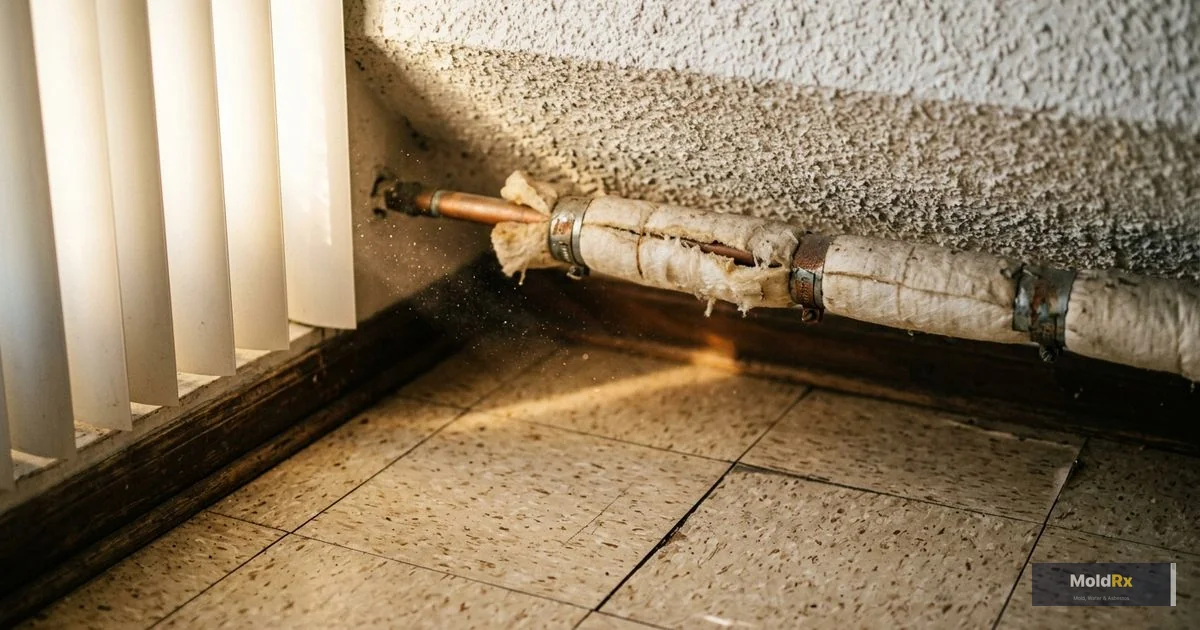
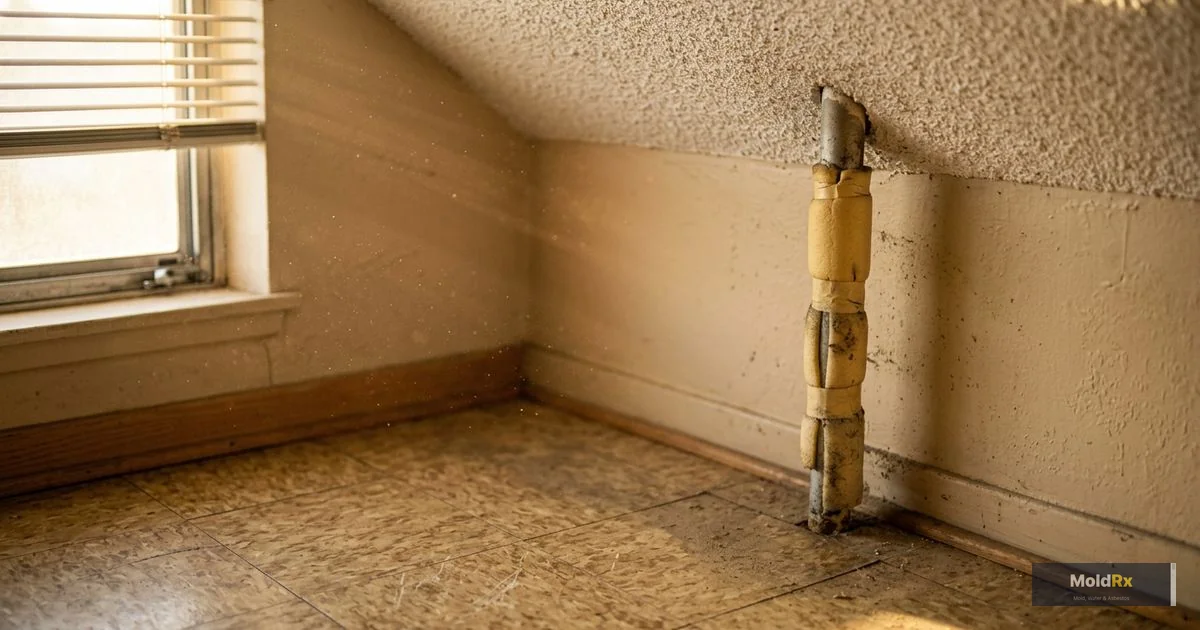
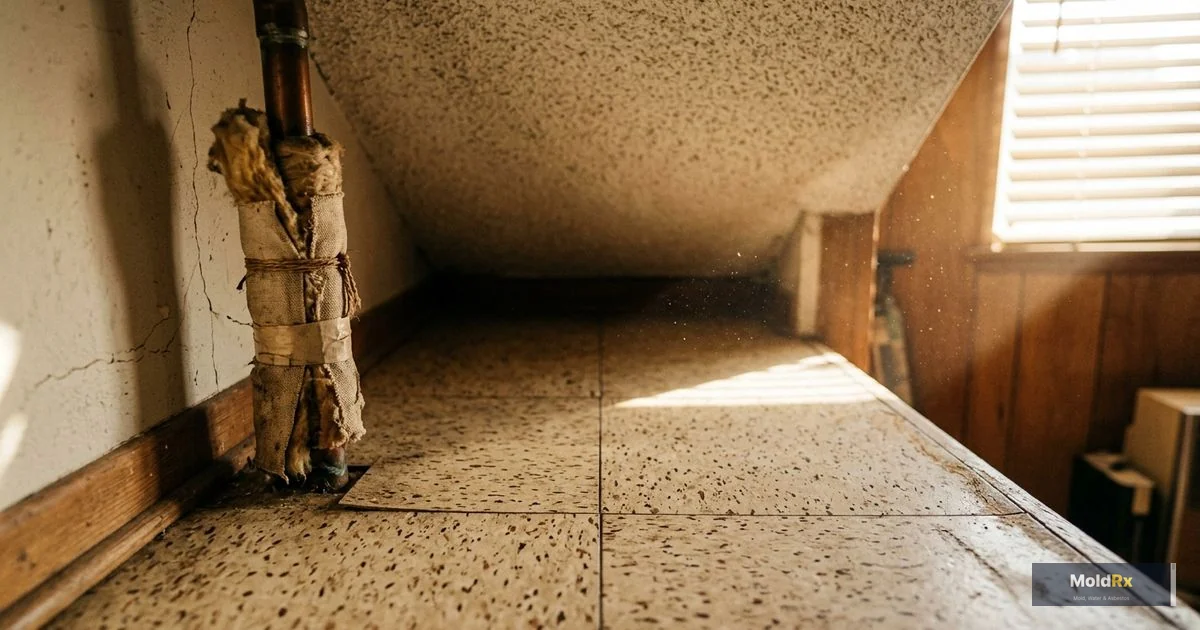
Corrugated paper wrap, calcium-silicate blocks, and air-cell insulation on HVAC components in pre-1980 homes commonly contain asbestos. In Cypress, ductwork insulation and pipe wrapping were part of standard tract-home construction. These materials sit in garages, attic spaces, and utility closets — unconditioned spaces where temperatures fluctuate widely and where the insulation is frequently bumped or scraped over decades. If you are replacing an HVAC system, upgrading ductwork, or converting a garage, test the insulation on existing equipment.
Roofing Materials
Asbestos-cement roofing shingles and roofing felt were widely used in California tract-home construction through the 1970s. Orange County's low rainfall means many Cypress homes still have original or early-replacement roofing that may contain asbestos. These materials are low-risk while intact but become a testing and abatement concern at re-roofing time. In a city full of 50- to 65-year-old homes, test before your contractor tears off old shingles and felt.
Joint Compound, Plaster, and Caulking
Drywall joint compound manufactured before 1980 frequently contained asbestos. Plaster, caulking, and textured wall coatings from this era also tested positive at high rates. Because joint compound is applied at every seam and screw hole in drywall construction, even a small remodel can disturb a surprising quantity of material. Sanding drywall joints is a particularly high-exposure activity when the compound contains asbestos.
Vermiculite Attic Insulation
Over 70 percent of vermiculite insulation sold in the United States from 1923 to 1990 came from the Libby, Montana mine, which was contaminated with tremolite asbestos. It appears as small, accordion-shaped granules — gray-brown or gold — in attic spaces. During the 1970s energy crisis, vermiculite was a popular attic insulation retrofit across Southern California. The EPA recommends treating all vermiculite insulation as potentially contaminated until tested. If you are doing any work in your attic, test any vermiculite present before disturbing it.
Exterior Cement Siding and Stucco
Some Cypress tract homes were built with asbestos-cement siding panels or included asbestos in stucco mixtures. These materials are low-risk while intact but become a concern when siding is being replaced, stucco is being removed, or new windows and doors require cutting through exterior walls.
How Asbestos Testing Works
1. Pre-Testing Consultation
Testing begins with a conversation about your property and your project — when the home was built, what materials you plan to disturb, and whether you have noticed any damage. For Cypress homes in the 90630 ZIP code built before 1980, the question is which materials to sample, not whether sampling is needed.
2. Bulk Sample Collection
A certified inspector collects bulk samples following EPA procedures. Each suspected material is sampled separately — the inspector wets the material to suppress fiber release, removes a small section, and seals it in a labeled container. Homogeneous materials like floor tiles require a minimum of three samples per distinct area. For a typical Cypress tract home, expect 10 to 20 samples across ceiling texture, floor tile, mastic, joint compound, insulation, and roofing materials.
3. NVLAP-Accredited Laboratory Analysis
Samples go to an NVLAP-accredited laboratory. The primary method is PLM (Polarized Light Microscopy), which identifies asbestos fiber type and estimates concentration above approximately 1%. When PLM results are negative but low-level asbestos is suspected, TEM (Transmission Electron Microscopy) provides higher sensitivity. Standard turnaround is 3 to 5 business days; rush service (24 to 48 hours) is available.
4. Results Interpretation and Recommendations
You receive a written report identifying each material sampled, whether asbestos was detected, the fiber type, and the estimated concentration. We explain which materials require licensed abatement before renovation can proceed, which can be safely managed in place, and which areas are clear for standard construction work.
What Happens If Asbestos Is Found?
A positive test result does not automatically mean your home is dangerous or that expensive removal is your only option. The response depends on material condition, project scope, and applicable regulations.
When Removal Is Required
Removal is required when your renovation will physically disturb ACM. SCAQMD Rule 1403 requires notification at least 10 working days before removal begins, and all abatement must be performed by a DOSH-registered contractor. Understanding this timeline upfront prevents the frustrating scenario of discovering asbestos mid-project and having all work stop.
When Encapsulation May Be an Option
Encapsulation applies a sealant over intact ACM to prevent fiber release without physical removal. It is appropriate for materials in good condition that will remain in place — intact floor tiles being covered with new flooring rather than torn out, or siding on a wall outside the renovation footprint. For Cypress homeowners undertaking partial renovations, encapsulation can be a practical and cost-effective solution for materials that will not be disturbed.
When Leaving It Undisturbed Is Acceptable
If ACM is in good condition and will not be disturbed, leaving it in place is often the safest and most cost-effective option. Intact asbestos materials do not release fibers. A management plan documenting the location and condition of ACM is the standard approach — many Cypress homeowners discover asbestos during testing for one project and manage materials in unaffected areas rather than removing everything at once.
Cypress Asbestos Risk by Construction Era
Cypress's development was compressed into roughly two decades, so the city does not have the wide range of construction eras found in larger communities. But there are still meaningful distinctions.
Late 1950s (Early Tracts): The first residential tracts appeared as Cypress transitioned from Dairy City to suburb. Homes from this era — now approaching 70 years old — have a very high probability of containing asbestos in multiple material categories: floor tiles, pipe insulation, roofing, siding, joint compound, and ceilings. Testing is essential before any work.
1960s (The Building Boom): The majority of Cypress's housing was built this decade. Homes represent the largest cohort in the city and carry high asbestos risk across nearly all material categories. Testing is essential before any renovation.
1970s (Buildout and Completion): By the mid-1970s, Cypress was largely built out. Early-to-mid-1970s homes carry the same high risk as 1960s construction. Late-1970s homes fall into the transition period — the EPA began restricting asbestos in 1978, but products already manufactured continued to be installed. Testing is the only way to know.
1980s and Later (Infill): A small number of homes were built as infill projects or replacements. Significantly lower asbestos risk but not zero — some products continued to contain asbestos after initial EPA bans. SCAQMD Rule 1403 still requires a survey before demolition regardless of building age.
Understanding the Health Risk
Asbestos is not dangerous sitting inside your walls. It becomes a health hazard when fibers are released into the air and inhaled. When asbestos-containing materials are cut, scraped, sanded, or broken, they release microscopic fibers that lodge in lung tissue and cannot be expelled. Over time, the embedded fibers cause scarring (asbestosis), genetic damage, and chronic inflammation. Mesothelioma — a cancer of the lining of the lungs — is caused almost exclusively by asbestos exposure, with a latency period averaging 30 to 40 years. Lung cancer risk is also elevated.
Asbestos fibers cannot be seen, smelled, or detected by any household method. Even trained inspectors cannot confirm asbestos by sight — confirmation requires a microscope and an accredited lab. This is why California and the SCAQMD require laboratory testing rather than visual assessment.
What Sets MoldRx Apart
- Honest assessment. If testing is not necessary for your project, we will tell you. We have no financial incentive to recommend testing or abatement you do not need.
- NVLAP-accredited lab partners. Every sample is analyzed by a nationally accredited laboratory using PLM and, when warranted, TEM methods that meet EPA and Cal/OSHA standards.
- Clear, actionable results. No jargon-filled reports that leave you guessing. Plain language, specific recommendations, and a clear path forward for your Cypress project.
- Family-owned accountability. We only send vetted asbestos testing professionals we stand behind. No subcontractor roulette — the people who show up are the people we trust with our own homes.
Get your free consultation — no obligations.
Cypress Neighborhoods and Areas We Serve
Our asbestos testing services cover all residential and commercial properties in Cypress, including:
- Cypress Village — One of the city's largest residential areas, developed through the 1960s and 1970s with single-family tract homes. Textbook peak-era asbestos construction. Testing is essential before any renovation.
- Oak Knoll — Well-established neighborhood anchored by Oak Knoll Park, with homes built during the 1960s building boom. High asbestos risk across multiple material categories.
- Lincoln Center — The area surrounding Lincoln Avenue, Cypress's cultural and commercial corridor. Residential and mixed-use buildings from the 1960s and 1970s should be tested before renovation.
- Lexington — Residential neighborhood with homes from the peak tract-building era and standard 1960s-1970s asbestos risk profile.
- Walker — Homes along the Walker Street corridor, built during the same era and carrying the same asbestos risk as the rest of the city.
- Bridgeport — Residential area on the city's western edge near Los Alamitos. Part of Cypress's buildout period — test before any renovation work.
- Areas Near Cypress College — The neighborhoods surrounding the 110-acre campus were built concurrently with the college's 1966 opening and are squarely in the high-risk category.
Nearby Communities
We also serve neighboring North Orange County communities including Buena Park to the north, Stanton to the east, Garden Grove to the south, Los Alamitos to the west, La Palma, Seal Beach, Westminster, and Anaheim.
Related Services in Cypress
-> All services
Frequently Asked Questions
Is asbestos testing required before renovation in Cypress?
Yes. SCAQMD Rule 1403 requires an asbestos survey before renovation or demolition in the South Coast Air Quality Management District, which includes all of Cypress and Orange County. The only exception is single-unit dwelling renovation involving less than 100 square feet of intact material. Most residential projects exceed that threshold. In Cypress, where virtually all homes predate 1980, this regulation applies to nearly every renovation.
How many samples need to be collected?
EPA procedures require a minimum of three samples per homogeneous material in each distinct area. A typical Cypress tract home undergoing a comprehensive renovation might need 10 to 20 samples across ceiling texture, floor tile, mastic, joint compound, insulation, and roofing material. Smaller projects may require fewer.
How long do asbestos test results take?
Standard PLM analysis takes 3 to 5 business days. Rush service is available with turnaround as fast as 24 hours. TEM analysis, if needed, typically requires 5 to 7 business days.
Can I collect asbestos samples myself?
California does not prohibit homeowners from collecting samples in their own single-family home, but the practice is strongly discouraged. Improper technique can release fibers into your living space, and samples collected by uncertified individuals may not be accepted for regulatory compliance. If you need results for a building permit, SCAQMD notification, or real estate transaction, use a certified inspector.
What does a positive asbestos test mean for my renovation?
A positive result means asbestos fibers were detected in the sampled material. Any material exceeding 1% asbestos is classified as ACM under federal and California regulations. A positive result does not mean immediate danger — intact, undisturbed ACM does not release fibers. But if your renovation will disturb that material, licensed abatement must be performed before construction work can proceed in that area.
Do all pre-1980 Cypress homes contain asbestos?
No, but the probability is high enough that testing is the only responsible approach. Industry data suggests 80% or more of pre-1980 buildings contain at least one asbestos-containing material — and Cypress's housing stock, built during the absolute peak of asbestos use, likely exceeds that national average. Laboratory testing is the only way to determine what your specific home contains.
My Cypress home has been renovated before — do I still need testing?
Yes. Previous renovations may have covered asbestos-containing materials rather than removing them. Unless the previous owner can provide laboratory documentation confirming asbestos was tested for and either not found or professionally removed, assume nothing. Test before you disturb.
Will my contractor handle asbestos testing?
Some general contractors coordinate testing as part of pre-construction planning, but many do not. Getting testing done independently before your contractor starts is the most reliable approach — if asbestos is discovered mid-project because testing was skipped, all work stops until abatement is complete, adding weeks and significant cost to your timeline.
Is there a difference between asbestos testing and an asbestos survey?
The terms are often used interchangeably. An asbestos survey is the formal process — a certified inspector examines the property, identifies suspect materials, collects samples, and provides a written report. Asbestos testing refers to the laboratory analysis of those samples. MoldRx coordinates both.
Get Asbestos Testing in Cypress
Planning a remodel on a 1960s Oak Knoll ranch home, replacing the roof on a Cypress Village tract house, or buying a mid-century property near Cypress College — testing gives you the information you need before the first wall comes down. In a city where virtually the entire housing stock was built during the peak years of asbestos use, testing is the standard first step for any renovation project.
A few days of testing and a few hundred dollars in lab fees protect your health, your family, your property value, and your project timeline. The alternative — discovering asbestos mid-renovation, stopping all work, and paying for emergency abatement — is entirely preventable.
Call MoldRx to schedule your asbestos test — (888) 609-8907. Know before you start.