Mold Removal in Coachella, CA — MoldRx
IICRC-Certified Mold Removal Professionals Serving Coachella and the Eastern Coachella Valley
Coachella sits approximately 68 feet below sea level in the eastern Coachella Valley, roughly 28 miles southeast of Palm Springs in Riverside County. With a population of about 46,000 — overwhelmingly Hispanic at nearly 97 percent — this agricultural city is one of the fastest-growing communities in the valley and one where mold surprises homeowners more than almost anywhere else in Southern California. Annual rainfall averages only three to four inches, summer highs regularly exceed 115 °F, and the desert setting makes mold seem impossible. But Coachella's agricultural roots, irrigation infrastructure, proximity to the Coachella Canal, rapid residential construction, and monsoon-season flash flooding create moisture conditions that colonize mold within 24 to 48 hours — the window documented by IICRC S520 and EPA publication 402-K-01-001. MoldRx only sends vetted, IICRC-certified mold removal professionals who follow IICRC S520/R520 remediation standards and EPA federal mold guidance.
Request your free estimate — we'll assess your property and give you straight answers.
Why Mold Grows in Coachella Homes
Agricultural Irrigation and a High Water Table
Coachella is the heart of the Coachella Valley's date palm industry — the region produces nearly 95 percent of all dates grown in the United States, with over 9,600 acres of date groves in Riverside County alone. Citrus, table grapes, peppers, and other crops surround the city on all sides. All of this agriculture depends on irrigation supplied largely through the Coachella Canal, a branch of the All-American Canal that delivers Colorado River water to more than two-thirds of local farmland. The result is a persistently elevated water table across the eastern valley floor, especially in areas at or below sea level. For residential properties near agricultural parcels — which describes a significant portion of Coachella — this means soil moisture that pushes water against slab foundations, into crawl spaces, and through foundation cracks. Homes built on former agricultural land inherit decades of saturated subsoil that wicks into concrete slabs and wall framing, providing mold with a reliable, year-round moisture source most homeowners never suspect.
HVAC Condensation and Evaporative Cooler Overflow
Coachella homes run air conditioning roughly eight to nine months of the year. Condensate drain lines, drip pans, and ductwork interiors collect moisture every cooling cycle. When a drain line clogs or a pan overflows — common in systems 15 to 30 years old — water seeps into wall cavities, ceiling plenums, and subfloor assemblies. Many older properties in the 92236 ZIP code still use evaporative (swamp) coolers, which add moisture directly to the air and can push indoor relative humidity well above the EPA's recommended 30 to 50 percent threshold. In homes without modern vapor barriers, this moisture settles behind drywall and inside ductwork where it feeds hidden mold colonies.
Older Housing Stock and Rapid New Construction
Coachella's housing spans two distinct eras. Many homes in established neighborhoods like Pueblo Viejo were built from the 1960s through the 1990s and still have original copper or galvanized plumbing, aging water heater connections, and minimal bathroom ventilation. Slab-on-grade foundations — the dominant construction type in the valley — hide slow leaks for months until mold has spread through wall cavities and under flooring. At the other end, Coachella is experiencing a residential construction boom, with over 40 new communities in development, including the 2,200-acre La Entrada master-planned community south of Interstate 10. New construction introduces its own mold risks: concrete that has not fully cured, construction moisture trapped behind finished surfaces, and freshly installed HVAC systems that begin condensing from day one.
Monsoon-Season Flooding and Storm Events
The North American Monsoon brings sudden thunderstorms and humidity spikes to the Coachella Valley from roughly July through September. Coachella's below-sea-level elevation makes it a natural collection point for storm runoff. Tropical Storm Hilary in August 2023 demonstrated the risk dramatically, delivering nearly half the region's annual rainfall in a single day and flooding roads and structures across the valley. Any structure that takes on even minor water intrusion during these events can develop mold within the 24-to-48-hour colonization window cited by IICRC S520 and EPA 402-K-01-001.
Signs You Need Professional Mold Removal
Visible Growth Beyond a Small Area
The EPA's publication 402-K-01-001 sets a practical threshold: if mold covers more than about ten square feet — roughly a three-foot by three-foot patch — professional remediation is recommended. In Coachella homes, visible mold that extensive almost always signals a larger hidden colony behind the surface, particularly along exterior walls adjacent to irrigated agricultural land or near slab foundations with subsurface moisture.
Persistent Musty Odor Without Visible Mold
A stale, earthy smell that lingers even after cleaning often indicates mold growing inside wall cavities, beneath flooring, or within HVAC ductwork. Because Coachella homes are sealed tightly against desert heat for months at a time, these odors concentrate indoors and are one of the earliest reliable indicators of a concealed problem.
Recurring Mold After Previous Cleanup
If you have cleaned mold off a surface and it returns within weeks, the underlying moisture source has not been resolved. Surface cleaning does not address colonies embedded in porous materials like drywall, insulation, or wood framing. In Coachella, recurring growth often points to subsurface moisture from the high water table or irrigation drainage pushing water against the foundation.
Water Damage History
Any property that has experienced a plumbing failure, roof leak, appliance overflow, or flood event — including the monsoon-driven flash flooding that periodically affects eastern Coachella Valley communities — should be evaluated for mold if remediation did not occur within the 24-to-48-hour window established by IICRC S520. Moisture trapped behind finished surfaces can sustain mold growth indefinitely.
Health Symptoms That Worsen Indoors
The CDC notes that mold exposure can trigger nasal congestion, throat irritation, coughing, wheezing, and eye irritation. If household members notice these symptoms improving when they leave the home and returning when they come back, indoor mold may be a contributing factor — especially during Coachella's long cooling season, when windows stay closed for the majority of the year.
Health Risks of Mold Exposure
Prolonged mold exposure is a recognized indoor air quality concern. The EPA, CDC (cdc.gov/mold), and the World Health Organization's Guidelines for Indoor Air Quality: Dampness and Mould document respiratory effects ranging from nasal irritation to more serious conditions in susceptible individuals. Mold produces allergens, irritants, and in some species mycotoxins that become airborne during normal breathing. In a tightly sealed Coachella home running recirculated air conditioning, spore concentrations can build well above outdoor baselines.
Populations at Higher Risk
Certain groups face elevated health risks from mold exposure. Coachella has a young population — the median age is just 33.4 years — and a substantial share of residents are children with developing respiratory systems. The WHO's Indoor Air Quality guidelines specifically note the risks of dampness and mold for children. Riverside County carries one of the highest asthma burdens in California, and asthma is directly aggravated by indoor mold. Older adults, individuals with compromised immune systems, or existing allergies also face greater risk. In a community where many households include multiple generations, addressing confirmed mold promptly protects the most vulnerable family members.
When DIY Mold Removal Isn't Enough
The EPA acknowledges that small mold problems on hard surfaces can often be handled by homeowners. However, professional remediation is the appropriate path when any of the following apply:
- Affected area exceeds ten square feet — the threshold in EPA 402-K-01-001 above which professional methods, containment, and personal protective equipment are recommended.
- Mold is inside HVAC systems or ductwork — the National Air Duct Cleaners Association (NADCA) recommends certified professionals for any contamination within air-handling equipment to prevent whole-house spore distribution.
- Growth involves structural materials — mold embedded in wall framing, subfloor sheathing, or roof decking requires controlled removal and often structural repair.
- Stachybotrys or other toxigenic species are suspected — dark, slimy growth on chronically wet materials warrants the containment and handling protocols outlined in IICRC S520.
- Water damage involves Category 2 or Category 3 water — sewage backups, agricultural irrigation overflow, monsoon floodwater, or appliance discharge containing contaminants require the decontamination procedures in IICRC S500.
- Documentation is needed for insurance or real estate transactions — professional remediation provides the inspection reports, lab results, and clearance testing that insurers and buyers require.
If any of these situations describe your Coachella property, request a free estimate and get a clear picture of what you are dealing with.
How We Remove Mold in Coachella Properties
Every MoldRx remediation project follows IICRC S520/R520 protocols and complies with Cal/OSHA Title 8 worker safety requirements. Here is how the process works from start to finish.
1. Inspection and Moisture Mapping
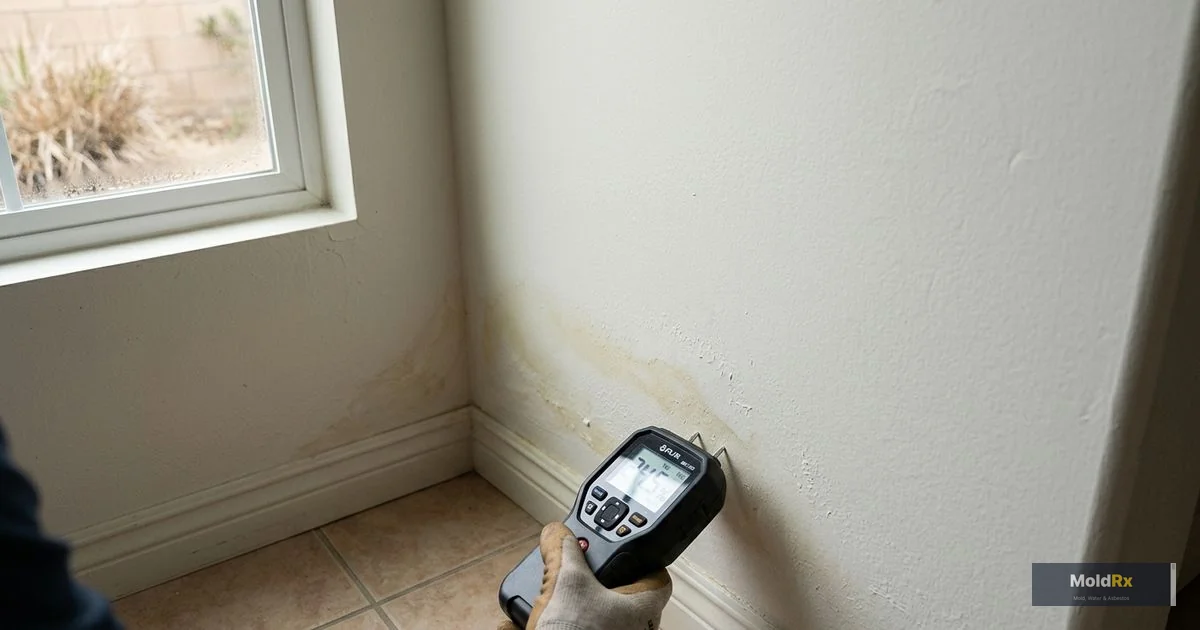
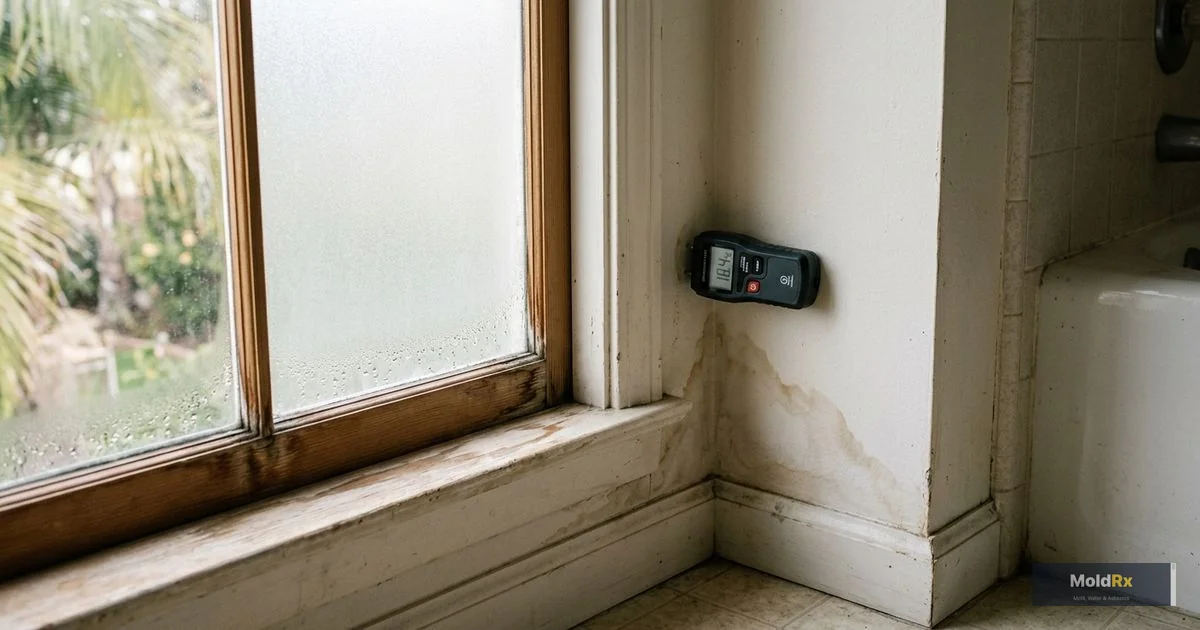
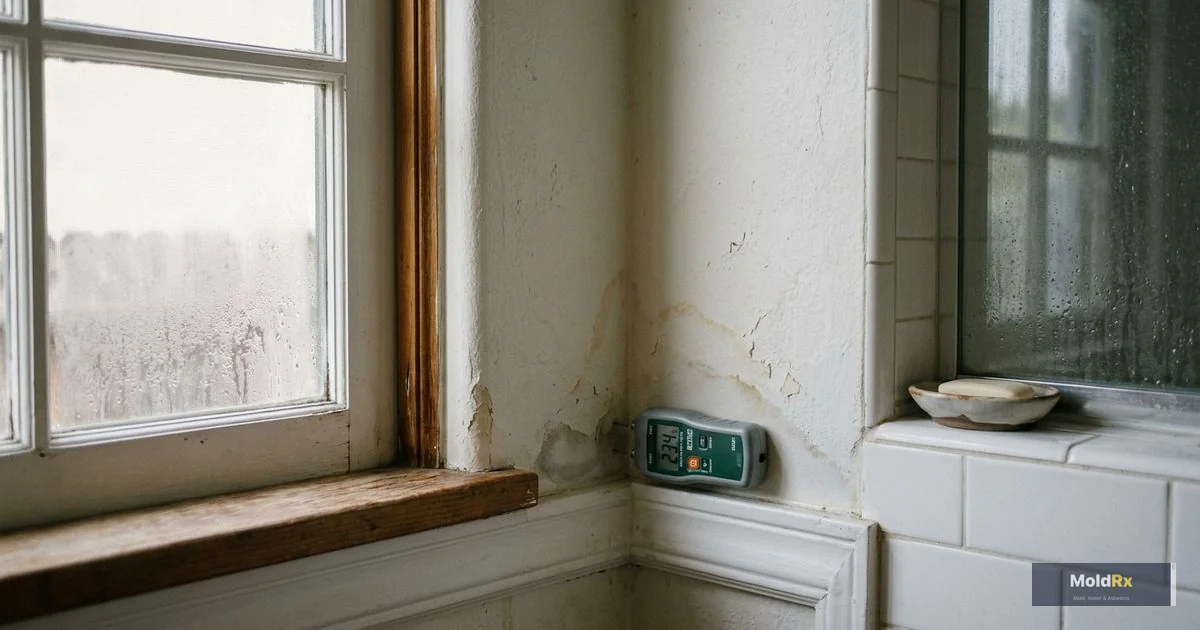
A thorough inspection identifies all visible and suspected mold growth, and moisture meters and thermal imaging pinpoint water sources behind walls, under flooring, and within ceiling assemblies. In Coachella, particular attention goes to slab-foundation moisture readings, HVAC interiors, and wall sections adjacent to irrigated land. Air and surface samples are collected when laboratory identification is warranted. This step follows the assessment framework in EPA 402-K-01-001 and documents the full scope before remediation begins.
2. Containment
Affected areas are isolated using polyethylene sheeting and negative air pressure to prevent spore migration to clean parts of the property. For Condition 2 and Condition 3 environments — as defined by IICRC S520 — HEPA-filtered air scrubbers capturing particles down to 0.3 microns run continuously throughout the work zone. This containment approach aligns with CDC (cdc.gov/mold) and EPA (epa.gov/mold) guidance for occupied structures and reflects WHO Indoor Air Quality recommendations for controlling bioaerosol exposure.
3. Removal and Treatment
Contaminated porous materials — drywall, insulation, carpet, and ceiling tile — are removed under containment and double-bagged for disposal. Non-porous surfaces are cleaned and treated with EPA-registered antimicrobial products. All work follows Cal/OSHA Title 8 Section 5155 exposure limits and IICRC S520 procedures. In Coachella, our professionals pay particular attention to wall cavities behind bathroom tile, HVAC closets, slab-edge intrusion points, and areas where irrigation moisture has wicked into foundations.
4. Moisture Correction
Removing mold without resolving the moisture source guarantees recurrence. In Coachella, moisture correction typically involves clearing HVAC condensate drain lines, repairing aged plumbing, improving exhaust ventilation, regrading agricultural drainage away from foundations, and addressing subsurface water intrusion from the elevated water table. For properties in flood-prone zones or near the Coachella Canal, we recommend additional drainage systems where appropriate.
5. Post-Remediation Verification
After remediation, clearance testing confirms that airborne spore counts have returned to Condition 1 (normal fungal ecology) as defined by IICRC S520. You receive a complete documentation package: inspection report, moisture mapping, laboratory analysis, scope-of-work summary, photographic records, and clearance test results — supporting your records, insurance claims, and future real estate transactions.
Mold Removal vs. Mold Remediation: What's the Difference?
The terms are often used interchangeably, but they describe different scopes of work. Mold removal refers to physically taking away contaminated materials — cutting out affected drywall, discarding saturated insulation, and cleaning surfaces. Mold remediation, as defined by IICRC S520, is the full process: assessment, containment, removal, antimicrobial treatment, moisture correction, and post-remediation verification. The goal is to return the indoor environment to Condition 1 — normal fungal ecology — not just strip away visible growth. Removal alone does not address the conditions that allowed mold to grow. MoldRx performs full remediation on every project because the goal is to resolve the problem permanently.
Preventing Mold After Remediation
Once your Coachella property has been properly remediated, these eastern Coachella Valley-specific practices will help keep mold from returning.
Maintain Your HVAC System
Have condensate drain lines flushed and inspected at least twice a year — once before cooling season and once at midseason. Replace air filters on the manufacturer's recommended schedule (monthly during peak cooling months is common in the desert). Inspect drip pans for standing water or biofilm. If your property uses an evaporative cooler, ensure the float valve and overflow drain are functioning correctly.
Control Indoor Humidity
Keep indoor relative humidity between 30 and 50 percent, consistent with EPA guidance. A hygrometer lets you monitor levels throughout the day. In Coachella, humidity spikes during monsoon season (July through September) and can rise in homes with evaporative cooling. Run bathroom and kitchen exhaust fans during and for 15 minutes after moisture-producing activities.
Manage Irrigation and Agricultural Drainage
If your property borders agricultural parcels or date groves, ensure irrigation runoff drains away from your foundation. Check that landscaping grading slopes away from the home on all sides. Properties near the Coachella Canal or in areas with elevated water tables should inspect slab edges and garage floors for moisture intrusion after irrigation cycles and monsoon rains.
Fix Water Intrusion Promptly
The 24-to-48-hour colonization window cited by IICRC S520 is the critical benchmark. Any leak, overflow, or flood event — including irrigation overflow or monsoon-driven runoff — should be dried and addressed within that timeframe. Delay is the single most common reason Coachella homeowners end up needing full remediation rather than a simple repair.
Schedule Periodic Inspections
An annual moisture inspection — particularly before monsoon season — can catch small problems before they become large ones. Focus on areas that are difficult to observe: behind water heaters, inside HVAC closets, under kitchen and bathroom sinks, along slab edges, and wall sections facing irrigated land.
What Sets MoldRx Apart
- Straight talk, not sales talk. If your problem is minor, we will tell you. If it is extensive, you will understand exactly why before any work begins.
- Licensed, insured, IICRC-certified. Every professional we send holds current IICRC certification, carries proper insurance, and operates under California Contractors State License Board (CSLB) and Riverside County licensing requirements.
- Full documentation on every job. Inspection reports, lab results, scope of work, photographic records, and clearance testing — all provided to you in a complete package.
- Family-owned accountability. We only send vetted remediation professionals we stand behind.
Get your free estimate — no obligations, no pressure.
Coachella Neighborhoods We Serve
Pueblo Viejo
Coachella's historic downtown core, bounded by Harrison Street, Ninth Street, and the railroad corridor. Pueblo Viejo is the city's oldest neighborhood, with homes and apartments dating from the 1950s through the 1980s. Original plumbing, minimal bathroom ventilation, and aging flat-roof construction make hidden mold in wall cavities and ceiling assemblies a persistent concern. The city's ongoing revitalization plan is bringing new investment, but many existing structures retain the moisture vulnerabilities of their original build.
Las Brisas and Vista del Agua
Residential communities east and south of downtown with single-family homes and multi-family housing built in the 1990s and 2000s. Proximity to agricultural parcels and date groves means irrigation moisture around foundations is consistently higher than elsewhere in the city. Aging HVAC systems and slab-on-grade construction are the most common mold triggers here.
Avenue 48 Corridor
The corridor along Avenue 48 from Harrison Street eastward includes some of Coachella's most established residential areas. Homes range from the 1970s to the early 2000s, and many sit on former agricultural land. Decades of irrigation left elevated soil moisture beneath foundations. Older plumbing and original HVAC systems are common mold risk factors across this area.
La Entrada and South Coachella
South of Interstate 10 and east of the All-American Canal, the 2,200-acre La Entrada master-planned community represents Coachella's largest new development. New construction introduces specific mold risks: uncured concrete, construction moisture sealed behind finished surfaces, and HVAC systems that begin condensing from day one. Homes in early phases should be monitored during their first two cooling seasons.
Date Palm Country Club Area
The area surrounding Coachella's date palm groves includes older manufactured homes and site-built residences. Mature palm groves require consistent irrigation, and persistent ground moisture from grove operations — combined with homes 30 to 50 years old — makes proactive moisture management especially important here.
Harrison Street and Avenue 52 Growth Area
The expanding residential zone along Harrison Street south to Avenue 52 includes dozens of new subdivisions from builders like Pulte, LGI, and Williams Homes. While built to current code, rapid construction timelines and extreme heat can trap moisture in building assemblies. New homeowners should monitor indoor humidity closely during their first cooling season and ensure HVAC condensate systems are functioning properly.
Nearby Communities
We also serve homeowners and businesses in neighboring communities, including Indio, La Quinta, Thermal, Mecca, and Palm Desert. Our coverage spans ZIP code 92236 and extends throughout the eastern Coachella Valley.
Related Services in Coachella
→ All remediation services in Coachella
Frequently Asked Questions
How quickly can MoldRx respond to a mold problem in Coachella?
We typically schedule an initial inspection within one to two business days. If you are dealing with active water damage — particularly during monsoon season or after an irrigation-related incident — let us know so we can prioritize your assessment within the critical 24-to-48-hour window.
How long does mold remediation take in a typical Coachella home?
Most projects take two to five days. Smaller, contained issues may wrap up in a single day, while larger projects involving multiple rooms or structural materials can take a week or more. We provide a realistic timeline during the initial assessment.
Do I need mold testing before remediation begins?
If mold is clearly visible, testing is not always necessary — the priority is containment and removal. However, testing is valuable when you suspect hidden mold behind walls or under flooring, when documentation is needed for insurance or real estate, or when you want laboratory identification of the species present.
Can I stay in my home during the remediation process?
In most cases, yes. Containment barriers and negative air pressure keep the work zone isolated from living areas. For larger projects, or if anyone in the household has respiratory sensitivities, we may recommend temporary relocation during the most intensive phases.
Is mold common in desert homes like those in Coachella?
More common than most people expect. Coachella's agricultural irrigation, high water table, reliance on air conditioning and evaporative coolers, and periodic monsoon flooding introduce substantial moisture into and around homes. Combined with housing that ranges from decades-old to brand-new — each with its own moisture vulnerabilities — and the city's below-sea-level elevation that collects runoff, the eastern valley creates conditions where mold thrives in concealed spaces even while the outdoor climate feels bone-dry.
Does agricultural irrigation near my home increase mold risk?
Yes. Properties adjacent to date palm groves, citrus orchards, or other irrigated agricultural land experience consistently higher soil moisture levels around their foundations. The Coachella Valley Water District delivers Colorado River water through the Coachella Canal to more than two-thirds of local farmland, keeping the water table elevated across much of eastern Coachella. Moisture wicks through slab foundations and into wall assemblies over time, creating conditions for mold growth that are easy to overlook because the source is underground.
What types of mold do you typically find in Coachella Valley homes?
The most frequent species include Cladosporium, Aspergillus, and Penicillium — common indoor molds associated with moisture intrusion and HVAC condensation. Stachybotrys chartarum ("black mold") is less common but appears in homes with prolonged water damage from monsoon flooding or slow plumbing leaks. Laboratory testing identifies the specific species when needed.
Will my homeowner's insurance cover mold remediation?
Coverage depends on the cause. Mold from a sudden, covered event — a burst pipe or appliance failure — may be covered. Mold from long-term maintenance issues, gradual leaks, or irrigation-related moisture is typically excluded. Our documentation supports legitimate claims.
Should I worry about mold if my Coachella home is newly built?
New construction is not immune to mold. Concrete slabs and framing lumber contain construction moisture that can take months to fully dry, especially in homes sealed and air-conditioned immediately after completion. Coachella's rapid development pace means some homes are occupied quickly, and trapped construction moisture can feed mold growth behind walls and under flooring within the first year. Monitor indoor humidity and watch for musty odors during your first two cooling seasons.
What is the difference between mold testing and mold remediation?
Mold testing identifies what is present — species, spore counts, and contamination locations. Remediation is the full process: removal, treatment, moisture correction, and verification. We offer both through our mold testing and mold removal services.
Get Mold Removal in Coachella
Coachella's desert setting, agricultural heritage, and below-sea-level elevation create a combination of moisture risks most homeowners do not anticipate. From the high water table fed by decades of irrigation to monsoon-season flash flooding, from aging swamp coolers to brand-new construction moisture, this city demands professionals who understand the specific conditions of the eastern Coachella Valley.
MoldRx exists to give Coachella homeowners a remediation partner they can trust. Every professional we send is vetted and IICRC-certified. Every project follows S520/R520 protocols. And every conversation starts with honest answers about what you are actually dealing with — not a sales pitch.
Call MoldRx for your free estimate — (888) 609-8907. Clear answers. Honest guidance. Work done right.