Mold Testing in Buena Park, CA — MoldRx
IICRC-Certified Mold Testing Professionals Serving Buena Park and North Orange County
Buena Park covers 10.5 square miles of flat terrain in north Orange County — roughly 83,000 residents at 75 feet elevation, at the foot of the West Coyote Hills and traversed by Coyote Creek. The city incorporated in 1953 as the postwar suburban boom accelerated, and the vast majority of homes went up between the early 1950s and mid-1970s — median construction year: 1966. The typical property is approaching 60 years old, built before modern vapor barriers, current ventilation codes, and contemporary moisture management. Average humidity runs around 65 percent, the marine layer pushes inland from the coast 12 miles west, and 14 inches of annual rainfall concentrates between November and March. Homes with aging plumbing, original ductwork, and slab-on-grade foundations on clay soils face moisture intrusion risks that compound over decades. Professional mold testing identifies which species are present, determines whether indoor concentrations exceed outdoor baselines, and gives you the factual basis to decide whether remediation is necessary. MoldRx only sends vetted, IICRC-certified professionals who use AIHA-accredited laboratories for every sample.
Request your free consultation — we'll help you determine if testing is right for your situation.
When Mold Testing Makes Sense in Buena Park
Not every concern requires testing, and a responsible assessment company will tell you that upfront. But there are specific situations where professional mold testing provides information you genuinely cannot get any other way.
Unexplained Health Symptoms That Improve Away from Home
If household members experience nasal congestion, eye irritation, persistent cough, or worsening asthma that ease when you leave the house, airborne mold may be a contributing factor. The CDC and WHO both identify mold exposure as a cause of respiratory symptoms in otherwise healthy individuals. In Buena Park, where marine layer humidity blankets the city most mornings and 1960s-era homes circulate air through original ductwork, distinguishing seasonal allergies from mold exposure without data is unreliable. Air sampling determines whether indoor spore levels are elevated compared to outdoor baselines.
Musty Odors Without Visible Mold
A persistent musty smell that cleaning does not resolve typically indicates mold in a concealed location — wall cavities, beneath flooring, or within ductwork. In Buena Park, marine layer moisture deposits on surfaces that may never fully dry under north-facing eaves or in shaded wall recesses. Ranch-style homes from the 1950s and 1960s — the dominant type across Bellehurst, the Founders' District, and the San Tract — run original HVAC systems with ductwork that has accumulated decades of condensation cycling, creating colonization sites pushing spores throughout every room. Air and surface sampling pinpoint the source without unnecessary demolition.
After Water Damage or Moisture Events
Any water intrusion — slab leak, roof leak, plumbing failure, or flooding — creates conditions for mold colonization within 24 to 48 hours per IICRC S520 guidelines. Buena Park carries particular risk: flat terrain, clay soils retaining moisture against slab foundations, and Coyote Creek's flood corridor affecting low-lying properties. Beach Boulevard has flooded during intense storms, and Tropical Storm Hilary in 2023 tested drainage across the flat residential grid. Properties near Coyote Creek or in FEMA Zone A face recurring moisture exposure that older foundations were not engineered to handle. If your property experienced water damage not professionally dried within 48 hours, testing determines whether mold has established itself.
Real Estate Transactions and Pre-Renovation Assessment
Mold testing provides documentation that buyers, sellers, lenders, and insurers rely on. If you are purchasing a Buena Park home — a 1950s ranch in the Founders' District, a 1960s home in the San Tract, or a property in the Los Coyotes area — pre-purchase assessment establishes baseline conditions before you close. If you are planning a renovation that will open walls or disturb HVAC systems, pre-renovation testing identifies hidden mold that demolition could release into your living space.
What Mold Testing Reveals That Visual Inspection Can't
A visual inspection tells you what is on the surface. Professional testing tells you what is in the air, what is behind the walls, and what species are involved. The most consequential contamination is often invisible.
Airborne spore counts compare indoor concentrations against outdoor baselines collected simultaneously per AIHA guidelines. In Buena Park, outdoor levels vary with proximity to Coyote Creek, mature landscaping in the Los Coyotes and Bellehurst neighborhoods, and the West Coyote Hills open space — only calibrated testing distinguishes normal outdoor infiltration from an active indoor problem. Species identification determines exactly which molds are present — elevated Aspergillus/Penicillium in a bathroom tells a different story than Chaetomium on drywall. The EPA (EPA 402-K-01-001) recommends professional assessment when contamination is suspected but not visible, when symptoms suggest exposure, and when documentation is needed.
Types of Mold Testing We Perform
Air Sampling (Spore Trap Analysis)
A calibrated pump draws air across a collection cassette capturing airborne spores. Samples are collected from indoor locations of concern and at least one outdoor control. All cassettes go to AIHA-accredited, NVLAP-certified laboratories for microscopic analysis — identifying genera, quantifying concentrations per cubic meter, and comparing indoor levels to the outdoor baseline. In Buena Park homes, we sample near HVAC supply vents, in bathrooms with persistent humidity, and along exterior walls receiving marine layer condensation. Given the city's predominance of ranch homes with original forced-air systems, HVAC-adjacent sampling is especially important.
Surface Sampling (Tape Lift, Swab, Bulk)
Collects material directly from suspect areas — discolored drywall, stained grout, visible growth, or ductwork deposits. Lab analysis identifies species and confirms whether discoloration is mold versus mineral deposit — a distinction that matters in Buena Park's older stucco homes where hard water staining and calcium deposits from irrigation can mimic mold.
ERMI Testing (Environmental Relative Moldiness Index)
A DNA-based tool developed by the EPA and HUD analyzing settled dust for 36 mold species using quantitative PCR, producing a score ranking your home against a national reference database. More comprehensive than air sampling — it detects species not airborne at the time of testing. We recommend ERMI when air sampling is inconclusive, when symptoms persist despite normal spore trap results, or when medical or legal documentation requires deeper analysis. For homes in the Founders' District and San Tract with chronic low-level moisture from aging plumbing, ERMI captures concealed colonization that standard air sampling may miss.
Moisture Mapping and Thermal Imaging
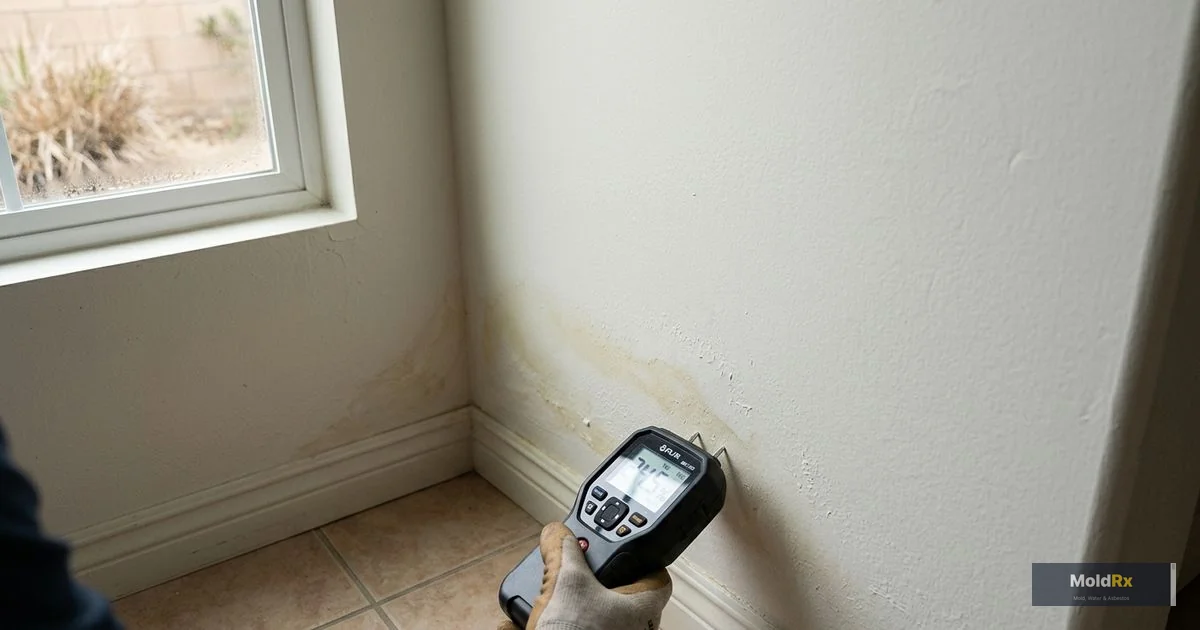
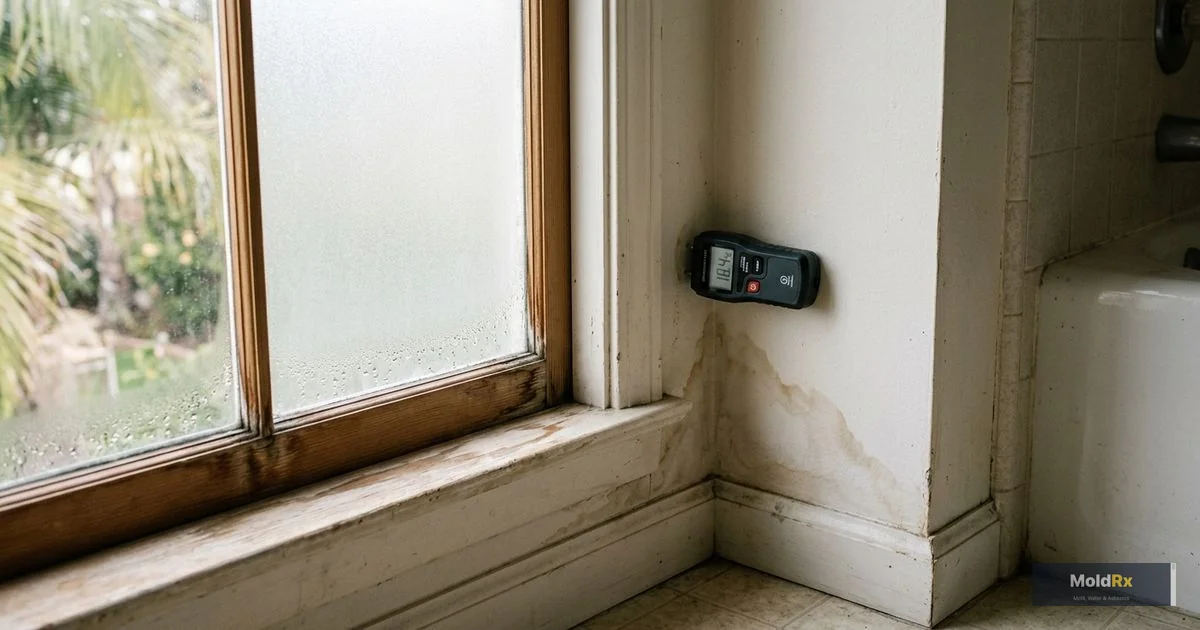
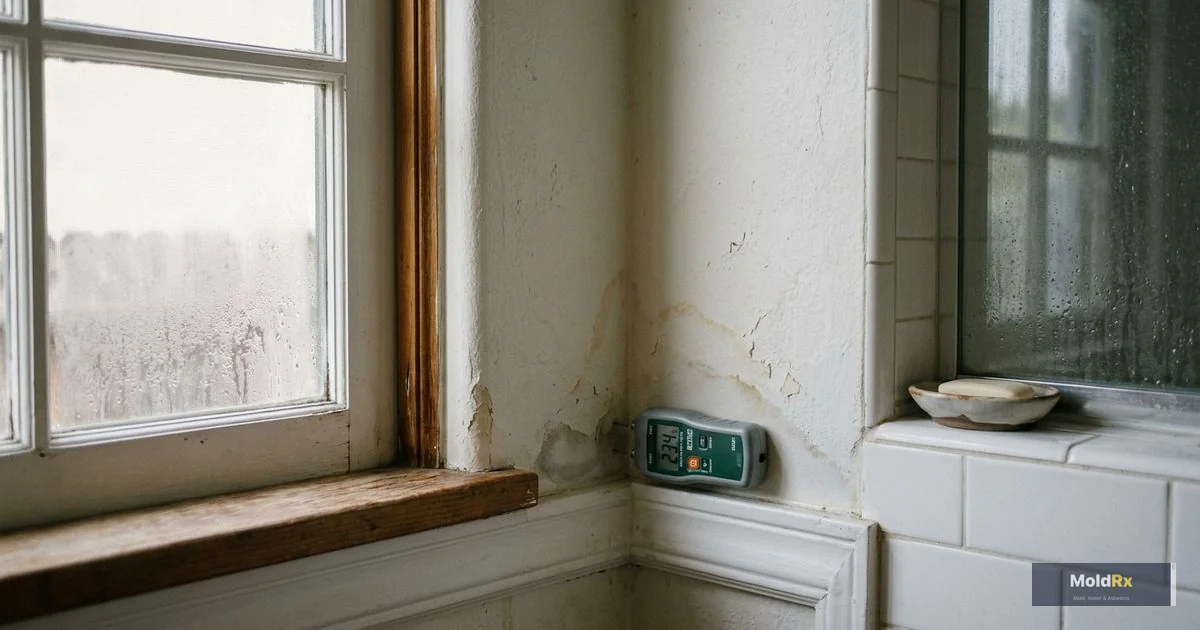
Infrared cameras detect temperature differentials indicating hidden moisture; pin and pinless meters measure moisture content in building materials. In Buena Park, thermal imaging locates slab moisture migration on clay soils, identifies condensation patterns on walls receiving marine layer humidity, and detects moisture intrusion around aging single-pane windows common in mid-century homes.
Our Mold Testing Process in Buena Park
1. Initial Consultation and Property Assessment
We evaluate your property's construction era, HVAC type, and location within the city. A 1940s cottage in the Founders' District gets a different approach than a 1960s ranch in the San Tract or a home in the Los Coyotes area. Following EPA 402-K-01-001 protocols, our professionals identify areas of highest concern and explain what testing will and will not reveal before work begins.
2. Sample Collection
Samples are collected following IICRC S520 protocols — calibrated equipment, proper techniques, chain-of-custody documentation. Sampling locations reflect property-specific risk factors: bathrooms with persistent condensation, HVAC vents connected to original ductwork, areas with known moisture history, and rooms along exterior walls receiving marine layer humidity.
3. Accredited Laboratory Analysis
All samples go to AIHA-accredited, NVLAP-certified laboratories — the same standards required by federal agencies, insurers, and the courts. Standard turnaround is 3 to 5 business days, with rush processing available.
4. Results Interpretation
Our professionals translate every result into plain language — which species were found, whether indoor concentrations are elevated relative to Buena Park's outdoor baselines, and what it means for your situation. Not every elevated reading requires remediation.
5. Recommendations and Next Steps
If results show normal conditions, we tell you clearly. If results indicate elevated levels, we explain what remediation would involve and recommend corrections addressing the root cause — slab leaks, marine layer condensation in aging wall assemblies, inadequate ventilation, or Coyote Creek-adjacent ground moisture. Every client receives a complete written report with lab results, interpretation, photographs, and recommendations.
DIY Mold Test Kits vs. Professional Testing
What DIY kits can do: Confirm the presence of viable mold on a specific surface.
What DIY kits cannot do: Measure airborne spore concentrations. Identify species reliably. Establish indoor-vs-outdoor baseline comparisons. Provide chain-of-custody documentation accepted by insurers or courts. Detect hidden mold behind walls or inside HVAC systems.
In Buena Park, where outdoor spores from Coyote Creek, residential landscaping, and the West Coyote Hills are part of the ambient environment, a DIY settle-plate kit near an open window will almost certainly come back positive — telling you nothing useful. For health concerns, insurance claims, real estate transactions, or determining whether remediation is warranted, professional testing provides the data you need.
Understanding Your Mold Test Results
What Spore Counts Mean
Spore counts are reported as spores per cubic meter (spores/m3). There is no "safe" or "dangerous" threshold — the EPA has not established numerical standards for mold. Results are interpreted by comparing indoor concentrations to outdoor baselines. When indoor counts significantly exceed outdoor levels, or when species appear indoors that are absent outdoors, an indoor source is indicated. In Buena Park, baselines vary — homes near Coyote Creek or Los Coyotes Country Club may show higher ambient counts than the San Tract or North Triangle — and our professionals account for this.
Common Mold Species Found in Buena Park Homes
Buena Park's coastal-influenced flatland climate produces a mold profile shaped by consistent marine layer humidity and warm inland temperatures:
- Cladosporium — The most common outdoor mold in Southern California. Elevated indoor levels indicate moisture intrusion or inadequate ventilation, particularly around windows and in bathrooms that never fully dry in the city's older single-bathroom ranch homes.
- Aspergillus/Penicillium — Grouped in spore trap analysis because spores appear similar under microscopy. The most common finding in Buena Park properties with concealed moisture — HVAC systems, behind shower walls, and wall cavities where condensation or slow plumbing leaks accumulate, particularly in 1950s and 1960s homes with original cast-iron plumbing.
- Chaetomium — A strong indicator of chronic water damage on cellulose materials like drywall and wood framing. Almost always indicates an ongoing moisture source. Common in Buena Park properties with undetected slab leaks or failed shower pans.
- Stachybotrys — Commonly called "black mold." Requires sustained moisture on cellulose materials. Its presence indicates a serious, chronic moisture condition warranting IICRC S520 Condition 3 remediation.
- Alternaria — Abundant outdoors in Southern California. Elevated indoor levels suggest water-damaged materials or excessive humidity near windows, particularly where irrigation contacts exterior stucco — common in Buena Park's established neighborhoods.
When Results Indicate Remediation Is Needed
IICRC S520 defines three conditions for interpreting mold assessment results:
- Condition 1 (Normal): Indoor levels consistent with outdoor levels. No remediation needed.
- Condition 2 (Settled Spores): Elevated spores on surfaces but no active growth. Cleaning and moisture correction typically appropriate.
- Condition 3 (Active Growth): Confirmed active contamination. Professional remediation following S520/R520 protocols recommended, particularly when area exceeds 10 square feet per EPA guidance or involves HVAC systems or structural materials.
Your report will clearly state which condition your property falls under and what that classification means for next steps.
Health Risks That Warrant Testing
Mold testing is a diagnostic step, not an emergency response. Understanding the health context helps you determine when testing is a worthwhile investment.
The EPA identifies mold exposure as a cause of allergic reactions, respiratory irritation, and asthma episodes. The CDC notes that mold can cause symptoms in otherwise healthy individuals and more serious effects in vulnerable populations. The WHO's Guidelines for Indoor Air Quality: Dampness and Mould links prolonged exposure to respiratory infections and asthma development in children. Cal/OSHA requires safe indoor air quality in commercial buildings, and testing provides compliance documentation.
Populations at elevated risk include children, elderly residents, individuals with asthma or allergies, and immunocompromised individuals. Buena Park's average household size of 3.31 persons — above the county average — means families with children in older homes with concealed moisture problems may experience prolonged exposure. Testing does not diagnose health conditions — it identifies environmental factors that may be contributing to them.
What Sets MoldRx Apart
-
Honest assessment, not upselling. If testing is not necessary, we tell you. If results come back normal, you hear that clearly — not a sales pitch for services you do not need.
-
IICRC-certified professionals, AIHA-accredited labs. Our vetted specialists hold current IICRC certifications and carry proper CSLB licensing. Every sample is analyzed by AIHA-accredited, NVLAP-certified laboratories meeting federal agency standards.
-
Clear, plain-language results. We walk you through what the numbers mean, what they do not mean, and what your options are.
-
Local expertise across Buena Park's mid-century housing stock. We only send vetted professionals who work Orange County regularly and understand postwar construction — 1950s ranch homes in the Founders' District, 1960s tract homes in the San Tract area, mid-century homes on generous lots in Bellehurst. Different neighborhoods, different plumbing ages, different testing strategies.
Get your free consultation — no obligations, no pressure.
Buena Park Neighborhoods We Serve
MoldRx provides mold testing across every neighborhood in Buena Park — ZIP codes 90620, 90621, and 90624 — including residential, commercial, and multi-family properties.
-
Founders' District — Central Buena Park's oldest residential area, with homes dating to the 1940s and 1950s when the city transitioned from farmland to suburb. Modest single-family homes with hardwood floors, original fireplaces, and mature landscaping. Many retain single-wall construction, minimal vapor barriers, and original plumbing. Testing here frequently reveals elevated Aspergillus/Penicillium in wall cavities and bathrooms where decades of use have compromised grout and caulking.
-
Bellehurst — Wide lots, tree-lined streets, single-story ranch homes from the 1950s and 1960s. Slab-on-grade foundations and original ductwork. Clay soils retain moisture against foundations — slab moisture migration is the primary concealed pathway. Many homes retain original cast-iron drain lines now 60-plus years old, with slow leaks wicking moisture into flooring and lower walls.
-
Los Coyotes Area — Northern Buena Park, near Los Coyotes Country Club and Ralph B. Clark Regional Park. Ranch-style homes on spacious lots from the mid-20th century. Mature landscaping holds morning humidity against building envelopes, and the 105-acre regional park elevates ambient outdoor spore counts factored into baseline comparisons.
-
San Tract Neighborhood — Southeastern Buena Park, with single-family homes and apartment complexes from the 1960s and 1970s. Multi-family properties present particular challenges — shared plumbing, common walls, and deferred maintenance concentrate moisture problems across adjacent units.
-
North Buena Park Triangle — Bordered by La Palma Avenue, Valley View Street, and the 5 Freeway. Proximity to Coyote Creek adds flood zone considerations — properties nearest the channel may fall within FEMA Zone A, compounding concealed mold risk.
-
Buena Park Estates — Southwestern corner near The Source OC and Knott's Berry Farm. Newer, larger homes with more HVAC zones and longer duct runs that create greater condensation opportunity.
Nearby Communities We Also Serve
Our vetted professionals also cover the surrounding Orange County communities:
- Fullerton — Eastern neighbor with comparable postwar housing stock
- Anaheim — Southeastern neighbor spanning colony-era to modern construction
- Cypress — Southwestern neighbor with similar flatland ranch homes
- La Palma — Western neighbor sharing mid-century housing characteristics
- Stanton — Southern neighbor with older apartment and single-family stock
Related Services in Buena Park
- Mold Removal in Buena Park
- Water Damage Restoration in Buena Park
- Asbestos Testing in Buena Park
- Asbestos Removal in Buena Park
-> All remediation services in Buena Park
Frequently Asked Questions
Do I need mold testing if I can already see mold?
Not always. If visible mold covers a small area on a non-porous surface, EPA guidance allows homeowner cleanup. Testing becomes valuable when growth exceeds 10 square feet, when contamination may extend behind walls or into HVAC systems, when you need documentation for insurance or real estate, or when species identification is needed to guide remediation.
How accurate are home mold test kits?
DIY settle-plate kits confirm mold exists, but spores are present virtually everywhere — a positive result is nearly guaranteed in north Orange County where outdoor counts include ambient species from Coyote Creek, residential landscaping, and marine air. Home kits cannot measure airborne concentrations, compare indoor to outdoor baselines, identify species, or provide documentation accepted by insurers. Professional testing provides the quantitative data needed for meaningful decisions.
Does the marine layer affect mold risk in Buena Park even though we're not on the coast?
Yes. Buena Park sits roughly 12 miles from the coast, but the marine layer regularly pushes inland, raising morning humidity above 70 percent before burning off by midday. This daily moisture cycle sustains condensation on cooler surfaces — beneath roof eaves, in shaded wall recesses, and inside wall cavities with poor ventilation. At 75 feet elevation with flat terrain, the city offers no topographic barrier to marine layer penetration.
Does Coyote Creek increase mold risk for nearby homes?
Properties near Coyote Creek face elevated moisture risk from seasonal water table fluctuations pushing ground moisture against slab foundations and periodic flooding during heavy winter storms. Homes in or near FEMA Zone A along the creek corridor are at particular risk. Even without visible flooding, elevated ambient moisture near the waterway sustains conditions favoring mold colonization in foundations and lower wall sections of older homes.
My house was built in the 1960s. Is mold testing more important for older homes?
Older homes carry higher risk because of construction practices predating modern moisture management. With a median construction year of 1966, the typical Buena Park home lacks vapor barriers, has minimal insulation, single-pane windows that promote condensation, and plumbing in service for over half a century. Slow leaks from original cast-iron drain lines beneath slab foundations are among the most common concealed moisture sources here. Newer homes are not immune — construction defects and plumbing failures create mold conditions regardless of age.
What mold levels are considered dangerous?
There is no universal "dangerous" threshold — the EPA has not established numerical indoor air quality standards for mold. Results are interpreted by comparing indoor concentrations to outdoor baselines. When indoor counts significantly exceed outdoor levels, or when moisture-indicator species like Chaetomium or Stachybotrys appear, an active indoor source is indicated. Your report explains what the numbers mean for your specific property.
How long do mold test results take?
Standard lab turnaround for air and surface samples is 3 to 5 business days. ERMI testing typically takes 5 to 7 business days. Rush processing is available for time-sensitive transactions. We schedule a results review as soon as the report is available.
Can mold testing detect hidden mold behind walls?
Yes — air sampling detects elevated spore counts from concealed sources, thermal imaging identifies temperature anomalies indicating hidden moisture, and wall cavity sampling confirms mold presence without demolition. In Buena Park's stucco-over-wood-frame homes, these techniques are particularly valuable because mold frequently grows between the stucco exterior and interior drywall where moisture condenses inside the wall assembly.
Should I test before or after mold removal?
Both, ideally. Pre-remediation testing establishes the baseline guiding remediation scope. Post-remediation clearance testing confirms conditions returned to IICRC S520 Condition 1 — the standard of care providing documentation that remediation was successful, critical for insurance claims and real estate closings.
Is mold testing required for selling a home in California?
California does not mandate mold testing as a condition of sale. However, California Civil Code Section 1102 requires sellers to disclose known material facts affecting property value, including known mold contamination. Many buyers and lenders request testing as due diligence. Given Buena Park's overwhelmingly mid-century housing stock, a clean test report from an accredited laboratory facilitates smoother transactions.
Get Mold Testing in Buena Park
Whether you are investigating unexplained symptoms, evaluating a real estate purchase, assessing conditions after water damage, or simply want to know what is in the air inside your Founders' District cottage, your Bellehurst ranch, or your San Tract property — professional testing replaces guesswork with facts.
MoldRx only sends vetted professionals who understand north Orange County — the marine layer dynamics, flat-terrain drainage, postwar housing stock from 1940s bungalows to 1970s tract homes, slab moisture on clay soils, and the Coyote Creek corridor risks that make Buena Park different from neighboring cities. No pressure. No manufactured urgency. Just honest assessment and clear results.
Call MoldRx to schedule your mold test — (888) 609-8907. Clear results. Honest guidance. No guesswork.