Water Damage Restoration in Big Bear Lake, CA -- Emergency 24/7 Response
Vetted Water Damage Restoration Specialists Serving Big Bear Lake and the San Bernardino Mountains -- Call Now
Your Big Bear Lake property is flooding and you may be hours away. A pipe froze and burst while your cabin sat empty during a cold snap. Snowmelt found a path through your roof and saturated the ceiling, walls, and floors of rooms you will not see until your next weekend visit. An ice dam built up along your roofline and forced water backward under your shingles and into your attic. Whatever happened, the water is destroying your mountain property right now -- and in Big Bear Lake's harsh alpine environment, the damage compounds faster and more severely than anywhere else in Southern California.
Big Bear Lake is not Orange County. It is not the Inland Empire. It is a mountain community at 6,750 feet elevation where winter temperatures drop into the teens, where 40+ inches of annual precipitation falls mostly as snow, where roughly 80% of housing was built before 1990, and where many properties sit vacant for days or weeks at a time. These conditions create water damage scenarios that are categorically different from anything lowland restoration companies encounter -- and they demand specialists who understand alpine properties.
If your Big Bear Lake property has water damage, every hour of delay makes the situation dramatically worse. Contact MoldRx now for emergency mountain property water damage restoration.
Why Water Damage in Big Bear Lake Is a Mountain Emergency
Water damage at 6,750 feet is not the same animal as water damage at sea level. The physics are different. The timeline is different. The risks are different. And the consequences of mishandling it are far more severe.
Frozen Pipe Catastrophe -- Big Bear's Number One Water Damage Threat
Every winter, Big Bear Lake homeowners suffer from the destruction, frustration, and financial burden caused by freezing and bursting water pipes. The Big Bear Lake Department of Water and Power warns residents annually about this risk because it is not an occasional problem -- it is a predictable, recurring catastrophe that damages dozens of properties every winter season.
Here is how it happens: Winter temperatures in Big Bear Lake regularly drop into the teens and single digits. Water inside pipes in garages, attics, crawl spaces, exterior walls, and unheated rooms freezes. When water freezes, it expands with approximately 2,000 pounds per square inch of pressure -- far more than any residential pipe can withstand. The pipe ruptures.
But the damage often does not begin at that moment. The frozen water itself acts as a plug, holding back the flow. The real catastrophe occurs when temperatures rise and the ice thaws. Suddenly, pressurized water from your supply line is pouring through a ruptured pipe into your walls, your ceilings, your floors -- and if nobody is home to notice, it does not stop.
This is the nightmare scenario for Big Bear Lake property owners: a pipe bursts during a cold snap on Tuesday night, thaws on Thursday afternoon, and nobody discovers the flooding until Saturday when the owner drives up for the weekend. By then, thousands of gallons of water have flowed through the home for 48+ hours. The damage is catastrophic. Floors are warped or destroyed. Drywall is saturated through multiple rooms. Ceilings have collapsed. Cabinets, furniture, and personal belongings are ruined. And mold is already establishing colonies in every damp surface.
If you have arrived at your Big Bear Lake property and discovered water damage from a burst pipe, this is an emergency. Do not attempt to clean it up yourself. Call for professional restoration immediately.
Snowmelt Intrusion -- The Slow-Motion Disaster
Big Bear Lake receives over 40 inches of annual precipitation, the vast majority falling as snow between November and April. During the record-breaking 2023 winter storms, the area received 64 inches of snow in just 48 hours -- eclipsing all previous records. When that snow sits on roofs, decks, and against exterior walls, it creates persistent moisture exposure that no amount of weatherproofing can completely prevent.
Spring warming brings rapid snowmelt, and that meltwater finds every vulnerability in your home's envelope:
- Ice dams form when heat from inside the home melts snow on the roof, which refreezes at the colder eaves. Water backs up behind the ice dam and is forced under shingles, through roof decking, and into attic spaces, ceilings, and walls.
- Snow loaded against exterior walls melts and saturates siding, seeps behind flashing, and enters wall cavities. Older Big Bear Lake homes with inadequate weatherproofing are particularly vulnerable.
- Snowmelt pooling around foundations exploits cracks and gaps in aging foundations to flood crawl spaces, basements, and lower-level living areas.
- Deck and balcony connections -- common on Big Bear Lake mountain homes -- allow meltwater to travel along structural members and into the building envelope.
Snowmelt intrusion is insidious because it is gradual. Unlike a burst pipe that creates a dramatic flood, snowmelt enters slowly and consistently. Damage accumulates over days and weeks. By the time it becomes visible inside the home -- a stain on the ceiling, a soft spot in the floor, a musty smell -- the moisture has already penetrated deeply into structural materials.
The Vacant Property Amplifier
According to housing data, approximately 80% of Big Bear Lake's housing units were built before 1990, and a significant percentage of properties in the area function as vacation homes, weekend cabins, or seasonal rentals. This means a substantial number of homes sit unoccupied for extended periods -- sometimes days, sometimes weeks, sometimes entire seasons.
Vacant properties are water damage multipliers. A pipe that bursts in an occupied home is discovered in minutes or hours. A pipe that bursts in a vacant Big Bear Lake cabin can flood unchecked for days. Snowmelt intrusion that a resident would notice and address can saturate an empty home's walls and floors for weeks before the owner returns. The combination of vacancy and Big Bear Lake's harsh climate is responsible for the most severe water damage cases in the San Bernardino Mountains.
The Big Bear Lake Department of Water and Power strongly recommends winterization for any property that will be unoccupied during cold months -- shutting off water at the stop-and-drain valve, draining interior lines, opening faucets, flushing toilets, and wrapping exposed pipes with insulation or heat tape. But even winterized homes can experience damage from snowmelt, ice dams, and roof failures.
Alpine Construction and Building Materials
Big Bear Lake developed primarily as a resort community, with major building periods in the 1940s through the 1980s. Many cabins and homes are 40 to 80 years old, featuring:
- Older plumbing systems with copper or galvanized pipes that have endured decades of freeze-thaw cycling
- Inadequate insulation by modern standards, particularly in older cabins designed for occasional weekend use rather than year-round habitation
- Wood-frame construction with older weatherproofing materials that have degraded over time
- Multiple wall layers and added insulation from decades of incremental upgrades, creating hidden cavities where moisture can accumulate undetected
- Pier-and-beam foundations common in mountain construction, creating crawl spaces that are vulnerable to moisture accumulation and difficult to inspect
These construction characteristics mean that water damage in Big Bear Lake homes is frequently more extensive than it initially appears. Water migrates through multiple layers, pools in hidden cavities, and saturates materials that cannot be seen without professional inspection equipment.
Summer Monsoon Flooding
Big Bear Lake's water damage season does not end with winter. Between July and September, monsoon moisture from the Gulf of California generates intense afternoon thunderstorms that can drop significant rainfall in very short periods. These storms overwhelm mountain drainage systems and flood lower-level spaces, sliding glass door entries, and garage-level areas. Summer storm water is typically Category 3 -- black water carrying soil, debris, and contaminants -- requiring hazmat-level response protocols.
Emergency Water Damage Restoration Process for Big Bear Lake Properties
MoldRx coordinates vetted water damage restoration specialists who are specifically equipped and trained for mountain property restoration. Alpine conditions change everything about how water damage restoration is performed -- from extraction techniques to drying protocols to equipment calibration.
Phase 1: Emergency Response and Stabilization (Hours 0-6)
Mountain response times can be longer than lowland deployments due to road conditions, elevation, and weather. Our specialists plan for this and arrive fully equipped to begin work immediately upon reaching your property.
Situation Assessment -- The first priority is understanding the full scope of what has happened. In Big Bear Lake, this means checking for:
- Active water flow from burst pipes (and checking for additional frozen pipes that have not yet thawed)
- Ice dam formation on the roof and evidence of meltwater intrusion
- Snowmelt saturation of exterior walls and foundation areas
- Structural concerns from water-loaded ceilings, saturated subfloors, or compromised support members
- Electrical hazards from water contact with wiring, outlets, or panels
Source Control -- Water sources are stopped. For burst pipes, the main supply is shut off and a careful assessment is made of the entire plumbing system -- in Big Bear Lake, one burst pipe frequently indicates that other pipes are frozen or compromised. For roof and snowmelt intrusion, temporary weatherproofing is applied.
Water Classification and Safety Protocols -- Water is categorized on-site. Burst pipe water (Category 1) requires standard protocols. Snowmelt that has passed through roofing materials and insulation may be Category 2. Flood water from storm events is Category 3. Safety protocols are implemented accordingly.
Emergency Extraction -- Standing water is removed using commercial-grade extraction equipment. In Big Bear Lake homes with pier-and-beam foundations, extraction includes accessing and clearing crawl spaces. In homes where ceilings have retained water, controlled drainage prevents ceiling collapse. In multi-level homes, extraction addresses water on every affected level.
Documentation -- Complete photographic and instrument documentation of all damage. This is particularly important for Big Bear Lake property owners who may not be on-site and need to understand the situation remotely.
Phase 2: Alpine-Calibrated Structural Drying (Days 1-7)
Drying a Big Bear Lake property is fundamentally different from drying a lowland property, and these differences matter enormously:
- Lower atmospheric pressure at 6,750 feet affects evaporation rates and dehumidifier performance. Equipment must be calibrated for altitude.
- Cold temperatures during winter months slow the drying process. Supplemental heating is often required to maintain the temperature range necessary for effective moisture removal.
- Low winter humidity can accelerate surface drying while leaving moisture trapped in structural materials -- the same deceptive drying phenomenon that affects the San Gorgonio Pass, but amplified by Big Bear's more extreme conditions.
- Multiple wall layers in older cabins create complex drying challenges. Moisture trapped between original walls and added insulation layers requires targeted drying strategies.
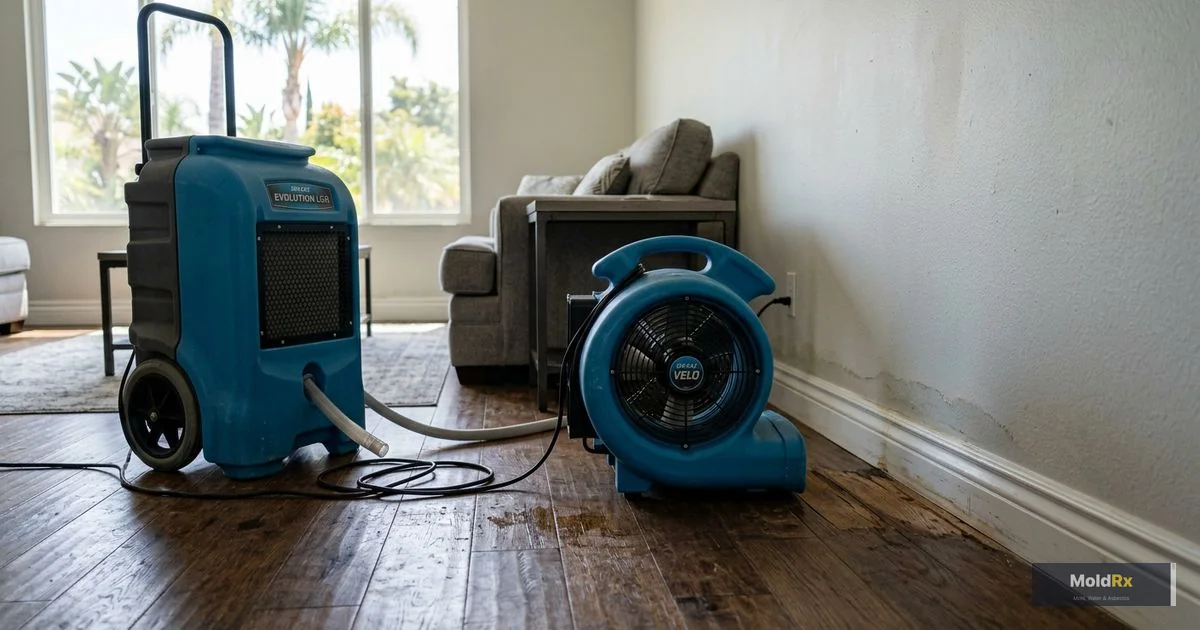
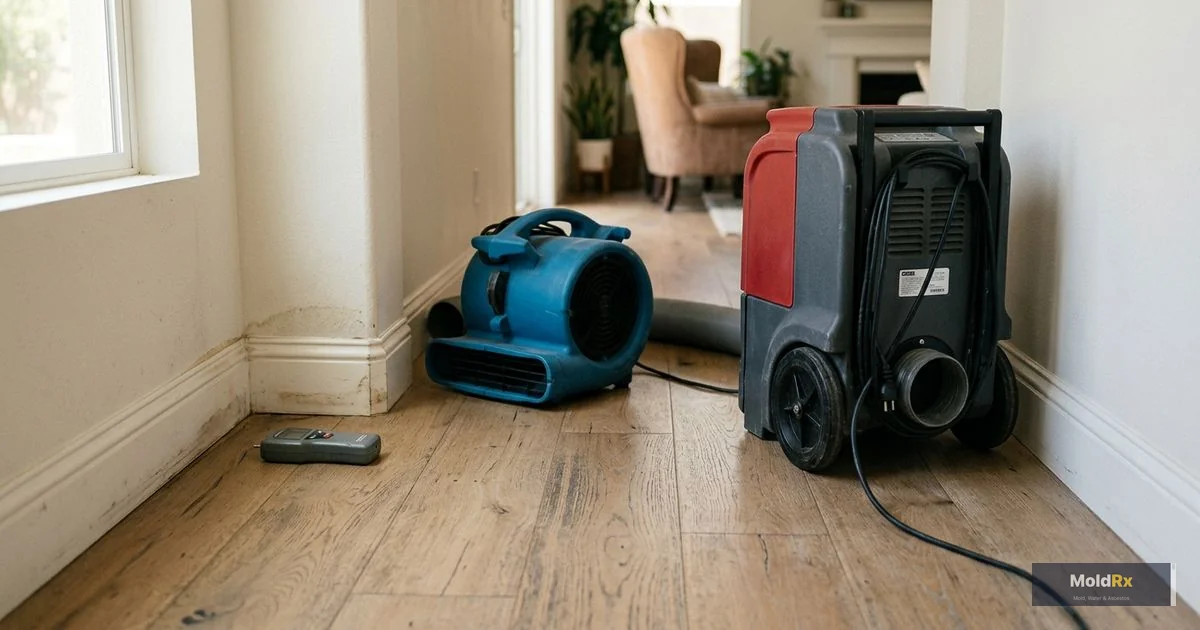
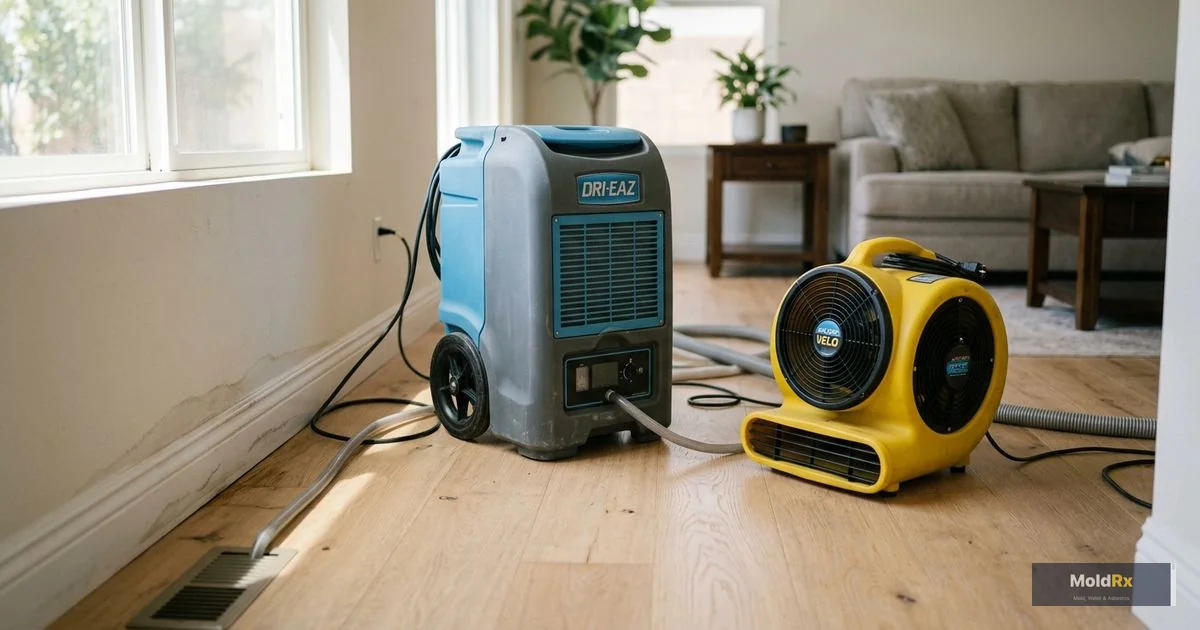
Our vetted specialists bring commercial dehumidifiers rated for alpine conditions, industrial air movers, supplemental heating equipment for winter deployments, and continuous moisture monitoring instruments. Daily readings track moisture content in every affected material. Drying is not declared complete until readings confirm that all materials have reached target moisture content -- verified by instruments, not by touch or appearance.
For Big Bear Lake property owners who are not on-site, our specialists provide daily reports with photos and moisture data, keeping you fully informed about the progress of your restoration.
Phase 3: Sanitization and Contamination Control (Days 3-8)
After structural drying, affected areas undergo thorough cleaning and sanitization. For Category 2 and Category 3 events, antimicrobial treatment is applied to all contacted surfaces. Contaminated materials that cannot be salvaged are removed and properly disposed of.
In Big Bear Lake properties where snowmelt has passed through roofing, insulation, and wall cavities, sanitization addresses the biological contaminants that accumulate in these materials. Old insulation that has absorbed moisture is removed and replaced -- both for sanitation and to improve the property's resistance to future water intrusion events.
Phase 4: Restoration, Repair, and Prevention (Days 5-14+)
Restoration returns your Big Bear Lake property to pre-damage condition while incorporating improvements to reduce future vulnerability:
- Drywall replacement and finishing
- Flooring replacement or repair
- Ceiling repair, including addressing any structural damage from water loading
- Cabinet and fixture repair or replacement
- Painting and finish work
- Pipe insulation upgrades to reduce freeze risk
- Improved weatherproofing at vulnerable roof and wall penetrations
- Drainage improvements to manage snowmelt around foundations
- Recommendations for winterization protocols to protect your property during vacant periods
What You Should Expect From MoldRx
-
Mountain-Specific Expertise. Our vetted specialists understand that Big Bear Lake properties face conditions unlike anywhere else in Southern California. They arrive prepared for elevation, temperature, access limitations, and the unique construction characteristics of mountain homes.
-
Remote Owner Communication. Many Big Bear Lake property owners live in Orange County, Los Angeles, or the Inland Empire and cannot be on-site during restoration. Our specialists provide regular updates with photos, moisture data, and detailed progress reports so you know exactly what is happening at your property.
-
Complete Honesty About Scope. Mountain properties frequently hide damage behind multiple wall layers, in crawl spaces, and within attic assemblies. If our inspection reveals damage beyond what was initially visible -- and this happens often -- you will know immediately. No surprises on the final invoice.
-
Coordination With Mountain Requirements. Big Bear Lake has specific requirements for construction and renovation work. Our vetted specialists understand local permit requirements and work within community guidelines.
Big Bear Lake Areas We Serve
Our vetted water damage restoration specialists serve all of Big Bear Lake and surrounding San Bernardino Mountain communities:
- Big Bear Lake Village -- Commercial and residential properties in the town center
- Boulder Bay -- Lakefront and near-lake properties with elevated moisture exposure
- Fawnskin (North Shore) -- Properties across the lake with limited access during winter storms
- Moonridge -- Ski-area adjacent homes and cabins
- Fox Farm -- Residential area with older cabin stock
- Sugarloaf and Big Bear City -- Eastern valley communities
- Lake Arrowhead, Running Springs, and Crestline -- neighboring mountain communities
ZIP codes served include 92315 (Big Bear Lake) and 92314 (Big Bear City). Whether your property is a lakefront cabin, a Moonridge chalet, a year-round residence, or a vacation rental, our specialists have the equipment and mountain-specific expertise to handle your water damage restoration.
Related Services in Big Bear Lake
Water damage in mountain properties frequently leads to mold problems -- particularly in homes that sit vacant, where moisture can persist undetected for extended periods. In addition to water damage restoration, we also offer Mold Removal in Big Bear Lake, Asbestos Removal in Big Bear Lake, Mold Testing in Big Bear Lake, and Asbestos Testing in Big Bear Lake services to Big Bear Lake property owners. Older Big Bear Lake cabins built before 1980 may contain asbestos in siding, insulation, or flooring materials that require proper handling during water damage restoration.
-> Learn more about remediation services in Big Bear Lake
Frequently Asked Questions
I just arrived at my Big Bear Lake cabin and found it flooded. What should I do right now?
Do not enter standing water if there is any possibility of electrical hazard -- submerged outlets, wet electrical panels, or water near wiring. If you can safely reach the main water shutoff, turn it off. If you can safely reach the electrical panel, turn off power to affected areas. Do not attempt to mop up or vacuum the water -- household equipment is not designed for this volume and presents safety risks. Take photos of everything you can see from a safe position. Then call for emergency restoration immediately. If you cannot be on-site, our specialists can coordinate with a neighbor, property manager, or locksmith to gain access and begin work.
My Big Bear Lake property has been sitting vacant. How do I know if there is water damage?
You may not know until you visit -- which is exactly the problem. Warning signs during a visit include: musty or moldy odors upon entering, visible water stains on ceilings or walls, warped or buckled flooring, soft spots in floors or walls, running water sounds when no taps are open, unexplained spikes in your water bill, and visible mold growth. If you have a property manager or neighbor who checks your cabin periodically, ask them to specifically look for these signs. Smart water leak detection sensors connected to Wi-Fi can provide early warning when you are away.
Does insurance cover frozen pipe damage in Big Bear Lake?
Most homeowner's policies cover sudden pipe bursts, including those caused by freezing. However, there are important caveats. Many policies require that you took reasonable steps to maintain heat in the home or to winterize the property. If your insurer determines that the pipe froze because the home was left unheated without proper winterization, the claim may be denied. Review your policy's vacancy provisions and maintenance requirements. Our vetted specialists document the cause and extent of damage thoroughly to support your claim.
How long does water damage restoration take in a Big Bear Lake mountain property?
Mountain restoration typically takes longer than lowland projects due to several factors: Alpine drying conditions require more time and specialized equipment. Access can be limited by weather and road conditions. The extent of damage in mountain homes is frequently greater than initial appearance suggests due to complex construction layers. Minor events may take 5 to 7 days. Moderate damage with structural drying: 10 to 14 days. Major frozen pipe catastrophes or extensive snowmelt intrusion: 2 to 4 weeks or longer. You will receive an honest timeline after assessment.
Should I winterize my Big Bear Lake property even if I visit regularly?
If there is any period -- even a few days -- when your property will be unoccupied during cold months, winterization steps are strongly recommended. The Big Bear Lake Department of Water and Power advises shutting off water at the stop-and-drain valve, draining interior lines by opening faucets and flushing toilets, and wrapping exposed pipes with insulation or heat tape. A pipe can freeze and burst during a single overnight cold snap. If you maintain heat in the home (minimum 55 degrees), you reduce the risk -- but you do not eliminate it. Pipes in exterior walls, garages, crawl spaces, and attics can still freeze even with the heating system running.
Can water-damaged wood in my Big Bear Lake cabin be saved?
It depends on the type of wood, the duration of exposure, the water category, and whether mold has begun growing. Solid wood structural members and log cabin walls can often be dried and saved if addressed promptly. Engineered wood products, plywood subfloors, and OSB sheathing have lower tolerances -- once delamination begins, replacement is typically necessary. Wood that has been submerged in Category 3 water or that shows active mold growth generally requires removal. Our specialists assess each material individually and provide honest recommendations about what can be saved and what must be replaced.
Your Big Bear Lake Property Cannot Wait
If you have discovered water damage at your Big Bear Lake property -- whether you are standing in it right now or received a call from a neighbor who noticed something wrong -- this is an emergency that will not improve on its own. Water damage in mountain properties escalates faster and hides more effectively than in any other type of Southern California home. Frozen pipes flood for days before anyone notices. Snowmelt saturates walls for weeks before the damage becomes visible. The alpine climate that draws people to Big Bear Lake is the same climate that makes water damage uniquely destructive here.
In the 2023 winter storms alone, 70 homes and businesses in the Big Bear area were destroyed and nearly 200 more suffered major or minor damage. The mountain does not forgive delayed response.
Contact MoldRx now for emergency water damage restoration in Big Bear Lake. Our vetted specialists understand mountain properties, alpine drying conditions, and the unique urgency of remote-owner situations. Fast response. Honest assessment. Professional execution -- even when you cannot be there yourself.