Mold Removal in Big Bear Lake, CA — MoldRx
IICRC-Certified Mold Removal Professionals Serving Big Bear Lake and the San Bernardino Mountains
Mold in a Big Bear Lake cabin is the predictable outcome of a mountain environment that pushes moisture into structures from every direction. Big Bear Lake sits at 6,752 feet in the San Bernardino Mountains with roughly 5,000 permanent residents, 60 to 90 inches of annual snowfall, winter temperatures in the teens, and a housing stock dominated by cabins built between the 1940s and 1990s. Add the defining factor — most properties sit vacant for weeks or months as seasonal rentals, Airbnb listings, and second homes — and mold establishes itself behind walls and under floors long before anyone returns to find it. MoldRx only sends vetted, IICRC-certified mold removal professionals who follow IICRC S520/R520 remediation standards and EPA federal mold guidance — specialists who understand mountain properties and resort-community housing.
Request your free estimate — we'll assess your property and give you straight answers.
Why Mold Grows in Big Bear Lake Properties
Big Bear Lake has approximately 5,044 permanent residents in San Bernardino County, though the population swells to tens of thousands during ski and summer seasons. The city sits at 6,752 feet elevation, served by ZIP codes 92315 and 92314. Its roughly 9,600 housing units have a vacancy rate near 77 percent — one of the highest in California — because the vast majority are vacation cabins, seasonal rentals, and second residences occupied only part of the year.
Snowmelt and Freeze-Thaw Cycling
Big Bear receives 60 to 90 inches of snow annually, with the season stretching from as early as October through May. At 6,752 feet, daily freeze-thaw cycling runs throughout winter — temperatures rise above freezing during the day, melting snow into liquid water that seeps into every gap, then drop below freezing at night, expanding that water as ice and widening gaps further.
Per IICRC S520 and EPA 402-K-01-001, mold colonizes within 24 to 48 hours once moisture enters a wall cavity. Freeze-thaw cycling drives snowmelt into roof penetrations, beneath flashing, through cracked chinking on log cabins, and around aging window frames. Ice dams form at eaves when attic heat melts snow from below — meltwater backs up beneath shingles and soaks insulation and joists. By the time the homeowner returns in spring, mold has had months to establish itself throughout these concealed spaces.
Seasonal Vacancy — The Vacation Home Factor
With 77 percent of housing units vacant at any given time, most Big Bear properties spend weeks or months unoccupied — no heating, no ventilation, no one to detect a leak. Trapped moisture from snowmelt, condensation, or a slow plumbing leak goes unchallenged. A roof leak during a February storm goes undetected until Memorial Day. A pipe that froze in January weeps water behind drywall until the owner arrives in July.
Property managers running vacation rentals face the same challenge at shorter intervals: turnover gaps leave properties unmonitored, and a guest who fails to report a leak creates moisture conditions that compound during the next vacancy.
Lake Proximity and Altitude Condensation
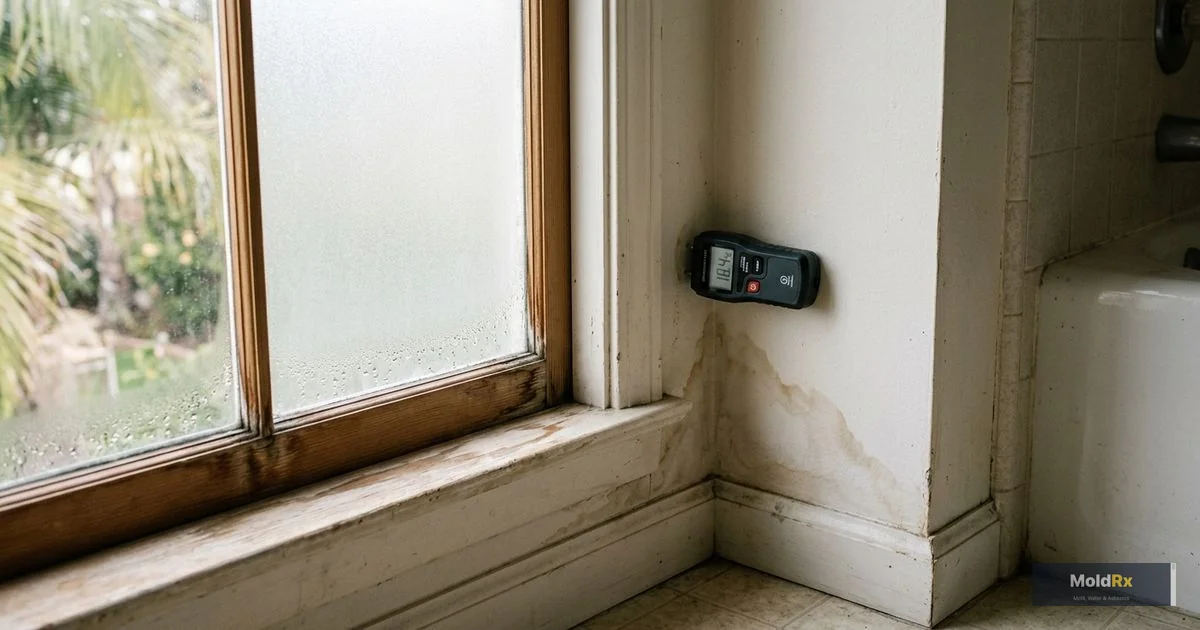
Big Bear Lake — the body of water — spans roughly 2.5 miles across the valley. Properties near the lakeshore experience elevated humidity from lake evaporation that enters cabins and settles on cold surfaces. At 6,752 feet, warm interior air meeting cold exterior walls and single-pane windows produces significant condensation. Metal window frames in 1960s and 1970s cabins conduct cold directly inside, creating condensation zones that feed mold year after year. Even in summer, nighttime lows in the mid-40s against daytime highs near 80 degrees produce daily condensation cycling.
Aging Cabin and Vacation Home Stock
Big Bear's housing developed primarily between the 1940s and 1990s as a resort destination. Original cabins used minimal insulation, no vapor barriers, single-pane windows, and wood-frame construction enduring six-plus decades of freeze-thaw stress. Log cabins develop cracked chinking admitting water directly. A-frames trap warm air at the peak and cold air at grade, producing condensation throughout the structure. Even 1980s and 1990s homes are now 30 to 45 years old with aging plumbing and deteriorating weather seals. Vacation homes receive less maintenance than primary residences — repairs get deferred until the next visit, and by then a minor drip has become an established mold colony.
Signs You Need Professional Mold Removal
Visible Growth Beyond a Small Area
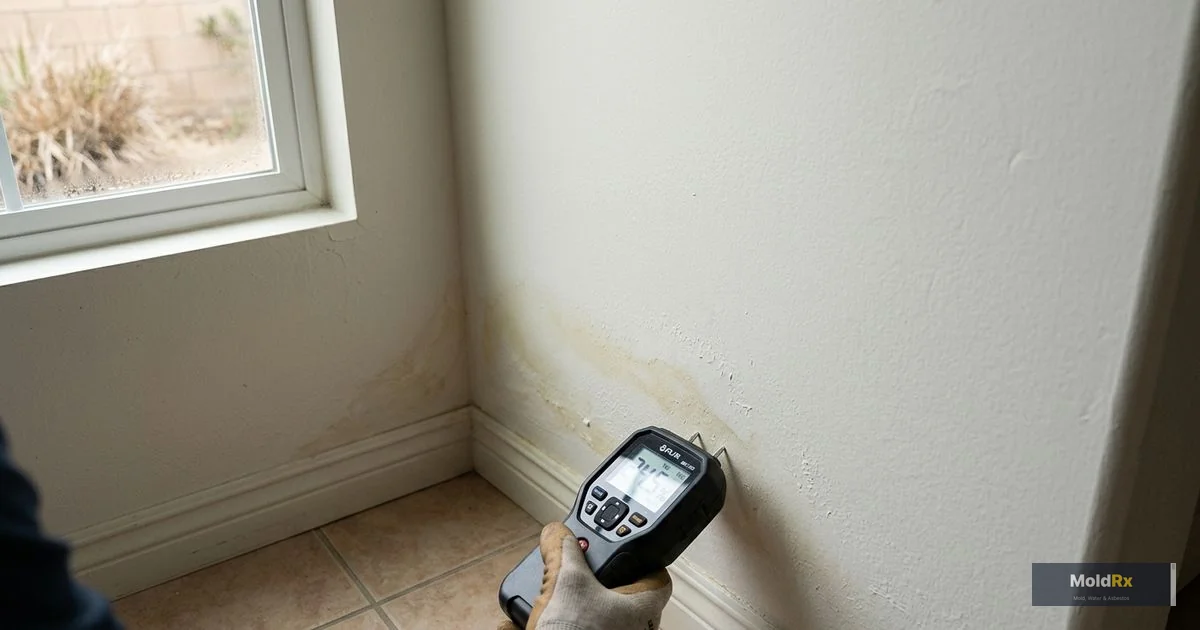
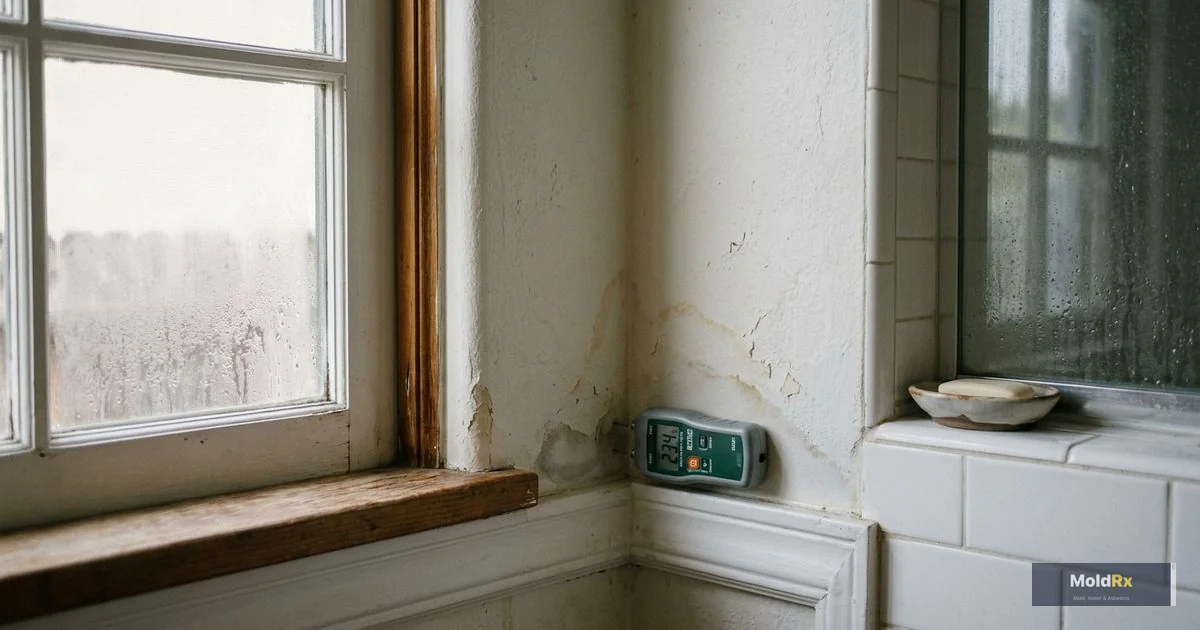
EPA 402-K-01-001 uses 10 square feet as a general threshold for professional remediation. In Big Bear homes, visible growth appears along baseboards on exterior walls where snowmelt penetrated, on ceiling surfaces below ice-dam-damaged roofs, inside bathroom cabinets where plumbing froze, around single-pane window frames, and on surfaces in cabins closed for extended periods.
Musty Odor When Opening a Closed Cabin
The smell that hits when you unlock a cabin vacant for weeks or months is the most common indicator of concealed mold in Big Bear. If a musty odor persists after airing the cabin for 24 hours, mold is growing behind paneling, under subflooring, or within wall cavities. Professional moisture mapping locates the source without unnecessary demolition.
Recurring Mold After Previous Cleanup
Mold that keeps returning means the moisture source was never resolved. In Big Bear, the recurrence pattern typically involves seasonal snowmelt re-wetting the same wall cavity every winter — each cleanup buys months, but the colony reestablishes with the next freeze-thaw cycle.
Water Damage Discovery After Vacancy
Returning to find water staining, warped flooring, or damp drywall signals moisture intrusion active for the duration of your absence. If the property was not professionally dried within the 24-to-48-hour window identified by IICRC S500, a mold assessment is warranted.
Health Symptoms That Worsen Indoors
Nasal congestion, eye irritation, persistent cough, or worsening asthma that improves when you step outside may indicate airborne mold exposure. The CDC notes that mold can cause respiratory symptoms in healthy individuals and more severe reactions in people with existing conditions.
Health Risks of Mold Exposure
According to the EPA, inhaling or touching mold spores can cause sneezing, runny nose, red eyes, and skin rash. The CDC identifies coughing, wheezing, and throat irritation. The World Health Organization's Guidelines for Indoor Air Quality: Dampness and Mould links prolonged exposure to respiratory infections, asthma development in children, and exacerbation of existing respiratory disease.
Big Bear's economy depends on short-term rentals. Guests arriving at a property with active mold — particularly children and elderly visitors — face respiratory risk the WHO specifically identifies. For property managers and Airbnb hosts, a mold complaint triggers habitability liability beyond a bad review. Proactive assessment and remediation documentation protect both guests and owners.
When DIY Mold Removal Isn't Enough
For small surface mold on non-porous materials, EPA guidance allows homeowner cleanup. But these conditions require professional intervention:
- Contamination exceeding 10 square feet — EPA 402-K-01-001 recommends professional remediation at this threshold
- Mold inside HVAC systems or ductwork — Contaminated ductwork circulates spores throughout the cabin; NADCA standards apply
- Structural involvement — Mold behind paneling, inside wall cavities, or within log construction requires containment and HEPA filtration
- Toxic species suspected — Stachybotrys chartarum (black mold) requires IICRC S520-compliant removal and proper PPE
- Category 2 or 3 water involvement — Sewage or contaminated flooding per IICRC S500 requires professional protocols
- Vacation rental or real estate documentation needed — Professional remediation generates records insurers, platforms, and buyers require
A professional assessment tells you whether full remediation is warranted. That assessment is part of our free estimate.
How We Remove Mold in Big Bear Lake Properties
Every remediation follows IICRC S520 standards and the ANSI/IICRC R520 Reference Guide. Our professionals adhere to Cal/OSHA Title 8 Section 5155 exposure limits throughout the process.
1. Inspection and Moisture Mapping
Our specialists map the full scope following EPA 402-K-01-001 assessment protocols. In Big Bear homes, that means checking roof penetrations for ice dam damage, inspecting walls for freeze-thaw infiltration, evaluating plumbing for freeze damage, examining crawl spaces where snow drives moisture inward, and assessing areas exposed to stagnant moisture during vacancy.
2. Containment
Physical barriers and negative air pressure isolate the affected area per IICRC S520 Condition 2 and Condition 3 protocols. HEPA air scrubbers capture airborne spores down to 0.3 microns. In Big Bear cabins with open floor plans and loft construction, containment requires extra attention — open layouts allow spore migration more readily.
3. Removal and Treatment
Mold-damaged materials — drywall, insulation, wood paneling, carpet, subflooring — are removed following IICRC S520 procedures and Cal/OSHA Title 8 Section 5155 limits. Remaining structural surfaces including log and timber framing are treated with EPA-registered antimicrobial solutions that eliminate residual spores and inhibit regrowth.
4. Moisture Correction
Our specialists resolve the underlying cause — ice dam pathways, freeze-damaged plumbing, snowmelt penetrating foundation walls, condensation on single-pane windows, or stagnant humidity in a closed cabin that needs ventilation improvements to survive vacancy.
5. Post-Remediation Verification
Affected areas are checked against IICRC S520 Condition 1 (normal fungal ecology) clearance standards. You receive documentation of scope, materials removed, treatments applied, moisture readings, and verification results — meeting standards required by insurers, real estate professionals, and vacation rental platforms.
Mold Removal vs. Mold Remediation: What's the Difference?
Mold removal refers to physically eliminating mold growth — cutting out contaminated drywall, HEPA-vacuuming surfaces, applying antimicrobial treatments. It addresses the mold already present.
Mold remediation is the broader IICRC S520 process: assessment, containment, removal, moisture correction, and post-remediation verification. Remediation addresses both the mold and the conditions that caused it, verifying return to Condition 1 (normal fungal ecology).
When MoldRx sends professionals to your Big Bear Lake property, they perform full remediation. The ice dam pathway gets sealed, the freeze-damaged plumbing gets replaced, the ventilation gets upgraded for vacancy survival. Any company offering removal without addressing the moisture source is selling a temporary fix — in a mountain community where snowmelt, freeze-thaw cycling, and months of vacancy assault your property, that fix fails before the next season.
Preventing Mold After Remediation
Seasonal Opening and Closing Protocol
When closing a cabin: run a dehumidifier on a timer, leave interior doors open for circulation, set the thermostat to 55 degrees minimum to prevent pipe freezing and reduce condensation, and winterize plumbing if shutting off water entirely. When reopening: inspect every room for musty odors, water staining, or visible growth. Check under sinks, behind toilets, in crawl spaces, and around windows. A consistent protocol catches problems early — before a small intrusion becomes a full remediation project.
Roof Debris and Pine Needle Clearing
Big Bear's dense pine forests deposit needles, cones, and branches on every roof surface. Debris traps moisture against roofing materials, blocks gutters, and accelerates deterioration. Clear organic debris from roofs, valleys, and gutters during fall and after storms. Ensure downspouts discharge at least 4 feet from the foundation. Monitor for ice dams — icicles along the roofline mean attic heat is melting snow that refreezes at the eave, backing water under shingles.
Humidity Control in Closed Cabins
The EPA recommends indoor humidity between 30 and 50 percent. In a vacant cabin, humidity climbs unchecked as trapped moisture, ground moisture, and lake-proximity humidity accumulate in stagnant air. Install a hygrometer and dehumidifier set to 45 percent during vacancy. For rentals, smart humidity monitors alerting property managers remotely catch problems within days rather than months.
Pipe Freeze Prevention
Frozen pipes are among the most common causes of catastrophic water damage and subsequent mold in Big Bear. Insulate all exposed plumbing. Keep the thermostat at 55 degrees minimum during vacancy. Consider an automatic shutoff valve that triggers on abnormal flow. If winterizing by draining the system, ensure complete drainage — residual water in a P-trap can freeze, crack the fitting, and create the slow leak that feeds mold for months.
Regular Professional Inspections
For part-time properties and rentals, schedule a professional moisture assessment at least annually — ideally in late spring after snowmelt and before peak summer rental season. This catches freeze-thaw damage, ice dam aftermath, and slow leaks that developed during winter vacancy before they escalate.
What Sets MoldRx Apart
-
Straight talk, not sales talk. If your mold situation is smaller than you feared, we will tell you. If it is more involved, you will hear that too. We do not manufacture problems to inflate a job.
-
Licensed, insured, IICRC-certified. Our vetted professionals hold IICRC certifications, carry proper California contractor licensing through the CSLB (Contractors State License Board), and maintain insurance coverage required for remediation work in San Bernardino County.
-
Full documentation on every job. Detailed records of work completed, materials removed, treatments applied, and moisture readings — for insurance, real estate transactions, vacation rental compliance, and your records.
-
Mountain property expertise. MoldRx only sends vetted remediation professionals who understand Big Bear's specific challenges — freeze-thaw cycling, ice dams, seasonal vacancy moisture, aging cabin construction, and resort-community housing demands.
Get your free estimate — no obligations, no pressure. Just a clear picture of your situation.
Big Bear Lake Neighborhoods We Serve
MoldRx provides mold removal across every neighborhood in Big Bear Lake and the surrounding mountain communities — ZIP codes 92315 and 92314 — including residential cabins, vacation rentals, and commercial properties.
-
The Village Area — Big Bear Lake's commercial core along Village Drive, surrounded by cabins, condos, and rental properties. The most active short-term rental zone in the valley, with high turnover creating more moisture events and shorter detection windows. Properties range from 1950s cabins to 1990s condos with aging plumbing and building envelopes.
-
Boulder Bay — A scenic lakeside neighborhood along the southern shore near the iconic Boulder Bay inlet. Lake proximity means elevated humidity, and mature trees deposit organic debris on roofs year-round. Cabins here tend toward 1950s through 1970s construction with original windows, minimal insulation, and wood siding that absorbs moisture during snowmelt.
-
Fawnskin (North Shore) — A quiet community backing against the San Bernardino National Forest. Dense tree cover limits sun exposure, extending drying times after rain and snowmelt. The north-facing slope keeps snow on structures longer than south-shore properties. Many cabins date to the 1940s and 1950s, predating modern moisture management.
-
Moonridge — Home to Bear Mountain Ski Resort, encompassing higher-elevation terrain with steeper slopes, heavier snow loading, and more freeze-thaw cycling. Homes range from 1960s A-frames to newer builds, with older stock presenting the highest mold risk from decades of snow exposure.
-
Fox Farm — A quiet residential neighborhood with level roads close to Big Bear Boulevard. Level terrain means slower drainage during snowmelt, and the aging housing stock with mature landscaping creates conditions where ground moisture contributes to persistent dampness at foundation level.
-
Metcalf Bay / Treasure Island — Waterfront properties from the Big Bear Lake Dam through Metcalf Bay, Fisher Cove, and Treasure Island. Lake-adjacent humidity, aging docks channeling moisture toward structures, and premium cabins visited infrequently create a specific profile: high value, high moisture, extended vacancy.
Nearby Communities We Also Serve
- Big Bear City — Unincorporated community east of Big Bear Lake sharing the same mountain valley and climate
- Sugarloaf — South of Big Bear City along Highway 38 with similar elevation and housing stock
- Erwin Lake / Baldwin Lake — Eastern valley communities with the same freeze-thaw and vacancy challenges
- Running Springs / Lake Arrowhead — Western San Bernardino Mountain communities with comparable mountain mold vectors
Related Services in Big Bear Lake
Mold rarely exists in isolation. We also cover:
- Water Damage Restoration in Big Bear Lake
- Mold Testing in Big Bear Lake
- Asbestos Removal in Big Bear Lake
- Asbestos Testing in Big Bear Lake
→ All remediation services in Big Bear Lake
Frequently Asked Questions
How long does mold remediation take in a Big Bear Lake cabin?
Most projects take 3 to 7 days. A single-room issue may wrap in 2 days; multi-room remediation involving freeze-thaw damage, ice dam infiltration, or extended vacancy moisture can take a week or longer. Mountain logistics — access roads, elevation, weather — can affect scheduling during winter. We will give you a realistic timeline after assessing your property.
Do I need mold testing before removal starts?
If mold is visible, testing is not always required — the priority is removal and moisture correction. Testing becomes valuable when you suspect hidden mold after extended vacancy, need insurance or real estate documentation, or want to establish a baseline for a vacation rental property.
Can I stay in my cabin during remediation?
Usually, yes. Containment and HEPA filtration isolate spores from living areas. For larger projects or if household members have respiratory sensitivities, we may recommend temporary relocation during intensive phases. Vacation rental properties should be taken offline during remediation.
My cabin has been closed for months and smells musty — is that mold?
Likely. A musty odor persisting after 24 hours of airing out indicates active growth in a concealed space. In Big Bear properties vacant for extended periods, moisture from snowmelt, frozen pipe leaks, or condensation frequently feeds mold behind walls, under flooring, or in attic spaces. Professional moisture assessment confirms the source without unnecessary demolition.
I manage vacation rentals in Big Bear. How do I prevent mold between guests?
Run exhaust fans during and after checkout, check under sinks and around windows, maintain the thermostat at 55 degrees minimum between bookings, and keep interior doors open. Install smart humidity monitors alerting remotely when levels exceed 50 percent. Schedule professional moisture assessment annually — ideally late spring before summer season. Documentation of proactive maintenance protects against liability if a guest raises a habitability concern.
How does Big Bear's elevation affect mold risk?
At 6,752 feet, Big Bear Lake faces conditions valley cities never encounter: 60 to 90 inches of annual snowfall, daily freeze-thaw cycling, ice dam formation, and extreme temperature differentials between heated interiors and frigid exteriors. These drive moisture into building materials through mechanisms absent at lower elevations. Add 77 percent housing vacancy and the risk profile is fundamentally different from any Inland Empire or coastal city.
Is mold common in Big Bear Lake's older cabins?
Extremely common. Cabins from the 1940s through 1970s were built as seasonal shelters with minimal insulation, no vapor barriers, single-pane windows, and wood construction enduring 50 to 80 years of freeze-thaw stress. Log cabins develop cracked chinking admitting water directly. A-frames trap warm air at the peak and cold air at grade, producing condensation throughout.
What happens if a pipe freezes and bursts while my cabin is vacant?
A frozen pipe that cracks and thaws creates catastrophic water damage. Per IICRC S500, mold colonization begins within 24 to 48 hours. A pipe that bursts in January and is not discovered until March has fed mold growth for two months. If you return to evidence of water damage after vacancy, do not assume it dried safely — professional assessment is essential.
What is the difference between mold removal and mold remediation?
Removal is the physical elimination of mold. Remediation is the complete IICRC S520 process — assessment, containment, removal, moisture correction, and verification. MoldRx professionals perform full remediation, addressing both the mold and its moisture source — the ice dam pathway, the freeze-damaged plumbing, the ventilation deficiency.
How should I close up my Big Bear cabin to prevent mold during winter?
Set the thermostat to 55 degrees minimum. Leave interior doors open. Run a dehumidifier on a timer. Winterize plumbing if shutting off water — drain all lines, fixtures, and the water heater completely. Clear pine needles and debris from the roof and gutters. Check that windows and doors seal properly. A smart leak detector at the water heater and under sinks provides remote alerts to moisture events during your absence.
Get Mold Removal in Big Bear Lake
Mold spreads. Snowmelt keeps entering through ice dam pathways every winter. Freeze-thaw cycling keeps widening every crack in aging cabin construction. Vacant properties keep accumulating moisture with no one there to notice. The longer these conditions go unaddressed, the further contamination reaches into your property's structure and your family's — or your guests' — air quality.
MoldRx only sends vetted remediation professionals who understand Big Bear Lake properties — mountain snowmelt, freeze-thaw stress, seasonal vacancy moisture, aging cabin stock, and the demands of a resort community where most homes sit empty more than occupied. No guesswork. No runaround.
Call MoldRx for your free estimate — (888) 609-8907. Clear answers. Honest guidance. Work done right.