Mold Removal in Barstow, CA — MoldRx
IICRC-Certified Mold Removal Professionals Serving Barstow and the High Desert
Mold in Barstow seems like a contradiction — you live in one of the driest stretches of the Mojave Desert, where rain barely registers on the gauge. But desert homes face their own moisture traps, and the ones in Barstow are persistent: swamp coolers running six months a year, aging mid-century plumbing, and wild temperature swings that build condensation inside wall cavities. MoldRx only sends vetted, IICRC-certified mold removal professionals who follow IICRC S520/R520 remediation standards and EPA federal mold guidance — specialists who work Barstow and the High Desert every week.
Request your free estimate — we'll assess your property and give you straight answers.
Why Mold Grows in Barstow Homes
Barstow sits at 2,106 feet along the Mojave River at the junction of Interstates 15 and 40 in San Bernardino County. The city is home to roughly 25,000 residents and serves as a gateway between Los Angeles and Las Vegas. With annual rainfall averaging just 4 to 5 inches, homeowners assume moisture is the last thing they need to worry about. That assumption is exactly why mold gets a head start here — nobody's looking for it until it's already spread.
Temperature Extremes and Condensation
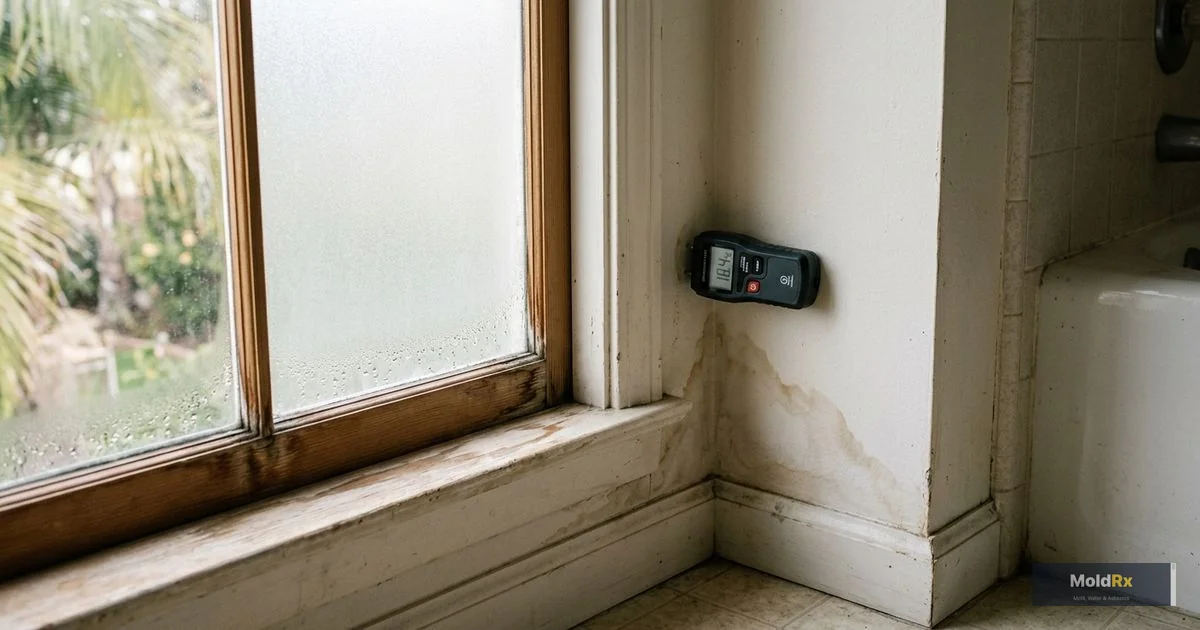
Barstow's climate is punishing on structures. Summer highs average 102 degrees and routinely exceed 110 during heat waves. Winter lows drop near freezing, with nighttime temperatures in the mid-30s from December through February. That 60-to-70-degree daily temperature swing drives condensation onto the interior surfaces of exterior walls, around window frames, and inside uninsulated attic spaces and crawl spaces. The moisture is invisible until mold has already taken hold. According to IICRC S520 guidelines and the EPA's Mold Remediation in Schools and Commercial Buildings (EPA 402-K-01-001), mold colonizes within 24 to 48 hours once a surface stays wet — and condensation in a Barstow wall cavity can persist for days before evaporating in the desert heat.
Swamp Coolers — The High Desert's Hidden Mold Source
Evaporative coolers are the default cooling system in Barstow. They're cheap to run and effective when outdoor humidity is low. But they pump moisture-laden air directly into the home, pushing indoor humidity to 50-70% — well above the 30-50% range the EPA recommends for indoor environments. The wet cooler pads themselves become breeding grounds for mold and bacteria when not cleaned and replaced regularly. Every time the unit runs, it can distribute spores through ductwork into bedrooms, kitchens, and closets. Given that Barstow's cooling season stretches from April through October, that's six or more months of continuous moisture introduction. Swamp coolers are the single most common mold source we see in desert properties.
Barstow's Housing Stock
The median construction year for Barstow homes is 1969 — making the typical house over 55 years old. Many homes in the 92311 ZIP code date to the 1940s and 1950s, built during wartime and postwar growth tied to the railroad and nearby military installations. These are single-family ranch-style homes with stucco exteriors, original cast-iron or galvanized plumbing, and construction methods that predate modern moisture barriers and building codes. Neighborhoods like Lenwood, the historic downtown area along Main Street, and the residential streets off Barstow Road contain some of the oldest housing stock in the region. Plumbing failures, deteriorated roof flashing, and cracked slab foundations are routine in homes of this age. Slab leaks are especially common — water migrates under vinyl flooring and behind baseboards for weeks before visible damage appears, giving mold ample time to colonize wall cavities and subfloor materials.
Monsoon Season and Flash Flooding
Late-summer monsoon moisture reaches the Mojave Desert between July and September. Barstow's 4 to 5 inches of annual rain falls largely during these concentrated bursts. The flat desert terrain and hardpan soils shed water rather than absorb it, and sudden storms push runoff against foundations and into garages. Properties near the Mojave River wash and in lower-lying sections of the city face the greatest risk. A single flash-flood event can force water through foundation cracks and under door thresholds — and if the interior isn't dried within 24 to 48 hours, mold growth follows.
Signs You Need Professional Mold Removal
Not every dark spot on a wall requires a remediation crew — but certain indicators mean the situation has moved beyond what household cleaning products can address. Here's what to watch for in Barstow homes.
Visible Growth Beyond a Small Area
The EPA's Mold Remediation in Schools and Commercial Buildings (EPA 402-K-01-001) uses ten square feet as the threshold where professional remediation becomes the recommended course of action. In Barstow homes, mold commonly appears around swamp cooler vents and ductwork registers, along baseboards near exterior walls where condensation collects during extreme temperature cycles, inside bathroom cabinets where aging plumbing connections sweat, and on ceiling drywall beneath uninsulated attic spaces. If the visible growth extends beyond a small, contained patch, the colonization behind the surface is almost certainly more extensive.
Persistent Musty Odor Without Visible Mold
A musty smell that persists despite cleaning typically indicates hidden mold. In Barstow's older housing stock — many homes dating to the 1940s through 1960s — the most common concealment zones are wall cavities along exterior walls (where condensation builds during 60-to-70-degree daily temperature swings), HVAC ductwork contaminated by months of swamp cooler moisture, and the cooler housing itself. The odor comes from microbial volatile organic compounds (MVOCs), and it often intensifies when the evaporative cooler runs and pushes air through colonized ducts.
Recurring Mold After Previous Cleanup
If you've scrubbed mold off a surface and it returned within weeks or months, the moisture source was never resolved. Surface cleaning removes what's visible but leaves the colony established inside the wall cavity, beneath flooring, or within porous materials like drywall and insulation. In Barstow homes with original galvanized plumbing, recurring mold often traces back to slow pipe corrosion or joint failures that introduce moisture behind walls for weeks before any visible damage appears.
Water Damage History
Any home that has experienced water intrusion — a slab leak through a cracked mid-century foundation, a monsoon-driven roof leak, a swamp cooler overflow, or a burst supply line — is at elevated risk. IICRC S520 and the EPA both document a 24-to-48-hour colonization window once materials stay wet. Barstow properties near the Mojave River wash and in lower-lying sections of the city face particular exposure during late-summer monsoon storms. Flash-flood events can force water through foundation cracks and under door thresholds. If water entered your home and the area wasn't professionally dried within that window, mold growth is probable — even if nothing is visible yet.
Health Symptoms That Worsen Indoors
The CDC documents that mold exposure can cause nasal stuffiness, throat irritation, coughing, wheezing, eye irritation, and skin irritation — and that symptoms tend to worsen in affected indoor environments. If household members experience respiratory symptoms that improve when they leave the home and return when they come back, mold should be investigated. This alone doesn't confirm contamination, but combined with any of the other signs above, it justifies a professional evaluation.
Health Risks of Mold Exposure
Mold is not just a property problem — it's a health concern backed by consistent findings from the EPA, CDC, and the World Health Organization's WHO Guidelines for Indoor Air Quality: Dampness and Mould. Prolonged exposure to elevated indoor mold levels is associated with respiratory symptoms, allergic reactions, and aggravation of asthma. The severity depends on the species present, the concentration of spores, the duration of exposure, and the individual's health profile.
Populations at Higher Risk
Not everyone reacts to mold the same way. Certain groups face disproportionate risk:
- Children — Over 40% of Barstow households include children under 18. The WHO identifies children as particularly susceptible to the respiratory effects of indoor dampness and mold, including the development of new asthma cases in previously healthy children.
- Individuals with asthma or allergies — The CDC recommends that people with mold allergies or asthma avoid exposure to mold, as it can trigger attacks and worsen chronic symptoms.
- Elderly residents — Older adults may have reduced respiratory capacity and immune function that make mold exposure more consequential, particularly in Barstow's aging housing stock where deferred maintenance compounds the risk.
- Immunocompromised individuals — People undergoing chemotherapy, organ transplant recipients, and those with HIV/AIDS or other immune-suppressing conditions face risk of serious fungal infections from mold exposure.
The goal is not to create alarm — it's to provide the factual basis for why timely remediation matters, particularly in homes with vulnerable occupants.
When DIY Mold Removal Isn't Enough
The EPA advises that homeowners can generally handle small areas of surface mold on non-porous materials. But there are clear situations where professional remediation is the appropriate response:
- Contamination exceeding ten square feet — EPA 402-K-01-001 sets this as the threshold where professional protocols, containment, and protective equipment become necessary.
- Mold inside HVAC systems or ductwork — Swamp cooler contamination is the most common mold source in Barstow homes, where the cooling season stretches six months or longer. Once mold colonizes ductwork, every cooling cycle distributes spores throughout the home. Duct cleaning for mold contamination should follow NADCA (National Air Duct Cleaners Association) standards in coordination with remediation.
- Structural involvement — Mold growing behind drywall, beneath subfloor materials, or inside wall cavities cannot be addressed with surface cleaning. In Barstow's mid-century homes, aging construction materials and the absence of modern moisture barriers make structural involvement more common.
- Toxic species suspected — Stachybotrys chartarum and other toxigenic molds require the full IICRC S520 remediation protocol regardless of the size of the affected area. Species identification requires laboratory analysis — visual identification alone is unreliable.
- Category 2 or Category 3 water involvement — IICRC S500 classifies water damage by contamination level. Gray water (Category 2) and black water (Category 3) intrusions carry additional biohazard concerns that compound mold risk and require professional handling.
- Insurance or real estate documentation needed — DIY cleanup produces no verifiable records. Professional remediation generates the inspection reports, moisture readings, scope-of-work documentation, and post-remediation verification that insurers, lenders, and real estate professionals require.
If any of these conditions apply, the responsible path is professional assessment. Request a free estimate — we'll tell you exactly where you stand.
How We Remove Mold in Barstow Properties
Every remediation follows a structured process built on IICRC S520 standards and the companion ANSI/IICRC R520 Reference Guide — the industry benchmarks for professional mold remediation recognized by insurers, public health agencies, and the courts. Our professionals also adhere to Cal/OSHA Title 8 regulations for worker and occupant safety throughout the process.
1. Inspection and Moisture Mapping
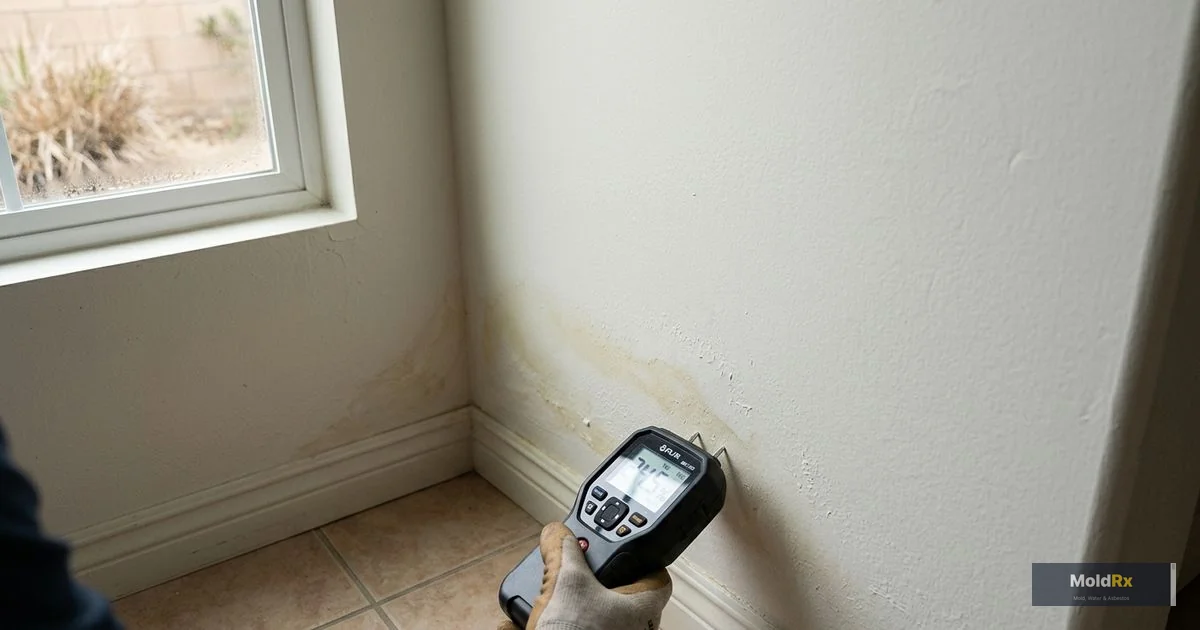
Before anything is torn out, our specialists map the full scope following the assessment protocols outlined in EPA 402-K-01-001. In Barstow homes, that means checking swamp cooler connections and ductwork, testing under-slab plumbing for slow leaks in aging mid-century foundations, examining wall cavities where condensation collects during extreme temperature cycles, and determining whether the moisture source is still active or resolved. You'll know exactly what we're dealing with before work begins.
2. Containment
Physical barriers and negative air pressure isolate the affected area per IICRC S520 Condition 2 and Condition 3 containment protocols, depending on the scope of contamination. HEPA air scrubbers run continuously to capture airborne spores down to 0.3 microns. This prevents cross-contamination to unaffected rooms — especially important in homes with children. Over 40% of Barstow households include children under 18, and the CDC, EPA, and the World Health Organization's WHO Guidelines for Indoor Air Quality: Dampness and Mould all identify children as more vulnerable to mold-related respiratory effects.
3. Removal and Treatment
Mold-damaged materials — drywall, insulation, carpet padding, porous surfaces that can't be effectively decontaminated — are removed and disposed of following IICRC S520 procedures and Cal/OSHA permissible exposure limits under Title 8 §5155 for airborne contaminants. Remaining structural surfaces are treated with EPA-registered antimicrobial solutions that eliminate residual spores and inhibit regrowth. Every surface in the containment zone gets addressed.
4. Moisture Correction
Removing mold without fixing the water source guarantees it returns. Our specialists identify and resolve the underlying cause — whether that's a corroded galvanized pipe in a 1950s home, an unmaintained swamp cooler, condensation from insufficient insulation, or water intrusion from a compromised slab. You'll get specific guidance on what needs to change to keep the problem from recurring.
5. Post-Remediation Verification
Work isn't finished until conditions are verified. Affected areas are checked against IICRC S520 Condition 1 (normal fungal ecology) clearance standards to confirm remediation was successful. You receive documentation of everything performed — scope of work, materials removed, antimicrobial treatments applied, moisture readings, and post-remediation verification results. This documentation meets the evidentiary standards insurers and real estate professionals require.
What Sets MoldRx Apart
-
Straight talk, not sales talk. If your mold situation is smaller than you feared, we'll tell you. If it's more involved, you'll hear that too. We don't manufacture problems to inflate a job.
-
Licensed, insured, IICRC-certified. Our vetted professionals hold IICRC certifications, carry proper California contractor licensing through the CSLB (Contractors State License Board), and maintain the insurance coverage required for professional remediation work in San Bernardino County. They have the credentials and field experience to handle Barstow's specific mold challenges — from swamp cooler contamination to slab-leak remediation in mid-century homes.
-
Full documentation on every job. Detailed records of the work completed, materials removed, treatments applied, and moisture readings. This protects you with insurance, in real estate transactions, and for your own peace of mind.
-
Family-owned accountability. MoldRx is not a call center routing you to whoever's available. We only send vetted remediation professionals we stand behind.
Get your free estimate — no obligations, no pressure. Just a clear picture of your situation.
Barstow Neighborhoods We Serve
MoldRx provides mold removal across every neighborhood in Barstow — ZIP codes 92311, 92312 — including residential, commercial, and multi-family properties.
- Barstow Heights — One of the city's most established residential areas, with homes dating back to 1954. The aging housing stock means original plumbing, deteriorated roof flashing, and cracked slab foundations are routine — all conditions that introduce moisture behind walls and under flooring where mold colonizes undetected.
- Lenwood — A quiet rural neighborhood along historic Route 66 south of the main city, featuring single-family homes on deep desert lots. Many properties rely on older well and septic systems, and the combination of aging infrastructure and limited maintenance access makes slow leaks and moisture intrusion harder to catch before mold establishes.
- Historic Downtown / Main Street — The oldest residential core of Barstow, with homes and mixed-use properties dating to the 1940s wartime boom. Original cast-iron and galvanized plumbing, pre-code construction without modern moisture barriers, and decades of temperature cycling make these properties among the highest-risk for hidden mold in the region.
- Montara Estates — A well-established neighborhood with modestly sized single-family homes. The reasonably priced housing here includes many properties now 30 to 40 years old, where aging water heaters, corroding supply lines, and original swamp cooler installations are common moisture sources that lead to mold behind drywall and in bathroom cavities.
- Skyline North — A family-oriented residential area in the northern part of the city, considered one of Barstow's more desirable neighborhoods. Homes here are primarily single-family on slab foundations, and the area's slightly higher elevation amplifies overnight temperature drops that drive condensation onto interior wall surfaces during winter months.
- MCLB Barstow Area — Residential streets surrounding Marine Corps Logistics Base Barstow, with a mix of military family housing and civilian rentals. High tenant turnover can delay detection of slow plumbing leaks and swamp cooler issues, giving mold more time to spread before anyone reports the problem.
- Barstow Road Corridor — The residential neighborhoods flanking Barstow Road between Main Street and the I-15 interchange, with homes spanning the 1950s through the 1980s. This corridor includes some of the city's densest housing, where aging flat-roof construction and shared-wall conditions in duplexes and fourplexes increase the risk of moisture migration and mold spread between units.
Nearby Communities We Also Serve
Our vetted professionals also cover the surrounding Mojave Desert region, carrying the CSLB licensing and IICRC credentials required for residential and commercial mold remediation in San Bernardino County:
- Victorville — The Victor Valley's largest city, 35 miles south, where swamp cooler contamination and slab leaks in 1980s-era subdivisions drive consistent mold remediation demand
- Hesperia — Over 102,000 residents along the Mojave River corridor, with housing stock now reaching the age where plumbing failures and condensation problems accelerate
- Apple Valley — High Desert community of 76,000 east of Victorville, where extreme temperature swings and evaporative cooler reliance create the same hidden mold conditions
- Adelanto — Growing High Desert city south of Barstow where newer slab-on-grade construction and desert climate moisture traps produce mold risk in homes of every age
- Hinkley — Unincorporated community west of Barstow with rural properties, older well-water systems, and limited infrastructure that allow moisture problems to persist longer before detection
- Yermo — Small desert community east of Barstow along I-15, with older housing stock and extreme summer heat that intensifies condensation cycles inside poorly insulated homes
Related Services in Barstow
Mold rarely exists in isolation. If you're dealing with water damage, need testing before remediation, or own a pre-1980s property that may contain asbestos, we cover those too:
- Water Damage Restoration in Barstow
- Mold Testing in Barstow
- Asbestos Removal in Barstow
- Asbestos Testing in Barstow
→ All remediation services in Barstow
Frequently Asked Questions
How long does mold remediation take in Barstow?
Most projects take 2 to 5 days depending on the size of the affected area, the materials involved, and whether structural repairs are needed. A single-room swamp cooler contamination issue may wrap in a day. Multi-room remediation involving slab-leak damage in an older Barstow home can take a week or longer. We'll give you a realistic timeline after assessing your property.
Do I need mold testing before removal starts?
If mold is visible, testing isn't always required — the priority is removal and moisture correction. Testing becomes valuable when you suspect hidden mold (behind walls, under flooring), need documentation for insurance, or are involved in a real estate transaction. We'll recommend the right approach for your situation.
Will my homeowner's insurance cover mold removal?
It depends on the cause. Mold resulting from a sudden, covered event — like a burst pipe — is often covered. Mold from long-term deferred maintenance typically is not. Our documentation is designed to support legitimate insurance claims with clear evidence of the cause, scope, and remediation performed. Call for a free estimate to discuss your specific situation.
Can I stay home during remediation?
Usually, yes. Proper containment and HEPA filtration keep spores isolated from your living areas during the work. For larger projects, or if anyone in the household has asthma or respiratory sensitivities, we may recommend staying elsewhere during the most intensive removal phases. We'll discuss this during your assessment.
Are swamp coolers really a mold risk?
Yes — evaporative coolers are the most common mold source we encounter in High Desert homes. The wet pads breed mold and bacteria, and the blower distributes spores through the house every time it runs. Regular cleaning (at least 3 to 4 times per cooling season), timely pad replacement, and proper winterization significantly reduce this risk. In Barstow, where the cooling season stretches six months or longer, that maintenance schedule is especially critical. If you're seeing mold around vents or smelling a musty odor when the cooler kicks on, it's time for a professional assessment.
How do I know if I have mold behind my walls?
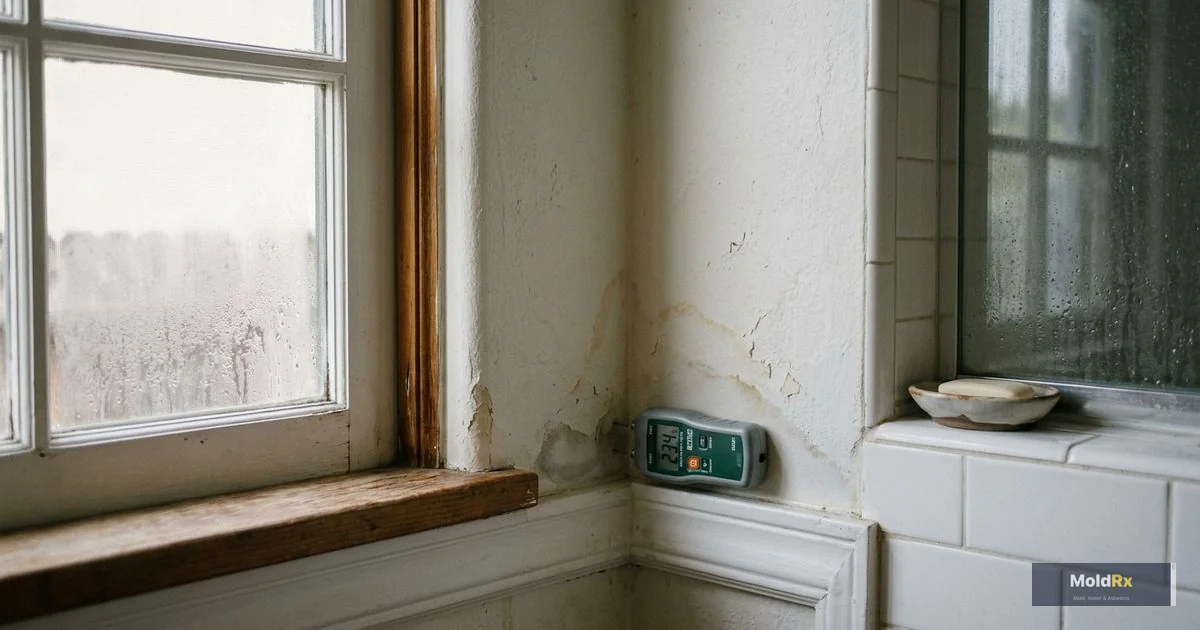
Common indicators include a persistent musty smell that doesn't go away with cleaning, visible water staining or discoloration on walls or ceilings, peeling paint or bubbling wallpaper, and worsening allergy symptoms indoors. In Barstow homes, pay special attention to areas near swamp cooler ducts, exterior walls (condensation zones), under bathroom vanities, and anywhere original plumbing runs through walls or the slab foundation. Homes built in the 1940s through 1960s deserve extra scrutiny around aging pipe connections. If you suspect hidden mold, a professional inspection with moisture mapping can confirm what's there without unnecessary demolition.
Get Mold Removal in Barstow
Mold spreads. The longer moisture stays unchecked, the further contamination reaches into your walls, your HVAC system, and your air quality. In a city where over 40% of households include children, that matters.
MoldRx only sends vetted remediation professionals who understand High Desert properties — the swamp cooler issues, the slab leaks in mid-century foundations, the condensation patterns that come with Barstow's extreme temperature swings. No guesswork. No runaround.
Call MoldRx for your free estimate — (888) 609-8907. Clear answers. Honest guidance. Work done right.