Mold Removal in Apple Valley, CA — MoldRx
IICRC-Certified Mold Removal Professionals Serving Apple Valley and the High Desert
Mold is the last thing most Apple Valley homeowners expect to deal with. You chose the High Desert for open space, dry air, and sunshine — not moisture problems. But the desert's extreme temperature swings, reliance on evaporative coolers, and aging plumbing conspire to create conditions that let mold take hold behind walls and inside ductwork before anyone notices. MoldRx only sends vetted, IICRC-certified mold removal professionals who follow IICRC S520/R520 remediation standards and EPA federal mold guidance — specialists who work Apple Valley and the High Desert every week.
Request your free estimate — we'll assess your property and give you straight answers.
Why Mold Grows in Apple Valley Homes
Apple Valley sits at approximately 2,900 feet in the western Mojave Desert, just east of Victorville in San Bernardino County. With a population of roughly 76,000, it is one of the largest communities in the Victor Valley. Homeowners here trust the arid climate to keep moisture problems at bay. It doesn't — and that false confidence is exactly why mold often spreads further in Apple Valley homes before anyone catches it.
Temperature Swings and Condensation
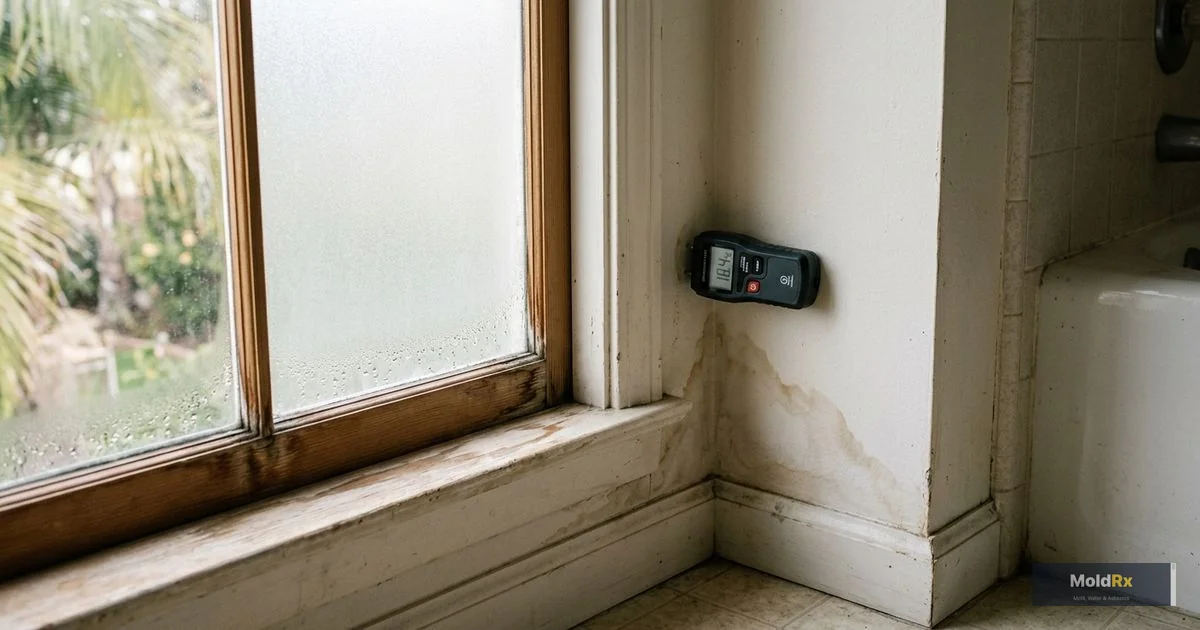
Summer highs in Apple Valley regularly reach the mid-90s, and triple-digit days are common from June through September. Winter nights routinely drop into the upper 30s and low 40s, with occasional freezing temperatures in December and January. That 50-to-60-degree daily temperature swing creates condensation on the interior side of exterior walls, around single-pane windows, and inside poorly insulated attic spaces. The moisture collects in places homeowners rarely inspect — and according to IICRC S520 guidelines and the EPA's Mold Remediation in Schools and Commercial Buildings (EPA 402-K-01-001), mold colonizes within 24 to 48 hours once conditions are right.
Swamp Coolers — The High Desert's Hidden Mold Source
Evaporative coolers are standard equipment across Apple Valley. They make sense for desert cooling — energy-efficient and effective in low humidity. But they pump moisture-laden air directly into your home. A running swamp cooler raises indoor humidity to 50-70%, well above the 30-50% range the EPA recommends for indoor environments and far past the threshold where mold stays dormant. The wet cooler pads themselves become breeding grounds for mold and bacteria if not cleaned and replaced multiple times per cooling season. Every time the unit kicks on, it can push spores through the ductwork and into bedrooms, kitchens, and living areas. This is the single most common mold source we encounter in High Desert properties.
Apple Valley's Housing Stock
The median construction year for Apple Valley homes is 1989, though development stretches back to the 1940s when the area was marketed as a desert retreat. Roughly 78% of the town's housing is detached single-family homes, many sitting on concrete slab foundations. Neighborhoods like Desert Knolls and the areas around the 92307 ZIP code include homes primarily built in the 1970s, while Jess Ranch, Skyline Ranch, and newer subdivisions east of Apple Valley Road were built through the 2000s. Regardless of era, homes that are now 20 to 50 years old share the same vulnerabilities — failing plumbing connections, degraded roof seals, and cracked caulking around windows and tub surrounds. Slab leaks are a persistent issue in Apple Valley. Water migrates under flooring and behind baseboards for weeks before the damage surfaces, and by that point mold has already established itself in the wall cavity.
Monsoon Season and Flash Flooding
Late-summer monsoon moisture reaches the Victor Valley between July and September. Apple Valley averages only about 4 to 5 inches of rain annually, but that precipitation is concentrated in sudden, intense bursts. Flash storms overwhelm flat desert terrain, push water against foundations, and exploit every gap in roofing and window flashing. Properties near washes or in lower-lying areas between Bear Valley Road and the Mojave River corridor face the greatest exposure during these seasonal downpours.
Signs You Need Professional Mold Removal
Not every dark spot on a wall is a crisis — but certain indicators mean the problem has moved beyond what a sponge and bleach solution can handle. Here's what to watch for in Apple Valley homes.
Visible Growth Beyond a Small Area
The EPA's Mold Remediation in Schools and Commercial Buildings (EPA 402-K-01-001) uses ten square feet as the threshold where professional remediation becomes the recommended course of action. In Apple Valley homes, mold commonly appears around swamp cooler vents and registers, along baseboards near exterior walls where condensation accumulates, inside bathroom cabinets where plumbing connections sweat, and on ceiling drywall beneath poorly insulated attic spaces. If what you're seeing extends beyond a small, contained patch, the growth behind the visible surface is almost certainly larger.
Persistent Musty Odor Without Visible Mold
A musty smell that won't go away — even after cleaning — usually points to hidden mold. In High Desert homes, the most common concealment zones are wall cavities along exterior-facing walls (where condensation builds during temperature swings), HVAC ductwork contaminated by swamp cooler moisture, and the cooler housing itself. The odor is produced by microbial volatile organic compounds (MVOCs), and it often intensifies when the evaporative cooler kicks on and pushes air through colonized ducts.
Recurring Mold After Previous Cleanup
If you've cleaned mold off a surface and it came back within weeks or months, the moisture source was never resolved. Surface cleaning removes what's visible but does nothing about the colony established inside the wall cavity, beneath flooring, or within porous materials like drywall and insulation. Recurring mold is a reliable sign that the underlying moisture pathway — a slow plumbing leak, condensation pattern, or swamp cooler issue — remains active.
Water Damage History
Any home that has experienced water intrusion — a slab leak, a monsoon-driven roof leak, a swamp cooler overflow, or even a burst washing machine line — is at elevated risk. IICRC S520 and the EPA both document a 24-to-48-hour colonization window once materials stay wet. Apple Valley properties near the Mojave River corridor and in lower-lying areas between Bear Valley Road and Highway 18 face particular exposure during late-summer monsoon storms. If water entered your home and the affected area wasn't professionally dried within that window, mold growth is probable — even if you can't see it yet.
Health Symptoms That Worsen Indoors
The CDC documents that mold exposure can cause nasal stuffiness, throat irritation, coughing, wheezing, eye irritation, and skin irritation — and that symptoms tend to worsen in affected indoor environments. If household members experience respiratory symptoms that improve when they leave the home and return when they come back, mold should be investigated. This alone doesn't confirm contamination, but combined with any of the other signs above, it justifies a professional evaluation.
Health Risks of Mold Exposure
Mold is not just a property problem — it's a health concern backed by consistent findings from the EPA, CDC, and the World Health Organization's WHO Guidelines for Indoor Air Quality: Dampness and Mould. Prolonged exposure to elevated indoor mold levels is associated with respiratory symptoms, allergic reactions, and aggravation of asthma. The severity depends on the species present, the concentration of spores, the duration of exposure, and the individual's health profile.
Populations at Higher Risk
Not everyone reacts to mold the same way. Certain groups face disproportionate risk:
- Children — Nearly 39% of Apple Valley households include children under 18. The WHO identifies children as particularly susceptible to the respiratory effects of indoor dampness and mold, including the development of new asthma cases in previously healthy children.
- Individuals with asthma or allergies — The CDC recommends that people with mold allergies or asthma avoid exposure to mold, as it can trigger attacks and worsen chronic symptoms.
- Elderly residents — Older adults, including residents of Apple Valley's 55+ communities like Sun City and Jess Ranch, may have reduced respiratory capacity and immune function that make mold exposure more consequential.
- Immunocompromised individuals — People undergoing chemotherapy, organ transplant recipients, and those with HIV/AIDS or other immune-suppressing conditions face risk of serious fungal infections from mold exposure.
The goal is not to create alarm — it's to provide the factual basis for why timely remediation matters, particularly in homes with vulnerable occupants.
When DIY Mold Removal Isn't Enough
The EPA advises that homeowners can generally handle small areas of surface mold on non-porous materials. But there are clear situations where professional remediation is the appropriate response:
- Contamination exceeding ten square feet — EPA 402-K-01-001 sets this as the threshold where professional protocols, containment, and protective equipment become necessary.
- Mold inside HVAC systems or ductwork — Swamp cooler contamination is endemic in Apple Valley. Once mold colonizes ductwork, every cooling cycle distributes spores throughout the home. Duct cleaning for mold contamination should follow NADCA (National Air Duct Cleaners Association) standards in coordination with remediation.
- Structural involvement — Mold growing behind drywall, beneath subfloor materials, or inside wall cavities cannot be addressed with surface cleaning. These situations require controlled demolition, containment, and proper disposal.
- Toxic species suspected — Stachybotrys chartarum and other toxigenic molds require the full IICRC S520 remediation protocol regardless of the size of the affected area. Species identification requires laboratory analysis — visual identification alone is unreliable.
- Category 2 or Category 3 water involvement — IICRC S500 classifies water damage by contamination level. Gray water (Category 2) and black water (Category 3) intrusions carry additional biohazard concerns that compound mold risk and require professional handling.
- Insurance or real estate documentation needed — DIY cleanup produces no verifiable records. Professional remediation generates the inspection reports, moisture readings, scope-of-work documentation, and post-remediation verification that insurers, lenders, and real estate professionals require.
If any of these conditions apply, the responsible path is professional assessment. Request a free estimate — we'll tell you exactly where you stand.
How We Remove Mold in Apple Valley Properties
Every remediation follows a structured process built on IICRC S520 standards and the companion ANSI/IICRC R520 Reference Guide — the industry benchmarks for professional mold remediation recognized by insurers, public health agencies, and the courts. Our professionals also adhere to Cal/OSHA Title 8 regulations for worker and occupant safety throughout the process.
1. Inspection and Moisture Mapping
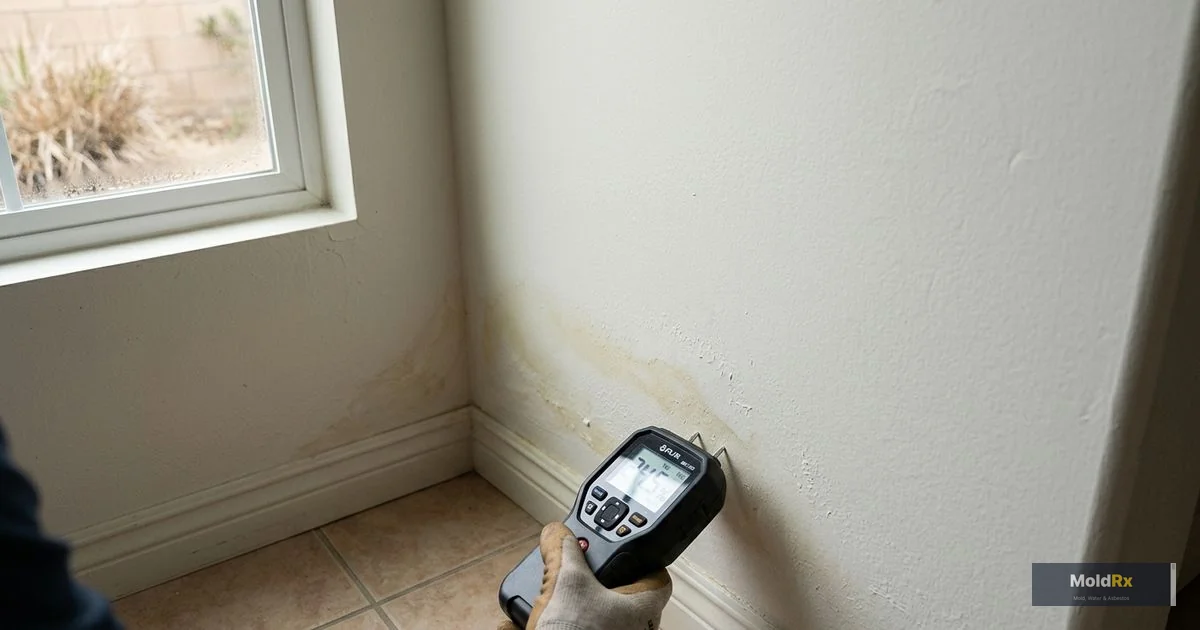
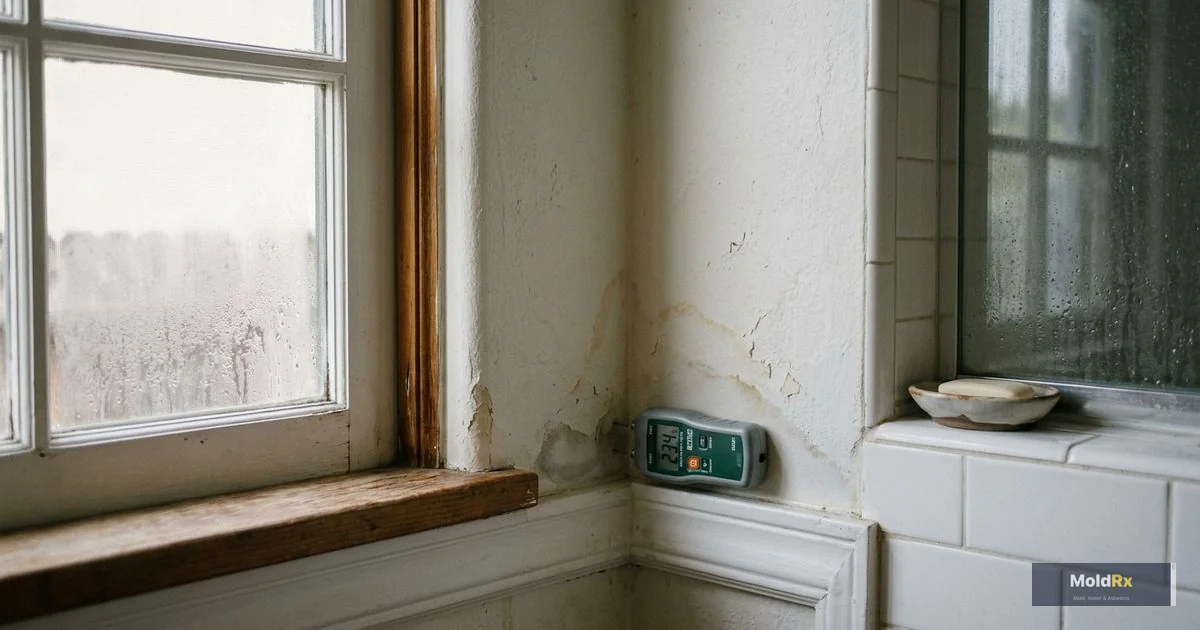
Before anything is torn out, our specialists map the full scope following the assessment protocols outlined in EPA 402-K-01-001. In Apple Valley homes, that means checking swamp cooler connections and ductwork, inspecting under-slab plumbing for slow leaks, examining wall cavities where condensation collects on exterior walls, and determining whether the moisture source is active or resolved. You'll know exactly what we're dealing with before work begins.
2. Containment
Physical barriers and negative air pressure isolate the affected area per IICRC S520 Condition 2 and Condition 3 containment protocols, depending on the scope of contamination. HEPA air scrubbers run continuously to capture airborne spores down to 0.3 microns. This prevents cross-contamination to unaffected rooms — especially important in homes with children. Nearly 39% of Apple Valley households include children under 18, and the CDC, EPA, and the World Health Organization's WHO Guidelines for Indoor Air Quality: Dampness and Mould all identify children as more vulnerable to mold-related respiratory effects.
3. Removal and Treatment
Mold-damaged materials — drywall, insulation, carpet padding, porous surfaces that can't be effectively decontaminated — are removed and disposed of following IICRC S520 procedures and Cal/OSHA permissible exposure limits under Title 8 §5155 for airborne contaminants. Remaining structural surfaces are treated with EPA-registered antimicrobial solutions that eliminate residual spores and inhibit regrowth. Every surface in the containment zone gets addressed.
4. Moisture Correction
Removing mold without fixing the water source guarantees it returns. Our specialists identify and resolve the underlying cause — whether that's a failed plumbing joint beneath the slab, inadequate bathroom exhaust, a poorly maintained swamp cooler, or condensation from insufficient wall insulation. You'll get specific guidance on what needs to change to keep the problem from recurring.
5. Post-Remediation Verification
Work isn't finished until conditions are verified. Affected areas are checked against IICRC S520 Condition 1 (normal fungal ecology) clearance standards to confirm remediation was successful. You receive documentation of everything performed — scope of work, materials removed, antimicrobial treatments applied, moisture readings, and post-remediation verification results. This documentation meets the evidentiary standards insurers and real estate professionals require.
What Sets MoldRx Apart
-
Straight talk, not sales talk. If your mold situation is smaller than you feared, we'll tell you. If it's more involved, you'll hear that too. We don't manufacture problems to inflate a job.
-
Licensed, insured, IICRC-certified. Our vetted professionals hold IICRC certifications, carry proper California contractor licensing through the CSLB (Contractors State License Board), and maintain the insurance coverage required for professional remediation work in San Bernardino County. They have the credentials and field experience to handle Apple Valley's specific mold challenges — from swamp cooler contamination to slab-leak remediation.
-
Full documentation on every job. Detailed records of the work completed, materials removed, treatments applied, and moisture readings. This protects you with insurance, in real estate transactions, and for your own peace of mind.
-
Family-owned accountability. MoldRx is not a call center routing you to whoever's available. We only send vetted remediation professionals we stand behind.
Get your free estimate — no obligations, no pressure. Just a clear picture of your situation.
Apple Valley Neighborhoods We Serve
MoldRx provides mold removal across every neighborhood in Apple Valley — ZIP codes 92307, 92308 — including residential, commercial, and multi-family properties.
- Jess Ranch — A master-planned community developed from the mid-1980s onward, with homes now 30 to 40 years old. Original plumbing lines and water heaters are reaching end-of-life, and slab leaks beneath these concrete-foundation homes are a frequent moisture source that leads to hidden mold in wall cavities.
- Desert Knolls — One of Apple Valley's older neighborhoods, with many homes built in the 1970s. Aging galvanized plumbing, single-pane windows prone to condensation, and original swamp cooler installations make these properties particularly susceptible to moisture intrusion and mold growth behind walls.
- Sun City Apple Valley — A 55+ retirement community with homes dating to the late 1960s and 1970s. The older construction and long-term occupancy mean deferred maintenance items — deteriorated caulking, aging roof flashing, and worn plumbing connections — are common mold catalysts. Elderly residents also face higher health risk from prolonged mold exposure.
- Skyline Ranch — Newer subdivisions built through the 1990s and 2000s east of Apple Valley Road. While the housing stock is younger, heavy reliance on evaporative coolers during the long cooling season introduces sustained indoor humidity that drives mold colonization in closets, attic spaces, and behind furniture on exterior walls.
- South Apple Valley — A mix of older ranch-style properties and 1980s tract homes south of Bear Valley Road. Lower elevation areas near washes face increased flash-flood exposure during monsoon season, and the flat terrain allows storm runoff to pool against foundations.
- Sycamore Rocks — Established residential area with homes primarily from the 1980s and 1990s on larger desert lots. The combination of aging plumbing, slab-on-grade construction, and extreme daily temperature swings creates condensation patterns that support hidden mold behind exterior walls and in poorly insulated garage conversions.
- Upper Desert Knolls / Mountain Vista — Higher-elevation parcels on the northern side of town with a mix of custom homes and older ranchettes. Properties here experience colder winter nights and more pronounced condensation cycles, and many rely on swamp coolers that push humidity levels well above the EPA's recommended 30-to-50-percent indoor range.
Nearby Communities We Also Serve
Our vetted professionals also cover the surrounding High Desert, carrying the CSLB licensing and IICRC credentials required for residential and commercial mold remediation in San Bernardino County:
- Victorville — The largest Victor Valley city, with a housing stock ranging from 1950s-era homes to 2000s subdivisions, all facing the same swamp cooler and condensation-driven mold risks
- Hesperia — Over 102,000 residents along the Mojave River corridor, where slab leaks and flash-flood exposure compound desert moisture problems
- Adelanto — A growing High Desert community where newer construction on slab foundations and reliance on evaporative cooling create the same hidden mold conditions
- Lucerne Valley — Rural desert community east of Apple Valley where older well-water systems, aging septic infrastructure, and remote properties mean moisture problems often go undetected longer
- Oro Grande — Small community north of Victorville along the Mojave River, with older housing stock and limited infrastructure that amplify mold risk from plumbing failures and storm-water intrusion
Related Services in Apple Valley
Mold rarely exists in isolation. If you're dealing with water damage, need testing before remediation, or own a pre-1980s property that may contain asbestos, we cover those too:
- Water Damage Restoration in Apple Valley
- Mold Testing in Apple Valley
- Asbestos Removal in Apple Valley
- Asbestos Testing in Apple Valley
→ All remediation services in Apple Valley
Frequently Asked Questions
How long does mold remediation take in Apple Valley?
Most projects take 2 to 5 days depending on the size of the affected area, the materials involved, and whether structural repairs are needed. A single-room swamp cooler contamination issue may wrap in a day. Multi-room remediation with slab-leak damage can take a week or longer. We'll give you a realistic timeline after assessing your property.
Do I need mold testing before removal starts?
If mold is visible, testing isn't always required — the priority is removal and moisture correction. Testing becomes valuable when you suspect hidden mold (behind walls, under flooring), need documentation for insurance, or are involved in a real estate transaction. We'll recommend the right approach for your situation.
Will my homeowner's insurance cover mold removal?
It depends on the cause. Mold resulting from a sudden, covered event — like a burst pipe — is often covered. Mold from long-term deferred maintenance typically is not. Our documentation is designed to support legitimate insurance claims with clear evidence of the cause, scope, and remediation performed. Call for a free estimate to discuss your specific situation.
Can I stay home during remediation?
Usually, yes. Proper containment and HEPA filtration keep spores isolated from your living areas during the work. For larger projects, or if anyone in the household has asthma or respiratory sensitivities, we may recommend staying elsewhere during the most intensive removal phases. We'll discuss this during your assessment.
Are swamp coolers really a mold risk?
Yes — evaporative coolers are the most common mold source we encounter in High Desert homes. The wet pads breed mold and bacteria, and the blower distributes spores through the house every time it runs. Regular cleaning (at least 3 to 4 times per cooling season), timely pad replacement, and proper winterization significantly reduce this risk. If you're already seeing mold around vents or smelling a musty odor when the cooler kicks on, it's time for a professional assessment.
How do I know if I have mold behind my walls?
Common indicators include a persistent musty smell that doesn't go away with cleaning, visible water staining or discoloration on walls or ceilings, peeling paint or bubbling wallpaper, and worsening allergy symptoms indoors. In Apple Valley homes, check areas near swamp cooler ducts, exterior walls (condensation zones), under bathroom vanities, and anywhere plumbing runs through walls or slabs. If you suspect hidden mold, a professional inspection with moisture mapping can confirm what's there without unnecessary demolition.
Get Mold Removal in Apple Valley
Mold spreads. The longer moisture stays unchecked, the further contamination reaches into your walls, your HVAC system, and your air quality. In a community of 76,000 where nearly four in ten households include children, that matters.
MoldRx only sends vetted remediation professionals who understand High Desert properties — the swamp cooler issues, the slab leaks, the condensation patterns that come with desert temperature extremes. No guesswork. No runaround.
Call MoldRx for your free estimate — (888) 609-8907. Clear answers. Honest guidance. Work done right.